Live · Global · Independent
Live Feeds
PinkVilla
Forbes
NDTV
Hindustan Times
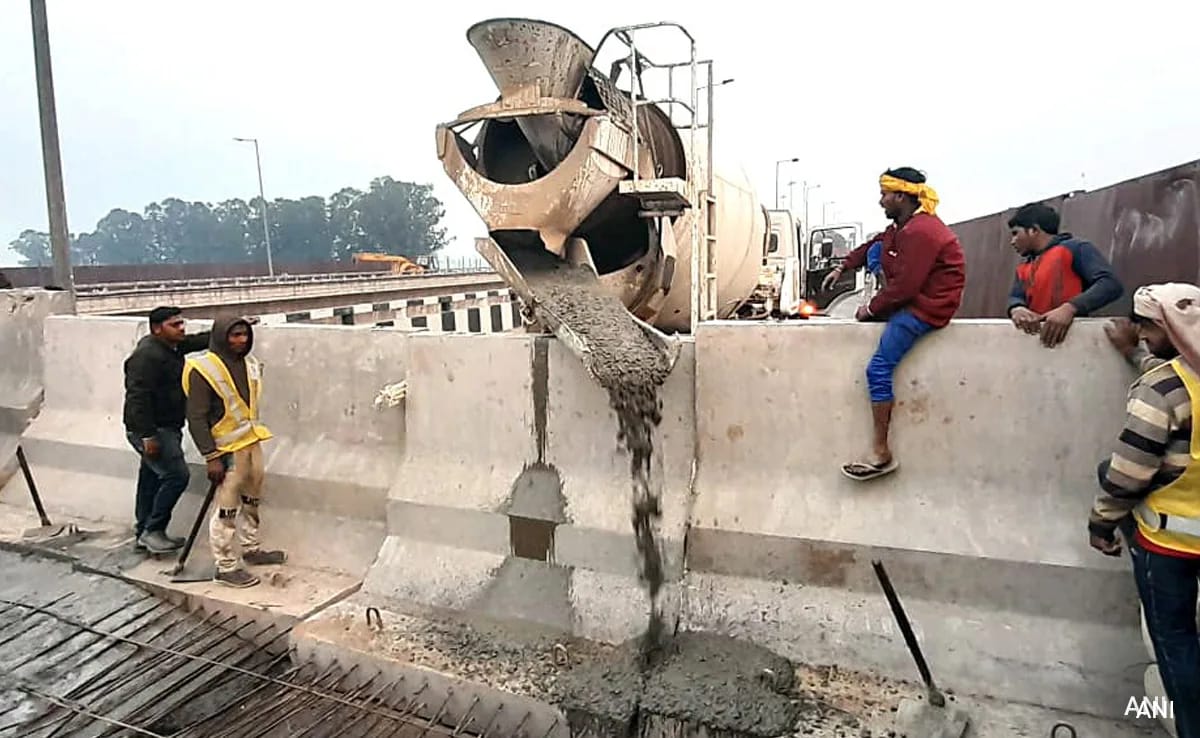
Cement Barricades, Nails On Road: Haryana Prepares To Block Farmers’ March
onmynews.com

Cement Barricades, Nails On Road: Haryana Prepares To Block Farmers’ March

Cement barricades, iron nails, heavy police deployment – this is how authorities in Haryana are preparing to block farmers who are planning to march to Delhi on Tuesday to press the Centre to accept their various demands. Route diversions and a seven-tier security cordon are also a part of the elaborate arrangements.

A video that is being widely shared on social media shows a man drilling iron nails into the road.

All the borders of Haryana with Punjab have been sealed with huge cement barricades and barbed wires. Section 144 has been imposed in many districts of Haryana and CRPF and other security agencies have also been deployed along with the police force.

The arrangements serve as a deja vu moment – another massive farmers’ march in 2020.

In 2020, a large number of farmers from Punjab and nearby areas of Ambala gathered at the Shambhu border and broke police barriers to march towards Delhi. The farmers held a year-long protest on Delhi’s border points against the three now-repealed farm laws.

Earlier in the day, the Haryana-Punjab border at Shambhu was closed for vehicular movement towards Ambala and Delhi. It even led to a massive traffic jam inconveniencing commuters travelling towards Ambala.

The Ghaggar river bed has also been dug up to prevent farmers from reaching the highway through tractors, said officials.

The Haryana government has also ordered the suspension of mobile internet services and bulk SMS in seven districts – Ambala, Kurukshetra, Kaithal, Jind, Hisar, Fatehabad and Sirsa – ahead of the farmers’ proposed march.

This comes even as the farmers are readying their tractor trolleys to participate in the march. In Rajpura, farmers took out a tractor march as part of their preparations to head towards Delhi.

More than 200 farmer unions are expected to begin the march on February 13 over several demands, including the enactment of a law to guarantee a minimum support price (MSP) for crops.

A three-member team of Union ministers on Thursday held a detailed discussion with the leaders of farmer organisations.

The farmer leaders had said the Central ministers assured them that they would hold a second round of the meeting soon but they had also stated that their proposed ‘Delhi Chalo’ march stands.  The ministers, meanwhile, have invited the farm union leaders for a meeting a day before the march – on March 12 – in Chandigarh

The farmers are also demanding implementation of the Swaminathan Commission’s recommendations, pensions for farmers and farm labourers, farm debt waiver, withdrawal of police cases and “justice” for victims of the Lakhimpur Kheri violence.
Read full article
Video: Standoff Between Armoured Vehicle And Suspected Insurgents In Manipur
onmynews.com

Video: Standoff Between Armoured Vehicle And Suspected Insurgents In Manipur

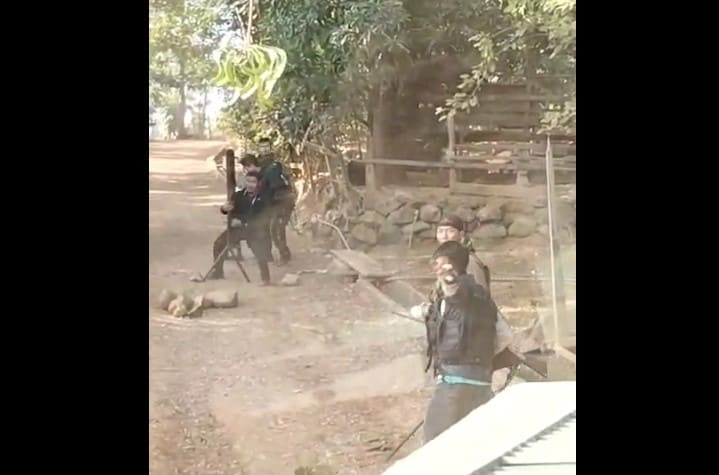
Videos of a tense stand-off between the Assam Rifles and a group of armed men in Manipur’s border town Moreh have emerged on social media, raising questions over how a few armed men stopped the security forces from moving around in the town just a stone’s throw away from conflict-hit Myanmar.

The incident happened on January 17, the day two Manipur Police commandos were killed in action while returning fire at insurgents. A day after the gunfight, Manipur Security Adviser Kuldiep Singh had told reporters that “numerous Kuki militants started firing at commando posts in three locations”, and the commandos being at a lower elevation were “sitting ducks”.

In the videos that surfaced on social today, which sources said have been verified as taken on January 17, Assam Rifles soldiers inside an armoured vehicle were heard shouting warnings at the armed men who were blocking their way.

“Please go to the side. Don’t do this. Don’t fire at our vehicle,” a soldier is heard saying.

Then the armed men in camouflaged battledress, numbering some 10-15, surrounded the armoured vehicle and waved at the soldiers to not press on.

At this, the soldier inside the vehicle shouts, “All of you stop firing. Aap logon ko nuksaan hoga (it won’t be good for you). Get to the side. Let our vehicle go. Why don’t you understand?”

The Assam Rifles uses an evolved Indian version of the South African-origin Casspir mine-protected vehicle.

The armed men brought out two crude rocket launchers – one was pointed at the vehicle directly from the front, while the other was aimed at the vehicle from higher ground on the right.

Another man armed with what appeared to be a foreign-origin M series (M4, M16, etc) assault rifle brought a handheld improvised explosive device (IED), stood near the front right tyre, and gestured as if he would throw the IED under the vehicle.

“IED leke aa gaya,” another soldier inside the mine-protected vehicle is heard saying.

Unable to proceed, the vehicle reversed slowly on the inclined gravel path which did not have enough space for a full turn. The armed men continued to follow, guns pointed at the vehicle. Another armed man was seen moving the crude rocket launcher to keep it aimed at the vehicle.

The Assam Rifles have in the past rescued police commandos pinned down with suppressive fire by hill-based insurgents in and around Moreh.

The January 17 attack at the police commandos involved rocket-propelled grenades fired by insurgents. Kuldiep Singh, the state Security Adviser, had said there was a possibility that Myanmar-based insurgents may have entered Manipur, but there was no evidence yet.

At least 25 Kuki insurgent groups have signed the tripartite suspension of operations (SoO) agreement with the Centre and the state.

Under the SoO agreement, the insurgents are housed in designated camps. There have been allegations that full attendance at many of the SoO camps has not been observed.

A retired top-ranking army officer from Manipur, Lieutenant General LN Singh (retired), blamed the ineffectiveness of the SoO agreement for the rising threat by “Kuki militants”.

“Kuki militants, encouraged by immunity from SoO agreement and leniency (sic) shown on them, are now directly threatening other security forces. More than 15 years of SoO, how much more? There has to be a timeline. Someone has to answer as to how much more taxpayers’ money will be spent,” Lt General Singh said in a post on the social media platform X.

Tensions between the hill-majority Kuki-Zo tribes and the valley-majority Meiteis have been lingering on nine months since clashes broke out between the two communities over disagreements on land, resources, political representation, and affirmative action policies.

Over 180 people have died in the violence, and thousands have been internally displaced. The two communities are sharply divided now, with people from either community not going to areas where those from the other community live.

Read full article
BJP Got Nearly Rs 1,300 Crore Through Electoral Bonds, Congress Received…
onmynews.com

BJP Got Nearly Rs 1,300 Crore Through Electoral Bonds, Congress Received…

The ruling BJP received nearly Rs 1300 crore through electoral bonds in the 2022-23, which was seven times more than what the Congress got in the same period through the same route.

The BJP’s total contributions stood at Rs 2120 crore in the 2022-23 fiscal, of which 61 per cent came from electoral bonds, according to the party’s annual audited report submitted to the Election Commission.

In FY 2021-22, the party’s total contributions were to the tune of Rs 1775 crore.

The party’s total income in 2022-23 stood at Rs 2360.8 crore, up from Rs 1917 crore in FY 2021-22.

The Congress, on the other hand, earned Rs 171 crore from electoral bonds which was down from Rs 236 crore in FY 2021-22.

The BJP and the Congress are recognised national parties.

The Samajwadi Party, a recognised state party, had earned Rs 3.2 crore through electoral bonds in 2021-22. In 2022-23, it received no contributions from these bonds.

Another state recognised party, the TDP, earned Rs 34 crore through electoral bonds in 2022-23 which was up 10 times from the previous fiscal.

The BJP also earned Rs 237 crore from interests in the last fiscal, up from Rs 135 crore in 2021-22.

Out of its total expenditure on ‘election and general propaganda’, the BJP paid Rs 78.2 crore for use of aircraft and helicopters, which is down from Rs 117.4 crore in 2021-22.

The party also paid Rs 76.5 crore as financial assistance to candidates, down from Rs 146.4 crore in 2021-22. The party has shown this assistance under the head ‘total payments’.

(Except for the headline, this story has not been edited by NDTV staff and is published from a syndicated feed.)

Read full article
Link copied!