onmynews.com
OnMyNews.com
Live · Global · Independent
Live Feeds
onmynews.com
UN Report Warns India Heading Towards Groundwater Depletion Tipping Point
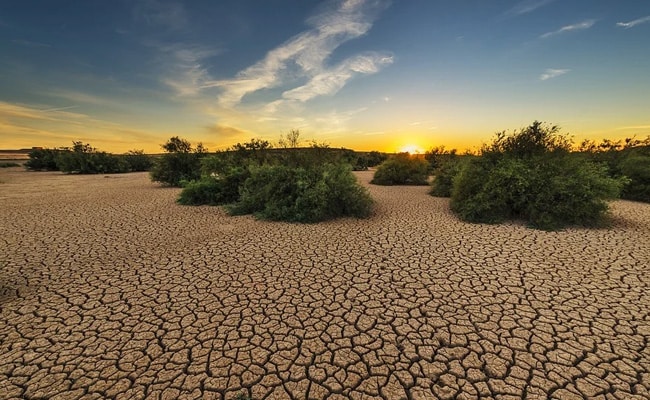
Some areas in the Indo-Gangetic basin in India have already passed the groundwater depletion tipping point and its entire northwestern region is predicted to experience critically low groundwater availability by 2025, according to a new report by the United Nations.
Titled “Interconnected Disaster Risks Report 2023” and published by the United Nations University – Institute for Environment and Human Security (UNU-EHS), the report highlights that the world is approaching six environmental tipping points: accelerating extinctions, groundwater depletion, mountain glacier melting, space debris, unbearable heat and an uninsurable future.
Environmental tipping points are critical thresholds in the Earth’s systems, beyond which abrupt and often irreversible changes occur, leading to profound and sometimes catastrophic shifts in ecosystems, climate patterns and the overall environment.
Around 70 per cent of groundwater withdrawals are used for agriculture, often when above-ground water sources are insufficient. Aquifers play a crucial role in mitigating agricultural losses caused by drought, a challenge expected to worsen due to climate change.
However, the report warns that the aquifers themselves are approaching a tipping point. More than half of the world’s major aquifers are depleting faster than they can naturally replenish. When the water table falls below a level accessible by existing wells, farmers may lose access to water, posing a risk to entire food production systems.
Some countries, like Saudi Arabia, have already exceeded the groundwater risk tipping point, while others, including India, are not far from it.
“India is the world’s largest user of groundwater, exceeding the use of the United States and China combined. The northwestern region of India serves as the bread basket for the nation’s growing 1.4 billion people, with the states of Punjab and Haryana producing 50 per cent of the country’s rice supply and 85 per cent of its wheat stocks.
“However, 78 per cent of wells in Punjab are considered overexploited and the northwestern region as a whole is predicted to experience critically low groundwater availability by 2025,” the report says.
Jack O’Connor, the lead author and senior expert at UNU-EHS, said, “As we approach these tipping points, we will already begin to experience the impacts. Once crossed, it will be difficult to go back. Our report can help us see risks ahead of us, the causes behind them and the urgent changes required to avoid them.”
onmynews.com
Russia, China Veto US Push For UN Action On Israel, Gaza
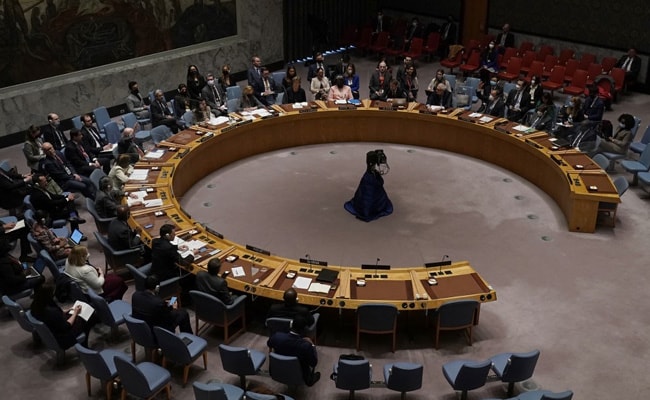
Russia and China on Wednesday vetoed a U.S. push for the United Nations Security Council to act on the Israel-Hamas conflict by calling for pauses in fighting to allow humanitarian aid access, the protection of civilians and a stop to arming Hamas and other militants in the Gaza Strip.
The United States put forward a draft resolution on Saturday as global outcry grew over a worsening humanitarian crisis and mounting civilian death toll in Gaza. It made the move just days after it vetoed a humanitarian focused draft from Brazil, arguing more time was needed for U.S.-led diplomacy.
The initial U.S. text shocked many diplomats with its bluntness in stating Israel has a right to defend itself and demanding Iran stop exporting arms to militant groups. It did not include a call for humanitarian pauses for aid access. But it largely toned down the final text that was put to the vote.
“We did listen to all of you,” U.S. Ambassador to the U.N. Linda Thomas-Greenfield told the 15-member council after the double veto, which she described as disappointing. “Though today’s vote was a setback, we must not be deterred.”
It was a rare move by the United States to suggest Security Council action. Washington has traditionally shielded its ally Israel at the world body.
Ten members voted for the U.S. text, while the United Arab Emirates voted no and Brazil and Mozambique abstained.
“The draft does not reflect the world’s strongest calls for a ceasefire, an end to the fighting, and it does not help resolve the issue,” China’s U.N. Ambassador Zhang Jun told the council after the vote. “At this moment, ceasefire is not just a diplomatic term. It means the life and death of many civilians.”
U.N. Secretary-General Antonio Guterres has been appealing for a humanitarian ceasefire.
‘OBLIGATION TO ACT’
In the wake of the Security Council deadlock, the 193-member U.N. General Assembly will vote on Friday on a draft resolution put forward by Arab states that calls for a ceasefire. No country holds a veto in the General Assembly. Resolutions are non-binding, but carry political weight.
Israel has vowed to wipe out Hamas, which rules Gaza, in retaliation for an Oct. 7 attack that killed 1,400 people. Israel has struck Gaza from the air, imposed a siege on the enclave of 2.3 million people and is preparing a ground invasion. Palestinian authorities say more than 6,500 have been killed.
Russia’s U.N. Ambassador Vassily Nebenzia accuses the U.S. of putting up a draft resolution that represented Security Council authorization of a ground offensive in Gaza by Israel “while thousands of Palestinian children will continue to die.”
After the double veto, the Security Council then voted on a rival Russian-drafted text that called for a humanitarian ceasefire and withdrawal of Israel’s order for civilians in Gaza to relocate south ahead of a ground assault.
Russia failed to the get minimum amount of support needed, winning only four votes. A resolution needs at least nine votes and no vetoes by the United States, France, Britain, Russia or China to be adopted.
It was Russia’s second attempt at a resolution. Only five council members voted in favor of a Russian text on Oct. 16.
The elected 10 members of the Security Council now plan to work on a new draft resolution, Malta’s U.N. Ambassador Vanessa Frazier said.
“This crisis is also gripped by a growing risk of a regional spill over. This demands our undivided attention,” she said. “We have the duty and the obligation to act.”