
Live · Global · Independent
Live Feeds
PinkVilla
Forbes
NDTV
Hindustan Times
Earthquake Of Magnitude 4.3 Hits Afghanistan
onmynews.com

Earthquake Of Magnitude 4.3 Hits Afghanistan

October 26 : An earthquake of magnitude 4.3 on the Richter Scale jolted Afghanistan on Thursday, the National Centre for Seismology informed.

According to NCS, the earthquake occurred at 1.09 am (IST) at a depth of 150 kms.

“Earthquake of Magnitude:4.3, Occurred on 26-10-2023, 01:09:18 IST, Lat: 37.00 & Long: 72.88, Depth: 150 Km,” the NCS posted from their official handle on X.

Significantly, this is the fourth earthquake to strike the impoverished nation in quick succession and comes just a week after a strong earthquake in Herat province claimed over 4,000 lives.

Earlier, an earthquake of magnitude 5.4 on the Richter Scale jolted Afghanistan on October 15.
Before that, an earthquake of magnitude 4.6 rocked Afghanistan on October 13.

Another earthquake of magnitude 6.1 on the Richter scale jolted the country earlier on October 11.

Last week, an earthquake in the Herat province of Afghanistan claimed more than 4,000 lives and destroyed thousands of residential houses, Khaama Press reported citing the Taliban-led ministry.

Herat and surrounding regions were shaken by the magnitude 6.3 earthquake and its powerful aftershocks.

The Taliban-led Ministry of Disaster Management of Afghanistan has announced that 1,983 residential houses have also been destroyed in 20 villages in Herat on Saturday.

The Taliban has not yet given an estimate of the number of deaths and injuries in the earthquake in Herat province.

Read full article
Man rapes 3-year-old girl who went to watch Dussehra event with grandfather
onmynews.com

Man rapes 3-year-old girl who went to watch Dussehra event with grandfather

Man rapes 3-year-old girl who went to watch Dussehra event with grandfather

​ 

India Today | India 

Read full article
UN Report Warns India Heading Towards Groundwater Depletion Tipping Point
onmynews.com

UN Report Warns India Heading Towards Groundwater Depletion Tipping Point

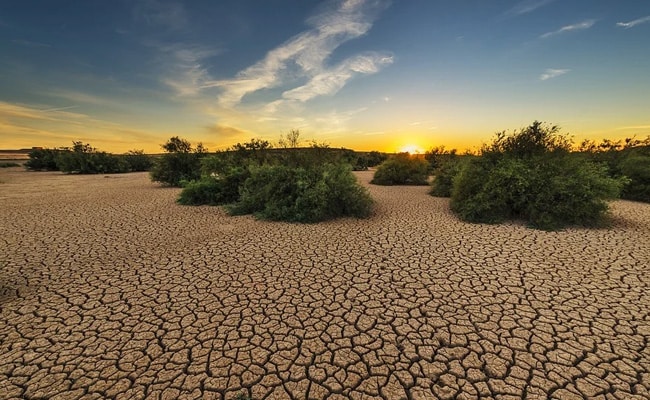
Some areas in the Indo-Gangetic basin in India have already passed the groundwater depletion tipping point and its entire northwestern region is predicted to experience critically low groundwater availability by 2025, according to a new report by the United Nations.

Titled “Interconnected Disaster Risks Report 2023” and published by the United Nations University – Institute for Environment and Human Security (UNU-EHS), the report highlights that the world is approaching six environmental tipping points: accelerating extinctions, groundwater depletion, mountain glacier melting, space debris, unbearable heat and an uninsurable future.

Environmental tipping points are critical thresholds in the Earth’s systems, beyond which abrupt and often irreversible changes occur, leading to profound and sometimes catastrophic shifts in ecosystems, climate patterns and the overall environment.

Around 70 per cent of groundwater withdrawals are used for agriculture, often when above-ground water sources are insufficient. Aquifers play a crucial role in mitigating agricultural losses caused by drought, a challenge expected to worsen due to climate change.

However, the report warns that the aquifers themselves are approaching a tipping point. More than half of the world’s major aquifers are depleting faster than they can naturally replenish. When the water table falls below a level accessible by existing wells, farmers may lose access to water, posing a risk to entire food production systems.

Some countries, like Saudi Arabia, have already exceeded the groundwater risk tipping point, while others, including India, are not far from it.

“India is the world’s largest user of groundwater, exceeding the use of the United States and China combined. The northwestern region of India serves as the bread basket for the nation’s growing 1.4 billion people, with the states of Punjab and Haryana producing 50 per cent of the country’s rice supply and 85 per cent of its wheat stocks.

“However, 78 per cent of wells in Punjab are considered overexploited and the northwestern region as a whole is predicted to experience critically low groundwater availability by 2025,” the report says.

Jack O’Connor, the lead author and senior expert at UNU-EHS, said, “As we approach these tipping points, we will already begin to experience the impacts. Once crossed, it will be difficult to go back. Our report can help us see risks ahead of us, the causes behind them and the urgent changes required to avoid them.”

Read full article
Link copied!