Live · Global · Independent
Live Feeds
PinkVilla
Forbes
NDTV
Hindustan Times
Harrdy Sandhu Once Got Rohit Sharma, Ravindra Jadeja Out. Video Goes Viral
onmynews.com

Harrdy Sandhu Once Got Rohit Sharma, Ravindra Jadeja Out. Video Goes Viral

Before Harrdy Sandhu entered the world of entertainment, he had a brief career as a cricketer and even represented India on the under-19 cricket team. Mr Sandhu was a fast bowler for Punjab and came close to being part of the Indian ICC U-19 Cricket World Cup 2006 squad. Unfortunately, he missed out on the opportunity due to some unforeseen circumstances. In a recent interview, he shared reasons why he wasn’t selected for the team, and one particular revelation from that interview has gained significant attention on the internet.

Appearing on a podcast ‘Figuring Out With Raj Shamani’, Mr Sandhu said the Under-19 team, while preparing for the 2006 World Cup in Sri Lanka, held a training camp in Pune. This camp invited 30 talented cricketers from all corners of the country. Each player was scheduled to participate in three matches during the camp, and the final team for the World Cup was to be selected by the selectors and the coach based on their performances in these matches. Mr Sandhu spoke about his notable performance during the camp, mentioning that in his first match, he managed to dismiss cricketers like Rohit Sharma, Cheteshwar Pujara, Ravindra Jadeja, Pinal Shah, and Yo Mahesh. This impressive performance led him to believe that he was on track to secure a spot in the Under-19 team for the upcoming World Cup.

Watch the video here:

However, despite his outstanding performance in the camp, Mr Sandhu was unable to secure a spot on the final team.

The selectors at that time were Pravin Amre, Dilip Vengsarkar, and one more person.

“We were batting on the third day, and it was my turn to bat. I asked Rahul Sharma, a former India and Punjab spinner, for a bat. Rahul was often called ‘Venky.’ Coincidentally, Venkatesh Prasad, who was our coach, was sitting in front of me. I called out ‘Venky’ to Rahul, but to my surprise, Venkatesh Prasad thought I was addressing him. Perhaps he took offense to this, and it might have influenced his decision to stick with the same squad that had played in the last two U-19 tournaments,”  Mr Sandhu said.

Harrdy Sandhu claimed this was one of the potential reasons for his non-selection in the team, and this particular revelation has been gaining significant attention on the internet. It has stirred a lot of reactions from users on social media, making it a viral topic of discussion.
Read full article
Ramen Or Noodles? No More Confusion! Know Main Differences Between The Two
onmynews.com

Ramen Or Noodles? No More Confusion! Know Main Differences Between The Two

If you’re a fan of Asian cuisine, you must’ve had ramen and noodles at some point. You must be wondering why we are mentioning them as different. Aren’t they supposed to be the same? Well, this is a common belief, but it’s not at all true. While both are made using wheat flour dough and served with different sauces and broths, there are many other things that set them apart. Whether you’re an Asian food lover or someone who likes to be updated with their food knowledge, it’s good to know the differences between these two popular dishes. Without further ado, let’s gain a deeper understanding of them below.

What Is Ramen?

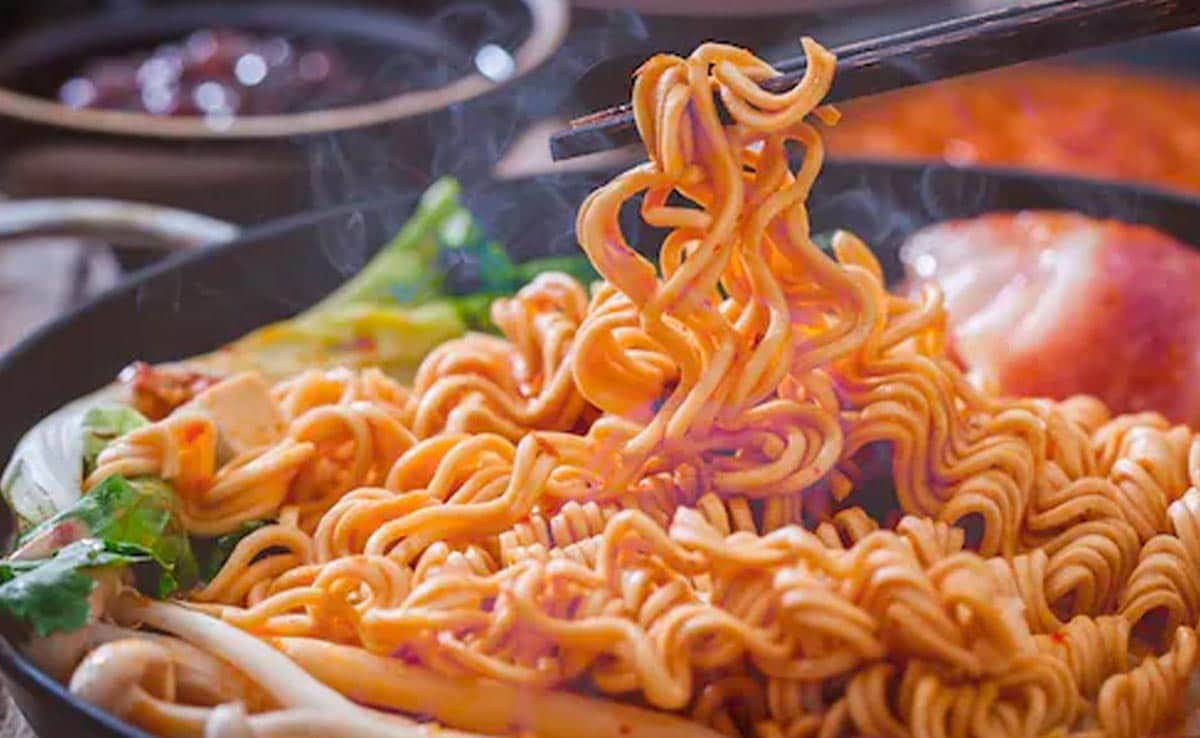
Ramen is a popular Japanese-style noodle dish. The fact that they are served in a broth is what makes them so unique. The broth usually includes flavours of soy sauce or miso and includes meat or vegetables. Ramen is further topped with different ingredients, such as eggs, scallions, etc.

What Are Noodles?

Noodles do not have one particular characteristic. They include different varieties of noodles, including ramen. So while ramen is a type of noodle, not all noodles are ramen. Noodles can include rice noodles, soba, spaghetti, and more. No one thing makes them unique, as they are all made using different ingredients and methods.
Also Read: Solving The Mystery: Are Singapore Noodles Actually From Singapore?

Photo Credit: Istock

Ramen Vs Noodles: What Are The Differences Between The Two:

1. Difference in ingredients:

The types of ingredients that are used to make ramen and noodles differ to a great extent. Ramen is made with wheat flour, salt, water, and a type of alkaline water called kansui. This last ingredient is what sets them apart from regular noodles. Noodles, on the other hand, are made using the first three ingredients alone. Ramen is always served in a broth, whereas noodles are flavoured with a variety of sauces.

2. Difference in preparation:

The preparation style of ramen and noodles is also not the same. While both are boiled, ramen is cooked in kansui water. Once done, it is rinsed with cold water to remove the excess starch and then added to the broth. This process is called blanching and helps give it its distinct chewy texture. Whereas noodles are simply boiled in salted water, drained, and then served with the desired sauce or topping.

3. Difference in texture:

If you look closely, you’ll also notice a difference in texture between the two. Ramen is usually thicker in texture as compared to regular noodles. They are not as thick as other varieties, but they have a somewhat medium thickness and a chewy texture. Whereas noodles come in a variety of forms and are known for having a thinner consistency with a smoother texture.
Also Read: Boiled Extra Noodles? Here Are 5 Creative Ways To Make Use Of Them

Photo Credit: istock

4. Difference in flavour:

Ramen and noodles have a different flavour profile as well. The former is known for having a distinct umami flavour. This primarily comes from the broth and seasonings that are served with it. Noodles, on the other hand, can be flavoured in a variety of different ways too, depending on the sauces you use. However, they may not have that umami flavour that is in ramen.

So, the next time you find yourself confused between ramen and noodles, you’ll know exactly what sets them apart.

Read full article
AI Education To Begin From Class 6: Here’s All You Need To Know
onmynews.com

AI Education To Begin From Class 6: Here’s All You Need To Know

To meet the rising demand for AI and data science knowledge in India, the Ministry of Electronics and Information Technology has introduced plans to incorporate AI courses into the country’s educational curriculum. These courses will begin at the school level, starting from Class 6. A committee has developed a comprehensive curriculum for these courses under the ‘National Programme on Artificial Intelligence (NPAI) Skilling Framework,’ ensuring that students nationwide are adequately equipped for AI education. The estimated demand for Artificial Intelligence/Data Science professionals in India is expected to exceed 1 million by 2024.

The committee’s report in June 2023 underscores the necessity of introducing AI education at various levels within the educational system. These courses will be aligned with both the National Higher Education Qualifications Framework and the National Credit Framework, ensuring a consistent approach to AI education across the nation.

The committee emphasised the importance of ethical considerations within AI education, recommending that at least 10 percent of the course duration be dedicated to ethical aspects. This approach aims to promote responsible development and deployment of AI systems, with an emphasis on transparency, fairness, and privacy.

Click here to access the report on National Programme on Artificial Intelligence (NPAI) Skilling Framework

To keep pace with the rapidly evolving field of AI, the report highlights the importance of flexible course development. It suggests creating smaller modules, such as micro-credentials, to adapt to technological advancements. Regulatory bodies, including the National Council for Vocational Education and Training, the All India Council for Technical Education, and the University Grants Commission, have been tasked with establishing guidelines and standards for AI education. You can access the reports on the University Grants Commission’s website at www.ugc.gov.in.

A recent NASSCOM report identified a 51 per cent shortfall in the demand and supply of AI and disruptive technology capabilities, leading to the introduction of AI courses in schools and undergraduate programs. The carefully crafted, age-appropriate school curriculum covers essential AI principles, machine learning, data management, programming, and ethical considerations.

Additionally, the report proposes faculty development programs to enhance educators’ understanding of AI concepts and teaching methodologies.

Current status: AI skilling

Various AI skill courses are currently available, with additional courses continually being developed. Within the government’s skill development network, courses are offered by entities such as Future Skills Prime (overseen by the NASSCOM Sector Skill Council), NPTEL, Centre of Advanced Studies (CDAC), and NIELIT. These courses cater to students at the school level, and a significant number of courses are also accessible through AICTE accredited institutions.

Training of assessors

AI assessments will be categorised into four groups:

Knowledge-based assessments: These evaluations are expected to consist of multiple-choice questions or interactive environments that can be automatically graded. Subject matter experts (SMEs) will design these assessments, adhering to robust assessment design principles. To facilitate these assessments, proctors will need training for administration. These assessments can be conducted in both formative and summative formats based on specific requirements.

Application-based assessments: These assessments will be conducted by college or undergraduate students and will be evaluated by college faculty members in collaboration with industry partners who will establish standardized norms and criteria for assessment. The assessors themselves will receive training from the industry or in accordance with institutional standards.

Industry certifications: These assessments will follow the standards set by the industry or original equipment manufacturers (OEMs).

Projects, hackathons, and internships: These evaluations will be initiated and guided by the industry and will involve specific projects aligned with the project objectives, necessitating training in accordance with those objectives.

Read full article
Link copied!