Live · Global · Independent
Live Feeds
PinkVilla
Forbes
NDTV
Hindustan Times
Putin Critic Navalny’s “Killers” Refusing To Hand Over Body, Say Allies
onmynews.com

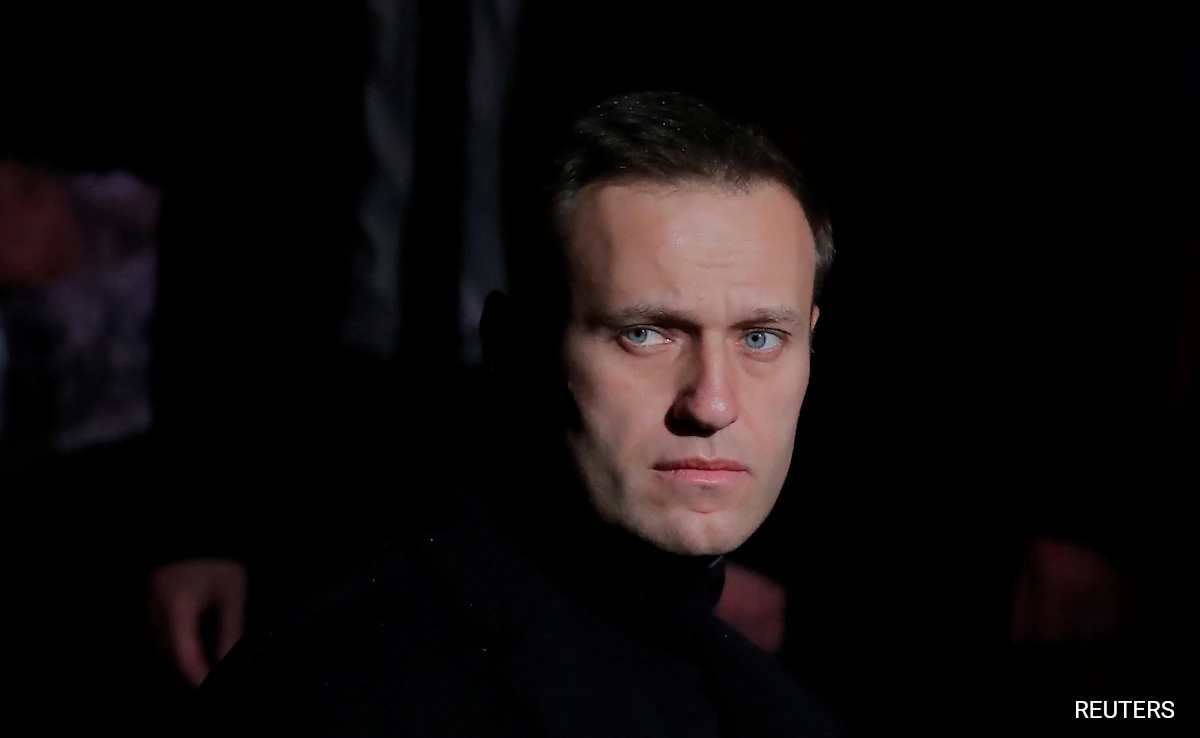
Putin Critic Navalny’s “Killers” Refusing To Hand Over Body, Say Allies

Alexei Navalny’s supporters on Saturday accused Russian authorities of being “killers” who were “covering their tracks” by refusing to hand over his body, as the Kremlin stayed silent despite Western accusations and a flood of tributes to the late opposition leader.

The 47-year-old Kremlin critic died in an Arctic prison on Friday after spending more than three years behind bars, prompting outrage and condemnation from Western leaders and his supporters.

His death, which the West has blamed on the Kremlin, deprives Russia’s opposition of its figurehead just a month before elections poised to extend President Vladimir Putin’s grip on power.

On Saturday, Navalny’s mother, Lyudmila and his lawyer were refused access to his body, after arriving in the region of the remote prison colony where he had been held, his spokeswoman Kira Yarmysh said.

“It’s obvious that the killers want to cover their tracks and are therefore not handing over Alexei’s body, hiding it even from his mother,” Navalny’s team said in a post on Telegram.

Russian police on Saturday moved swiftly to break up small protests and memorials in honour of the dead Kremlin critic.

They arrested more than 340 people in 30 cities, the OVD-Info rights group said. 

In the capital Moscow, AFP reporters saw two people being detained at a makeshift tribute in central Moscow, while hundreds of tearful mourners laid flowers in the snow.

“Alexei Navalny’s death is the worst thing that could happen to Russia,” said one note left among the flowers.

Putin ‘responsible’

After initially pushing back at accusations they were to blame, the Kremlin made no mention of his death on Saturday, despite an angry chorus of condemnation from Western leaders.

G7 foreign ministers meeting in Munich held a minute’s silence for the leader on Saturday, while US President Joe Biden pointed the blame at Putin.

“Make no mistake, Putin is responsible for Navalny’s death,” he said on Friday.

Speaking at the Munich Security Conference hours after news of her husband’s death, Yulia Navalnaya said Putin and his entourage would be “punished for everything they have done to our country, to my family and to my husband”.

She called on the international community to “unite and defeat this evil, terrifying regime”.

Russian Nobel Peace Prize winner Dmitry Muratov said Navalny’s death was “murder” and that he was “tortured and tormented” for all of the three years he spent in prison.

Tributes continued to pour in on Saturday, as supporters staged anti-Putin protests and set up memorials to Navalny at Russian diplomatic missions around the world.

In Russia, police detained hundreds of people who had laid flowers at monuments to the victims of political repression, rights groups said.

In a video posted by the independent Sota outlet from the capital Moscow, a woman could be heard screaming as a crowd of police officers forcefully detained her, to chants of “shame” from onlookers.

Another showed a group of people in plain clothes removing flowers from a monument opposite the former headquarters of the Soviet secret police, while police blocked off the area.

On a bridge next to the Kremlin, hooded men were seen scooping up flowers into bin bags that had been laid at an unofficial memorial to Navalny ally, dead Kremlin critic Boris Nemtsov.

Russia’s federal penitentiary service said Friday the Kremlin critic had died after he “felt bad after a walk” and lost consciousness.

One of Navalny’s lawyers, Leonid Solovyov, told the Novaya Gazeta newspaper that he was “normal” when another lawyer saw him on Wednesday.

In footage of a court hearing from his prison colony on Thursday, Navalny was seen smiling and joking as he addressed the judge by video link.

‘I’m not afraid’

Navalny, who led street protests for more than a decade, became a household name through his anti-corruption campaigning.

His exposes of official corruption, posted on his YouTube channel, racked up millions of views and brought tens of thousands of Russians on to the streets, despite harsh anti-protest laws.

He was jailed in early 2021 after returning to Russia from Germany, where he was recovering from a near-fatal poisoning attack with Novichok, a Soviet-era nerve agent.

A subsequent investigation by his team and several media outlets said a Russian FSB hit squad was behind the attack.

Upon his return he was hit with a barrage of charges, including a 19-year prison sentence for “extremism”, widely condemned by rights groups and seen in the West as retribution for his opposition to the Kremlin.

His decision to go back to Russia despite knowing he would face jail brought him global admiration. 

“I’m not afraid and I call on you not to be afraid,” he said in an appeal to supporters as he landed in Moscow, moments before being detained on charges linked to an old fraud conviction.

His arrest spurred some of the largest demonstrations Russia had seen in decades, and thousands were detained at rallies nationwide calling for his release.

‘Don’t do nothing’

From behind bars, Navalny was a staunch opponent of Moscow’s full-scale military offensive against Ukraine and was forced to watch on, helplessly, as the Kremlin dismantled his organisation and locked up his allies. 

Dozens of his top supporters fled into exile and continued to campaign against the offensive on Ukraine and repression inside Russia.

Late last year, Navalny was moved to a remote Arctic prison colony nicknamed “Polar Wolf” in Russia’s Yamalo-Nenets region in northern Siberia.

He said in January that his daily routine included prison walks in freezing temperatures.

Since being jailed, he spent more than 300 days in solitary confinement, where prison authorities kept him over alleged minor protocol infringements.

The last post on Navalny’s Telegram channel, which he managed through his lawyers and team in exile, was a tribute to his wife posted on Valentine’s Day.

In a documentary filmed before he returned to Russia, Navalny was asked what message he wanted to leave to the Russian people should he die or be killed.

“Don’t give up. You mustn’t, you can’t give up,” he said.

“All it takes for evil to triumph is for good people to do nothing. Therefore, don’t do nothing.”

(Except for the headline, this story has not been edited by NDTV staff and is published from a syndicated feed.)
Read full article
Congress Bracing For Another Jolt? Big Buzz Over Kamal Nath Switchover
onmynews.com

Congress Bracing For Another Jolt? Big Buzz Over Kamal Nath Switchover

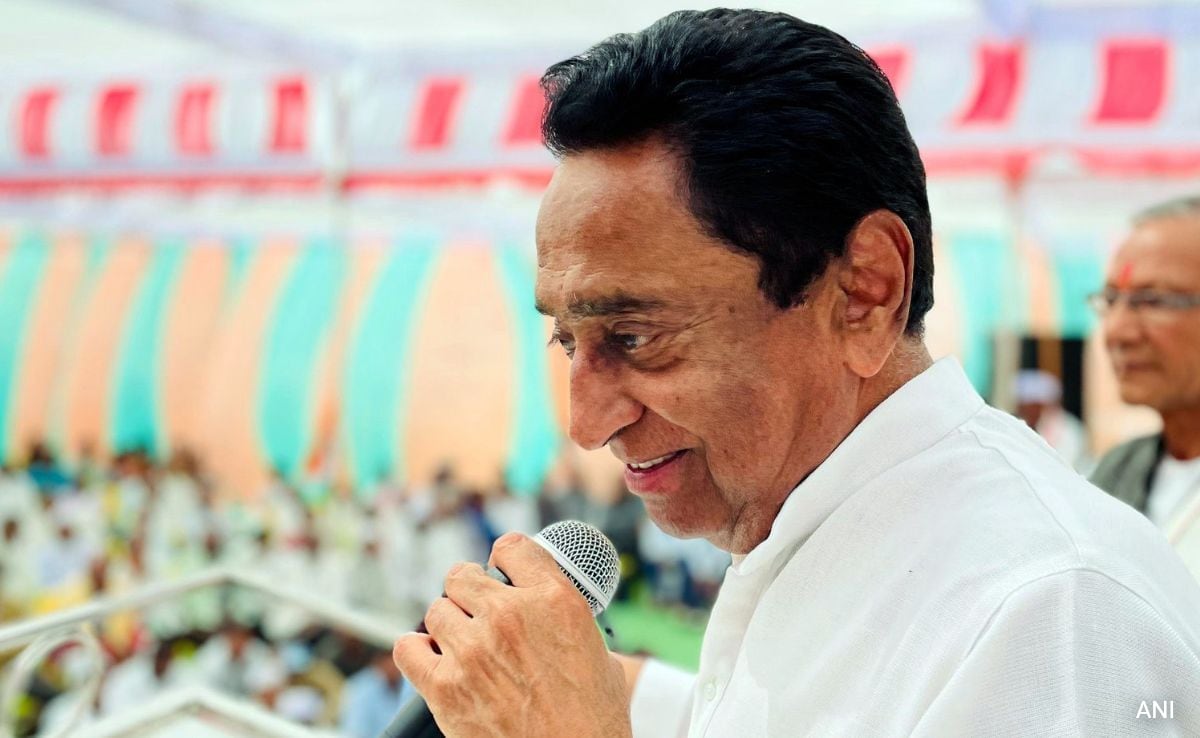
There’s a strong buzz that Kamal Nath may switch to the BJP in a fresh jolt to the Congress ahead of the national elections, with sources close to him telling NDTV that he is “unhappy” with the party.

The former Madhya Pradesh Chief Minister arrived in Delhi on Saturday, adding fuel to the speculations. But he hasn’t met Prime Minister Narendra Modi and Home Minister Amit Shah and has only heard BJP state leaders like VD Sharma saying he is welcome to join their party, sources said.

The people in Chhindwara – which Mr Nath has represented nine times in Lok Sabha – want him to join the BJP to ensure better development and the matter is under his consideration, sources said.

The constituency is now represented by Kamal Nath’s son Nakul Nath, who is also being speculated to join the BJP along with his father. Nakul Nath had removed ‘Congress’ from his social media bio, leading to the mega crossover buzz yesterday, but sources said his bio never mentioned the party’s name.

Kamal Nath’s Delhi trip comes at a time BJP is holding a two-day national council, being attended by top leaders from across the country.

Read | Can Indiraji’s “Third Son” Ever Leave Party? Congress Leader On Kamal Nath

He hasn’t resigned from Congress, but feels the party isn’t the same that he had joined five decades ago and has conveyed his unhappiness to the leadership, the sources said.

“He feels that Rahul Gandhi is busy with the Bharat Jodo Nyay Yatra and the party is now being run by the likes of senior leaders Jairam Ramesh, KC Venugopal, and Randeep Surjewala,” the sources said.

They also ruled out that his unhappiness was over not being nominated to the Rajya Sabha, and said senior leader Digvijaya Singh had requested him not to leave the party.

The Congress has denied reports that Mr Nath will end his long association with the party, stressing that former Prime Minister Indira Gandhi had called him her “third son” while campaigning for him in 1979.

“Can you think even in a dream that Indira Gandhi’s ‘third son’ will quit the Congress? Can he think of leaving the workers who fought the Assembly elections under his leadership and worked tirelessly to try and make him the chief minister,” said Jitu Patwari, who had replaced him as the state Congress chief after the party’s election setback last year.

Kamal Nath’s switchover would deliver a major blow to the Congress ahead of the national elections. The grand old party is already reeling from a string of high-profile exits, the latest being former Maharashtra chief minister Ashok Chavan, who joined the BJP earlier this week.

Mr Nath’s exit will leave the party vulnerable in Madhya Pradesh, where the Congress had won just one seat in 2019 elections.

His former colleague Jyotiraditya Scindia, now a Union Minister, had crossed over to the BJP after a mega revolt that had brought down the Congress government in Madhya Pradesh in 2020.

Read full article
Alexey Navalny’s Death Sends Message About Vladimir Putin’s Grip On Russia
onmynews.com

Alexey Navalny’s Death Sends Message About Vladimir Putin’s Grip On Russia

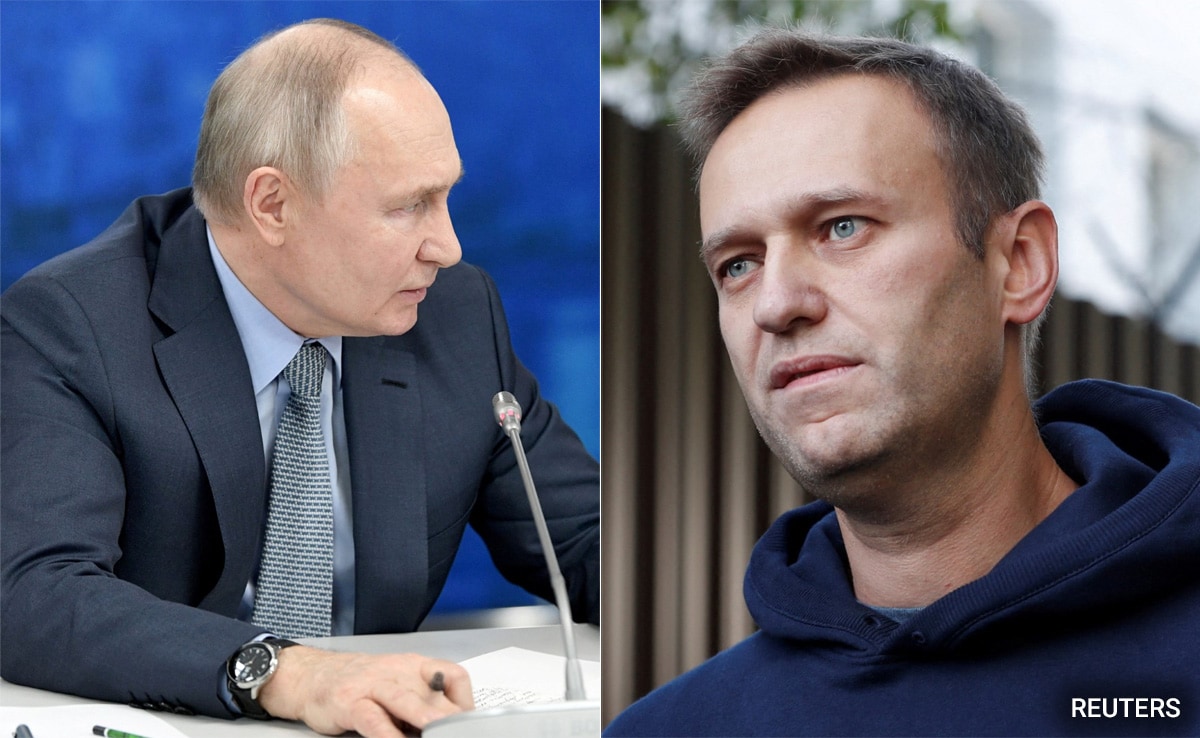
Alexey Navalny’s death removes the most prominent opponent of President Vladimir Putin, and sends another unmistakable signal of the dangers of standing up to the Russian leader’s increasingly repressive regime.

Ever since he rose to international prominence in massive pro-democracy protests in Russia in 2011-2012, it was evident to both the Kremlin and Putin’s opponents that the charismatic and witty Navalny had the potential to become a serious political challenge.

It was equally clear that Navalny was living on borrowed time after he returned to Russia in early 2021 and defied warnings of imprisonment.

Navalny’s death had been confirmed in an “official message” to his mother, said Kira Yarmysh, his spokesperson, on the X social media platform and in a video statement on Saturday.  

The fate of the opposition activist follows a fatal plane crash that killed Wagner mercenary group leader Yevgeny Prigozhin last year. Prigozhin, who became a hero to Russian nationalists for his part in fighting in Ukraine, was reported killed in August, exactly two months after leading a mutiny against the Defense Ministry’s leadership that spiraled into the biggest threat to Putin’s nearly quarter-century rule.  

The two incidents serve to remove figures who publicly opposed Putin, though from very different perspectives. That alone sends a powerful message to Russians and to the world as the second anniversary nears of Putin’s full-scale invasion of Ukraine that triggered a wave of sanctions and prompted the US and its allies to supply weaponry to Kyiv.

Navalny’s death was announced on the eve of official campaigning for the March 17 presidential election in which Putin is seeking a fifth term. Government leaders quickly accused the Kremlin and some directly blamed Putin, the former KGB officer who’s on course to equal Soviet tyrant Josef Stalin’s record term as ruler in Moscow.

Russian authorities have yet to disclose a cause of death, saying Navalny felt unwell after a walk and lost consciousness. Just a day earlier, he’d appeared on video from prison at a court hearing, joking cheerfully with officials.

Putin was so hostile to Navalny that he refused to use his name when reporters asked questions about the activist, a trend followed by Kremlin spokesperson Dmitry Peskov. Russian state television, which for years had banned any mention of Navalny, briefly reported his demise.

With relations between Russia and the West already largely severed over Putin’s attack on Ukraine on Feb. 24, 2022, it’s unclear if US and European condemnation of Navalny’s death will turn into more concrete penalties against the Kremlin.

Friends and allies of Navalny had worried constantly for his safety in prison as the Kremlin engaged in the biggest crackdown on dissent in decades to crush opposition to the war.

That concern intensified when Navalny, 47, was transferred to a remote Arctic prison colony, IK-3, in late December from a jail outside Moscow. In his last post on X, formerly Twitter, on Feb. 14, he reported that he’d been sentenced to 15 days in a punishment cell for the fourth time since he’d arrived there.

He’d been advocating from prison on social media for a nationwide protest during the presidential election, encouraging people to arrive at polling stations at exactly midday to vote against Putin. Navalny had also condemned the invasion of Ukraine.

His death is the latest in a string of incidents involving leading critics of the Kremlin.

Boris Nemtsov, a former deputy prime minister, was assassinated in Moscow within sight of the Kremlin walls in February 2015. Campaigning journalist Anna Politkovskaya was shot dead in the lift of her Moscow apartment building on Putin’s birthday in October 2006.

Vladimir Kara-Murza, another prominent opposition figure sentenced to 25 years for treason in April after he condemned the invasion of Ukraine, has accused the Russian authorities of twice poisoning him in the past.

In his early years at least, Navalny courted controversy by reaching out to nationalist elements who were hostile to the Kremlin as well as to foreigners and minorities. Navalny justified the ties by arguing he was trying to build a broad coalition against Putin, but many liberal activists remained suspicious of him.

Fearless and Internet-savvy, Navalny gained a huge online following in Russia with investigations exposing corruption at state companies and among top officials, using social media posts to bypass the blackout on state television. In January 2021, he caused a storm with a video exposing a lavish $1.3 billion Black Sea palace that he said was built for Putin.

The video, which has been viewed more than 129 million times on YouTube, was released after Navalny was detained when he returned to Russia from Germany, where he’d been treated for a nerve-agent poisoning in Siberia in 2020 that he and the West blamed on the Kremlin. Russia denied involvement.

Later that year, Russia outlawed Navalny’s nationwide network of campaign groups as “extremist,” forcing activists to disband and many to flee abroad. Navalny himself was suffering from worsening health in prison and looked gaunt at court hearings after spending 24 days on hunger strike to demand better medical care.

The fate of the opposition leader and his movement, made up of mostly young professionals, contrasted starkly with the early optimism of the massive protests in 2011-2012 against Putin’s return to the presidency in place of Dmitry Medvedev. The Kremlin crackdown that had followed failed to dim their determination.

When Navalny was unexpectedly allowed to contest Moscow mayoral elections in September 2013, following widespread protests in support of his release from detention, he came within a whisker of forcing a run-off against Sergei Sobyanin, the incumbent Putin ally. He got 27% against 51% for Sobyanin.

That was the last time Navalny was permitted to run. When he mounted a campaign to challenge Putin in the 2018 presidential election, officials barred him from the ballot because of a fraud conviction that Navalny, the US, and the European Union had criticized as politically motivated.

“Navalny was essentially killed when he was arrested years ago,” said Thad Troy, managing director of Crumpton Global and a former CIA officer in Moscow. “It’s an inevitable next step for Putin to strengthen his hold over Russia.”

In prison, Navalny continued his defiance of Putin. He also disclosed that he’d developed a belief in God after years of atheism, surprising many of his supporters.

“Our country is built on injustice. But tens of millions of people want the truth,” he told a court during a failed 2021 appeal hearing. “And sooner or later they’ll get it.”

(Except for the headline, this story has not been edited by NDTV staff and is published from a syndicated feed.)

Read full article
Link copied!