Live · Global · Independent
Live Feeds
PinkVilla
Forbes
NDTV
Hindustan Times
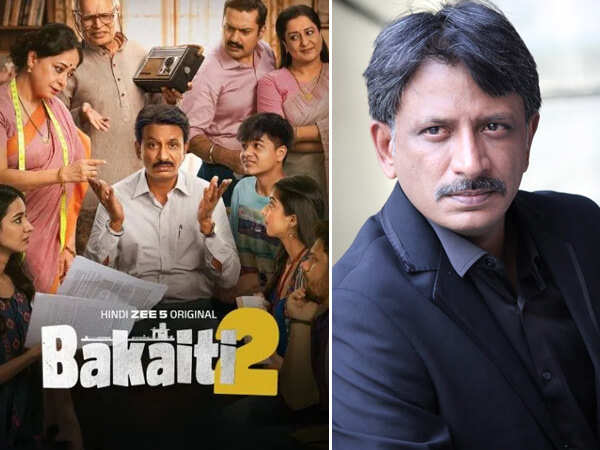
Exclusive: Rajesh Tailang on Bakaiti 2 Changing Ideas of Fatherhood and More
onmynews.com

Exclusive: Rajesh Tailang on Bakaiti 2 Changing Ideas of Fatherhood and More

With Bakaiti 2 out, Rajesh Tailang returns to a family drama that finds its humour and conflict in the everyday lives of a middle-class household. As Sanjay Kataria, he plays a father whose sense of responsibility often comes with an instinct to keep his vulnerabilities hidden. The character also offers an interesting contrast to Tailang’s own experience of fatherhood.
In this conversation with Filmfare, the actor discusses the nuances of playing Sanjay, his long-standing working relationship with co-star Sheeba Chaddha, and why stories centred on families continue to find an audience. He also reflects on the changes he has witnessed in the film industry over the years and discusses taking the Mirzapur universe to the big screen.
What did you personally relate to about the Kataria family? How similar or different are you from Sanjay?
When you read the script or watch the show, you feel that everyone is a part of your family. If not your family, you’ll find someone like them in your neighbourhood. That makes the show very relatable, and it was a lot of fun to work on. At the same time, there is emotion and nuance to the story. I have a lot in common with Sanjay, but there are differences, too. I’m not like him in many ways. I’m more of a friend to my child than Sanjay is to his.
Rajesh Tailang
One of the things explored this season is Sanjay’s tendency to see himself as the patriarch of the family. He doesn’t want to share his vulnerabilities because he feels it might diminish him. This season, he realises that expressing emotions is not a weakness; it can actually be a strength. Personally, I don’t think that way. I’m quite comfortable being vulnerable at home.
Do you think the idea of fatherhood has changed across generations?

Yes. I see it changing with every generation, and children are changing, too. They are more vocal and quick to point out hypocrisy. But my father was also a friend to me. I’m giving my son what I received from my father. He treated me the way I try to treat my son. However, I’ve seen that this wasn’t the case in many families, and I can see things changing.
How has your working relationship with Sheeba Chaddha evolved?
We’ve been working together for almost 10 years. We’ve explored different kinds of characters and played husband and wife in three different series. I know her both as a person and as an artist. There are many things we don’t need to say to each other.
At the same time, exploring something new is exciting and unpredictable, especially when you’re working with a good actor like Sheeba. You never know exactly how she will approach a scene, and she doesn’t have to approach it the same way she did something earlier. That freshness is important. It’s not good for an actor to become too predictable. We try to keep exploring the dynamics of interpersonal relationships.
Rajesh Tailang
Do you think OTT has created more room for stories like Bakaiti, which focus on ordinary middle-class families and their everyday experiences?
Definitely. When OTT platforms first started becoming popular, there were shows that were very over the top. There were also violent shows and crime thrillers, some of which I have worked on myself.
Earlier, OTT was more of an individual viewing experience. You would watch a show on your own. But with easier access to the internet and the growing presence of smart TVs in our homes, OTT has also become a family viewing experience. The content has changed as a result. Shows like Bakaiti have found space because people can watch them together as a family.

You’ve witnessed the industry evolve from television and films to OTT. As an actor, what is the biggest change you’ve experienced since you started out?

I started with Shanti – Ek Ghar Ki Kahani (1994), which was one of the first daily soaps on Indian television. In the early days, I also worked on a few films with people such as Govind Nihalani and Ketan Mehta. Films were still being shot on celluloid then, which made for a very different experience.

There was always the concern of wasting footage, so things were more carefully planned. You couldn’t keep doing the same shot over and over again. With digital filmmaking, you can shoot from different angles and repeat takes more easily. That has made things more comfortable for actors. Earlier, you had to get the shot right quickly. There would be more rehearsals but fewer final takes. Now, there may be fewer rehearsals and more takes.
Another major change is the length of shooting shifts. Earlier, shifts were generally eight hours long; now, they can stretch to 12 hours. There are also advantages to the industry becoming more corporate. Many processes are better streamlined, sets are more professional, and things have improved in terms of scheduling and payments. Women’s participation in the overall filmmaking process has also increased significantly.
Your recent film, Mirzapur: The Movie, also became a hit. When you began working on it, did you anticipate this response?

Everyone was nervous because it was the first experiment of its kind. No series had previously been adapted into a film in this way. There were positives and negatives to consider. On the one hand, audiences already knew the characters and the world, which was an advantage. On the other hand, they might wonder what was new about it.
Everyone was a little apprehensive, but I think the approach was to make something honestly and then see what happened. We all tried to remain honest to our characters.
View this post on Instagram

A post shared by Zee 5 (@zee5)

What’s next for you?

I have Carnaame – Badla Gear Palti Kismat in the pipeline, as well as Paan Parda Zarda.

Bakaita season 2 is streaming on Zee 5.
Read full article
Anirudh Ravichander and Kavya Maranâs Wedding Reception on November 21
onmynews.com

Anirudh Ravichander and Kavya Maranâs Wedding Reception on November 21

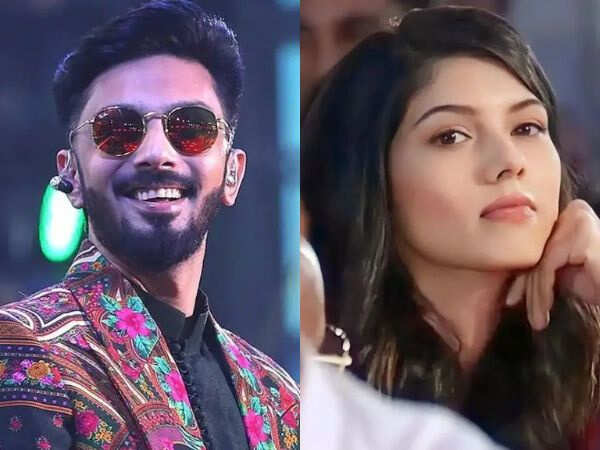
Music composer Anirudh Ravichander and Sunrisers Hyderabad CEO Kavya Maran have been at the centre of relationship and wedding speculation for months. Now, a post from the Telangana Chief Minister’s Office has confirmed that their wedding reception is scheduled to take place in Chennai on November 21, 2026. The announcement has added to the excitement surrounding the reported wedding of two prominent names from the worlds of cinema and cricket.

According to media reports, the couple are expected to have an intimate destination wedding in Greece on November 11, followed by the Chennai reception. However, details of the wedding ceremony itself have not been officially announced by the couple.

Anirudh

Telangana CMO Confirms Reception Date

The latest update emerged after Sun Group chairman Kalanithi Maran and his wife, Kavery Maran, met Telangana Chief Minister A. Revanth Reddy at his residence in Jubilee Hills and invited him to their daughter’s wedding reception.

A post shared by the official Telangana CMO account on X read, “Sun Group Chairman Shri Kalanithi Maran and his wife, Smt. Kavery Maran, met Hon’ble Chief Minister Shri A. Revanth Reddy at his residence in Jubilee Hills and invited him to the wedding reception of their daughter, Kavya Maran. The wedding reception of Kavya Maran and Anirudh Ravichander is scheduled to be held in Chennai on November 21.”

The announcement has brought a fresh development to months of speculation surrounding the pair. While the reception date has now been confirmed through the official post, further details about the wedding ceremony and celebrations remain awaited.

Anirudh

A High-Profile Guest List

The reception is expected to bring together prominent personalities from the worlds of South Indian cinema, business, politics and cricket. Reports have suggested that the celebrations could feature several high-profile guests, although the complete guest list has not been officially disclosed.

The reported union brings together two influential spheres of South Indian popular culture. Anirudh has established himself as one of the leading composers in Indian cinema, while Kavya is closely associated with the Sun Group and its IPL franchise, Sunrisers Hyderabad.

With the Chennai reception date now confirmed, anticipation surrounding the celebrations is likely to grow in the coming weeks.

Also read: Anirudh Ravichander-Kavya Maran Wedding Buzz: Greece Plans or Just Gossip?

Read full article
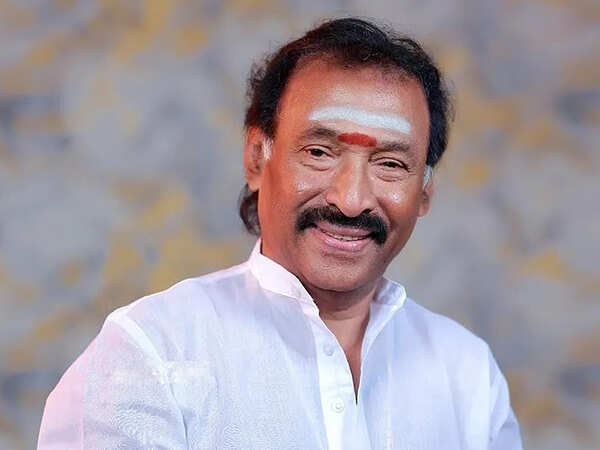
Veteran Tamil Composer Deva Known As âThenisai Thendralâ Passes Away At 75
onmynews.com

Veteran Tamil Composer Deva Known As âThenisai Thendralâ Passes Away At 75

Veteran Tamil film composer and singer Deva, fondly known as ‘Thenisai Thendral’, passed away in Chennai on Saturday, October 17. He was 75. According to reports, the musician was admitted to Surya Hospital at around 8.30 am, where he died suddenly. Further information about the circumstances surrounding his death is awaited.

One of the prominent names in Tamil film music from the late 1980s onwards, Deva carved a distinct identity with his infectious tunes, folk-inspired arrangements and ability to blend Chennai’s gaana music with the demands of mainstream cinema. His compositions became an integral part of several popular films through the 1990s, a period during which Tamil film soundtracks enjoyed enormous cultural influence.

Born Devanesan Chokkalingam on November 20, 1950, the composer built a career that extended across Tamil, Telugu, Kannada and Malayalam cinema. His music encompassed a variety of genres, from energetic dance numbers and street-inspired rhythms to romantic melodies and devotional compositions. While his songs often reflected the vibrant musical traditions of Chennai, his versatility allowed him to work across different cinematic settings.

Veteran Tamil Composer Deva, Known As

Two decades of memorable Tamil film soundtracks

Deva’s rise in Tamil cinema coincided with a period of significant change in the industry’s musical landscape. His work found favour with audiences through its accessible melodies, catchy rhythms and an instinct for creating songs that complemented the personalities of the films’ leading actors.

Among his best-known soundtracks are Annamalai, Baashha, Aasai, Kadhal Kottai, Nerrukku Ner, Ninaithen Vandhai, Priyamudan, Vaalee and Kushi. These films, many of which went on to enjoy considerable popularity, featured songs that became closely associated with their respective stars and stories. His compositions for Rajinikanth’s Annamalai and Baashha, in particular, remain part of the musical memory of an important era in Tamil commercial cinema.

His collaborations with filmmakers and leading actors helped establish him as a dependable composer during a prolific phase of his career. Deva understood the importance of a film song as both a narrative device and an independent source of entertainment. His music could heighten a dramatic moment, lend momentum to a star’s screen presence or provide audiences with a melody that stayed with them long after they left the theatre.

Although he was widely associated with high-energy numbers, Deva’s repertoire was not confined to a single musical idiom. His romantic songs demonstrated a softer sensibility, while his devotional work reflected another dimension of his musical interests. This range allowed him to serve films with different moods and audiences without losing the distinctive character of his compositions.
 

Veteran Tamil Composer Deva, Known As

Taking Chennai’s gaana music to the mainstream

One of Deva’s most significant contributions was his role in bringing Chennai’s gaana tradition to a wider audience through Tamil film music. Rooted in the everyday experiences and cultural life of the city’s working-class communities, gaana is known for its earthy rhythms, colloquial lyrics and direct, expressive quality. Deva incorporated elements of this musical tradition into commercial soundtracks, helping establish its place within mainstream Tamil cinema.

His approach gave popular film music a recognisable local flavour. Rather than treating folk influences as incidental additions, he made their rhythms and energy central to several of his compositions. The result was music that resonated with audiences across different sections of society while retaining a strong connection to the city that inspired it.

Veteran Tamil Composer Deva, Known As

Deva’s contributions received formal recognition as well. He was honoured with the Tamil Nadu government’s Kalaimamani award and received the Tamil Nadu State Film Award for Best Music Director for Aasai, further cementing his standing in the industry.
His musical legacy also continued through his family. His son, Srikanth Deva, established himself as a film composer in his own right, while his brothers Sabesh and Murali were also associated with the film music industry.

With Deva’s passing, Tamil cinema loses a composer whose work helped define the sound of popular entertainment across a significant period. His songs remain a testament to his ability to bring together melody, rhythm and the unmistakable spirit of Chennai. Further details about his final rites and tributes from members of the film fraternity are awaited.
 

Read full article
…
Link copied!