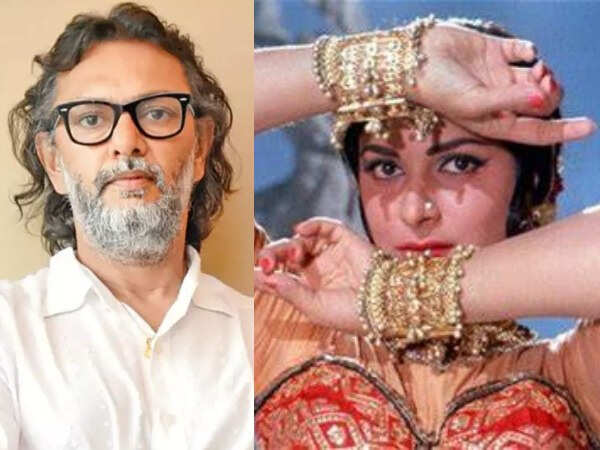
Vijay Anand’s Guide (1965) is a film that shattered the pride of men and the prejudice around women, wiping off decades of dust and discrimination. The gender-bender narrative was dicey given male sensibilities predominantly nurtured on misogyny. ‘Glamour, grace, gumption’… that’s how filmmaker Rakeysh Omprakash Mehra, who cast Waheeda Rehman in his Rang De Basanti (2005) and Delhi-6 (2009), describes the legendary actor in his memoir Stranger In The Mirror. There couldn’t be a better summation of her role as rebel Rosie in Navketan Films’ Guide as well.
Waheeda plays the anti-heroine who turned iconic. A woman, who dares to walk out of a sham of a marriage. Bells on her toes and dreams in her eyes, she dances to destiny’s design. She chooses to live-in with mentor Raju (Dev Anand) rather than seek the sanction of ‘marriage’. Together they experience the highs of passion and fame. Till one day Raju’s con ruptures the relationship. The estranged lovers do meet again… but by then their paths have altered.
Here, Rakeysh Omprakash Mehra revisits the tale of love and liberation, remorse and redemption… in his own words…
As a sweet accident of destiny, I moved from making ad films to feature films in the 2000s. My first feature film was Aks (2001) with Amitabh Bachchanji and Manoj Bajpayee. A pre-release screening was organised at Excelsior theatre in Mumbai. I was keen to invite only one person – Goldie sir (late filmmaker Vijay Anand). I went over to his house and told him, “You’re my inspiration. I want you to be my guest of honour.” He sweetly obliged.
So, I watched my first film with Goldie sir on one side and Amitji on the other. It’s a moment I’ll always cherish. Aks didn’t do well at the box-office. To that Goldie sir simply said, “Guide didn’t go down well at the box-office either though everyone acknowledged it.” I was amazed at his attitude. Even for me, the first concern has never been the box-office. It’s to tell a story in the best way possible.
There were great directors between the ’50s –’60s, including Guru Dutt (Pyaasa), Bimal Roy (Do Bigha Zameen and Madhumati), Raj Kapoor (Shree 420, Jagte Raho), K. Asif (Mughal-E-Azam), V Shantaram (Do Aankhen Barah Haath)… But it happens once in a while that someone comes and takes the industry by storm. That’s what Vijay Anand did with Guide. He reshaped Hindi cinema. He followed it with Teesri Manzil (1966), one of the greatest suspense thrillers. I believe it to be Shammi Kapoor’s best performance. How well Goldie sir balanced Shammiji’s persona with his character. Next was Jewel Thief (1967), a crazy blockbuster. Johny Mera Naam (1970) made history. It’s Dev Anand saab’s greatest hit ever.
The art of storytelling was what Goldie sir pursued. The commerce followed. He had incredible music in all his films. He worked with music directors including SD Burman, RD Burman, Kalyanji Anandji…and lyricists Shailendra, Majrooh Sultanpuri, Rajendra Krishan… Their energies were different. But that didn’t matter. You could sense Vijay Anand’s soul in his films. I can instantly recognise a Vijay Anand frame. Just as the artist signs his painting, Goldie sir’s signature was evident in his body of work.

Vijay Anand never compromised though the stakes are high in showbiz. A filmmaker works with high calibre artistes – music directors, writers, lyricists, cameramen. As the captain of the ship, he guided them all. In fact, he taught us that you could combine commercial pulp with meaningful cinema. That’s his achievement. Great filmmakers across the globe have said that movie making is modern-day art form. It’s a combination of several arts – acting, photography, music writing, art direction, fashion… and above all human emotions, which you connect with the emotions of the audience. Guide has all of this.
I can’t think of any other novel (Guide was based on R K Narayan’s similarly titled Sahitya Akademi winning novel, while its English version was written by Pearl S Buck and directed by Tad Danielewski) being adapted so beautifully. Apparently, when Dev saab offered it to Goldie sir, it just took seven days for him to come back with his ‘interpretation’ and how he was going to make the film.
With the advent of the VHS, the first video cassette I acquired was that of Guide. The film had left me in sheer wonderment. Around me I saw a man’s world. But in Guide, it was the woman (Waheeda Rehman as Rosie), who helmed the narrative. The man (Dev Anand as tourist guide Raju) followed it only to find a greater meaning, a greater purpose in life.
What made the ‘dicey’ subject work of rebellion work? On a philosophical level it was the director’s fearlessness. Secondly, it was belief in his intuition. It was dubbed a death wish for Waheedaji to pick up Guide. She said, ‘I was told that I wouldn’t be offered any roles after Guide. Aapko sirf dancing aur vamp ka role milega.’ There was fearlessness on her part too.
As a producer, Dev Anand was fearless to make the film with a debutant director. Goldie sir understood that the subject was against family values. Indian society was still so conservative. Especially, when it came to a woman breaking shackles. Todh ke bandhan baandhe payal… (I broke the bondage only to tie anklets)… sums up it all.
Initially, Rosie wants a life of a normal woman. She wants to have babies. But her archaeologist husband Marco (Kishore Sahu) is impotent. That’s a naked truth, which she accepts. Yet he cheats on her. She walks out because he doesn’t value her. That must have been inspiring for many women in that era.
The film is full of strong moments. Like when Rosie walks out on Marco. When Raju takes her out into the world and presents her talent… the rise and rise of Rosie begins. How he continues to remain in the shadow is again a great moment. The song Kya se kya hogaya, bewafa tere pyaar mein… is a seminal picturisation. The lover doesn’t understand what’s hit him. It’s an ‘open wound’ kind of situation. The audience can sense the pathos in their lives.
Another moment that stands out is when towards the end when Raju undertakes the fast for the larger good and has a conversation with his alter ego. The spiritual ego speaks to guide Raju about merging with a higher reality. It shatters the myth of the invincible Indian hero. It was brave of Goldie sir to envision that.
Guide works even though it doesn’t have a happy ending. For me, separation is the purest form of love. The beginning of the end is when you give it a social status – marriage! Which we ironically term ‘happy ending’. Guide is food for the soul. Here, the love sustains. Rosie sheds off her stardom, her finery, her jewellery… she walks barefoot to reach the man she loves. And, for Raju what better than dying in the arms of his beloved. Unfulfilled love has far greater value. In that pain he finds a higher meaning in life and also finds Rosie again.
You have to see Raju’s eyes in the last five minutes when he looks at Rosie. There’s so much respect and honour for this woman. In Rosie’s eyes, there’s only love for this man. Love goes beyond life and death. You feel the sadness of separation. Tragedy is a powerful emotion. We grow with tragedy not happy endings.
The Hindi version of Guide was our official entry for the Best Foreign Language Film at the 38th Academy Awards. But it did not receive a nomination. Had the world understood the Indian narrative at that point in time; Guide would have picked up the Oscar. I guess they had no understanding of Indian social culture or what women in South Asia go through. They saw it from the Western lens.
Back home, Guide received nine nominations and won seven Filmfare Awards (Best Film, Best Director, Best Actor, Best Actress, Best Story for R.K.Naryan, Best Dialogue for Vijay Anand and Best Cinematography for Fali Mistry), the epitome of prestige and recognition.
To sum it up, Guide is about the liberation of the female soul. Shailendra’s lyrics Koi na roko dil ki udaan ko, dil woh chala… aaj phir jeene tamanna hai, aaj phir marne ka irada… define the film. ‘‘I am limitless. I will live on my own terms or I’d rather die’ is what Rosie believes.
The song Masakali (means ‘pigeon’ in Hindi, it embodies the spirit of freedom) from my Delhi-6 is an ode to Aaj phir jeene ki tamanna… AR Rahman captured this mood for me in the song written by Prasoon Joshi. Where again the girl, Bittu Sharma (Sonam Kapoor), has dreams and wants to fly. But she’s an old Delhi girl, bound by shackles, a Chandni Chowk girl, who wants to make it in showbiz. She wears salwar-kameez when she leaves home and changes into jeans at the metro station. So yes, Goldie sir did inspire me in the way I told my story.
A true piece of art is rarely understood initially. Over time, it becomes precious. Good movies are for perpetuity. Not for a Friday. That’s the obligation the filmmaker has to cinema, to his cast and crew, his audience and to himself. Guide has given birth to a thousand Guides by different names. Vijay Anand has inspired all of us to look beyond the Friday butchering night.