Live · Global · Independent
Live Feeds
PinkVilla
Forbes
NDTV
Hindustan Times
Womens Day: Misogyny Versus Microfeminism in Bollywood Movies Like Sholay Laapataa Ladies and More
onmynews.com

Womens Day: Misogyny Versus Microfeminism in Bollywood Movies Like Sholay Laapataa Ladies and More

What does a feminist look like? When you search it on the internet, first few visuals in the image section would be of women across ages, class and race screaming slogans, carrying placards and demanding equality in protests. Ever since the 19th century, feminist movements have fought for equal pay, reproductive rights, right to vote, women’s suffrage, addressing gender disparities and more. While these actions have demanded physical effort and decades of patience, one that is excruciatingly painful and does not guarantee solutions, there is another bandwagon of quiet rebellion arising on the internet known as microfeminism.

This viral trend, that is slowly gaining momentum online, is a trigger of microaggressions and sexism that women face on a daily basis. For instance, being overlooked in professional setups, being mansplained, assuming a police officer or the CEO is a man, watching the waiter present the bill to the man at the restaurant, bifurcation of drinks, clothes and emotions as girly and manly, referring to God as “He”, frowning upon a man who dresses up in pink and a host of others. In quiet rebellion against the likes of these notions’ women hold their ground and employ subtle objection in their everyday lives. And this practice is known as microfeminism.

Microfeminist acts, in such cases would involve, clapping back at this inherited misogynistic mindset like deliberately using female pronouns when talking about hierarchical positions like police officers, lawyers or entrepreneurs and complementing a man for wearing whatever colour he pleases and whatever emotion he shows without associating gendered connotations. You would find multiple reels online with supers that read “Tell me your favourite acts of microfeminism”. And the comments would follow saying:

“I assume, when talking to a man about sports, that he’s talking about women’s sports and make him clarify”
“When a man says he is babysitting his children I make sure to correct it to parenting”.

Safe to say, slowly but steadily this movement is brewing on social media as a nuanced expression of feminism.

The current trend in Bollywood relies heavily on hyper masculine or Toxic (pun intended) masculine narratives. Male protagonists with scathing egos, are in a battle to prove who is the “big daddy” and who is more alpha. Amidst this phallocentric cinema, there exist movies and characters who embody microfeminism at its best.

sholay

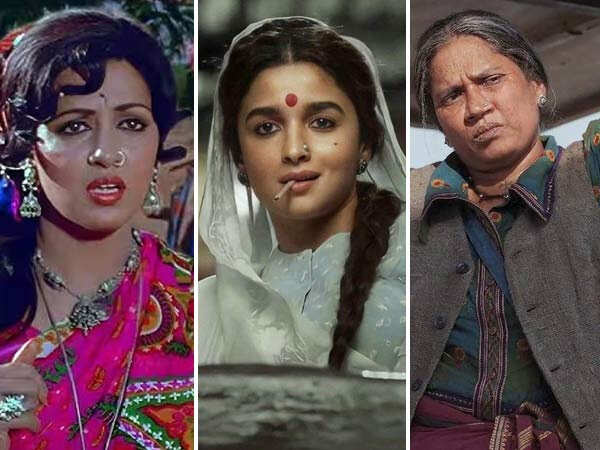
In Sholay (1975), Basanti played by the evergreen Hema Malini is one of the most fitting characters in this essence. Long before the “strong independent woman” was a viral trope, Basanti was already living it. She drove her Tonga, a role carried mostly by men, through the streets of Ramgarh, indifferent to the societal norms. She took the road not taken, literally and figuratively. In one of the film’s key scenes when we meet Basanti, she addresses taunts that she often receives from the villagers. “Log kehte hain Basanti, ladki hokar tanga chalati ho?” She responds, “Dhanno ghodi hokar tanga kheench sakti hai toh Basanti ladki hokar kyon nahi chala sakti?” It’s subtle yet loud enough to make you realize that Basanti is not just a vivacious village belle. She represents female agency and mobility with understated impact.

sholay

Another sharp jab at the patriarchy mind comes in Gangubai Kathiawadi (2022). Gangu (Alia Bhatt) claims her identity proudly as a prostitute when she goes to meet the principal to seek admission for her daughters. Mother’s name, Gangubai Kathaiwadi, she asks him to write on the admission form. The principal asks for father’s name, with cold deliberation. “Aur Baap ka naam kya likhe?” He questions. “Maa ka naam kaafi nahi hain na?” Gangu fires back. Would this question be raised if the woman was divorced or widowed? Perhaps not.

This situation mirrors many inherited gendered practices the society follows to marginalize women of lower class. Microfeminism tries to defy such an inherited patriarchal mindset with small rebellions. Gangu doesn’t get mad or scream at the principal for throwing an obnoxious question at her. Instead, she simply sits back and cheekily answers saying Dev Anand is the father’s name, subjugating the snobbish principal with ease. This is what microfeminism essentially advocates. To hold your stance with such a wit and ease that makes the misogynist crumble with frustration.

 sholay

Manju Maai (Chhaya Kadam) from Laapataa Ladies (2023) also takes up the gauntlet of cleansing this inherited social conditioning. Manju, who runs a snacks stall at the railway station, exposes the tenets of the “fraud scheme” rigorously that pedestalizes the man’s world. “Dekhne jaye toh auratoon ko mardoon ki kouno khaas jarurat waise hai nahi, par ee baat agar aurtoon ko pata chal gayi, toh marad bichara kya baajana bajayega?” (If you think about it, women don’t really need men at all. But if all women figured this out, men would be screwed, wouldn’t they?” Manju Maai tells Phool (Nitanshi Goel). Microfeminism aims at dismantling biases exactly like this. Not just by screaming and suffering, but in everyday conversations and practices that will hopefully instigate a change one day.

Beyond these everyday acts, Hindi cinema has also showcased characters embodying feminism at its finest. From Deepika Padukone in Piku to Taapsee Pannu in Pink, Kangana Ranaut in Queen, Vidya Balan in Kahaani, Sridevi in English Vinglish, and even male allies like Aamir Khan in Dangal, Shah Rukh Khan in Chak De! India, and Amitabh Bachchan in Pink, have brought to light the resilient and courageous stories of women.

All these narratives aim at challenging the ingrained prejudices for women to feel seen, heard and valued. While an unwritten societal manual still dictates the roles of women as caregivers and men as providers, it is very important to erase and rewrite these rules. And microfeminism, in today’s time, is one important step in doing the same.
ALso Read: Sholay’s 4K Restoration to Premiere at TIFF 2025

Read full article
Exclusive: Shilpa Shirodkar on Battling Depression Bouncing Back and Reinventing Herself
onmynews.com

Exclusive: Shilpa Shirodkar on Battling Depression Bouncing Back and Reinventing Herself

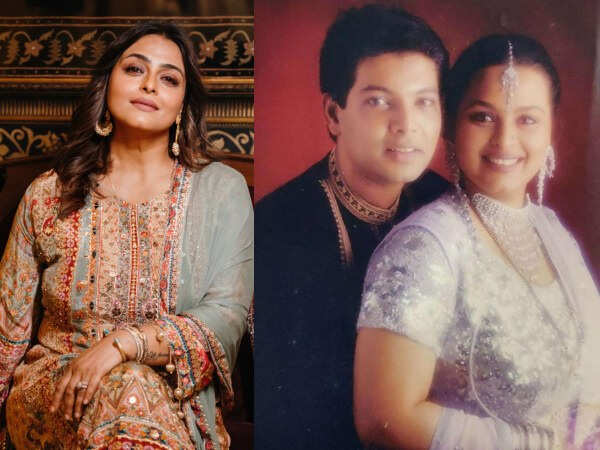
Shilpa Shirodkar’s graph has alternated between troughs and triumphs. The ‘jinxed’ tag being thrust on her even before her debut, the teen turned it around in a sensuous sweep. If Ramesh Sippy’s Bhrashtachar banked on her ‘sightless’ vulnerability, Rakesh Roshan’s Kishen Kanhaiya cashed in on her copious curves. Hum, Khuda Gawah, Aankhen, Bewafa Sanam, Mrityudand… Shilpa was the nymphet of the ’90s till she gave it all up to marry UK-based banker Aparesh Ranjit. Leaving the trappings of stardom behind, she explored new worlds, new possibilities. While she became a professional hairdresser in New Zealand and later took up a corporate job as a credit controller, post the birth of daughter Anoushka (Ranjit) the family moved to London.
shilpa shirodkar

What shook her drastically was the demise of her parents, dad Nitin Shirodkar and mom Vanita Shirodkar, between 2007- 2008. Tragically, both succumbed to cancer. Dubbing it as ‘the darkest phase’ in her life, she returned to Mumbai in 2010 to be close to sister/actor Namrata Shirodkar. Anti-depression treatments and spiritual therapies later, Shilpa at 40 went on to do television shows Ek Mutthi Aasman, Silsila Pyar Ka… It was post the pandemic in 2024 that Shilpa consumed by loneliness returned to India for good. If participating in Bigg Boss 18 rebooted her personality, doing films relit her love for the camera. She’s ecstatic celebrating her homecoming – the emotional baggage behind her, the panorama ahead full of promises…  

SHILPA SHIRODKAR’S STORY IN HER OWN WORDS:
JINX VS JUBILEES

Ramesh Sippy’s Bhrashtachar (1989) was my debut. But before that some of my projects got shelved. Supposed to be a big launch, Souten Ki Beti, didn’t work out. The film I was supposed to do with Boney Kapoorji. That also didn’t happen. I was dubbed ‘jinxed’ but I had the support of an amazing family. My sister Namrata (Shirodkar, wife/actor of South superstar Mahesh Babu) and I wanted to make a name for ourselves.
Then, Rikku Rakesh Nathji (producer and ex-manager of Madhuri Dixit), introduced me to Mithun Dada (Chakraborty). I owe a lot to Dada. He saw my pictures and spoke about me to Ramesh Sippyji. That’s how I was signed to play a blind girl in Bhrashtachar, which featured Dada and Rekhaji. The ‘rape’ scene was sensitively shot (Anupam Kher plays a politician, who rapes Shilpa’s character and has her killed). It was not sensational. I went on to do nine films with Dada (including Trinetra, Hitler, Swarg Yahan Narak Yahan, Jeevan Ki Shatranj, Rangbaaz between 1991 – 1996).
shilpa shirodkar

Another significant film was Kishen Kanhaiya (1990). To be noticed in a Madhuri Dixit-Anil Kapoor film was an achievement for me. I was nervous about shooting the ‘waterfall’ song – Radha bina hai Kishen akela. The thought that I was working with Anil Kapoor and Gudduji (director Rakesh Roshan) on a huge project was as overwhelming. Dance master Kamalji was a strict professional. During the first scene itself, I slipped on the rocks and my foot was bruised. They put some spirit, made me feel comfortable and we continued shooting. There was no time to sulk. We completed the song in four days.

‘B’IG ENCOUNTER

I was indeed fortunate to have worked with Amitji (Bachchan) in Mukul Anand’s Hum (1991) and later Khuda Gawah (1992) I was his crazy fan. I adored him. He was my idol, my hero. I’d no idea that one day I’d be working with him. I met Amitji for the first time while shooting in Ooty for Hum. I was rehearsing a shot when there was a buzz. Suddenly, heads turned around as he walked in. I couldn’t believe I was seeing ‘the love of my life’ for the first time. He walked in wearing an electric blue trench coat and huge sunglasses… the tallest man in the corridor. I froze. He came towards us. He shook hands with me saying, ‘I am Amitabh Bachchan!’ My hands turned cold. Even now as I recall the moment I get goosebumps.

He sat and watched the shooting. I was finding it difficult to do my steps. Mukulji told Amitji she’s ‘nervous’. Amitji calmly said, “Don’t be nervous. Just do your work.” Then on, I went about ‘doing my work’, giving retakes and not being embarrassed about it. I learnt the value of time and work from Amitji. Of being kind and humble even in that position.

Through the ’90s, I did a medley of films including Aankhen (Govinda), Bandish (Jackie Shroff), Do Matwale (Sanjay Dutt), Yodha (Sunny Deol), Gopi Kishan (Suniel Shetty), Bewafa Sanam (Krishan Kumar), Mrityudand  (Ayub Khan)… M.F.Husain’s  Gaja Gamini in 2000 was one of my last films before I got married to Aparesh Ranjit (UK-based banker) in  the same year.
MARRIAGE & ME

I was 27 when I met Aparesh. Within a day and a half of meeting him, I decided to settle down with him. His honesty was refreshing. He was not overwhelmed by who I was. He had no insecurities regarding me. He came across as a simple guy. I am a simple person too. I believed getting married was the right thing. Recently, we celebrated our 25th wedding anniversary.
shilpa shirodkar
I’ve travelled the world with Aparesh. We’ve lived in different countries. We started off with the Netherlands for a year. Then we lived in New Zealand for three years. There I did a hairdressing course from Winters Hairdressing Academy just to keep myself busy. I became a professional hairdresser. Later, I took up a corporate job and worked with Dun & Bradstreet as a credit controller for more than two years. I quit the job when I became pregnant. Our daughter, Anoushka (Ranjit) was born in 2003 in New Zealand. Then we moved to London. We stayed there for seven years.
GRIEF-STRUCK

Dad (Nitin Shirodkar) passed away in 2007 and Mom (Vanita Shirodkar) in 2008. It was shocking that they both passed away from the same illness – cancer. It was the darkest phase in my life. My husband Aparesh, my sister Namrata, my daughter Anoushka… all were there for me. But I still felt alone. I was so emotionally upset that I’d blow everything out of proportion and make a big deal of it. I couldn’t understand why I was doing that because basically I’m a happy person. I knew something was not right. I was kept on antidepressants.
In 2010 I wanted to leave London. My husband was doing extremely well there. But he realised that I needed to come back to India to heal myself. I needed to be closer to Namrata. I returned to India. We even started a production house.
Here, I also got inclined towards spirituality. I started reading about life after death. I believed my parents were around me and watching over me. Choreographer Shiamak Davar, who’s also spiritually inclined, helped me during the time I was grieving. He said, “Don’t run away from the pain. Eventually, you’ll learn to deal with it and the pain will become part of your life.”
In Mumbai, I also met an amazing hypnotherapist Vikram Reddy. The four sessions that I did with him gave me a new perspective. I started dealing with the triggers that disturbed me. It helped me go deep within me. I was able to deal with my sorrow. Thankfully, it’s all over and in the past.
BACK TO WORK
In 2013, I resumed work with the TV series Ek Mutthi Aasmaan. In fact, I turned 40 on the sets of Ek Mutthi… Silsila Pyar Ka (2016) and Savitri Devi College & Hospital (2017) are my other shows. It was a golden period because television is a women-centric space. To be getting that love and respect at my age is rare. I also featured in the film Guns of Banaras (the 2020 film re-launched Rakesh Rikku Nath’s son Karan Nath).
After working for four years on television, my husband got an opportunity to go to Dubai. Anoushka was only 13 at that time. I needed to be with her. I moved to Dubai with my family. Post the pandemic, we moved back to London. When I turned 50, I told my husband I didn’t want to be in London anymore because I felt lonely. I’m a people’s person. I love people. I value their presence in my life. My husband understood me. He’s always been supportive. They say, ‘Behind every successful man there’s a woman.’ I’d say behind every successful woman there’s an understanding man.
shilpa shirodkar

In 2024, I took a one-way ticket to India. I came back home. I was actually in Hyderabad with Namrata, when I got a call to participate in the show Bigg Boss 18. When I joined the house in October 2024, it was alleged that Namrata was upset. In fact, I signed the show while I was with her. Namrata and I are extremely close. She means everything to me. There’s nothing that we don’t share or discuss. She’s taken over my parents’ position in my life. I don’t know what I’d have done without her.

Anyway, I came out of the Bigg Boss house in January 2025. My world had changed. The house taught me patience. It taught me not to take decisions in anger. Because anything that is done or said in rage can never be reversed. You’ll end up hurting someone, because you’re hurting yourself. Also, I’ve become more vocal. I say what needs to be said. Currently, I’m shooting for Prerna Arora’s Telugu film Jata Dhara. I’ve also made my OTT debut with Shankar– The Revolutionary Man, a biopic on the life of saint/philosopher Adi Shankaracharya.
shilpa shirodkar

HOME AGAIN

My husband is back in London pursuing his career. We keep meeting each other. Recently, we went for a vacation. Anoushka has graduated in International Relations and History. She’s currently pursuing a law degree in London. Emotionally and physically I haven’t felt better. People compliment me on my weight loss, which began in the Bigg Boss house itself. I guess the choices there are limited. It’s about being careful about what you eat and how much you eat… In the real world we have so many options. Yeh bhi khayenge, woh bhi khayenge!
I’m lovin’ the new me. More than looking slim or pretty, it’s about being happy. I practise yoga. I’m careful about what I eat. I didn’t know I could look like this. So I want to maintain it. Many years ago I was rejected for Chaiya Chaiya (the song in the 1998 film Dil Se was choreographed by Farah Khan) because they found me ‘fat’. It’s okay because they considered it from the project’s point of view. I didn’t have a thyroid disorder. I just loved to eat. Obviously, I felt bad losing it because more than the song, I wanted to work with Mani Ratnam sir.
shilpa shirodkar

In retrospect, there’s nothing that I’d like to redo about my life. We should own it all however things might have been. Challenges shape you. This is the third time I’ve got an opportunity to come back and do what I love. I’m God’s favourite child. He gives me everything at the right time.

Also Read: Exclusive: When Janhvi Kapoor Spoke About Expressing Her Opinions at Work

Read full article
Exclusive: Guide Is About Liberation of The Woman… – Rakeysh Omprakash Mehra
onmynews.com

Exclusive: Guide Is About Liberation of The Woman… – Rakeysh Omprakash Mehra

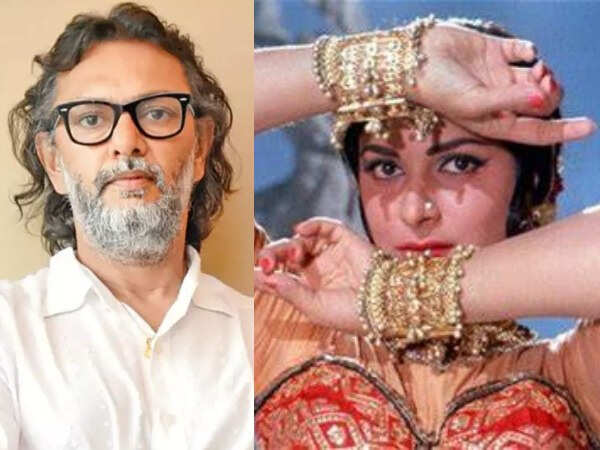
Vijay Anand’s Guide (1965) is a film that shattered the pride of men and the prejudice around women, wiping off decades of dust and discrimination. The gender-bender narrative was dicey given male sensibilities predominantly nurtured on misogyny. ‘Glamour, grace, gumption’… that’s how filmmaker Rakeysh Omprakash Mehra, who cast Waheeda Rehman in his Rang De Basanti (2005) and Delhi-6 (2009), describes the legendary actor in his memoir Stranger In The Mirror. There couldn’t be a better summation of her role as rebel Rosie in Navketan Films’ Guide as well.
Waheeda plays the anti-heroine who turned iconic. A woman, who dares to walk out of a sham of a marriage. Bells on her toes and dreams in her eyes, she dances to destiny’s design. She chooses to live-in with mentor Raju (Dev Anand) rather than seek the sanction of ‘marriage’. Together they experience the highs of passion and fame. Till one day Raju’s con ruptures the relationship. The estranged lovers do meet again… but by then their paths have altered.
Guide
Here, Rakeysh Omprakash Mehra revisits the tale of love and liberation, remorse and redemption… in his own words…
GENIUS

As a sweet accident of destiny, I moved from making ad films to feature films in the 2000s. My first feature film was Aks (2001) with Amitabh Bachchanji and Manoj Bajpayee. A pre-release screening was organised at Excelsior theatre in Mumbai. I was keen to invite only one person – Goldie sir (late filmmaker Vijay Anand). I went over to his house and told him, “You’re my inspiration. I want you to be my guest of honour.” He sweetly obliged.
So, I watched my first film with Goldie sir on one side and Amitji on the other. It’s a moment I’ll always cherish. Aks didn’t do well at the box-office. To that Goldie sir simply said, “Guide didn’t go down well at the box-office either though everyone acknowledged it.” I was amazed at his attitude. Even for me, the first concern has never been the box-office. It’s to tell a story in the best way possible.
There were great directors between the ’50s –’60s, including Guru Dutt (Pyaasa), Bimal Roy (Do Bigha Zameen and Madhumati), Raj Kapoor (Shree 420, Jagte Raho), K. Asif (Mughal-E-Azam), V Shantaram (Do Aankhen Barah Haath)… But it happens once in a while that someone comes and takes the industry by storm. That’s what Vijay Anand did with Guide. He reshaped Hindi cinema. He followed it with Teesri Manzil (1966), one of the greatest suspense thrillers. I believe it to be Shammi Kapoor’s best performance. How well Goldie sir balanced Shammiji’s persona with his character. Next was Jewel Thief (1967), a crazy blockbuster. Johny Mera Naam (1970) made history. It’s Dev Anand saab’s greatest hit ever.
The art of storytelling was what Goldie sir pursued. The commerce followed. He had incredible music in all his films. He worked with music directors including SD Burman, RD Burman, Kalyanji Anandji…and lyricists Shailendra, Majrooh Sultanpuri, Rajendra Krishan… Their energies were different. But that didn’t matter. You could sense Vijay Anand’s soul in his films. I can instantly recognise a Vijay Anand frame. Just as the artist signs his painting, Goldie sir’s signature was evident in his body of work.
guide

Vijay Anand never compromised though the stakes are high in showbiz. A filmmaker works with high calibre artistes – music directors, writers, lyricists, cameramen. As the captain of the ship, he guided them all. In fact, he taught us that you could combine commercial pulp with meaningful cinema. That’s his achievement.  Great filmmakers across the globe have said that movie making is modern-day art form. It’s a combination of several arts – acting, photography, music writing, art direction, fashion… and above all human emotions, which you connect with the emotions of the audience. Guide has all of this.

I can’t think of any other novel (Guide was based on R K Narayan’s similarly titled Sahitya Akademi winning novel, while its English version was written by Pearl S Buck and directed by Tad Danielewski) being adapted so beautifully. Apparently, when Dev saab offered it to Goldie sir, it just took seven days for him to come back with his ‘interpretation’ and how he was going to make the film.
FEARLESS

With the advent of the VHS, the first video cassette I acquired was that of Guide. The film had left me in sheer wonderment. Around me I saw a man’s world. But in Guide, it was the woman (Waheeda Rehman as Rosie), who helmed the narrative. The man (Dev Anand as tourist guide Raju) followed it only to find a greater meaning, a greater purpose in life.
What made the ‘dicey’ subject work of rebellion work? On a philosophical level it was the director’s fearlessness. Secondly, it was belief in his intuition. It was dubbed a death wish for Waheedaji to pick up Guide. She said, ‘I was told that I wouldn’t be offered any roles after Guide. Aapko sirf dancing aur vamp ka role milega.’ There was fearlessness on her part too.
As a producer, Dev Anand was fearless to make the film with a debutant director. Goldie sir understood that the subject was against family values. Indian society was still so conservative. Especially, when it came to a woman breaking shackles. Todh ke bandhan baandhe payal… (I broke the bondage only to tie anklets)… sums up it all.
Initially, Rosie wants a life of a normal woman. She wants to have babies. But her archaeologist husband Marco (Kishore Sahu) is impotent. That’s a naked truth, which she accepts. Yet he cheats on her. She walks out because he doesn’t value her. That must have been inspiring for many women in that era.
TRAGEDY

The film is full of strong moments. Like when Rosie walks out on Marco. When Raju takes her out into the world and presents her talent… the rise and rise of Rosie begins. How he continues to remain in the shadow is again a great moment. The song Kya se kya hogaya, bewafa tere pyaar mein… is a seminal picturisation. The lover doesn’t understand what’s hit him. It’s an ‘open wound’ kind of situation. The audience can sense the pathos in their lives.
Another moment that stands out is when towards the end when Raju undertakes the fast for the larger good and has a conversation with his alter ego. The spiritual ego speaks to guide Raju about merging with a higher reality. It shatters the myth of the invincible Indian hero. It was brave of Goldie sir to envision that.
guide

Guide works even though it doesn’t have a happy ending. For me, separation is the purest form of love. The beginning of the end is when you give it a social status – marriage! Which we ironically term ‘happy ending’. Guide is food for the soul. Here, the love sustains. Rosie sheds off her stardom, her finery, her jewellery… she walks barefoot to reach the man she loves. And, for Raju what better than dying in the arms of his beloved. Unfulfilled love has far greater value. In that pain he finds a higher meaning in life and also finds Rosie again.

You have to see Raju’s eyes in the last five minutes when he looks at Rosie. There’s so much respect and honour for this woman. In Rosie’s eyes, there’s only love for this man. Love goes beyond life and death. You feel the sadness of separation. Tragedy is a powerful emotion. We grow with tragedy not happy endings.
RECOGNITION

The Hindi version of Guide was our official entry for the Best Foreign Language Film at the 38th Academy Awards. But it did not receive a nomination. Had the world understood the Indian narrative at that point in time; Guide would have picked up the Oscar. I guess they had no understanding of Indian social culture or what women in South Asia go through. They saw it from the Western lens.
Back home, Guide received nine nominations and won seven Filmfare Awards (Best Film, Best Director, Best Actor, Best Actress, Best Story for R.K.Naryan, Best Dialogue for Vijay Anand and Best Cinematography for Fali Mistry), the epitome of prestige and recognition.
TIMELESS

To sum it up, Guide is about the liberation of the female soul. Shailendra’s lyrics Koi na roko dil ki udaan ko, dil woh chala… aaj phir jeene tamanna hai, aaj phir marne ka irada… define the film. ‘‘I am limitless. I will live on my own terms or I’d rather die’ is what Rosie believes.
The song Masakali (means ‘pigeon’ in Hindi, it embodies the spirit of freedom) from my Delhi-6 is an ode to Aaj phir jeene ki tamanna… AR Rahman captured this mood for me in the song written by Prasoon Joshi. Where again the girl, Bittu Sharma (Sonam Kapoor), has dreams and wants to fly. But she’s an old Delhi girl, bound by shackles, a Chandni Chowk girl, who wants to make it in showbiz. She wears salwar-kameez when she leaves home and changes into jeans at the metro station. So yes, Goldie sir did inspire me in the way I told my story.
A true piece of art is rarely understood initially. Over time, it becomes precious. Good movies are for perpetuity. Not for a Friday. That’s the obligation the filmmaker has to cinema, to his cast and crew, his audience and to himself. Guide has given birth to a thousand Guides by different names. Vijay Anand has inspired all of us to look beyond the Friday butchering night.
Read full article
…
Link copied!