Live · Global · Independent
Live Feeds
PinkVilla
Forbes
NDTV
Hindustan Times
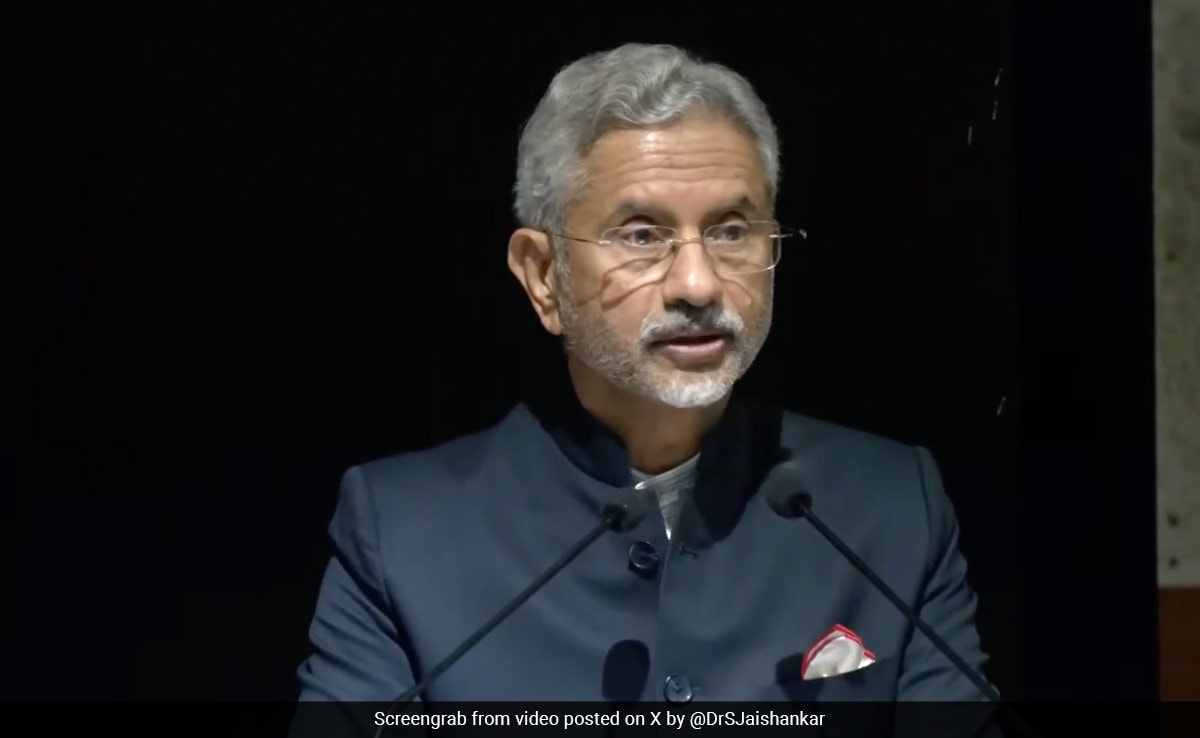
Tried To Maintain Equilibrium, China’s 2020 Move Changed That: S Jaishankar
onmynews.com

Tried To Maintain Equilibrium, China’s 2020 Move Changed That: S Jaishankar

India and China are rising and the two countries, in the process, are changing the world order, External Affairs Minister S Jaishankar said on Monday.

Mr Jaishankar, citing talks between the leadership of the two countries in Mamallapuram and Wuhan, said India tried to maintain an “equilibrium” in the ties through diplomacy, but the relations took a different turn following China’s military build-up along the Line of Actual Control in 2020 in violation of laid down norms.

The external affairs minister, speaking at a media summit organised by the TV9 Network, described the rise of India and China as “significant” in the global geopolitical scenario.

“If you were to list three or four really big things which have changed in the last 20-25 years, I think most people would agree it would be the rise of China and the rise of India,” he said, replying to a question.

“You can say China started it much earlier because our own politics here delayed the era of reform. That’s okay. What’s done is done. But there is no question, both countries are rising and for world politics, this poses a very interesting problem,” he said.

“The problem is this: both are changing the world order by their rise. So each one has an impact vis-a-vis the world. But they also happened to be neighbours. So their relationship is also changing while it is changing vis-a-vis the rest of the world,” Mr Jaishankar added.

The external affairs minister argued that the situation, therefore, is making it “very complicated to create an equilibrium”. They were part of an “equilibrium maintenance exercise”, Mr Jaishankar said when specifically asked about the informal summit between Prime Minister Narendra Modi and Chinese President Xi Jinping in the Chinese city of Wuhan in 2018 and Mamallapuram in 2019.

“We tried to maintain that equilibrium naturally — first through diplomacy. So what you saw in Wuhan and Mamallapuram, etc was that equilibrium maintenance exercise,” he said.

“But what happened in 2020 was China for whatever reason chose to move military forces in disregard of agreements. That called for a different response for the equilibrium,” he said.

“The logical thing for us to do, which is what we did, was we moved our forces and in a very big way. So from 2020, you have an equilibrium, one part of which is the military posture in the border areas, one part of it today obviously is the political relationship impacted by this border situation,” he said.

“One part of it is also the economic measures that we have taken,” he added.

Mr Jaishankar said the Modi government believes that the interests of the country’s working class, small enterprises and small industries must be protected against “unfair competition”.

“Our effort today is to build our deep strengths. We have to build our digital capabilities, our telecom, our manufacturing, our pharma industry, our health self-sufficiency, our defence industry, our ability to deploy on the border which you can only do if you build infrastructure,” he said.

Mr Jaishankar suggested that India’s annual average expenditure on the border with China was about Rs 3,500 crore till 2014.

Today, it is almost Rs 15,000 crore, he said.

There was a neglect of the border infrastructure, he said, adding “You cannot defend the border if you do not build infrastructure there”. 

(Except for the headline, this story has not been edited by NDTV staff and is published from a syndicated feed.)
Read full article
“We’re Close”: Biden Says Gaza Ceasefire Could Happen By Monday
onmynews.com

“We’re Close”: Biden Says Gaza Ceasefire Could Happen By Monday

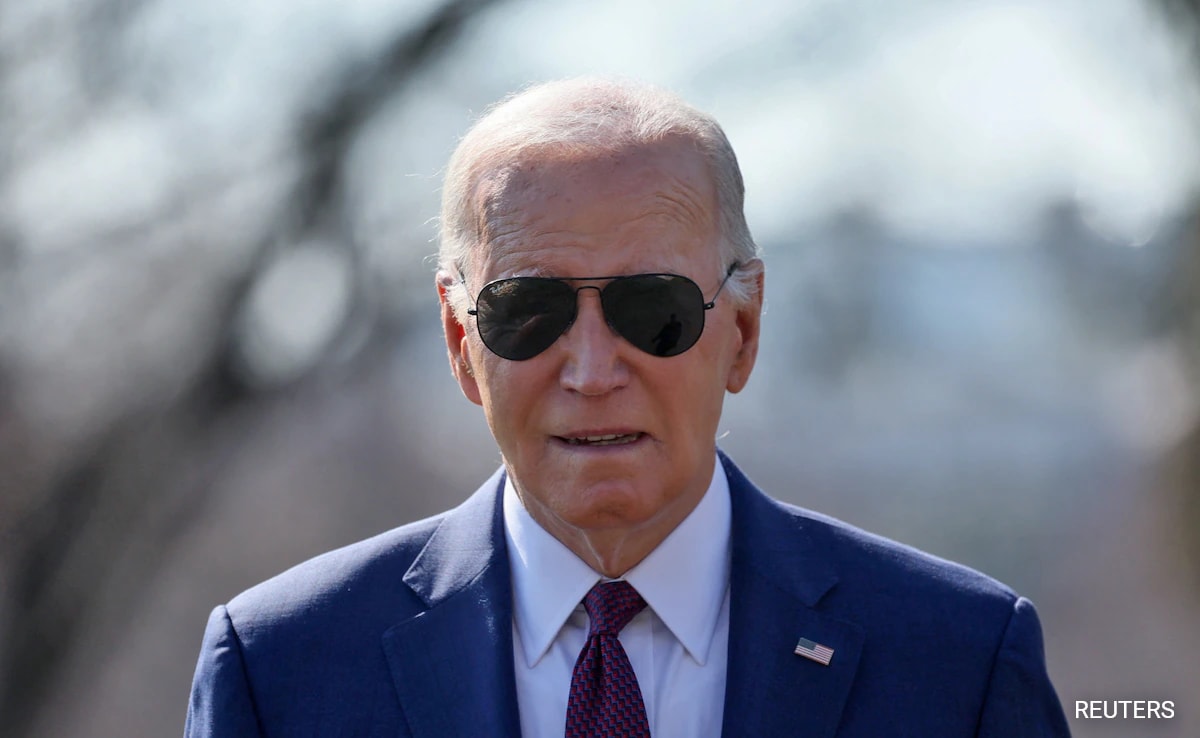
US President Joe Biden said Monday he hoped a ceasefire in Gaza could start by the beginning of next week.

Amid a spiraling humanitarian crisis in the Palestinian territory, representatives from Egypt, Qatar, the United States, France and elsewhere have acted as go-betweens for Israel and Hamas, seeking a halt to the fighting and the release of Israeli hostages held in Gaza.

A deal could also include the exchange of dozens of hostages for several hundred Palestinian detainees held by Israel. 

Biden was asked during a visit to New York when such an agreement might start, and answered, “My national security advisor tells me that we’re close, we’re close, we’re not done yet.”

“My hope is by next Monday we’ll have a ceasefire,” Biden added.

Representatives from several parties, not including Gaza rulers Hamas, met in Paris over the weekend and “came to an understanding… about what the basic contours of a hostage deal for a temporary ceasefire would look like,” White House National Security Advisor Jake Sullivan told CNN Sunday.

After the Paris meeting, Egyptian, Qatari and US “experts” met in Doha in recent days for talks also attended by Israeli and Hamas representatives, state-linked Egyptian media said, hoping to secure a truce before the Muslim holy month of Ramadan.

A Hamas source told AFP that “some new amendments” were proposed on contentious issues, but “Israel did not present any substantive position on the terms of the ceasefire and the withdrawal from the Gaza Strip.”

Israeli Prime Minister Benjamin Netanyahu has dismissed the troop withdrawal demand as “delusional,” and said that any ceasefire deal would only delay a military incursion into the southern Gaza city of Rafah, where around 1.4 million Palestinians have sought shelter from fighting elsewhere in Gaza. 

On Monday, an unnamed Israeli official told news site Ynet the “direction (of the talks) is positive,” and Israeli media reported that military and intelligence officials were headed to Qatar for further talks on a deal.

And Qatar’s Emir Sheikh Tamim bin Hamad Al-Thani — whose country hosts Hamas leaders and helped broker a one-week truce in November — is due in Paris this week, the French presidency said.

Sheikh Tamim has met Hamas chief Ismail Haniyeh in Doha and discussed efforts “aimed at reaching an immediate and permanent ceasefire agreement” in Gaza, the official Qatar News Agency said.

Israel’s military campaign has killed at least 29,782 people in Gaza, mostly women and children, according to the ministry. 

The war broke out after Hamas launched their unprecedented attack which killed 1,160 people in Israel, mostly civilians, according to an AFP tally of official figures.

Hamas also took about 250 hostages, 130 of whom remain in Gaza, including 31 presumed dead, according to Israel.

(Except for the headline, this story has not been edited by NDTV staff and is published from a syndicated feed.)

Read full article
Tough Fight Today In Rajya Sabha Polls Amid Cross-Voting Buzz: 10 Facts
onmynews.com

Tough Fight Today In Rajya Sabha Polls Amid Cross-Voting Buzz: 10 Facts

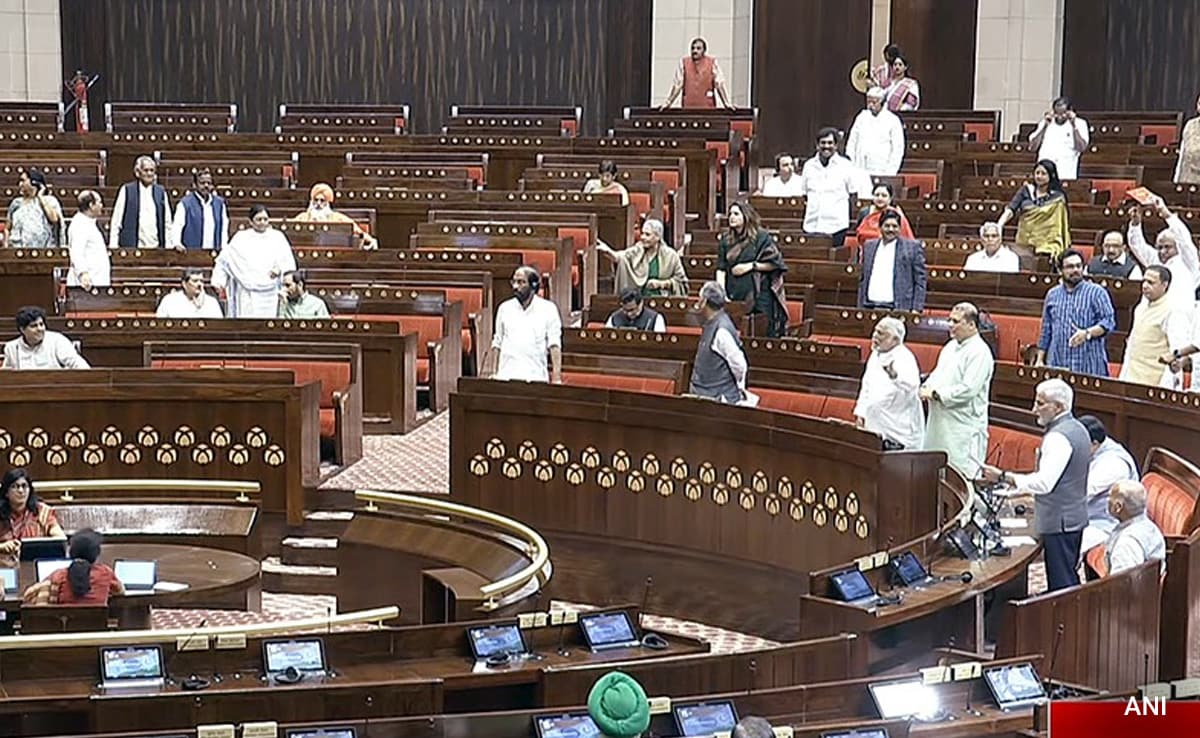
41 leaders for 56 seats have already been elected unopposed. The list includes former Congress chief Sonia Gandhi, BJP chief JP Nadda, Ashok Chavan and Union ministers Ashwini Vaishnaw and L Murugan. For 15 seats, elections are due in Uttar Pradesh, Karnataka and Himachal Pradesh.
In Uttar Pradesh, the BJP has fielded eight candidates and the Opposition Samajwadi Party three for the 10 Rajya Sabha seats, setting the stage for strong contest over one seat. The focus will be on how many first preference votes the candidate gets – the magic figure is 37.
The BJP is said to be banking on surplus votes from Ajit Singh’s Rashtriya Lok Dal, which has joined the NDA in all but name. Leaders of the BJP have also claimed that at least 10 MLAs of Akhilesh Yadav’s Samajwadi Party are in touch with them. The SP – which is in alliance with the Congress — has staunchly denied it.
The BJP has fielded former Union minister RPN Singh, former MP Chaudhary Tejveer Singh, senior state leader Amarpal Maurya, former minister Sangeeta Balwant (Bind) party spokesperson Sudhanshu Trivedi, former MLA Sadhna Singh and former Agra mayor Naveen Jain. Its eighth candidate is Sanjay Seth — a former member of the Samajwadi Party and an industrialist.
The SP has fielded actor-MP Jaya Bachchan, retired IAS officer Alok Ranjan and Dalit leader Ramji Lal Suman.
In Karnataka, the ruling Congress shifted its MLAs to a private hotel on Monday to prevent undue influences — a situation that has seen multiple re-runs in the chequered politics of the state. State party chief and Deputy Chief Minister DK Shivakumar has denied any possibility of cross-voting by the party MLAs.
In Himachal Pradesh, the BJP has forced a contest on the state’s single seat by fielding Harsh Mahajan against Congress’s Abhishek Manu Singhvi. While the Congress has 40 MLAs to the BJP’s 25, the election will be seen as a prestige battle for Chief Minister Sukhvinder Singh Sukhu.
Rajya Sabha MPs are elected by MLAs through the proportional representation process with the single transferable vote (STV) system. The MLAs have to list candidates in order of preference. Their first choice counts most — a candidate with the required number of first preference votes get elected, else the votes get transferred to their next choice. 
The ruling BJP holds 28 of the 56 seats and is expected to have at least 29 after the election. In Uttar Pradesh, INDIA bloc will gain one seat as the SP is expected to improve its tally from one to two seats 
Currently, the Rajya Sabha has a strength of 245. The term for Upper House MPs is six years, and elections are held every two years for 33 per cent of the seats.

Read full article
Link copied!