Live · Global · Independent
Live Feeds
PinkVilla
Forbes
NDTV
Hindustan Times
Shraddha Kapoor, Ananya Panday, Tamannaah Bhatia and ‘all hot people in one reel’ from Ambani’s Ganesh Chaturthi celebrations; WATCH
onmynews.com

Shraddha Kapoor, Ananya Panday, Tamannaah Bhatia and ‘all hot people in one reel’ from Ambani’s Ganesh Chaturthi celebrations; WATCH

On September 7, 2024, the Ambanis hosted a grand Ganesh Chaturthi celebration, attended by several top celebrities who arrived in style. Socialite Orhan Awatramani later shared a compilation video on Instagram, featuring stars like Shraddha Kapoor, Ananya Panday, and others. One fan commented, “all the hot people in one reel.”

In the video, celebrities participated in a fun compilation, showcasing their presence and flaunting their outfits. The video included Shraddha Kapoor, Ananya Panday, Tamannaah Bhatia, Bhumi Pednekar, Arjun Kapoor, Atlee, Alizeh Agnihotri, Shanaya Kapoor, and Veer Pahariya. 

Check out Orry’s post here: 

Shraddha Kapoor and Bhumi Pednekar couldn’t resist as they dropped heart emoji’s in the comment section Netizens were quick to chime into the comments section. One person wrote, “all hot people in one reel”. Someone wrote, “orry makes best reels”. One wrote, “Petition to sue whoever uses same mobile back cover as Orry”. One person commented, “this reel reminds me of diamond niiii”. One person wrote, “Orry ki reel 1 no”. One person wrote, “A lots of love creativity chow aesthetically on fire”. 

Salman Khan was also present at the event, dressed in a brown shirt and white pants. Aamir Khan attended with his sons, Junaid and Azad Khan. Sonam Kapoor arrived with her husband, entrepreneur Anand Ahuja. Other notable attendees included Kareena Kapoor Khan, Saif Ali Khan, Sanjay Dutt, Tiger Shroff, Tania Shroff, Suniel Shetty, Jackie Shroff, Sidharth Malhotra, and Kiara Advani. Priyanka Chopra’s brother, Siddharth Chopra, was seen with his fiancée, Neelam Upadhyaya. Sachin Tendulkar also arrived with his daughter Sara Tendulkar for the festivities. 

Sara Ali Khan attended the festivities alongside her brother, Ibrahim Ali Khan. The sibling duo posed for the cameras at the Ganapati Pooja hosted by the Ambani family. Ibrahim donned a purple sherwani paired with a white churidar for the occasion.

Newlyweds Anant Ambani and Radhika Merchant performed their first Ganpati Pooja at home in the evening. The Ganesh Chaturthi celebrations will continue for 10 days, culminating in the Ganapati Visarjan ceremony. 

ALSO READ: Jigra x Stree 2: Alia Bhatt and Shraddha Kapoor’s social media banter over their films is pure BFF goals; Don’t miss

Read full article
We Live in Time Director John Crowley Reveals He Was ‘Stunned’ After Florence Pugh Agreed To Shave Her Head To Play Almut
onmynews.com

We Live in Time Director John Crowley Reveals He Was ‘Stunned’ After Florence Pugh Agreed To Shave Her Head To Play Almut

Florence Pugh is portraying the role of Almut in her upcoming romantic comedy-drama We Live in Time alongside Andrew Garfield. Pugh went to extreme lengths to play the character, who, at a point in the story, gets diagnosed with cancer and undergoes treatment. 

Director John Crowley recently revealed that he was ‘stunned’ by the actress’s choice to shave her head for her part instead of choosing to wear a wig. Read on further to know more details!

In a recent interview with People magazine, We Live in Time director John Crowley revealed that Florence Pugh was so ‘committed’ to her role that she agreed to a complete transformation, including shaving her head, to portray Almut and effectively depict her character’s journey. Crowley told the publication that he had thought about different ways to give the Oppenheimer actress a shaved head look, but Pugh had her ideas. 

He recalled that before meeting the actress, he talked to his hair and makeup team about how they could achieve the look if they can’t shave the head, saying, “So I had all of my sort of less good ways of doing it in mind, but before I even got to say anything about any of that, she [Pugh] was, ‘I’m shaving my head by the way.'” 

He further told the outlet that he was surprised by her commitment. The director explained that he didn’t try to talk her out of going bald, noting that he was “stunned” because he knew she would soon start working on a Marvel movie.

Crowley said they slotted “right into a window because her Marvel movie just shunted back a little bit,” referring to her upcoming MCU film Thunderbolt, for which she will reprise her role as Yelena Belova. He added, “So she’s fearless, Florence, and really committed.”
 

ALSO READ: Andrew Garfield And Florence Pugh’s Rom-Com We Live In Time To Close San Sebastian Film Festival

ALSO READ: ‘I Just Stopped Him’: Florence Pugh Shares Her Experience of Going Bald For Andrew Garfield Starrer We Live in Time

According to the official synopsis, the film follows Almut (Pugh) and Tobias (Andrew Garfield), who meet each other in a surprising way that changes their lives. Through snapshots of their life together—falling in love, building a home, and starting a family—a difficult truth emerges that shakes their relationship. As they face challenges with time, they learn to value every moment of their “love story has taken, in filmmaker John Crowley’s decade-spanning, deeply moving romance.”

Meanwhile, We Live in Time will be released in theaters in the US on 11 October 2024.

Read full article
Gods Who Did Not Fulfill Prayers Are Put On Trial, Punished In This Court
onmynews.com

Gods Who Did Not Fulfill Prayers Are Put On Trial, Punished In This Court

Chhattisgarh’s tribal-dominated Bastar region has often made headlines for kangaroo courts in which Maoists mete out punishments. But Bastar has another court that meets once a year and even Gods are not immune to its sentences. This court, which meets at a temple, holds Gods guilty and also punishes them.

The Bastar region, where tribals account for 70 per cent of the population, is seeped in myth and folklore. The tribes — Gond, Maria, Bhatra, Halba and Dhurwa — practice many traditions that are unheard of outside the region and form a key part of Bastar’s rich heritage. One of them is the jan adalat — meaning people’s court — that meets at Bhangaram Devi temple during Bhado Jatra festival every year during the monsoon.

Trial And Punishment

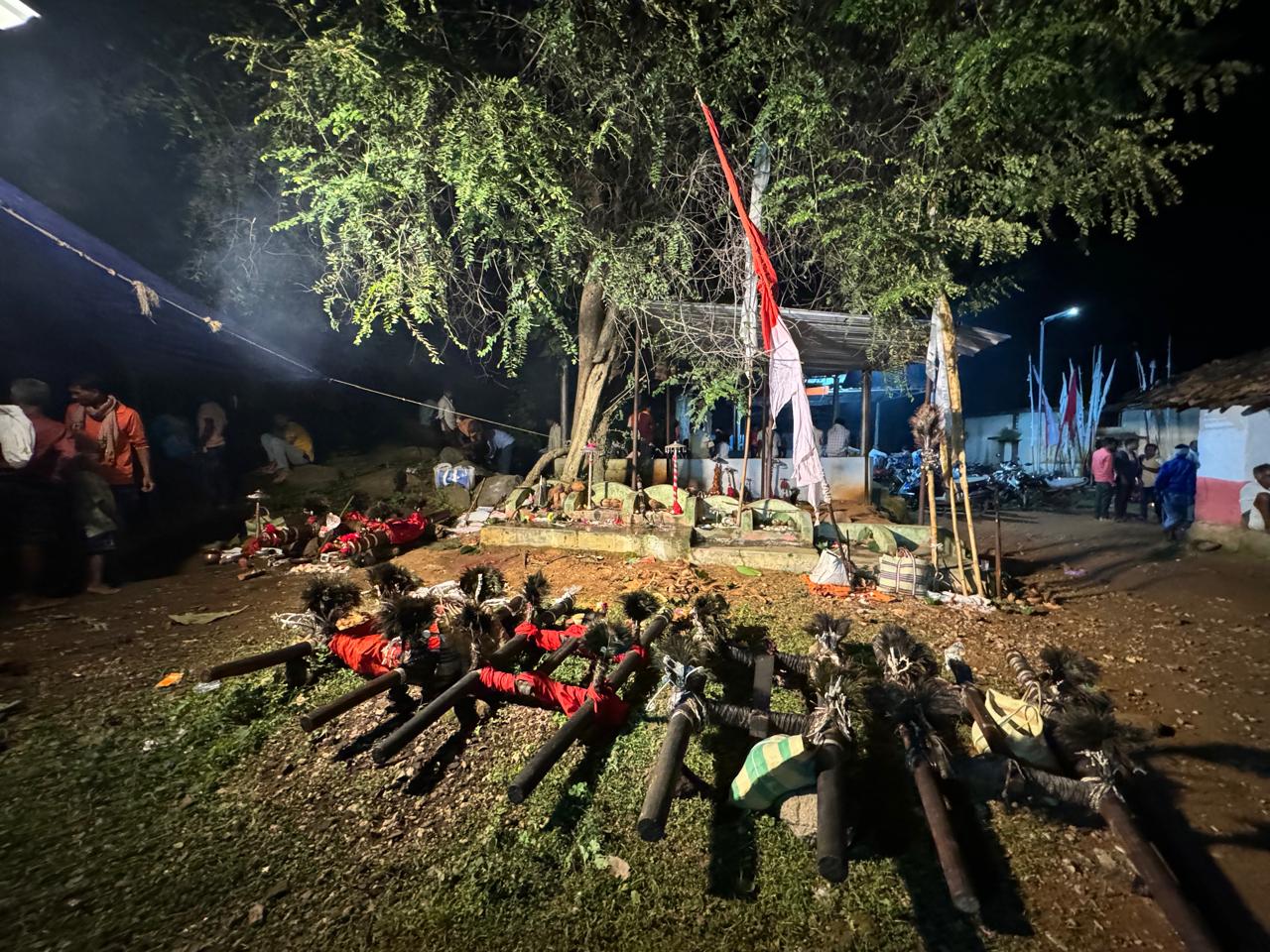
During the three-day festival, the temple’s deity Bhangaram Devi presides over trials in which Gods are accused and animals and birds — often hens – are witnesses. The villagers are the complainants — complaints range from a failed harvest to a lingering illness and can include anything for which prayers were not answered. The punishments are harsh. A God found guilty is sentenced to exile — their idols, mostly wooden totems, lose their place inside the temple and are banished to its backyard. Sometimes, this punishment is for life or till they mend their ways and get their seat in the temple back. People from around 240 villages gather to see the gods on trial. A feast is arranged for them.

Behind the festival, which is a symbol of India’s rich diversity, is an idea that even Gods are accountable to the people.

A Chance Of Redemption

Trials at Bhangaram Devi Temple are not just about punishment, but reformation too. Gods are given an opportunity to redeem themselves. If they rectify their behaviour and answer the people’s prayers, they get their temple seat back. If not, the exile continues. Historian Ghanshyam Singh Nag says, “This tradition represents the idea that the relationship between gods and humans is reciprocal. Gods protect and provide for the people, and in return, they are worshipped. If this balance is disturbed, even gods are judged.”

The people approach the divine court if they believe their Gods failed them during times of need — this may include disease outbreaks, natural calamities or a bad harvest. Then the Gods are summoned and punished after trial. If the Gods mend their ways — the village gets rain or good fortune — they are welcomed back from exile. Farsu Salam, a member of Bhangaram Temple Committee, says, “If villagers believe that the Gods responsible for solving their problems have failed, they are brought here for trial. This happens once a year.”

Lawyers And Witnesses

Village leaders serve as lawyers in this divine court and hens are witnesses. A hen is brought to the court and set free after the trial, marking the end of its testimony. The sentence is pronounced by a village leader, believed to be voicing the goddess’s instructions.

The punished gods are then removed from the temple and sometimes placed under trees — a symbolic imprisonment. The gold or silver decorations on the idols are not removed. There have been no reports of theft as the tribals believe such an act will invite divine justice.

Like any court, a ledger is maintained that lists details of every case – the number of deities accused, the nature of their alleged crimes, the witnesses, and the final judgments.

“We maintain a register where we document everything, from how many gods appeared to how many were punished,” Farsu Salam said.

Appeals Against Sentences

In the regular legal system, a sentence can be appealed in a higher court. But at Bastar’s divine court, the appeals must be filed before Bhangaram Devi, who pronounced the sentence. If the exiled Gods seek forgiveness and convince the deity, their exile sentence is suspended and they can return to the temple.

Poetess Poonam Vasam says, “This is a social system. It is believed that just as humans are responsible for fulfilling their duties in the society, the gods too must bear responsibility. If they fail to protect or help their people, they too face punishment.”

The Temple And The Deity

The tribes in Bastar have their gods and goddesses. According to the local folklore, many of them were humans earlier and were elevated to the divine status for their noble deeds.

Bhangaram Devi, local residents believe, came to Bastar centuries ago from Warangal in present-day Telangana. Along with her came “Dr Khan” from Nagpur. The temple, according to local residents, was built in during the reign of King Bhairamdev in the 19th century.

Local village Sarju says, “When Mai ji came from Warangal, she asked the local king for a place to settle. She was given land near the mountains of Keshkal. Along with her came Dr Khan, who served the tribals during cholera and smallpox outbreaks.” Over time, Dr Khan has acquired divine status and is known as Khan Devta or “Kaana Doctor”. Villagers now offer lemons and eggs to the deity. ‘Khan Devta’ resides along with other deities at Bhangaram Devi temple.
Read full article
Link copied!