
Live · Global · Independent
Live Feeds
PinkVilla
Forbes
NDTV
Hindustan Times
Watch: “Dome Of Harmony” Inside Sanctum Sanctorum Of Abu Dhabi Temple
onmynews.com

Watch: “Dome Of Harmony” Inside Sanctum Sanctorum Of Abu Dhabi Temple

Marking a significant milestone for the Indian community in the Middle East, Prime Minister Narendra Modi has inaugurated Abu Dhabi’s first Hindu temple, which is also the largest in the region. 

Spread over 27 acres and built at a cost of over Rs 700 crore, the BAPS Hindu temple is also seen as a sign of the deepening relationship between India and the United Arab Emirates.

PM Modi also participated in a ‘global aarti (prayer)’, which was performed simultaneously at over 1,200 temples built by BAPS. The Bochasanwasi Shri Akshar Purushottam Swaminarayan Hindu Mandir or BAPS Hindu Mandir, is spread over a 27-acre piece of land. The temple is 108 feet high and 180 feet wide and its seven spires represent the seven emirates.

The temple has 402 pillars and iron has not been used in any of them, making it the first Hindu stone temple in UAE. The pillars in the sanctum sanctorum of the temple are made of white Italian marble.

The pillars have intricate carvings of deities and symbols central to the Hindu religion. Seven shrines of different deities including, Lord Ram, Goddess Sita, Lakshmi, and Lord Shiv, are present in the temple. 

“Dome of Harmony has different levels. These levels represent the fire, earth, air, water and space. The shank represents water, Tej represents the sun and running Deers represent air,” a volunteer told NDTV.

“Every pillar inside the sanctum sanctorum is unique and every pillar has its pillar. There are 1,400 pillars, protected by a transparent shield. They represent differences, but they all make one pillar,” the volunteer added. 

The depiction of different civilizations on pillars makes the temple’s architecture unique. Apart from Indian civilization, stories are taken from the Maya, Aztec, Egyptian, Arabic, European, Chinese and African civilizations etc.

In a shrine of Lord Ram and Goddess Sita, the Ramayan has been carved on the stones and ‘shankh’ (shell) and sun have been sculpted on the dome of the shrine. The Vedic-style temple has two central domes – the ‘Dome of Harmony’ and the ‘Dome of Peace’.

The fine detailing in sculpting the deities and symbols makes the temple an architectural brilliance.
Read full article
“We Are Living in Fear”: NDTV Ground Report From Bengal’s Sandeshkhali
onmynews.com

“We Are Living in Fear”: NDTV Ground Report From Bengal’s Sandeshkhali

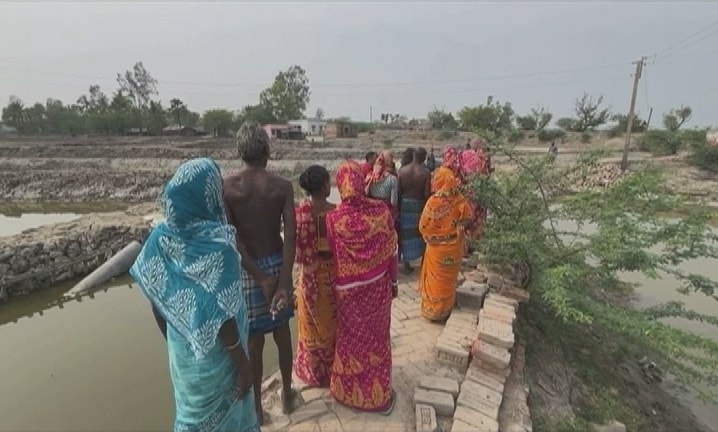
Amid a political firestorm between the Trinamool Congress and the BJP over claims of sexual assault by aides of a strongman from the ruling party in Sandeshkhali, NDTV spoke to some of the women, who said they are “living in fear”. Conversations with the women revealed that while the allegations of rape may not be true, many were called to the party office at odd hours and were threatened if they refused. Some women also spoke of their husbands being tortured.

NDTV visited Sandeshkhali, an island close to the Indo-Bangladesh border where prohibitory orders have been imposed on all entry points, on Wednesday. While some women who have been protesting against Trinamool strongman Sheikh Shahjahan’s aides agreed to speak, none of them wanted to reveal their identity in front of television cameras, fearing reprisal and persecution.

One woman, who participated in the protests earlier, told NDTV, “These incidents must have taken place, otherwise why will the women say these things? You must enquire for yourself. Why else will women come out on the streets and speak out? Are they lying? There must be truth in these statements.”

“We are living in fear. We don’t come out of our homes because of fear,” she added.

Another woman said, “They (Shahjahan’s aides) would call women for meetings or rallies but there was no fixed time. It could be day or night. We would have to go whenever they called and if we didn’t, they would threaten us.”

“Even if we did not want to go, they would force us. They gave us examples of the Lakshmi Bhandar scheme and the free rice scheme. They said Didi (West Bengal Chief Minister and Trinamool Congress chief Mamata Banerjee) is feeding you but you still won’t go to meetings? Even if it is at night, you have to go or we will kidnap you, they would say,” another woman claimed.

The women named Sheikh Shahjahan’s aides, Shibu Hazra and Uttam Sardar. While Sardar has been arrested, Hazra is on the run. Shahjahan has also been missing since an Enforcement Directorate team was attacked by a mob during a raid on his house in connection with an alleged ration scam on January 5.

“Shibu Hazra and Uttam Sardar would call us to the party office even at night on the pretext of holding a meeting,” another woman alleged.

Asked if there have been allegations of sexual assault, the woman said, “They would torture us. They targeted women by picking up their husbands and beating them up with a stick in the party office. If we refused to go to the party office, they would pick up the men and thrash them so we would be forced to go.”

Claims, Counterclaims

Earlier on Wednesday, West Bengal BJP President Sukanta Majumdar allegedly suffered injuries during a clash with the police as he attempted to go to Sandeshkhali despite police restrictions and prohibitory orders. He has been admitted to a hospital in Kolkata. Some have claimed Mr Majumdar’s injuries were the result of him falling after climbing atop a police car to protest.

The BJP has alleged that women have been sexually harassed and raped in Sandeshkhali and wanted to visit the area to speak to them.

Leader of Opposition in the West Bengal Legislative Assembly, Suvendu Adhikari. said, “What happened with BJP state president is being condemned by the whole country. As Leader of Opposition, I condemn the way the state police treated him. We will protest against this on Thursday. Action should be taken against the person whose orders are being followed by the police.”

The Trinamool hit back at the BJP and said the opposition party wants to create trouble as peace is returning to the area. West Bengal Minister Shashi Panja told reporters, “There is a competition between BJP leaders over who is a bigger leader and who can reach Sandeshkhali. Because of this competition, they attempted to reach Sandeshkhali again. They protested on Tuesday as well. Now they say he (Mr Majumdar) has fainted. He has been brought to Kolkata for treatment.”

“We are saying that the situation is returning to normal and the National Women’s Commission visited the area on Wednesday and they are also saying no sexual harassment of women has taken place. What does Sukanta Majumdar want to hear after this,” Mr Panja asked.

In a post on X, the West Bengal Police has also denied any such allegations or complaints and warned against “wilful misinformation” by sections of the media. 

Read full article
Supreme Court’s Big Verdict On Electoral Bonds Scheme Today
onmynews.com

Supreme Court’s Big Verdict On Electoral Bonds Scheme Today

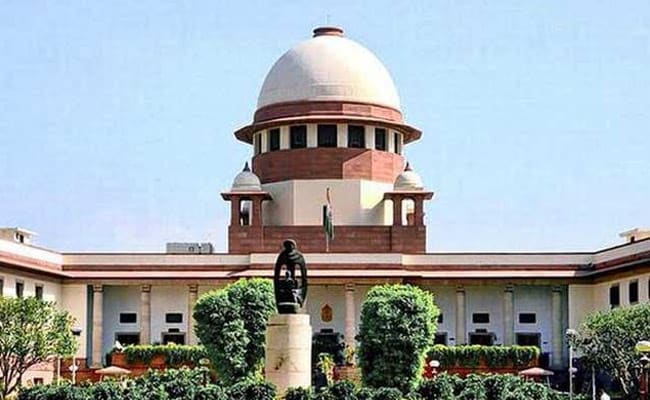
The Supreme Court will today pronounce its verdict on a set of petitions challenging the validity of the electoral bonds scheme. A five-judge Constitution bench, led by Chief Justice DY Chandrachud, reserved its verdict on November 2 last year. The electoral bonds scheme, introduced by the government on January 2, 2018, was seen as a solution to replace cash donations and enhance transparency in political funding.

Electoral bonds serve as a financial instrument allowing individuals and businesses to contribute funds to political parties discreetly, without revealing their identities. Under the provisions of the scheme, any citizen of India or entity incorporated or established in the country can purchase electoral bonds. These bonds are available in various denominations, ranging from Rs 1,000 to Rs 1 crore, and can be obtained at all branches of the State Bank of India (SBI). These donations are also interest-free.

One of the key features of electoral bonds is the anonymity they provide to donors. When individuals or organisations purchase these bonds, their identities are not disclosed to the public or the political party receiving the funds. However, the government and the bank maintain a record of the purchaser’s details for auditing purposes, ensuring the legitimacy of funding sources.

Last year, ahead of the Supreme Court’s November hearing, Attorney General R Venkataramani argued that the Constitution does not guarantee citizens an absolute right to information regarding the source of funds used for political party funding through electoral bonds. He said that the electoral bond scheme promotes transparency and clean money in elections. However, Mr Venkataramani maintained that there are limitations to the right to information, and it cannot be an unrestricted right to know “anything and everything.”

“The scheme in question extends the benefit of confidentiality to the contributor. It ensures and promotes clean money being contributed. It ensures abiding by tax obligations. Thus, it does not fall foul of any existing right,” he had said.

Only political parties registered under Section 29A of the Representation of the People Act, 1951, and those securing not less than 1 per cent of the votes in the last Lok Sabha or state legislative assembly elections are eligible to receive electoral bonds. Furthermore, these bonds can only be encashed by eligible political parties through an authorised bank account, as specified in the notification.

In April 2019, the Supreme Court had declined to stay the electoral bonds scheme, stating the need for a comprehensive hearing due to “weighty issues” raised by the Centre and the Election Commission. The current Constitution bench, comprising Justices Sanjiv Khanna, BR Gavai, JB Pardiwala, and Manoj Misra, began hearing arguments on October 31 last year. The petitions included those filed by Congress leader Jaya Thakur, the Communist Party of India (Marxist), and the NGO Association for Democratic Reforms (ADR).
 

Read full article
Link copied!