Live · Global · Independent
Live Feeds
PinkVilla
Forbes
NDTV
Hindustan Times
No Consensus On Chief Ministers Yet, BJP To Pick Observers Tomorrow
onmynews.com

No Consensus On Chief Ministers Yet, BJP To Pick Observers Tomorrow

The BJP is still working on selecting the final names to be made chief ministers in the three states where the party won the recent assembly elections, sources said. The party will appoint observers for the three states tomorrow to finally choose the names, they said.

More than a handful names are said to be in the list of probables for the chief minister posts in the three states – Rajasthan, Chhattisgarh, and Madhya Pradesh.

The BJP fought the elections without naming any chief ministerial candidate.

The observers are likely to oversee meetings of the newly elected MLAs in the three states, where they will pick their leaders. Many within the BJP see the massive mandate it has got in the three states as a strong statement of wider popular support for its policies and Prime Minister Narendra Modi’s leadership.

Shivraj Singh Chouhan remains a strong contender in Madhya Pradesh, following the party’s win with a two-thirds majority. Union ministers Prahlad Patel, Jyotiraditya Scindia and Narendra Singh Tomar are also being seen as among the probables.

In Chhattisgarh, former chief minister Raman Singh, state BJP president Arun Kumar Sao, leader of Opposition Dharamlal Kaushik and former IAS officer OP Chaudhary are seen by political analysts as among the contenders. Except for Mr Singh, all the three leaders come from the Other Backward Classes (OBC).

The BJP leadership has, however, often surprised observers with its chief ministerial picks in the past.

In Rajasthan, former chief minister Vasundhara Raje is seen as one of the contenders for the top post. Some 25 BJP MLA met her on Monday in what was seen as a show of support and strength. Though the MLAs termed it a courtesy meeting, they said they will support Ms Raje if the party leadership chooses her for the top post. Ms Raje along with her son Dushyant Singh met BJP chief JP Nadda in Delhi this evening.
Read full article
Video: Chennai, Battling With Floods, Now Has An Oil Spill Problem
onmynews.com

Video: Chennai, Battling With Floods, Now Has An Oil Spill Problem

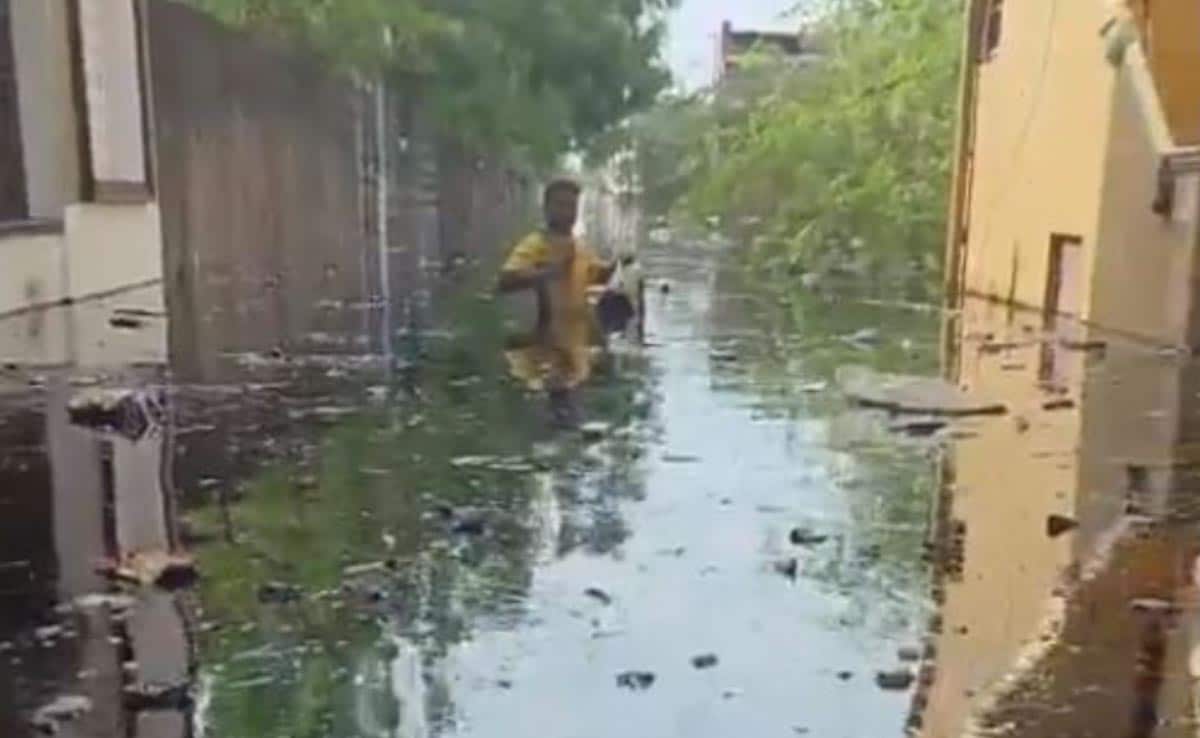
A viral video has surfaced showing layers of oil floating on floodwater in the Ennore area of Chennai. The area is home to several oil refineries and petrochemical industries, and the police are currently tracing the origin of the oil discharge.

Chennai is currently grappling with the devastating aftermath of Cyclone Michaung. Torrential rains have left the city’s low-lying pockets submerged in water, highlighting the critical need for improved flood prevention measures. 

The crude oil has reportedly spilled into the Buckingham Canal, a crucial waterway in the area. In the viral videos, the oil, slick like a dark stain, flowed freely along the canal’s surface, its path leading towards a nearby river, raising concerns about the potential contamination of a vast aquatic ecosystem.

READ | PM Modi Okays Rs 561 Crore For Chennai Flood Management Project

Days after Cyclone Michuang unleashed torrential rain on Chennai and its surrounding districts, the city continues to battle crippling waterlogging. The floodwaters, relentlessly clinging to the streets and suburbs, have paralysed daily life, leaving many stranded in their homes. The oil spill has now added to the problems.

Chennai Petrochemicals Limited (CPCL) has denied any leakage at its refinery at Manali. 

“We are investigating,” it said in a statement. “Due to Cyclone Michaung incessant rain caused unprecedented flooding inside the refinery. Other industries of Manali were also badly affected. Despite the flood situation in and around the refinery, the CPCL team rose to the occasion and ensured uninterrupted and safe operation of the refinery.”

Prime Minister Narendra Modi has greenlighted the first urban flood mitigation project in Chennai, allocating Rs 561.29 crore for “Integrated Urban Flood Management” activities in the Chennai Basin project.

Efforts to pump out stagnant water are being undertaken across various locations throughout the city while the Indian Air Force and the Coast Guard were engaged in dropping food and medical supplies from helicopters. 

Read full article
Supreme Court Verdict On Validity Of Ending J&K Special Status On Monday
onmynews.com

Supreme Court Verdict On Validity Of Ending J&K Special Status On Monday

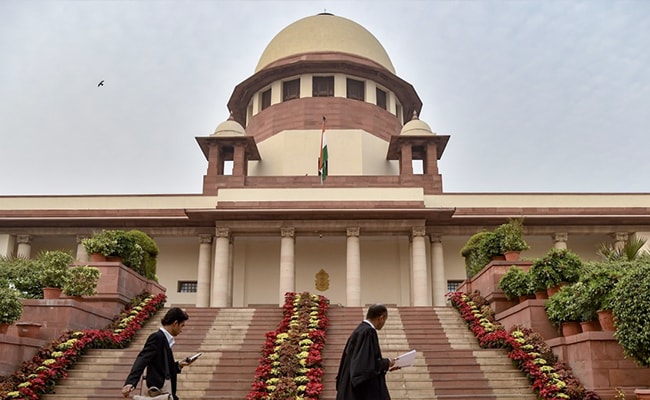
The Supreme Court will deliver its much-anticipated verdict on the constitutional validity of the Centre’s decision to abrogate Article 370 of the Constitution, which granted special status to Jammu and Kashmir, on Monday.

The landmark case, encompassing 23 petitions challenging government action, has been under review by the Supreme Court for an extended period. After 16 marathon days of hearings and persuasive arguments presented by both sides, the court reserved its judgment on September 5. 

A five-judge Constitution bench, led by Chief Justice of India DY Chandrachud and comprising Justices Sanjay Kishan Kaul, Sanjeev Khanna, BR Gavai, and Surya Kant, will pronounce the verdict on Monday. Their decision will hold immense significance, determining whether the abrogation of Article 370 was carried out in accordance with the Constitution and legal principles.

Eighteen lawyers, including Kapil Sibal, Gopal Subramaniam, Dushyant Dave, and Rajiv Dhawan, presented arguments challenging the validity of the Centre’s decision while the Centre, represented by Attorney General R Venkataramani, Solicitor General Tushar Mehta, and other legal experts, defended its actions as being completely logical and appropriate.

Centre’s Argument 

The Centre argued that the dissolution of the Jammu and Kashmir Constituent Assembly automatically brought about the creation of the Legislative Assembly. This, they claim, empowers the Centre to take action with the consent of Parliament when the Legislative Assembly stands adjourned during periods of President’s rule. 

They further asserted that this process adheres to the Constitution and does not violate the federal structure between the central and state governments.

Petitioners’ Argument 

The petitioners have accused the Centre of arbitrarily disregarding the state’s rights and constitutionally enshrined Legislative Assembly.

They argued that before dividing the state, obtaining the consent of the people, represented by their elected representatives in the Legislative Assembly, was a fundamental requirement. By bypassing this crucial step, the Centre has encroached upon the state’s autonomy and undermined the fundamental principles of Centre-State relations.

The petitioners further argued that the people of Jammu and Kashmir have been “deprived of representation” in both the Legislative Assembly and Lok Sabha for four long years. This denial of their elected representatives amounts to a strangulation of democracy in the region, they argued. 

Read full article
Link copied!