Live · Global · Independent
Live Feeds
PinkVilla
Forbes
NDTV
Hindustan Times
Probe Agency Approaches Court After Arvind Kejriwal Skips 5th Summons
onmynews.com

Probe Agency Approaches Court After Arvind Kejriwal Skips 5th Summons

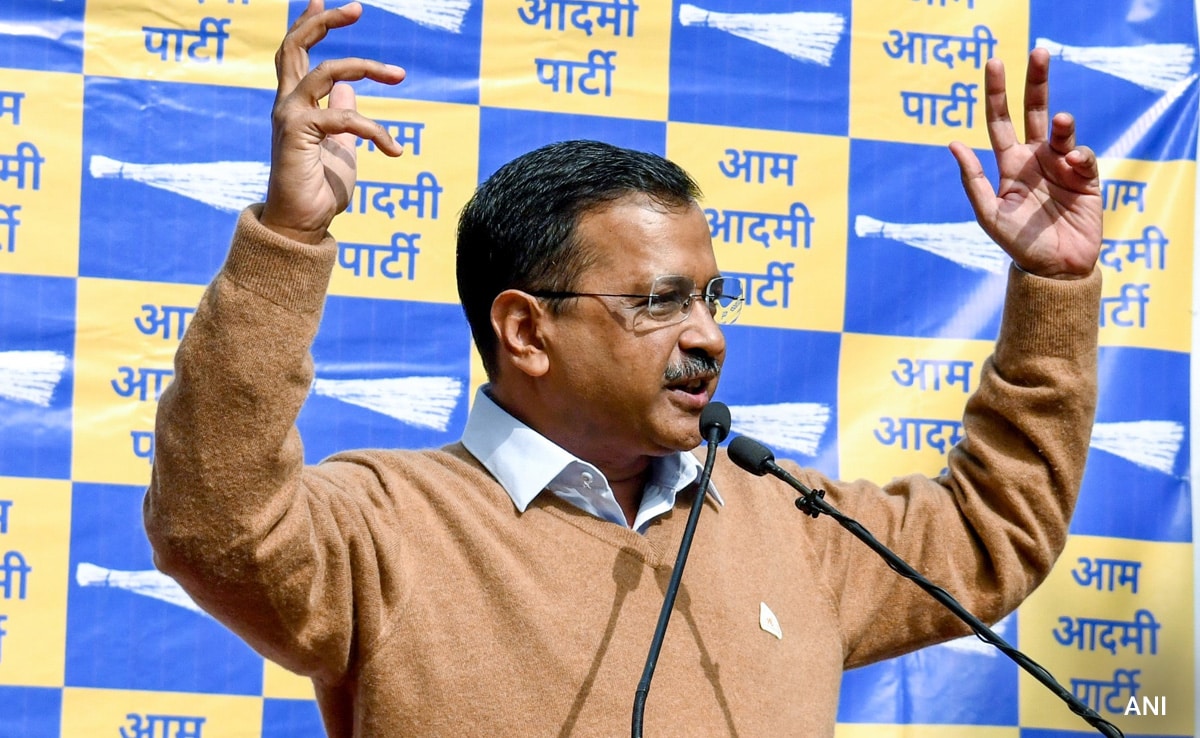
A day after Delhi Chief Minister Arvind Kejriwal skipped the fifth summons in the alleged liquor policy scam, the Enforcement Directorate has approached a court and filed a complaint stating that he has not appeared for questioning. The Rouse Avenue court in New Delhi will hear the case on Wednesday. 

Mr Kejriwal had refused to appear before the Enforcement Directorate on Friday and has repeatedly claimed that the summonses issued were illegal and the agency’s only aim is to arrest him. Speculation about the AAP chief’s arrest has been rife ever since the first summons was issued by the agency on November 2.

Two other AAP leaders – former Delhi deputy chief minister Manish Sisodia and Sanjay Singh – were taken into custody in connection with the case last year. 

The Enforcement Directorate’s complaint before the Rouse Avenue court on Saturday has been filed under Section 63 (4) of the Prevention of Money Laundering Act (PMLA), which deals with a person intentionally disobeying any direction issued under Section 50 – the clause that gives the agency the power to summon a person. 

Section 174 of the Indian Penal Code, which pertains to non-attendance in obedience to an order from a public servant, also finds mention in the complaint. 

Reacting to Friday’s summons, the AAP had termed the agency’s actions “politically motivated” and “unlawful”.

“PM Narendra Modi’s aim is to arrest Arvind Kejriwal and topple the Delhi government. We will not allow this to happen,” the party had said in a statement.

The Delhi chief minister has skipped five summons by the ED – on November 2, December 21, January 3, January 19 and February 2 – and had been questioned by the Central Bureau of Investigation in connection with the case in April last year, but was not made an accused by the agency. The ED is investigating the money-laundering angle in the case. 

The Case 

Under the liquor policy, introduced in November 2021, the government withdrew from retail sale of liquor and allowed private licensees to run stores. In July 2022, Delhi Chief Secretary Naresh Kumar flagged gross violations in the policy and alleged “undue benefits” to liquor licensees. The policy was scrapped in September that year.

The CBI has alleged that liquor companies were involved in framing the excise policy, which would have brought them a 12% profit. It said a liquor lobby dubbed the “South Group” had paid kickbacks, part of which were routed to public servants. The Enforcement Directorate has alleged laundering of the kickbacks.

The BJP has claimed that the proceeds of the alleged scam were used by the AAP to fund its campaign for the Gujarat Assembly polls in 2022, in which it got 12.91% of the votes and established itself as a national party

 

Read full article
US, UK Strike 36 Houthi Targets In Yemen In Bid To End Ship Attacks
onmynews.com

US, UK Strike 36 Houthi Targets In Yemen In Bid To End Ship Attacks

The United States and Britain struck dozens of targets in Yemen on Saturday in response to repeated attacks on shipping by Iran-backed Huthi rebels that have disrupted global trade and put lives at risk.

The joint air raids in Yemen come a day after a wave of unilateral American strikes against Iran-linked targets in Iraq and Syria that were carried out in response to the killing of three US soldiers in Jordan on January 28.

The strikes hit “36 Huthi targets across 13 locations in Yemen in response to the Huthis’ continued attacks against international and commercial shipping as well as naval vessels transiting the Red Sea,” the United States, Britain and other countries that provided support for the operation said in a statement.

“These precision strikes are intended to disrupt and degrade the capabilities that the Huthis use to threaten global trade, and the lives of innocent mariners,” the statement said.

The assault “targeted sites associated with the Huthis’ deeply buried weapons storage facilities, missile systems and launchers, air defense systems, and radars.”

US forces earlier Saturday separately carried out strikes against six Huthi anti-ship missiles that were “prepared to launch against ships in the Red Sea,” the Central Command (CENTCOM) said.

The military command also said Saturday that US forces shot down eight drones near Yemen the day before and destroyed four more before they could be launched.

CENTCOM said the four drones hit on the ground belonged to the Huthis, but did not identify a country or group linked to those that were shot out of the air.

The Huthis began targeting Red Sea shipping in November, saying they were hitting Israel-linked vessels in support of Palestinians in Gaza, which has been ravaged by the Israel-Hamas war.

US and British forces have responded with strikes against the Huthis, who have since declared American and British interests to be legitimate targets as well.

In addition to strikes against the Huthis, the United States set up a multinational naval task force aimed at protecting shipping on the transit route, which carries up to 12 percent of global trade.

Anger over Israel’s devastating campaign in Gaza — which began after an unprecedented Hamas attack on October 7 — has grown across the Middle East, stoking violence involving Iran-backed groups in Lebanon, Iraq, Syria and Yemen.

Last weekend, a drone slammed into a base in Jordan, killing three US soldiers and wounding more than 40 — an attack Washington blamed on Iran-backed forces.

The United States responded Friday with strikes against dozens of targets at seven Tehran-linked facilities in Iraq and Syria, but did not hit Iranian territory.
 

(Except for the headline, this story has not been edited by NDTV staff and is published from a syndicated feed.)

Read full article
1,000 Accounts, 1 PAN: How Paytm Payments Bank Came Under RBI’s Radar
onmynews.com

1,000 Accounts, 1 PAN: How Paytm Payments Bank Came Under RBI’s Radar

Hundreds of accounts created on Paytm Payments Bank without proper identification were one of the major reasons for the Reserve Bank of India to impose stringent curbs on the company, people familiar with the matter said. These accounts with inadequate Know-Your-Customer (KYC) conducted transactions worth crores of rupees on the platform, leading to fears of potential money laundering.

More than 1,000 users were found to have linked the same Permanent Account Number (PAN) to their accounts. The compliance submitted by the bank was found to be incorrect during verification processes conducted by both the RBI and auditors.

RBI is concerned that some of the accounts could have been used for money laundering, sources said. As well as informing the Enforcement Directorate, the RBI has sent its findings to the ministry of home affairs and the prime minister’s office.

The Enforcement Directorate will probe Paytm Payments Bank if any evidence of illegal activity is found, Revenue Secretary Sanjay Malhotra told Reuters.

There were also reports of non-disclosure of major transactions within the group and associated parties, further intensifying regulatory worries. The central bank’s scrutiny also unearthed loopholes in the governance standards, particularly in the linkage between Paytm Payments Bank and its parent company, One97 Communications Ltd.

Transactions routed through the parent app of Paytm raised data privacy concerns, leading to the RBI’s decision to halt transactions through Paytm Payments Bank. While user deposits in savings accounts, wallets, FASTags, and NCMC accounts are not immediately affected, the company will have to rely on third-party banks for its operations until February 29.

Following the RBI’s notice, Paytm stock experienced a sharp decline, plummeting 36% over two days and wiping $2 billion off its market value.

Paytm founder Vijay Shekhar Sharma dismissed the regulatory actions as a “speed bump” during a conference call with analysts, aiming to reassure stakeholders amid the ongoing turbulence.

Read full article
Link copied!