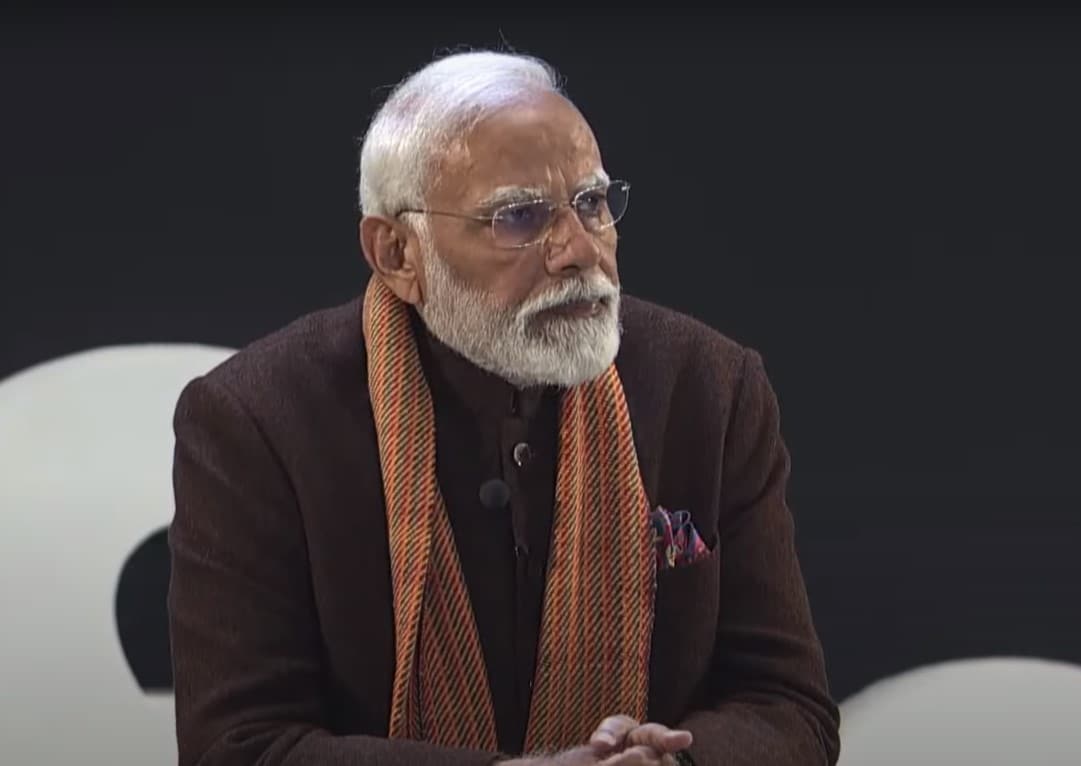
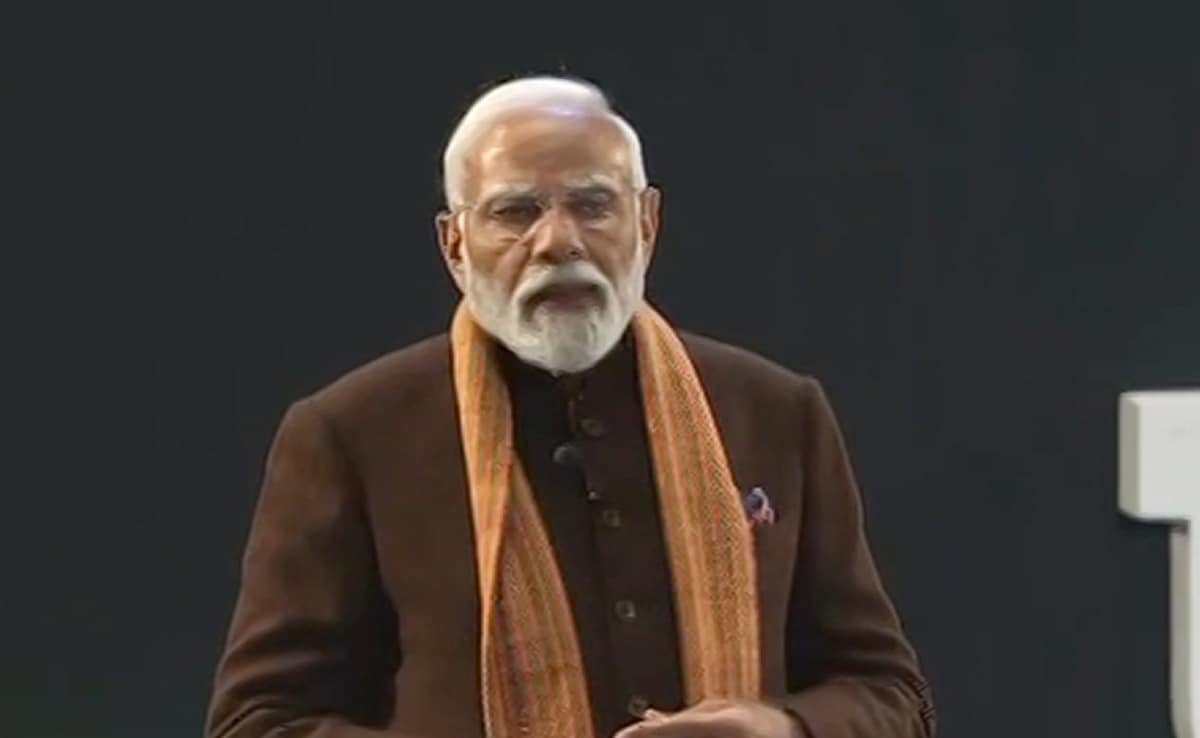
Prime Minister Narendra Modi on Monday said it is crucial to instill resilience in children to help them cope with pressures and asserted that parents and teachers should collectively address challenges faced by students. Interacting with students, parents and teachers during his annual Pariksha Pe Charcha programme, the prime minister advised parents against treating their child’s report card as their own visiting card and suggested that students should compete with themselves and not others.
“It is crucial to instill resilience in our children and help them cope with pressures… We cannot do switch off, pressure is gone. One must become capable of bearing any kind of pressure. They should believe that pressure keeps on building, and one has to prepare oneself,” he said.
Prime Minister Modi also suggested students to “always make friends who are more intelligent and work harder”. “You must be inspired by such friends. Don’t let the pressure of studies and examinations overpower you,” he said.
PM Modi said that even though competition and challenges act as inspirations but competition must be healthy.
“Lot of parents keep on giving examples of other children to their children. Parents should avoid doing these things…,” he said.
The prime minister said, “We have also seen that those parents who have not been very successful in their lives have nothing to say or want to tell the world about their successes and achievements, make the report card of their children as their visiting card. Whenever they meet someone, they will tell them the story of their children.” “You must not compare one child with another as that can be detrimental to their future. Some parents treat their children’s report card as their visiting card, this is not good,” he said at the seventh episode of his outreach programme with students ahead of examinations.
The prime minister explained that the stress faced by students is of three types –induced by peer pressure, by parents and self induced.
“At times, children take pressure on themselves that they are not performing up to the mark. I suggest that you should set small goals during preparation and gradually improve your performance, this way you will be completely ready before exams,” he said.
“We have to make ourselves capable of facing any sort of pressure. Students need to make themselves ready to go through any condition. If we visit any cold place, we make up our minds, and accordingly, we keep ourselves ready…(in the) same way you have to be ready for exams,” PM Modi said.
The prime minister said that challenges of students must be addressed collectively by parents and teachers. He also encouraged teachers to forge strong connections with their students.
“The bond between educators and learners is the foundation for a bright future. If teachers start working on building a relationship with their students from the first day of the year, there won’t be any question of tension building up among students at the time of examinations,” he said.
“Teachers must expand their connections with students much beyond their subject syllabus so that students can reach out to their teachers even for the smallest of problems. Music teachers can not only help their own students deal with tensions, they can do so for students of the entire school,” PM Modi said.
Replying to questions on balancing studies with a healthy life, Prime Minister Modi said many students use mobile-phones and some do it for many hours. He advised students not to use their sleep time for watching reels.
“They should understand that even mobiles need recharge to be used, and similarly, our body also needs to be recharged. On the other hand, some students keep playing all the time, but it is necessary to strike a balance. A healthy body is necessary for a healthy mind. Good and sound sleep is also a must for good health. Don’t use your sleep time for watching reels,” he said.
“I get into deep sleep within 30 seconds of lying on the bed on all 365 days. When I am awake, I am fully awake, but I am totally asleep while sleeping. Nutrition is also necessary. Our body must get the required nutrition. A good balance of food and regular exercise for fitness are also necessary,” PM Modi said.
The prime minister also advised students to practice writing. “In this age of mobile phones and laptops, students are losing the practice to write while exams are supposed to be handwritten. Of the time dedicated to studies, you should devote at least 50 per cent time to practise writing,” he said.
Describing students as the shapers of India’s future, Modi said the Pariksha Pe Charcha programme is like an examination for him too. He also said that students have become more innovative than ever.
Organised by the Ministry of Education, Pariksha Pe Charcha has been engaging students, parents and teachers for the past six years.
This year’s event has been held in a town hall format at the Bharat Mandapam here. An estimated 2.26 crore registrations have taken place on the MyGov portal, highlighting the widespread enthusiasm among students.
Due to the COVID-19 pandemic, the fourth edition was held online, while the fifth and sixth editions returned to the town-hall format.
(Except for the headline, this story has not been edited by NDTV staff and is published from a syndicated feed.)