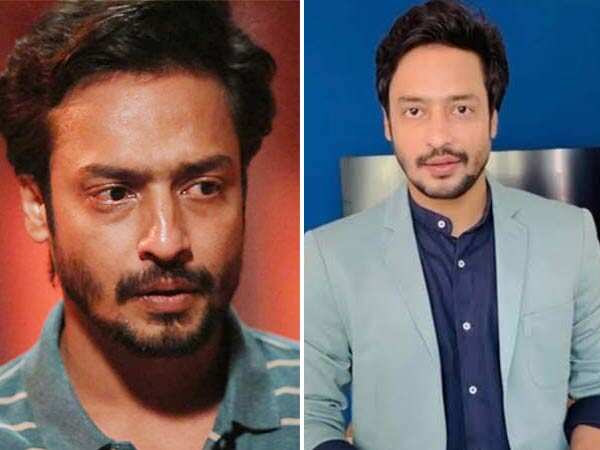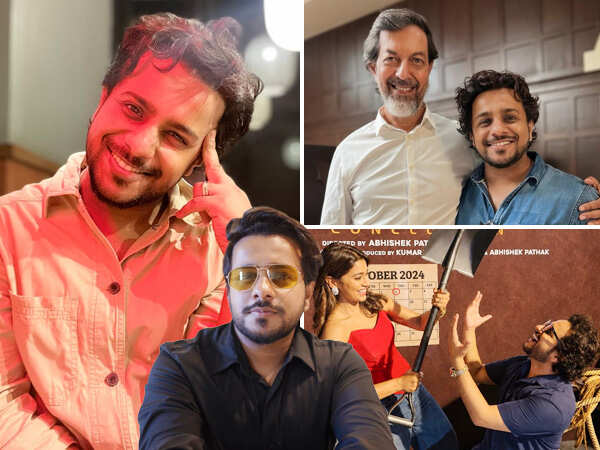
Filmfare Exclusive: Vijay Salgaonkar helped secure my future – Aamil Keeyan Khan on Drishyam

Four years ago, Aamil Keeyan Khan debuted as a screenwriter with Runway 34 and Drishyam 2 in the same year. Now, with Drishyam: The Conclusion, the story has come full circle. Writing alongside director Abhishek Pathak and Parveez Sheikh, Aamil spent months on a climax that kept refusing to end, and a hero the audience now suspects of everything, even sneezing. In this chat with Filmfare, he talks about the writers’ room fights, the dark draft they abandoned, the Malayalam original, and the one scene he’d rather sell to a producer than reveal to us.

You debuted as a screenwriter with Drishyam 2 and now you’ve closed the franchise. What does Vijay Salgaonkar mean to you personally?
Actually, I made my debut with Runway 34. Drishyam 2 was my second film, but both released in 2022, which was my debut year. And now, four years later, in 2026, here we are concluding Drishyam: The Conclusion. So, in a strange way, life has come full circle.
There’s also something rather poetic about Vijay Salgaonkar. Vijay spent three films trying to protect his family’s future, and somewhere along the way, he helped secure mine.

Where were you when you typed the final scene, and what did you do after?
We were at the Panorama office, in our infamous conference room, Abhishek, Parveez bhai and I. I remember it very vividly because by then I’d completely lost count of how many times we’d rewritten the ending. The great irony was that the ending itself was refusing to end!
When we finally finished, I silently offered a little prayer, hoping this would be the last rewrite. Abhishek read it and said, “It’s good… for now. We’ll see.”
Those three words, for now, we’ll see, are enough to give any screenwriter sleepless nights.
So, much like the audience, I spent the next few days wondering how this story was going to end. Thankfully, everything eventually fell into place. Although I think the real climax for me was the day nobody asked for another draft!
Abhishek has said he “cracked” the story and brought the base. What was the very first idea he pitched you, and what did you add that changed it?
I can’t discuss this without giving away spoilers. 😛 On hold for now.
Most of the cast and crew weren’t told the ending. Did any actor try to sweet-talk the climax out of you on set?
Haha! Quite a few people tried! Actors, crew members, friends, relatives. Suddenly, everyone was being unusually nice to me. Abhishek was extremely particular about keeping the climax under wraps. Most people only knew what they needed to know for their scenes.
The funniest part was watching people come up with their own theories. Some were surprisingly clever. Others made me wonder all sorts of things.

Which scene or twist was your favourite but never made it to the final cut?
I could either tell you, or I could sell it to a producer. Which one do you think sounds like a better idea? Giving away perfectly good ideas for free would be a rather poor business decision!
Which draft was the most different from the film we saw? Was there a version where Vijay’s fate was completely different?
Oh, absolutely! I remember a draft we wrote during our very first trip to Goa together to work on the film. It was our first serious attempt at cracking the screenplay, and we took Vijay Salgaonkar to some very dark places.
We were exploring just how far this character could go, morally and psychologically. There were new characters, some rather disturbing possibilities, and I remember we’d written a particularly interesting part for a character you wouldn’t even guess.
We actually cracked almost half the film in terms of beats. We decided what the interval point could be. And we were patting each other on the back, imagining how fascinating it would be for audiences to watch their beloved protagonist descend into darkness. By evening, we’d gone back to the drawing board. Haha!
That’s the wonderful thing about writing. You can spend an entire day convincing yourself you’ve written something extraordinary, only to realise by dinner that you’ve completely lost your mind. But I still have a soft corner for that version. Unfortunately, even we weren’t entirely sure we wanted to follow him there.

Abhishek said you each read each other’s drafts. Did you read the Malayalam team’s script? Were you tempted to steal anything, or deliberately steer away?
Our draft was already written and ready by the time we got to read the Malayalam version. So, the only temptation, really, was curiosity. As fans of Malayalam cinema and Jeethu Joseph’s work, we were genuinely excited to see where he was taking this world and these characters.
Once we read it, it became quite clear that both stories had their own appeal and were suited to their respective audiences. The Hindi and Malayalam versions were taking entirely different directions. And because our story had already taken shape, there was never really a temptation to borrow anything. Nothing from their version would have fitted organically into ours.
Ajay Devgn has said he’d love Mohanlal to watch this film. If Georgekutty and Vijay met over chai, what would they say to each other?
Haha! I think they’d sit across from each other, sipping chai, exchanging notes on how their wives have repeatedly managed to leak their carefully guarded secrets to the police.
Two of the smartest men in the country, brought together by one common problem: ghar mein koi baat hazam nahin hoti!

Vijay was almost a blank slate in Part 1. Now the audience knows exactly how his mind works. How do you outsmart viewers who are already suspicious of everything he does?
Exactly! I think the challenge is that by the third film, the audience knows Vijay Salgaonkar almost as well as we do. If he buys a newspaper, people suspect there’s a secret message in it. If he sneezes, they’re probably wondering whether it’s Morse code! Haha!
And that’s what makes writing for him both exciting and difficult. You have an audience that’s already familiar with his methods, so simply giving him another clever plan isn’t enough.
We tried to approach it by focusing on the difference between surprise and suspense. Sometimes the audience knows something is happening, but the pleasure lies in discovering how, why, and what they’ve overlooked along the way. Of course, you can never be certain you’ve managed to surprise everyone. Audiences are incredibly perceptive, and some viewers will always be several steps ahead of you.
I think our job isn’t to underestimate the audience’s intelligence, but to respect it enough to keep challenging ourselves as writers. And hopefully, somewhere along the way, we manage to surprise a few people. Including ourselves!

How do you plant a clue in plain sight, so it’s invisible on first watch but obvious on rewatch?
If you draw too much attention to it, the audience immediately suspects something. If you hide it too well, the eventual revelation feels unfair.
The best clues often have two meanings. The first one makes perfect sense when you’re watching the scene. The second only becomes apparent once you know the truth. And you have to be careful not to cheat. The information should be available to the audience, even if they don’t recognise its significance at the time. Ideally, on the first watch, the audience shouldn’t notice the clue. On the second, they should wonder how on earth they missed it.
Of course, there are always those people who spot everything immediately. I have tremendous respect for them. I just wish they’d stop posting spoilers on Instagram and YouTube!

You balance humour, family, emotion and thrills. Which one is hardest to protect in a thriller?
I’d say emotion. Because suspense can keep an audience curious, humour can keep them entertained, and a clever twist can make them applaud. But if they don’t care about the characters, none of it really matters.
Take Drishyam. At its heart, it’s a story about a father protecting his family. Remove that emotional connection and suddenly you’re watching a very intelligent man obstruct a police investigation. Which, frankly, is a rather questionable thing to celebrate! Haha!
And that’s the danger with thrillers. You can become so obsessed with making the plot clever that you forget to make the characters human.
A twist makes the audience say, “I didn’t see that coming.” Emotion makes them say, “I hope that doesn’t happen.” For me, the second is what gives the first its impact.

When you’re stuck in draft 70-something, what gets you unstuck? A walk, a whiteboard, a fight with the director?
Haha! All three, although I’d strongly recommend the walk before the fight with the director! I think what usually helps is going back to the fundamental question: what is this scene actually trying to achieve? Sometimes you’re struggling with the dialogue when the real problem is the scene itself. Or you’re trying to fix a scene when the problem was created twenty pages earlier.
A fresh conversation helps enormously. Abhishek, Parveez bhai and I would keep challenging each other’s ideas, and sometimes one innocent question would expose a problem we’d been overlooking for weeks. The most frustrating thing about writer’s block is that the solution often arrives when you’re doing absolutely nothing. Which makes it very difficult to justify your working hours to your family.

Writing three people’s ideas into one voice can bruise egos. How did the writers’ room (you, Abhishek, Parveez) settle a creative fight?
I think the first thing you have to accept in a writers’ room is that your idea isn’t necessarily the best idea just because it’s yours. Abhishek, Parveez bhai and I would discuss, debate and sometimes defend our ideas quite passionately. But ultimately, the question was never who came up with something. It was whether it made the film better.
And sometimes you have to let go of an idea you absolutely love. That’s probably the most difficult part of collaboration. Especially when you know you’re right and the other two are clearly suffering from a temporary lapse in judgement! Haha! But seriously, the moment you start protecting your ego instead of the screenplay, you’ve already lost the argument.
Is there a line or a silence in the film that you think says everything about Vijay?
Filmo ka sach hona zaroori nahin, sach lagna zaroori hai.
As a writer, I always wonder: when do you know a script is done, versus just out of time?
I think once the film has released in theatres, it’s probably a good time to stop rewriting it. Although I’m sure some writers would still like to send revised pages to the projectionist!
But seriously, I don’t think a writer ever feels a screenplay is completely finished.
There’s always a scene you could improve, a line you could sharpen, a moment you could rethink. At some point, you have to recognise the difference between making something better and simply making it different. A screenplay is never really finished. It just gets taken away from the writer. And sometimes, thank God for that!
Did you ever feel the weight of Drishyam 1’s cult status while writing? Did you have a “don’t mess this up” moment?
Of course! The interesting thing about a beloved film is that audiences don’t just remember what happened. They remember how it made them feel. That’s a much harder thing to recreate.
So yes, there were plenty of ‘don’t mess this up’ moments. In fact, I think that was the unofficial title of our writers’ room WhatsApp group!
Why was this the right place to end Vijay’s story, and not Part 4?
Because I think there’s a difference between a story reaching its natural conclusion and a franchise reaching its commercial limit. Ideally, you should stop at the former, even if the latter is nowhere in sight.
Vijay’s journey began with one incident and the consequences that followed. We’ve explored how far a man can go to protect his family, what those decisions cost him, and how long he can continue living with them. At some point, extending that conflict risks turning a compelling character into a convenient excuse for another sequel.
And there’s something quite satisfying about ending a story while people still want more. Besides, if we make Drishyam 4, Vijay might have to start hiding the screenwriters’ bodies just to stop us from troubling him!
If a fan could ask you one thing about Vijay’s world, what do you think it would be, and would you answer it?
I think after three films, fans have enough questions about Vijay Salgaonkar to conduct an entire CBI interrogation. Would I answer them? Of course! Whether they’d get the truth is another matter.

Vijay’s smartest move in the trilogy?
Convincing the audience that he’s a good man. His smartest move wasn’t fooling the police. It was making the audience his accomplice.
The scene you’d rewrite if you could, no questions asked?
That’s a dangerous question. If I name a scene, Abhishek might call me tomorrow and ask for another draft! I think every writer watches their film and finds little things they could’ve done differently. But there’s also a point where you have to make peace with the film you’ve made.
As a writer, you are bound to receive notes from producers, stars, and studio executives. Without taking any names of actors or projects, what is the most unintentionally hilarious creative note you were ever handed by someone who clearly had no understanding of the story?
I’ve heard some wonderfully hilarious suggestions over the years, but I wouldn’t want to embarrass anyone by quoting them because they may read this interview – and some of my invoices are still due.
From a Goa draft that went too dark to a climax that refused to end, Aamil Keeyan Khan’s journey with Vijay Salgaonkar has been as full of rewrites as the films themselves. As Drishyam: The Conclusion brings the trilogy to a close, one thing is clear: the writers know when to stop and they’d rather leave the audiences wanting more than stretch the story into a Part 4. Whether viewers spotted every clue or not, Vijay’s tale ends the way it began. With a man, his family and a story that only needed to feel true.
Also Read: The White Edit: Navratri’s Second Dawn, Reimagined in Haute Couture
 Producer TG Vishwa Prasad believes The Raja Saab might have performed better had it not released during Sankranthi (Pongal). Speaking to the media on Tuesday, he said the outcome “would have been different” had the film arrived outside the festival window. The horror-fantasy comedy, headlined by Prabhas, with Sanjay Dutt playing the antagonist, failed to meet expectations at the box office.