Live · Global · Independent
Live Feeds
PinkVilla
Forbes
NDTV
Hindustan Times
Atharvaa Transforms Across The Years In Idhayam Murali Birthday Glimpse
onmynews.com

Atharvaa Transforms Across The Years In Idhayam Murali Birthday Glimpse

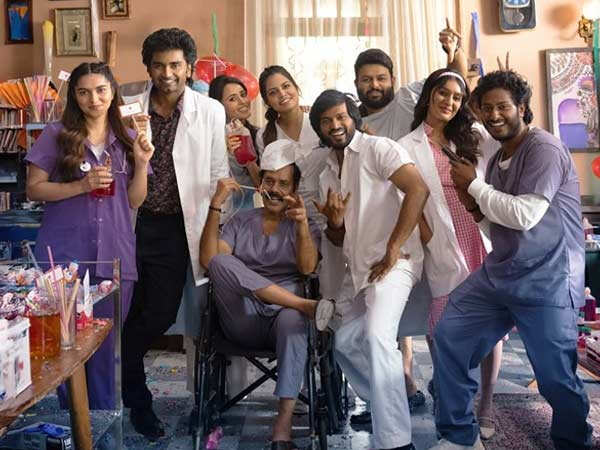
Atharvaa celebrated his 37th birthday on Thursday, and the makers of his upcoming film Idhayam Murali marked the occasion by unveiling a behind-the-scenes video from the project. More than a standard birthday promo, the glimpse offers early insight into the film’s emotional tone and the character journey Atharvaa is set to portray.

A Peek Into Atharvaa’s Emotional Journey

The video presents the actor in multiple avatars, hinting at a story that unfolds over several years. In some portions, Atharvaa appears as a carefree youngster enjoying college life with friends, while later glimpses show a visibly older and more guarded version of the character. The progression suggests that Idhayam Murali could be tracing the emotional shifts that come with adulthood, heartbreak and changing relationships.

Going by the footage, the film appears to lean into the coming-of-age romance space, with friendship and love forming the core of the narrative. The makers have not revealed specific plot details yet, but the visual treatment and mood of the teaser point towards a nostalgic drama shaped by personal memories and emotional transitions.

Atharvaa was last seen in a key role in Sudha Kongara’s Parasakthi, alongside Sivakarthikeyan, Ravi Mohan and Sreeleela. While the actor has frequently explored intense and action-oriented roles in recent years, Idhayam Murali looks positioned as a more emotionally driven film, with romance and personal growth taking centre stage.

Fahadh Faasil, Thaman And A Large Ensemble Join The Film

The film is written, produced and directed by Aakash Baskaran in his directorial debut. Alongside Atharvaa, the cast features Fahadh Faasil, Kayadu Lohar, Thaman S, Natty Subramaniam, Preity Mukundhan, Pragya, Angeline and Yashashree.

One of the notable aspects of the casting is Thaman’s appearance in an acting role. The composer, who has become one of the busiest names in South Indian film music, is returning to acting for the first time since his appearance in Shankar’s Boys. The film also includes internet personalities Sudhakar and Dravid from the Parithabangal YouTube channel, along with content creator Niharika NM. Singer Jonita Gandhi is expected to make a cameo appearance.

The technical crew includes cinematographer Manoj Paramahamsa, whose work in romantic dramas and visually polished entertainers has often stood out for its glossy aesthetic. Editing is handled by Pradeep E Ragav, while lyricist Vivek has penned the songs. Senthilkumar Kesavan serves as the co-director, with dialogues written by Aakash Baskaran alongside Dravid and Ramanagirivasan.

Music is composed by Thaman, and the BTS video already hints at a soundtrack that could play a major role in shaping the film’s nostalgic and emotional atmosphere. Though the makers are yet to announce a release date, the birthday glimpse has sparked curiosity online, especially among audiences interested in character-driven romantic dramas.

Also Read: Atharvaa Steps Into a Dual Identity With Valai, a Gritty Coastal Revenge Thriller
Read full article
The Firebrand and The Frame: Reassessing John Abrahamâs Radical Cinema
onmynews.com

The Firebrand and The Frame: Reassessing John Abrahamâs Radical Cinema

Malayalam cinema’s great radical, John Abraham, is back in conversation. With the restored 4K version of Amma Ariyan, his landmark 1986 Malayalam film, set to have its world premiere at the 79th edition of the Cannes Film Festival, renewed attention is once again turning towards one of the most uncompromising filmmakers Indian cinema has produced.

Born in Kerala in 1937, Abraham studied at the Film and Television Institute of India, where he trained under filmmaker Ritwik Ghatak. The influence of Ghatak’s politically charged storytelling and formal experimentation can be seen across Abraham’s films. At a time when mainstream Indian cinema revolved around star-driven narratives and rigid storytelling structures, Abraham gravitated towards films that resisted neat storytelling and remained deeply rooted in social realities.

The Firebrand and the Frame: Reassessing John Abraham’s Radical Cinema

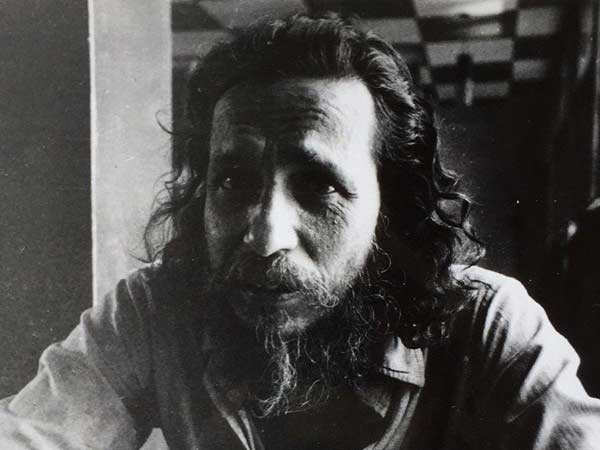
John Abraham with cinematographer Venu. Image: Venu

Across just four feature films, Vidyarthikale Ithile Ithile (1971), Agraharathil Kazhuthai (1977), Cheriyachante Kroorakrithyangal (1979) and Amma Ariyan (1986), he questioned authority, caste structures, organised religion and ideological certainties. Though his filmography was brief, its impact on Malayalam parallel cinema remains difficult to ignore.

Challenging Norms Through Cinema

Abraham’s second feature, Agraharathil Kazhuthai, remains one of the sharpest anti-caste satires made in Indian cinema. Inspired by Au Hasard Balthazar by Robert Bresson, the film follows a professor who brings a donkey into a conservative Brahmin settlement, triggering paranoia and hostility within the community. The film won the National Film Award for Best Tamil Feature Film and gradually acquired cult status for its fearless social commentary. Decades later, the film’s portrayal of a community projecting fear and moral panic onto a stray animal still feels unsettlingly familiar.

His Malayalam films pushed even further into philosophical and social territory. Cheriyachante Kroorakrithyangal explored power, guilt, and feudal violence through an experimental narrative structure, while Amma Ariyan examined the emotional aftermath of activism in Kerala during the 1980s.

The Firebrand and the Frame: Reassessing John Abraham’s Radical Cinema

A Still from Agraharathil Kazhuthai

Amma Ariyan follows a group of friends travelling across Kerala to inform a mother about the death of her son, a percussionist believed to have been involved in radical politics. Along the way, the journey becomes a portrait of a society shaped by protest movements, student politics, and ideological uncertainty. The film blended documentary realism with fiction, often using real locations and non-professional performers to create a sense of immediacy.

The film also stood apart formally. Rather than following a conventional dramatic structure, Amma Ariyan unfolded through conversations, encounters, and fragments of memory. Cinematographer Venu used a stark visual style that gave the film an almost reportage-like texture.

Reinventing the Idea of People’s Cinema

Abraham’s politics extended beyond the stories he told. In the mid-1980s, he co-founded the Odessa Collective, a people’s film movement that sought to break away from traditional production and distribution systems. Members of the collective travelled across Kerala screening films in public spaces and collecting small donations from ordinary people to finance new projects.

The Firebrand and the Frame: Reassessing John Abraham’s Radical Cinema

A still from Amma Ariyan

This grassroots fundraising model eventually helped produce Amma Ariyan, making it one of India’s earliest crowd-funded films. At a time when independent filmmakers had limited access to institutional funding, the Odessa Collective offered an alternative model built around community participation.

The movement also changed how films were exhibited. Odessa screenings took place in village squares, factory spaces, and local gatherings rather than conventional theatres. For Abraham, cinema was not meant to exist only within commercial structures. It was meant to provoke discussion, circulate among people, and remain connected to public life outside the screen.

Though Abraham died in 1987 at the age of 49 after an accidental fall, his influence continues to be felt across Malayalam cinema. Filmmakers and scholars frequently revisit his work for its formal experimentation, social engagement and rejection of cinematic convention. The renewed international attention surrounding Amma Ariyan’s restoration has once again brought focus to a filmmaker who believed cinema should remain inseparable from political and public life.

Also Read: Check out Akshay Kumar and John Abraham’s crackling camaraderie

Read full article
Exclusive: Simran Says Bollywood Doesnât Respect South Actorsâ Legacy
onmynews.com

Exclusive: Simran Says Bollywood Doesnât Respect South Actorsâ Legacy

South actress Simran made quite a revelation during her recent conversation with Filmfare. The actress stated that the Hindi film industry lacks respect for many actors from the South. She also cited this as one of the reasons why she often turns down Hindi films.
She told Filmfare, “A lot of times, I have refused to do a Hindi film because I don’t connect with people. It feels like they have not seen the work we have done down South and the legacy actors carry before we come here. It bothers me. There is no respect. I have given more than half of my life to cinema, and despite that, if I lack respect, then it hurts. It makes no sense.”
She then stated that the accommodation and stays are not properly handled for South actors, and producers often negotiate basic facilities. Simran continued, “They bargain on stay. They limit the number of people who can travel with me. They say things like, ‘You can’t bring so many staff.’ They bargain on hotels and tickets. These things bother me a lot, but nobody talks about it. There is a hierarchy, so you don’t feel like working. You feel hurt.”
However, she also shared her positive experience with certain production houses and gave a shout-out to Om Changani, who backed the Sunny Deol starrer Gabru. The actress further praised the team of Gulmohar and added that she never felt out of place while working on that film.
This is not the first time an actor from the South has commented on the Hindi film industry. Some time back, Dulquer Salmaan said that he would get pushed around on sets and had to create the illusion of being a big star so that he was treated with basic respect.

Also Read: “Gen Z Don’t Ask for Permission From Parents” – Kajol Says DDLJ’s Simran Doesn’t Exist Today

Read full article
Link copied!