When Navy kids Geeta and Sanjay Chopra left their Dhaula Kuan Officers’ Enclave home, it was 6.15 pm. It was a late-August evening in 1978 and Delhi was grey. There were threats of large-scale floods in northern India.
A drizzle had threatened to play spoilsport for the Chopra siblings. They were headed to the All India Radio (AIR) office on Sansad Marg for a special programme. Geeta, a 2nd-year student of Jesus and Mary College, was scheduled to be on Yuva Vani, along with brother Sanjay, at 8 pm that day.
The rain meant the Chopra siblings could not walk the few kilometres to Sansad Marg. They hitched a ride with Dr MS Nanda, who dropped them off at Gole Dak Khana, one kilometre from their destination. Their father was supposed to pick them up from the AIR office at 9 pm. It was August 26, 1978.
Sanjay and Geeta, the son and daughter of Indian Navy Captain MM Chopra and Roma Chopra, never made it to the AIR office. Their parents never heard from them again.
Three days later, a passing cowherd discovered the rotting bodies of the two children in the dense undergrowth of the Ridge. It was 6 pm on August 28, 1978.
The Lime-Coloured Fiat
After the Chopra teenagers were dropped off near Gole Dak Khana by Dr Nanda, a few people saw a lime-coloured Fiat around the area. Something was off about the car.
Bhagwan Das, the owner of an electrical goods store, saw the Fiat driving past him at the Gole Market intersection. He called the cops at 6.45 pm to report an alleged kidnapping. There was a teenage couple in the back seat of the car and the girl was screaming for help. The number plate of the car read “MRK 930”.
The Control Room sent out a wireless alert to patrol vehicles in the area. Soon after the alert went out, another similar report was registered at the Rajinder Nagar Police Station.
23-year-old junior engineer Inderjeet Singh Noato informed the duty officer, Harbhajan Singh, that he saw a Fiat speeding past his scooter near the Lohia hospital. He had heard the muffled screams of a girl from the car.
As he pulled his scooter up near the Fiat at the intersection, he saw two men in the front seat of the car, and a boy and a girl in the back. The girl was pulling at the driver’s hair. The boy gesticulated to his blood-stained T-shirt as he saw Singh pull up near the window.
The car jumped a red light and sped away.
A botched up investigation by the police followed, and public rage spilled on to the streets.
Three days after the disappearance of Geeta and Sanjay, the police discovered that they were murdered. Geeta was also raped.
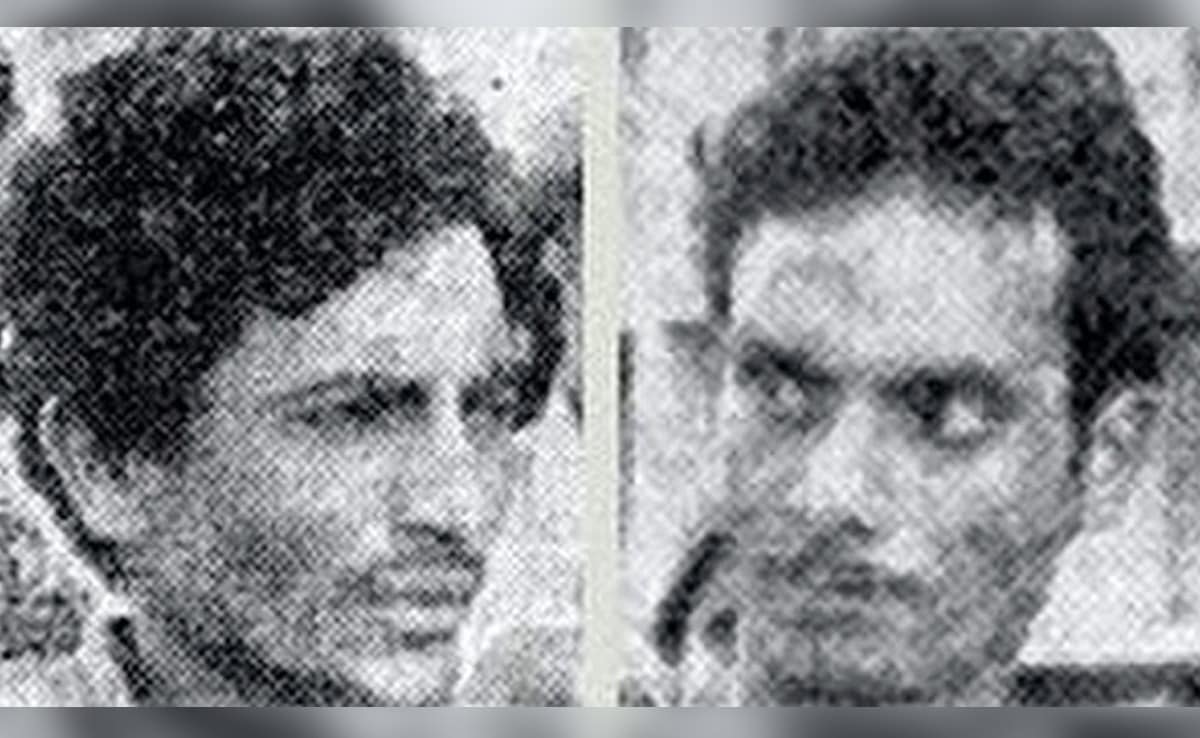
Back in the 1970s, Delhi hadn’t yet become the “rape capital”, and the rape-murder of Geeta and Sanjay Chopra was perhaps Delhi’s first brush with a crime as heinous. The Delhi High Court handed a death penalty to the killers, Kuljeet AKA Ranga Khush and Jasbir Singh AKA Bengali AKA Billa.
While announcing death to the killers for the “cold-blooded, ruthless, cruel murders of two innocent teenagers”; the Delhi High Court said that Billa and Ranga “had a fiendish sadistic pleasure in committing the crime”, and so “to award any other sentence except death sentence will amount to complete failure of justice”.
The Nabbing of Ranga-Billa
Two weeks after Geeta and Sanjay were killed, Ranga and Billa, who had been on the run, boarded the Kalka Mail to Delhi. They got on the train as it slowed down near the Agra station. They made the mistake of boarding a military compartment, which finally did them in.
When Lance Naik Gurtej Singh and AV Shetty asked for their IDs, one of the men said to the other, “Usko bhara hua identity card dikhao (Show them the ID that’s filled in).” Lance Naik Gurtej Singh suspected the credentials. He also happened to have a copy of the Hindi daily Navyug with him, which had a photo of Billa – “India’s Most Wanted” in 1978.
So, at 3.30 am, when the train chugged into the Delhi station, Ranga and Billa were handed over to the police, along with their belongings of a kirpan, a live .32 bore cartridge, and bloodstained clothes belonging to the men.
And that’s how, in 1978, Ranga and Billa landed up at the ‘phansi kothi (hanging room)’ of the Tihar Jail, where jailer Sunil Gupta was in-charge of operations. The hanging of Ranga-Billa was Gupta’s first execution in Tihar.
A Netflix series on the life of Sunil Gupta, based on Sunetra Choudhury’s book Black Warrant: Confessions of a Tihar Jailer (Roli Books, 2019), is slated to release on January 10.
In Tihar’s ‘Phansi Kothi’
In the book Black Warrant: Confessions of a Tihar Jailer, Sunil Gupta recounts, “Decades after I first met Billa and Ranga, I can still distinguish them by their very distinct personalities. Ranga’s name in Tihar was ‘Ranga Khush’, a literal representation of his disposition. He was 24-year old and about six-feet tall and eerily, seemed quite happy in jail. ‘Ranga Khush, Ranga Khush‘ (Ranga’s happy). I think he picked this line from the dialogue of a film and used it repeatedly as if to convince himself that he was in a happy place and not on death row. I am not sure whether he was genuinely happy or he had just hypnotised himself into a state, but he kept up his cheery demeanour until the end.”
Billa, on the other hand, was quite the opposite, according to Sunil Gupta.
“In contrast, 22-year-old Billa who was much shorter, only about 5.5 feet tall, would skulk around the jail. Ranga participated in the daily life of the jail community, but Billa did not talk to anyone. He told us repeatedly that he was framed and falsely accused. He would tell his visiting family, ‘Get me a lawyer, get me bail.’ Every court reaffirmed the death sentence to him but Billa, the man whose blood and his victims’ blood had forensically linked him to the crimes, refused to accept it until the end,” says Gupta in the book, Black Warrant: Confessions of a Tihar Jailer.
Ranga maintained till the end, says Gupta, that he and Billa had plotted a kidnapping for ransom, and Geeta and Sanjay were never meant to be raped or killed.
The cover of Black Warrant: Confessions of a Tihar Jailer, by Sunetra Choudhury and Sunil Gupta (Roli Books, 2019)
“It was only when Billa saw Geeta, Ranga claims, that he was overpowered by his attraction towards her and turned a simple kidnap and robbery into the most gruesome rape and murder case that Delhi had heard of at that time,” says Gupta.
The Delhi High Court’s death penalty was upheld by the Supreme Court. Morarji Desai, who was the Prime Minister of India in 1978, took special interest in the case. His government was torn apart for its handling of the Chopra slayings.
The Janata Party alliance government, which was voted into power after the Emergency, lost the subsequent elections. The sorry state of the law and order of Delhi had a significant role to play in the Janata Party’s defeat.
The September 30, 1978, issue of the India Today Magazine reported, “The capital’s steadily deteriorating law and order situation had already reached rock bottom, and the Chopra slayings were the spark that lit the conflagration. Captain Chopra, the father of the slain children, was echoing the sentiments of a majority of Delhi’s citizens when he said bitterly: ‘These days no mother and father feels secure about their children. It is not the question of my children—it is my children today; tomorrow it can be others.'”
The Black Warrant
(Why Black Warrant: A ‘Black Warrant’ is called so because of the black lines that frame a death warrant.)
As soon as Ranga and Billa’s death warrant was signed, Tihar’s hangmen received the summons. Fakira from Faridkot in Punjab and Kalu from Meerut Jail made their way to Tihar to see through the hanging of Delhi’s notorious rapist-killer duo.
The hanging was set for January 31, 1982, four years after the rape and murder of Geeta and Sanjay Chopra.
A week before January 31, Ranga and Billa were moved to the phansi kothi, now located in Jail Number 3. This section of Tihar has 16 ‘death cells’; earmarked for death-row inmates in their final week. The hanging area is housed within this building. It is shielded from the rest of the jail and far from the eyes of the public.
No one from outside the phansi kothi would have any idea of the preparations that went underway when a death-row inmate was prepped for hanging.
The best of prison services are made available for the death-row inmates when in phansi kothi. Prisoners are asked if they want a final meeting with their family, or a magistrate to note their will. Ten minutes before the time of hanging, they are handcuffed and taken to the hanging platform.
The night before the hanging, as Billa sobbed, Ranga had also mocked him: “Dekho, mard hoke ro raha hai (Look at this pathetic crying man)!”
In Delhi back then, only jail officials were allowed to be present when a hanging is underway. So, when Ranga and Billa were taken to the hanging platform on January 31, 1982, there was no-one except for the jail men. Jail Road was shut down and the media had no inkling of how the hanging was panning out inside Tihar.
Billa was sobbing, recalls Sunil Gupta, as the noose went around his neck. Ranga, on the other hand, true to his name “Ranga Khush“, shouted, “Jo Bole So Nihaal, Sat Sri Akal!“
The Final Minutes
When the hangmen pulled the lever that parted the hanging platform, plunging Ranga and Billa into the 15-foot well below, death was supposed to be instantaneous. Billa’s was. Ranga, two hours after the hanging, still had a pulse.
The slim and tall Ranga had held his breath while the hangmen pulled the lever, and thus survived the hanging. One jail staff had to enter the well and physically pull Ranga’s legs till he was dead. That’s how Ranga’s last breath was pulled out of him, quite literally.
Ranga and Billa’s families did not come to claim their bodies. The jail staff cremated them.
The Death-Row Interviews
On January 30, a day before the hanging of Ranga and Billa, five reporters from Delhi walked the corridors of Tihar Jail’s death row to interview Billa.
Prakash Patra, then with The National Herald, recalled for The Telegraph later, “The reporters stood in front of a cell, separated by an iron grille, to interview Jasbir Singh alias Billa, hours before he was to hang with his accomplice Kuljeet Singh, alias Ranga, for the brutal murders of siblings Sanjay and Geeta Chopra in 1978.”
Only Billa had agreed to the interview. Ranga did not want to meet anyone.
“When we met him, Jasbir Singh stood about a foot from the grille. What I remember most from that 15-20-minute encounter are two things: how the man trembled and how his voice was high-pitched and clear,” writes Patra, “He repeatedly proclaimed his innocence and kept saying that ‘Rab‘ (God) knew that he had not committed the murders for which he was to hang. I don’t think any of us present that day believed him for a second.”
The next day, Delhi read Billa’s interview splashed across newspapers. The rapist-killer of Delhi teens Geeta and Sanjay Chopra, along with his accomplice Ranga, had already been sent to the gallows by then.
(The writer tweets as @ananya116)