Live · Global · Independent
Live Feeds
PinkVilla
Forbes
NDTV
Hindustan Times
Royal Enfield Faces Fresh Challenge From Harley In India’s Biker Paradise
onmynews.com

Royal Enfield Faces Fresh Challenge From Harley In India’s Biker Paradise

Sajneet Sandhu grew up riding on her father’s Royal Enfield around Goa’s palm-fringed roads, taking in endless beaches and rice paddies from the back of the iconic Indian motorcycle. Now 43 and inspired by those childhood memories, she has got a bike of her own. But it isn’t like her dad’s.

Rather than a Royal Enfield favored by her father and several million other riders in India, Ms Sandhu opted for a slick roadster from UK-based Triumph.

“The new Triumph was affordable, and I was like, ‘why not!'” the teacher said.

Her choice reflects a shift in India’s motorcycle scene, where Ms Sandhu is part of an expanding middle class and one of a growing contingent of female bikers.

Like Triumph, US giant Harley-Davidson Inc. is also renewing efforts in India, where Royal Enfield is revered to a similar extent as Harley is in the US. The Milwaukee-based company and Triumph both have local partners so they can produce their bikes more cheaply in the world’s biggest two-wheeler market.

Harley initially failed to make inroads into India and pulled out in 2020 due to poor sales. Its imported motorcycles were heavily taxed and not designed for India’s climate and potholed roads.

Harley launched its X440 specifically for India earlier this year, manufactured by Hero MotoCorp Ltd. in Neemrana. The X440 starts from Rs 239,500 ($2,870), much less than the American company’s cheapest imported big engine motorcycle, the Nightster, which costs Rs 10.2 lakh.

Harley says it has taken more than 25,000 bookings for the X440 since July.

Triumph’s Indian partner Bajaj Auto Ltd. makes and distributes the Scrambler 400X and Speed 400, priced at Rs 262,996 and Rs 233,000, respectively. Orders for those began in the second half of this year and have already reached more than 10,000, according to Bajaj.

The numbers suggest that the decision to manufacture more affordable, smaller-engine motorcycles locally is paying off for Harley and Triumph, giving them a better chance of pulling closer to Royal Enfield.

The thump and roar of Royal Enfield’s Bullet motorcycle won over a generation of riders, and the company is the clear leader in small- to mid-engine capacity bikes. It sold about 75,140 motorcycles in India in November, a festival-season month when consumer spending is typically strongest. Royal Enfield’s best-selling bike, the Classic 350, starts from Rs 193,080.

“People’s purchasing capacity has improved and they are going beyond their city commute to do offroading and leisure riding,” said Rahul Mishra, a partner at management consultancy firm Kearney. “There’s also a fair bit of status consciousness, customers want to be seen with bigger bikes and better brands.”

Still, smaller, less powerful motorcycles are most widely used in India, as they are better suited to lower budgets and the need to navigate the South Asian country’s massive and congested cities, as well as remote rural areas.

About 2.25 million two-wheelers in total were sold nationwide in November. Hero, Bajaj, TVS Motor Co. and Honda are the top sellers in India, rolling out flashy advertising campaigns with Bollywood stars and cricketers such as Hrithik Roshan, Virat Kohli and Sachin Tendulkar.

Royal Enfield is a different beast. Founded in the UK at the start of last century and with motorcycles that were used in World War II, it leans more on an enduring legacy and historic appeal to adventure seekers. Royal Enfield brand ambassadors are generally regular people, not multimillionaire celebrities.

Royal Enfield was acquired by India’s Eicher Motors Ltd. in 1994. The bikes have maintained a reputation for rugged durability that suits epic journeys in remote places such as Leh-Ladakh and other jaw-dropping parts of the Himalayas, and enthusiasts are part of a biking fellowship.

Harley and Triumph share some of those traits, and all three brands sell associated merchandise, including apparel and biking gear for women.

Harley imports its popular Fat Boy and Fat Bob models as well as the Pan America tourer, while Triumph has its Tiger adventure range of motorcycles, Bonnevilles and roadsters including the Speed Triple and Rocket 3.

For Sandhu, Triumph’s Speed 400 was most appealing, partly thanks to its “sophisticated and quintessential English” look.

Sumeet Narang, an executive director at Bajaj, said the company aims to more than double Triumph’s India showrooms to 100 in six months, adding that people want one motorcycle to cover daily travels as well as road trips.

“Through these partnerships, international brands are trying to bring in products which are designed for the Indian market, and that’s what’s needed,” Kearney’s Mishra said. “There is room for new entrants to do well.”

(Except for the headline, this story has not been edited by NDTV staff and is published from a syndicated feed.)
Read full article
Tension In Bihar’s Gopalganj After Priest Shot Dead, Eyes Gouged Out
onmynews.com

Tension In Bihar’s Gopalganj After Priest Shot Dead, Eyes Gouged Out

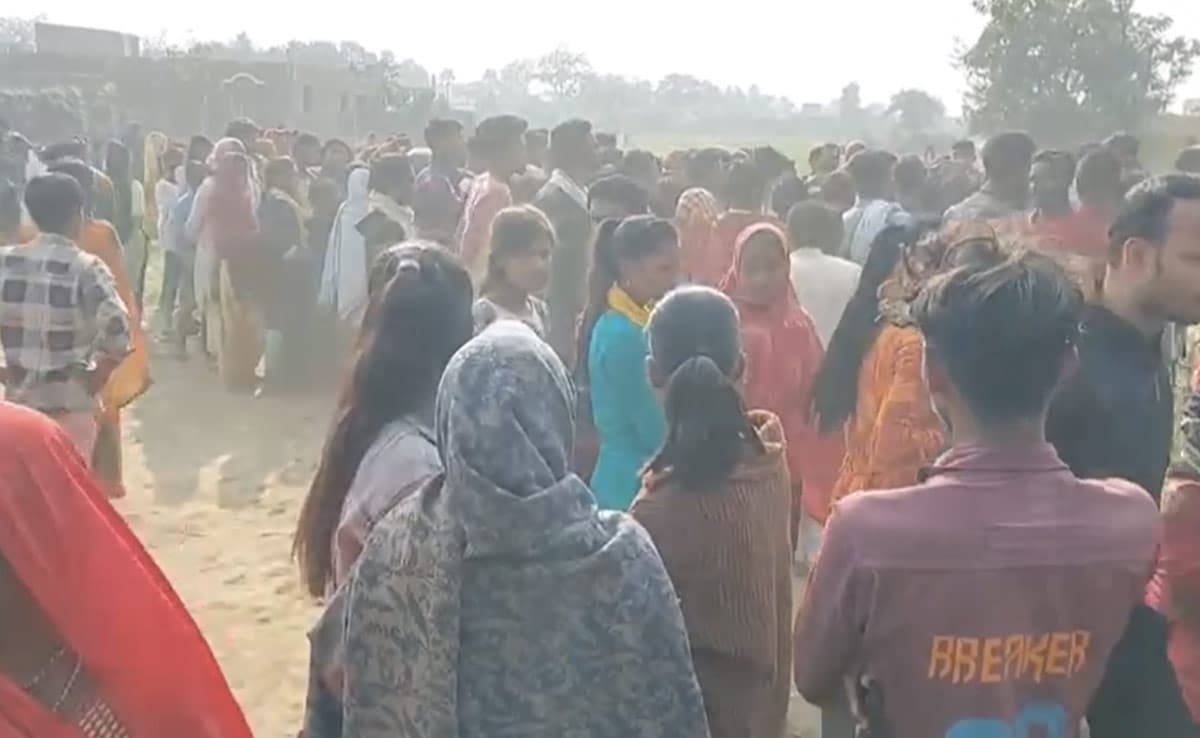
A priest was shot dead and his eyes gouged out in Bihar’s Gopalganj district yesterday, the police said.

His body was recovered from the bushes late last evening, officials said, adding there were injuries on his private parts as well.

32-year-old Manoj Kumar had been missing since Monday night. He was last seen leaving the Shiva temple in Danapur village at around midnight.

Manoj Kumar’s brother Ashok is a former BJP worker.

Soon after his body was found, clashes erupted in the village with locals accusing police of negligence. Two policemen were injured in the clashes after villagers staged protest on the national highway and threw stones at police. A police vehicle was also set on fire.

Manoj Kumar’s family had filed a missing complaint on Tuesday following which police had launched a search operation to trace him.

Pranjal, Sub-Divisional Police Officer, Gopalganj, said the situation in the village was under control now and adequate police force had been called in to prevent any untoward incident.

He said a probe has been launched and efforts are on to arrest the suspects.

Read full article
“Because Of This”: How Air Force’s Ops Forced Pak To Surrender In 1971
onmynews.com

“Because Of This”: How Air Force’s Ops Forced Pak To Surrender In 1971

India celebrated Vijay Diwas yesterday to mark the surrender of 93,000 Pakistani troops and the liberation of Bangladesh. In a fortnight of fighting, the Pakistani army opted for a truce over war following a well-coordinated three-pronged attack by the Indian Army, Air Force and Navy, supported by the Mukti Bahani, a guerilla force raised by India.

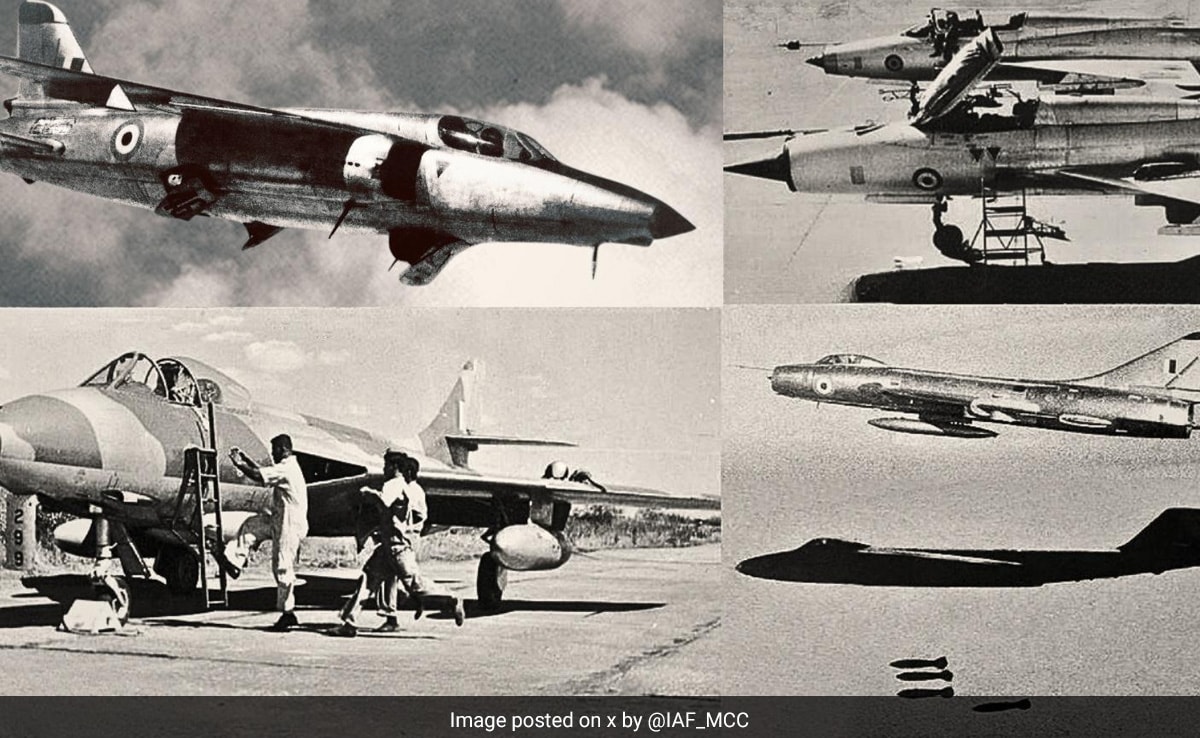
The war officially began on December 3, 1971, and within three days, the Indian Air Force established air superiority in East Pakistan. The complete domination of skies in the eastern theatre played a decisive role in forcing 93,000 troops to surrender.

Aerial Supremacy

The Indian Air Force posted a series of threads about its history on X (formerly Twitter), highlighting the crucial role played in a war that changed the world map. Operations of the Indian Air Force forced Lt General AAK Niazi-led Pakistani forces to surrender.

On December 14, the Indian Air Force bombed the Governor House in Dhaka when a meeting was ongoing in the building. The air strike had such a demoralizing effect that the East Pakistan government resigned on the spot. This was the last straw on the camel’s back and Niazi chose peace over more fighting. A day later, Lt Gen Niazi reached Indian Army chief General Sam Manekshaw, seeking a ceasefire.

General Manekshaw responded, “I expect you to issue orders to all forces under your command in Bangladesh to ceasefire immediately and surrender to my advancing forces.” Niazi had no other option and December 16 was set as the day of surrender.

The Indian Air Force put a temporary halt in its air operations till 9:00 am on December 16, this pause on operations was done on General Manekshaw’s assurance to Lt Gen Niazi that no air operation would be conducted from 5:00 pm on December 15. When barely thirty minutes were left before the “bombing pause” expired Lt Gen Niazi sought an extension till 3 pm and said he was going ahead with the surrender and due to communication and isolation of troops, requested the truce to be extended by six hours. This is a testament to the demoralizing effect IAF operations had in East Pakistan.

The temporary halt in air operations till 0900 hrs on 16 Dec 71 was extended to 1500 hrs on request of the Pak Army which wanted time to inform it’s troops & arrange a surrender ceremony. This extension meant that the day’s first air strike had to be recalled.#1971Warpic.twitter.com/zBy6zvodw4

— Indian Air Force (@IAF_MCC) December 16, 2023

At 4:31 pm, the instrument of surrender was formally signed between India and Pakistan and Lt Gen AAK Niazi and his 93,000 troops surrendered to India. The operations on the western theatre, however, continued an air interdiction campaign until India declared a unilateral ceasefire on December 17, 1971.

“Because Of This!”

After the surrender, a senior IAF officer asked Lt Gen Niazi why he had surrendered when his army was still intact. The General pointed at the pilot’s wings on the uniform and said, “Because of this, you the Indian Air Force”.

“BECAUSE OF THIS!” pic.twitter.com/79i0QLOpzN

— Indian Air Force (@IAF_MCC) December 17, 2023

Air Marshal HC Dewan, the Air Officer Commander-in-Chief, Eastern Air Command, was the architect of the air campaign in the east and the IAF’s speedy operations and dominance in the air and aerial supremacy in the east forced Pakistan to surrender, coupled with Indian Navy’s blockade and army surrounding Dhaka.

A coordinated offensive and months of planning resulted in a victory. In just 13 days, the war ended. Soldiers on both sides fought gallantly, with some fierce battles taking place.

Lt Gen Niazi could well have pointed at any Indian soldier or sailor & said the same thing…” BECAUSE OF YOU!”, the Indian Air Force said.

Read full article
Link copied!