Syrian Rebels Close In On Damascus, US Fears Assad’s Chemical Weapons
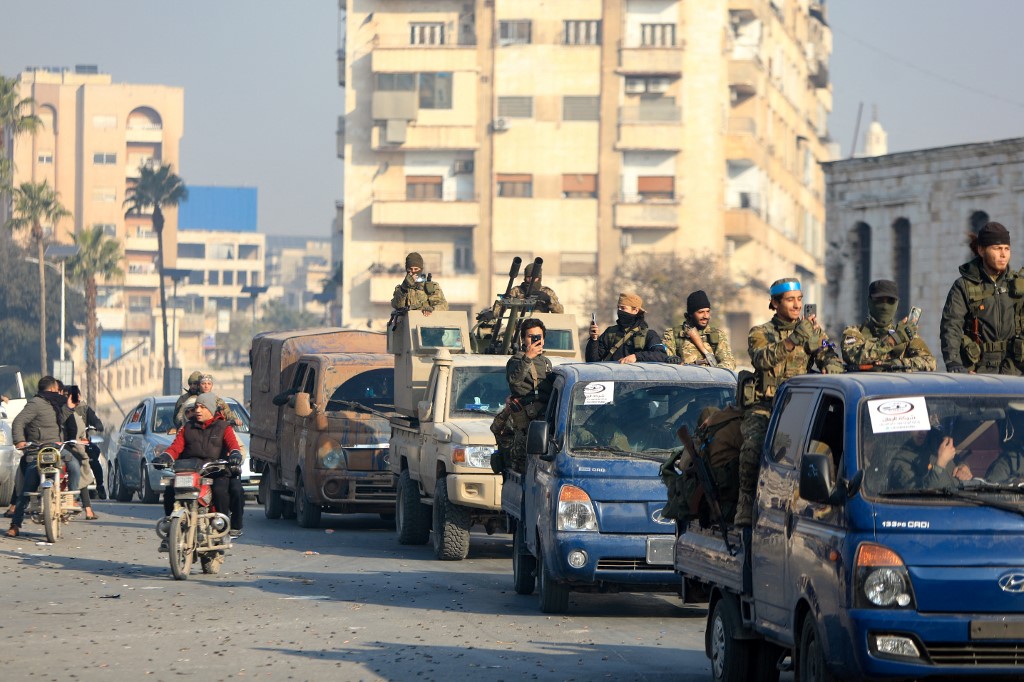
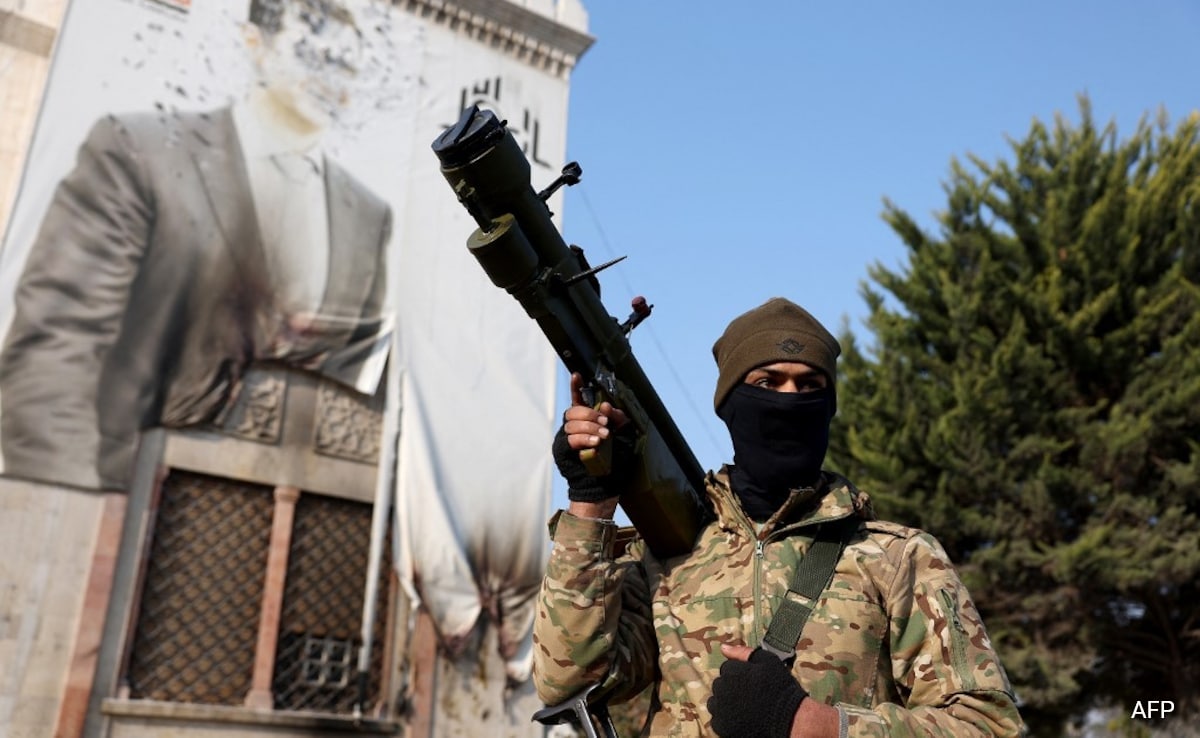
Syrian rebel forces claim to have made inroads, bringing them closer to the heart of the capital Damascus, the seat of President Bashar al-Assad‘s power. The swift advance has plunged Assad’s regime into its most precarious position since the brutal civil war which erupted in 2011 after a civil uprising.
The Islamist faction Hayat Tahrir al-Sham (HTS) announced last night that its forces had entered Homs, Syria’s third-largest city after the Syrian army reportedly began retreating to its outskirts. The city, a critical junction between Damascus and Assad’s strongholds along the Mediterranean coast, now seems poised to fall into rebel hands. HTS leader Abu Mohammed al-Jolani declared that his forces were “on the threshold of Homs and Damascus, and the toppling of the criminal regime is close.”
The rapid advance by HTS and other factions has created a coordinated pincer movement on Damascus. From the south, newly unified rebel factions under the Southern Operations Room have seized control of the Daraa province, the cradle of the 2011 uprising, and have declared their intent to march on the capital. Videos emerging from the area showed a statue of Assad’s father and predecessor, Hafez al-Assad, being torn down.
In a coordinated offensive, opposition factions have also taken control of Sweida, a southwestern city with a predominantly Druze population, and Quneitra near the Israeli-occupied Golan Heights.
The Syrian army’s withdrawal from Homs has effectively severed Damascus from the coastal provinces of Tartus and Latakia, historically strongholds of support for Assad’s regime.
Region In Flux
Iran, one of Assad’s staunchest allies, has reportedly begun evacuating military commanders and diplomatic staff from Syria. For decades, Tehran invested heavily in Syria as a conduit for arming its regional proxies, including Hezbollah in Lebanon. However, Iran now appears unable or unwilling to reinforce Assad, facing its own domestic challenges and the toll of ongoing conflicts in the region.
According to news agency AFP, Hezbollah is pulling its forces from the outskirts of Damascus and the Homs area.
The potential collapse of Assad’s government would reshape the Middle East. For Israel, a rebel victory would mean an enemy replacing another enemy. With its own resources stretched, thanks to a multi-frontal war with Iran featuring Hamas in Gaza and Hezbollah in Lebanon, Israel faces a new headache in Syrian rebels.
Russia, another critical ally of Assad, has also been notably absent in this crisis. Russian forces, heavily committed in Ukraine, appear unable to offer the air support that proved decisive in earlier phases of the Syrian war. This shift leaves Assad increasingly isolated, with few external resources to rely on.
Civilian Impact And Warnings
The deteriorating security situation has had devastating consequences for civilians. The United Nations Office for the Coordination of Humanitarian Affairs (OCHA) reported that over 370,000 people have been displaced in just a week of intensified fighting. The US Embassy in Syria issued a warning to its citizens, urging immediate evacuation as “commercial options remain available.”
Turkey, a key backer of some rebel factions, has expressed concerns over the safety of civilians, with Turkish President Recep Tayyip Erdogan calling for an end to the bloodshed.
India issued a notification to its citizens, warning against travelling to Syria in light of the unrest.
Assad’s Waning Grip
While Syrian state media insists that Assad remains in Damascus, reports of defections and retreats by government forces suggest that the regime’s control is rapidly unravelling. In the southern town of Moadamiya, roughly four kilometres from the Presidential Palace in Damascus, rebel commanders reportedly persuaded Syrian troops to surrender without a fight.
Similar scenes have played out in other recently captured areas, where residents have toppled symbols of the regime and freed political prisoners.
Videos circulating online show Syrian police officers discarding their uniforms and attempting to blend in with civilians. In Homs, thousands celebrated the departure of government forces, chanting slogans against Assad and in favour of a free Syria.
Chemical Weapons Fears
US intelligence agencies are monitoring suspected chemical weapons storage sites, concerned that Assad might deploy such weapons as a last resort to defend Damascus. The Assad regime has been accused of using chemical weapons against citizens since civil war broke out in 2011.
The Ghouta chemical attack of 2013, which killed over an estimated 300 civilians, and the Khan Shaykhun attack of 2017 which reportedly killed over 100, are some of the many instances where the use of Sarin Gas by regime forces on civilians was reported. Multiple United Nations fact-finding missions have presented “clear evidence” of the use of chemical weapons over the years.