Live · Global · Independent
Live Feeds
PinkVilla
Forbes
NDTV
Hindustan Times
South Korean President Withdraws Martial Law After Lawmakers Defy Him
onmynews.com

South Korean President Withdraws Martial Law After Lawmakers Defy Him

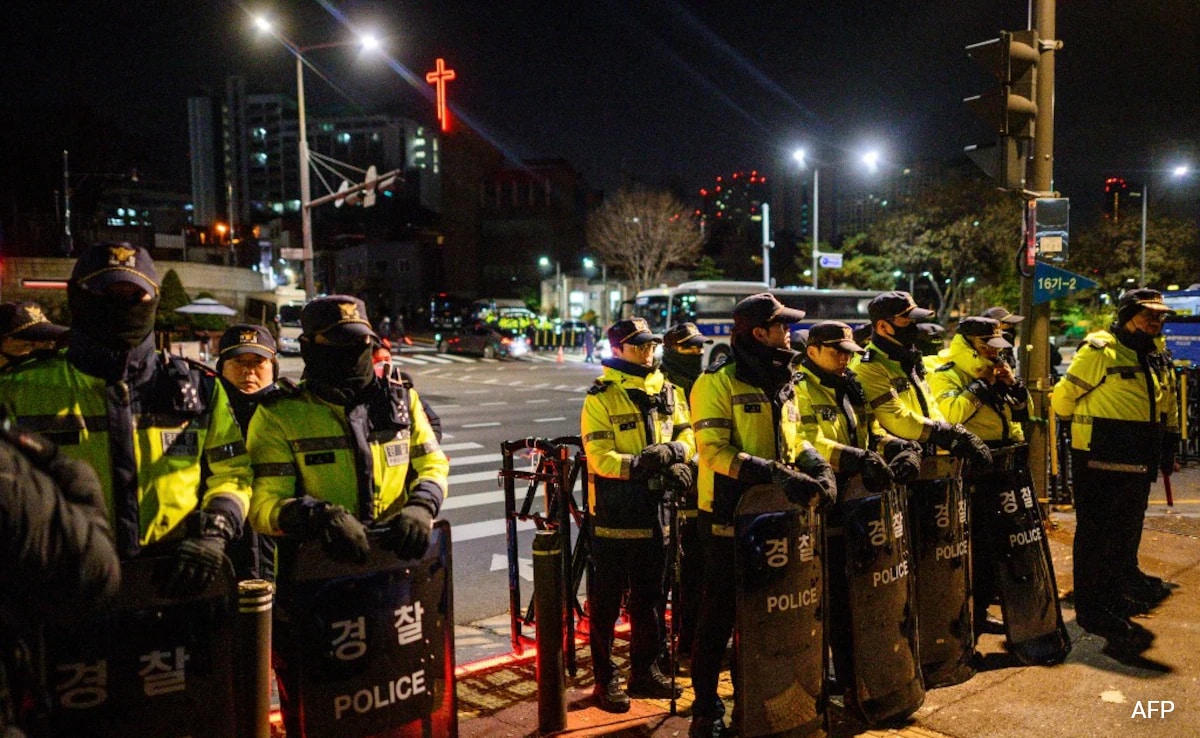
South Korean President Yoon Suk Yeol abandoned a short-lived attempt to impose martial law on Wednesday after lawmakers defied security forces to vote against his declaration and thousands of protesters took to the streets.

Yoon’s shock bid to impose South Korea’s first martial law in over four decades plunged the country into the deepest turmoil in its modern democratic history and caught its close allies around the world off guard.

The United States, which stations nearly 30,000 troops in South Korea to protect it from the nuclear-armed North, initially voiced deep concern at the declaration, then relief that martial law was over.

The dramatic developments also left the future of Yoon — a conservative politician and former star public prosecutor who was elected president in 2022 — in jeopardy.

South Korea’s main opposition party — whose lawmakers jumped fences and tussled with security forces so they could vote to overturn the law — demanded that Yoon step down immediately over the attempted “insurrection”.

The nation’s largest umbrella labour union also called an “indefinite general strike” until Yoon resigned. And the leader of Yoon’s own ruling party described the attempt as “tragic” while calling for those involved to be held accountable.

Yoon backed down after lawmakers voted to oppose the declaration, which he made late on Tuesday night citing the threat of North Korea and “anti-state forces”.

“Just a moment ago, there was a demand from the National Assembly to lift the state of emergency, and we have withdrawn the military that was deployed for martial law operations,” Yoon said in a televised address around 4:30 am (1930 GMT Tuesday).

“We will accept the National Assembly’s request and lift the martial law through the Cabinet meeting.”

Yonhap news agency then reported that Yoon’s cabinet had approved the motion to lift the order.

Senior aides working for Yoon offered Wednesday to resign en masse over the martial law declaration, Yonhap reported.

By the start of the working day, Yoon had yet to reappear publicly.

‘Impeachment’

The U-turn prompted jubilation among protesters outside parliament who had braved freezing temperatures to keep vigil through the night in defiance of Yoon’s martial law order.

Demonstrators who had been waving South Korean flags and chanting “Arrest Yoon Suk Yeol” outside the National Assembly erupted in cheers. 

Lim Myeong-pan, 55, told AFP that Yoon’s decision to rescind martial law did not absolve him of wrongdoing.

“Yoon’s act of imposing it in the first place without legitimate cause is a serious crime in itself,” Lim told AFP.

“He has paved his own path to impeachment with this.”

Defying security forces, 190 lawmakers managed to get into the assembly in the early hours of Wednesday and unanimously voted to oppose martial law. 

Under the constitution, martial law must be lifted when a majority in parliament demands it.

‘Anti-state’ elements

Yoon had given a range of reasons to justify martial law — South Korea’s first in more than 40 years.

“To safeguard a liberal South Korea from the threats posed by North Korea’s communist forces and to eliminate anti-state elements plundering people’s freedom and happiness, I hereby declare emergency martial law,” Yoon said in a televised address.

Yoon did not give details of the North’s threats, but the South remains technically at war with nuclear-armed Pyongyang.

“Our National Assembly has become a haven for criminals, a den of legislative dictatorship that seeks to paralyse the judicial and administrative systems and overturn our liberal democratic order,” Yoon said.

The president labelled the main opposition Democratic Party, which holds a majority in the 300-member parliament, “anti-state forces intent on overthrowing the regime”.

Yoon and his People Power Party are also bitterly at odds with the opposition over next year’s budget.

Opposition MPs last week approved a significantly downsized budget plan through a parliamentary committee.

The imposition of emergency martial law came after Yoon’s approval rating dropped to 19 percent in the latest Gallup poll last week, with many expressing dissatisfaction over his handling of the economy and controversies involving his wife, Kim Keon Hee.

Concern, relief

Democratic South Korea is a major ally of the United States in Asia, but Washington said it was not given advance notice of Yoon’s plan to impose martial law.

“We welcome President Yoon’s statement that he would rescind the order declaring emergency martial law,” US Secretary of State Antony Blinken said.

“We continue to expect political disagreements to be resolved peacefully and in accordance with the rule of law.”

China, a key ally of North Korea, urged its nationals in the South to stay calm and exercise caution, while Britain said it was “closely monitoring developments”.

Vladimir Tikhonov, professor of Korea studies at the University of Oslo, said Yoon’s move to impose martial law was “an attempt to wind history back”.

“I don’t think South Korea’s civil society can recognise Yoon as a legitimate president any longer,” he told AFP.

(Except for the headline, this story has not been edited by NDTV staff and is published from a syndicated feed.)
Read full article
South Korean President Lifts Martial Law After Parliament Votes Against It: Updates
onmynews.com

South Korean President Lifts Martial Law After Parliament Votes Against It: Updates

South Korean President Yoon Suk Yeol abandoned a short-lived attempt to impose martial law on Wednesday after lawmakers defied security forces to vote against his declaration and thousands of protesters took to the streets.

South Korean MPs unanimously voted against the imposition of martial law at a midnight session of the National Assembly to denounce the President’s decision.

“We will accept the National Assembly’s request and lift the martial law through the Cabinet meeting”, Yoon said in a televised address.

Here are the live updates of the situation in South Korea:

Read full article
South Korea Withdraws Martial Law. What Happens Next
onmynews.com

South Korea Withdraws Martial Law. What Happens Next

South Korean President Yoon Suk Yeol on Wednesday said he would lift martial law just hours after he imposed it, in a brief and confusing episode in which he blasted the opposition as “anti-state forces” threatening the country’s democracy.

The unexpected move from Yoon — the first time martial law had been declared in South Korea in more than four decades — alarmed the United States and the country’s other allies.

What do we know about the imposition, its lifting and what might come next?

– What was the declaration? –

In a dramatic, late-night emergency television address to the nation, Yoon announced that he was imposing martial law, as he accused the opposition of paralysing the government with “anti-state activities”.

A six-point decree from the new martial law commander, army chief General Park An-su swiftly followed, banning political activities and parties, “false propaganda”, strikes and “gatherings that incite social unrest”.

The order also brought all media outlets under the authority of martial law and directed all medical staff, including striking doctors, to return to work within 48 hours.

– What happened at parliament? –

Security forces sealed the National Assembly, helicopters landed on the roof and troops entered the building for a short time, seemingly in a bid to prevent lawmakers from getting inside.

But 190 lawmakers managed to enter and voted unanimously to reject Yoon’s declaration and call for martial law to be lifted.

Outside, hundreds of protesters gathered, many raising chants calling for Yoon to be arrested.

– What happened next? –

Following the lawmakers’ vote, Yoon backed down. His cabinet additionally approved the motion to lift the order, Yonhap news agency reported.

“Just a moment ago, there was a demand from the National Assembly to lift the state of emergency, and we have withdrawn the military that was deployed for martial law operations,” Yoon said in a televised address around 4:30 am (1930 GMT Tuesday).

Under South Korea’s constitution, the parliamentary vote to lift martial law has to be respected.

– Why did Yoon do this? –

Yoon said he was acting to safeguard his country’s liberal democracy from “anti-state elements” and “threats posed by North Korea” — but gave little detail.

While unexpected, the announcement came in the context of a festering budget row between Yoon and the opposition Democratic Party.

The opposition has slashed around 4.1 trillion won ($2.8 billion) from Yoon’s proposed 677 trillion won budget for next year, prompting the president to complain that “all key budgets essential to the nation’s core functions” were being cut.

“What is clear is that Yoon has been a deeply unpopular, ineffectual leader and he is having a hard time getting any kind of public support for anything he’s trying to do,” said Alan Yu, a former US diplomat in Asia now at the Center for American Progress.

“The use of martial law feels almost like a desperation move to try to break out, both in a political and policy sense, but it is really poorly played on both fronts.”

– What is next for Yoon? –

Domestically, pressure has only grown further on Yoon after his late-night bombshell.

South Korea’s main opposition party has demanded that Yoon step down, accusing him of “insurrection”.

The country’s main labour union group has also called an “indefinite general strike” until he resigns over the “irrational and anti-democratic measure”.

Yoon’s own People Power Party described his attempt at imposing martial law as “tragic” and demanded that those involved be held accountable.

– What has the reaction been abroad? –

South Korea is a key Western ally in Asia, seen as an important democratic bulwark in a region dominated by authoritarian regimes, and the drama is being watched with concern.

Washington said it was “relieved President Yoon has reversed course” on his martial law order.

Earlier, Britain and Germany both said they were closely following developments.

China, a key ally of nuclear-armed North Korea, urged its citizens to exercise caution, while Russia — itself increasingly close to Pyongyang — called the situation “alarming”.

(Except for the headline, this story has not been edited by NDTV staff and is published from a syndicated feed.)

Read full article
Link copied!