Live · Global · Independent
Live Feeds
PinkVilla
Forbes
NDTV
Hindustan Times
US, Russia To Name Teams To Negotiate “Ending Conflict In Ukraine”
onmynews.com

US, Russia To Name Teams To Negotiate “Ending Conflict In Ukraine”

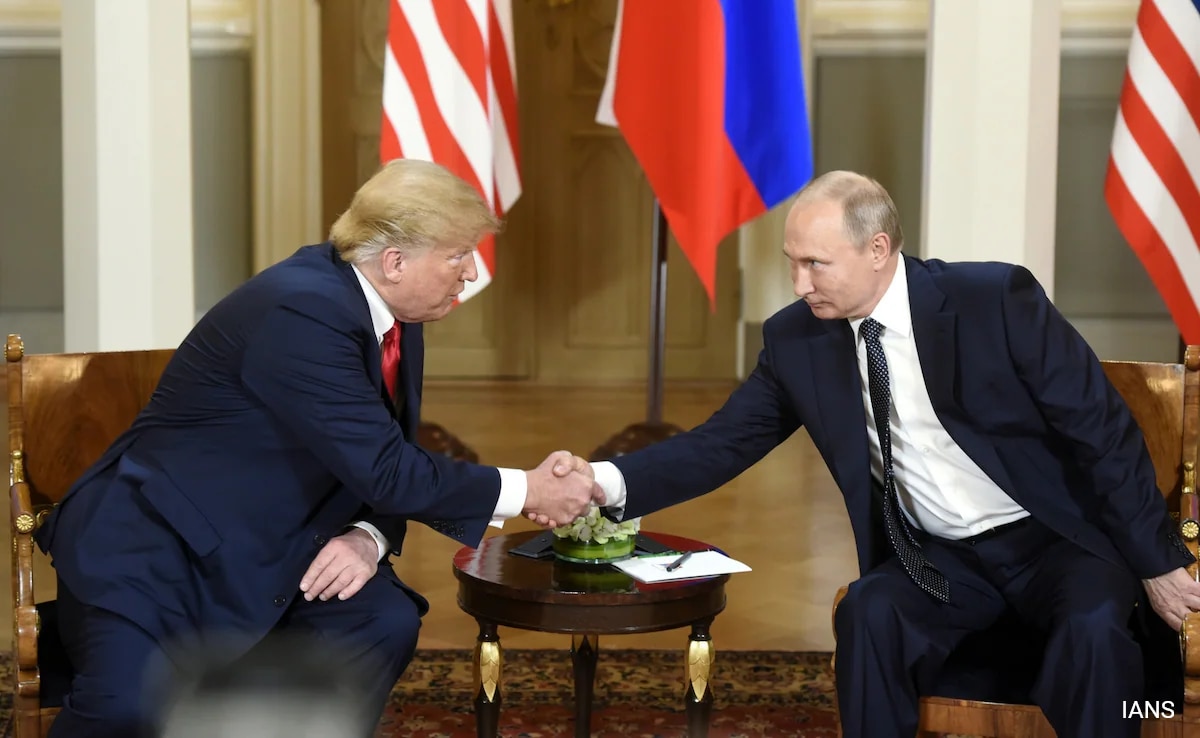
Washington said Russia and the United States will name teams to negotiate a path to ending the war in Ukraine as soon as possible, as the superpowers met on Tuesday in Saudi Arabia without Kyiv or the EU.

However, no specifics on a possible meeting between Donald Trump and Vladimir Putin emerged from the gathering in Riyadh, the first high-level official Washington-Moscow talks since Ukraine’s 2022 invasion.

Some European leaders, alarmed by Trump’s overhaul of US policy on Russia, fear Washington will make serious concessions to Moscow and re-write the continent’s security arrangement in a Cold War-style deal between superpowers.  

On Tuesday, US Secretary of State Marco Rubio and Russian Foreign Minister Sergei Lavrov agreed to “appoint respective high-level teams to begin working on a path to ending the conflict in Ukraine as soon as possible”, the State Department said.

Washington added the sides had also agreed to “establish a consultation mechanism” to address “irritants” to Russia and America’s relationship, noting the sides would lay the groundwork for future cooperation.

Russia offered less detail on the outcome of the talks, saying: “We discussed and outlined our principled positions, and agreed that separate teams of negotiators will be in touch on this topic in due course.”

“It is still difficult to talk about a specific date for a meeting between the two leaders,” said Yuri Ushakov, Putin’s foreign policy aide.

Russia sketched out some of its perspectives on future talks to ending the fighting in Ukraine, arguing that settling the war required a reorganisation of Europe’s defence agreements.

Moscow has long called for the withdrawal of NATO forces from eastern Europe, viewing the alliance as an existential threat on its flank.

“A lasting and long-term viable resolution is impossible without a comprehensive consideration of security issues on the continent,” Kremlin spokesman Dmitry Peskov told reporters on Tuesday, responding to a question by AFP.

Before invading Ukraine in February 2022, Moscow had demanded NATO pull out of central and eastern Europe.

European leaders held an emergency meeting in Paris a day earlier, but struggled to put on a united front. 

Ukrainian President Volodymyr Zelensky, in Turkey on Tuesday, said on the eve of the talks that he was not invited and would not “recognise any things or any agreements about us without us”. 

Isolated by the West for three years, Russia is hoping for a “restoration” of ties with the United States and a comeback to the international arena. 

At the Diriyah Palace in Riyadh, negotiations began without visible handshakes. 

‘How to start negotiations’

Both Russia and the United States have cast Tuesday’s meeting as the beginning of a potentially lengthy process and downplayed the prospects of a breakthrough.  

Russia’s Ushakov told state media the talks would discuss “how to start negotiations on Ukraine”.

Trump has said he wants to end the war in Ukraine, but has thus far presented no concrete plan. 

The United States has urged both sides that concessions will have to be made if any peace talks materialise. 

Russia on the eve of the summit said there cannot be even a “thought” on it giving up territory seized from Ukraine. 

The Kremlin said Tuesday that Ukraine had the “right” to join the European Union, but not the NATO military alliance.

It also said Putin was “ready” to negotiate with Zelensky “if necessary”, though repeated its questioning of his “legitimacy” — a reference to his five-year term expiring last year, despite Ukrainian law not requiring elections during wartime.

The Ukrainian leader was in Turkey on Tuesday for discussions on the conflict with President Recep Tayyip Erdogan. 

He is due in Saudi Arabia on Wednesday, though he said he does not plan to meet with US or Russian officials. 

‘Efforts toward peace’

The EU, reeling from a series of speeches by Trump’s officials indicating Washington does not see Moscow as a threat, said it still wants to “partner” with the United States on any truce talks.

Trump’s administration has given no clear answer on whether the EU would take part and Moscow has said it sees no point in Europe having a seat at the table. 

“Financially and militarily, Europe has brought more to the table than anyone else,” the president of the European Commission, Ursula von der Leyen, said on social media.  

“We want to partner with the US to deliver a just and lasting peace for Ukraine.”

Key Russian ally China also welcomed “efforts towards peace” on Tuesday.

“At the same time, we hope that all parties and stakeholders can participate,” foreign ministry spokesman Guo Jiakun said.

Russia has presented cautious optimism on the talks.

(Except for the headline, this story has not been edited by NDTV staff and is published from a syndicated feed.)

Read full article
“Sometimes It Looks Like…”: Nadir Godrej On Trump’s Tariffs, India Impact
onmynews.com

“Sometimes It Looks Like…”: Nadir Godrej On Trump’s Tariffs, India Impact

Much of the headlines from Donald Trump‘s second term as US President has been around deportation and tariffs, with India feeling the pinch on both counts. Over 300 Indians living illegally in that country have been flown back – shackled – on American military aircraft, so far. And then there are the tariffs.

The impact of tariffs on India – 25 per cent on steel and aluminium, and the reciprocal tariffs announced last week, hours before Trump met Prime Minister Narendra Modi – will play out over the next weeks.

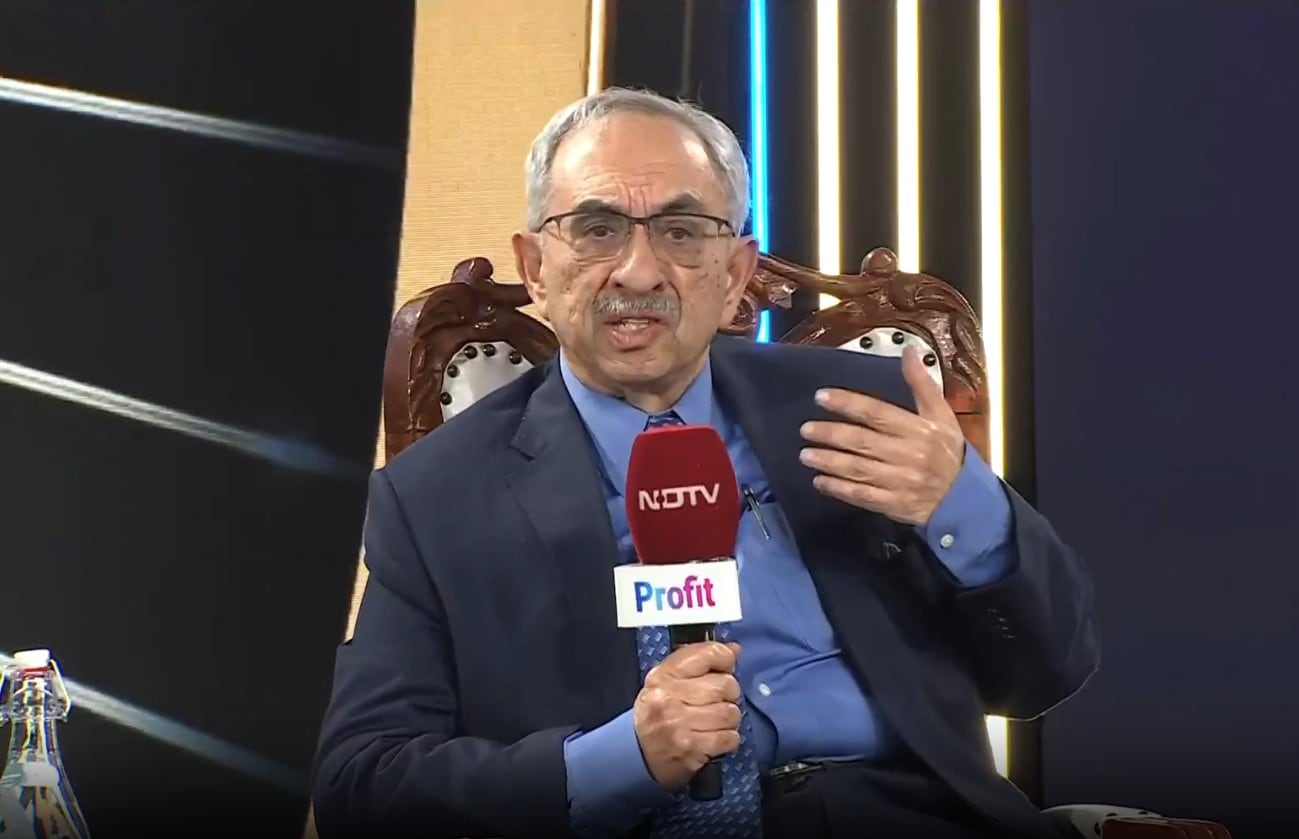
But the effect may not be too bad, Godrej Industries’ Managing Director, Nadir Godrej, told NDTV.

Speaking at an NDTV Profit event, Mr Godrej pointed to the US President’s apparent tactic when in confrontation mode – threaten tariffs to force a settlement, as he did with Colombia’s Gustavo Petro when the South American nation refused to accept illegal immigrants.

“It (the tariffs) won’t impact our business too much… although we do export to America, it is not a very large percentage of our business. It may certainly impact other Indian business…”

“But sometimes it looks like Donald Trump talks a lot, and then quickly withdraws. He delayed his tariffs on Canada and Mexico… of course, only for a month, so let us see what happens.”

“But probably he looks for some quick transaction (from the country on which he is imposing tariffs) and lets them off the hook. I hope that is what is going to happen (with India),” he remarked.

Trump And Reciprocal Tariffs

The US President believes ‘reciprocal tariffs’ are an easy way to counter taxes imposed by other nations – including India, whom he called “a very big abuser” – on American products.

EXPLAINED | What Are Reciprocal Tariffs And Who Might Be Affected?

He believes an ‘eye-for-an-eye’ tactic will either force lower tariffs all-round or boost a stuttering domestic manufacturing sector by incentivising foreign companies to open factories in the US.

The US did see a bump in manufacturing employment as a result of tax cuts in Trump’s first term, but things changed after he introduced the steel and aluminium tariffs in March 2018.

Since re-assuming office on January 20, Trump has re-ordered tariffs – on all Chinese goods and two separate levies on imports from Canada and Mexico, his two largest trading partners.

The latter levies include 25 per cent taxes on steel and aluminium.

India is not a particularly large supplier of steel to the US (America’s largest is Canada), but it is one of the world’s largest primary producers of aluminium and America is its top export market. And news of the steel and aluminium tax sparked a 1,038-point meltdown in the Indian stock market.

However, at least in the case of Canada and Mexico, Trump paused the tariffs almost as soon as he ordered them. In return, Ottawa promised to crack down on the flow of fentanyl, a deadly narcotic, across the Canada-US border, and Mexico City said it would try to control migration.

No such concession was made for China.

Japan, it is understood, has sought an exemption from the steel and aluminium tax.

Can Bourbon “Buy Us Peace?”

Mr Godrej seemed to be referring to that trade-off, and chuckled that New Delhi’s move to slash taxes on bourbon whiskey – from 150 per cent to 50 per cent – might “buy us some peace”, particularly since the new tariff is now only half that imposed on the same product from other importing nations.

READ | US’ Bourbon Whiskey Gets Sweet Deal As India Slashes Tariffs

India has also reduced duties on other American products, including the iconic Harley-Davidson motorcycles, a point Trump noted in comments to the press after meeting Mr Modi. He recalled how “Harley Davidson couldn’t sell their motorbikes in India because the tariff was so high”.

READ | Amid Tariff Threats, India Cuts Import Duty On Iconic US Bikes, Cars

However, Finance Minister Nirmala Sitharaman has said these reductions had nothing to do with any brewing tariff war with the US. “We are looking to strengthen the foundation of the Indian economy,” she told NDTV this month in an exclusive post-Union Budget 2025 interview.

On a more serious note, the industrialist also underlined “the need to stand up to these kinds of tactics (the threat of tariffs) and find good strategies (to counter).

Limited Impact On India?

A report by the State Bank of India suggests the actual impact of America’s tarrifs may be limited.

The report indicated that even if Trump were to order higher-than-expected tariffs, i.e., by 20 per cent, or more, the overall decline in Indian exports to the US will likely only be three to 3.5 per cent.

READ | US’ Reciprocal Tariffs May Have Limited Impact On India: Report

And this, the report says, can be offset by strategic export diversification.

NDTV is now available on WhatsApp channels. Click on the link to get all the latest updates from NDTV on your chat.

Read full article
Villagers killed execution-style in Sudan, activists say
onmynews.com

Villagers killed execution-style in Sudan, activists say

More than 200 civilians have been killed by paramilitaries, a rights group says. 

​More than 200 civilians have been killed by paramilitaries, a rights group says.  

Read full article
Link copied!