Live · Global · Independent
Live Feeds
PinkVilla
Forbes
NDTV
Hindustan Times
Video: Passengers Eat Food On Tarmac, Next To Plane, After 12-Hour Delay
onmynews.com

Video: Passengers Eat Food On Tarmac, Next To Plane, After 12-Hour Delay

In an unprecedented incident in India’s civil aviation, a man slapped the pilot of an IndiGo flight inside the parked aircraft yesterday. Some yelled at the ground staff of airlines. Hundreds aggressively stood around check-in counters in Delhi airport, demanding to know when would they fly.

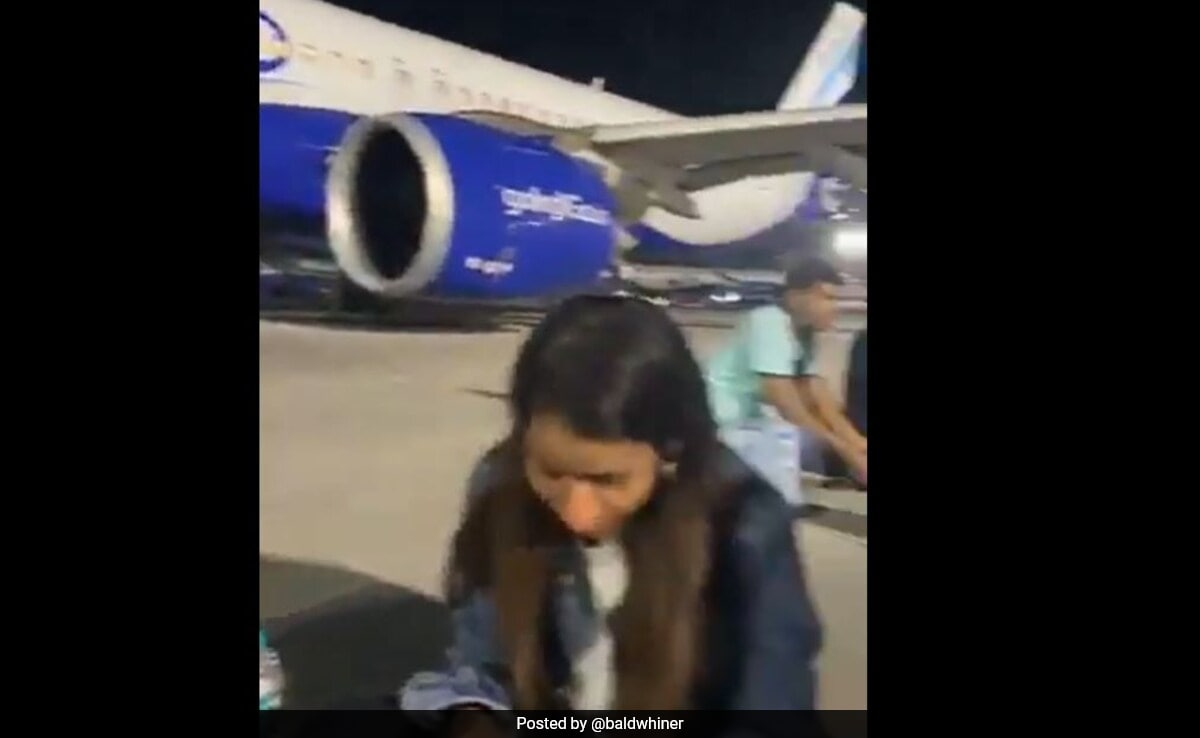
And now visuals have emerged on social media showing people sitting in groups and eating meals on the tarmac, next to an aircraft.

Such was the scale of flight disruptions in Delhi airport due to fog yesterday.

“… Passengers of IndiGo Goa-Delhi who after 12-hour delayed flight got diverted to Mumbai having dinner just next to IndiGo plane,” a user on X said in a video post.

passengers of IndiGo Goa-Delhi who after 12 hours delayed flight got diverted to Mumbai having dinner just next to indigo plane pic.twitter.com/jGL3N82LNS

— JΛYΣƧΉ  (@baldwhiner) January 15, 2024

In the video, the exhausted passengers are seen sitting on the tarmac just a few steps away from an IndiGo plane, and having their meals.

Smooth coordination in Delhi airport broke down yesterday after hundreds of passengers of delayed flights demanded answers from the airlines.

The Delhi airport chaos led to a cascading effect in many airports.

The stressful day also saw the passenger of an IndiGo flight attacking a pilot inside the plane while it was on the tarmac.

Air India in a statement today said it regrets the disruption to operations arising from the last few days’ dense fog in north India, including at “our main Delhi hub, which resulted in some diversions and desynchronisation of aircraft and crew rotations.”

Read full article
“Snowball Effect”: How World Economic Forum Chief Sees India Growth Story
onmynews.com

“Snowball Effect”: How World Economic Forum Chief Sees India Growth Story

India is currently seeing an “exponential growth” and can end up a “10 trillion US dollar economy maybe in a decade,” Borge Brende, the President of the World Economic Forum told NDTV in an exclusive interview today. Speaking to NDTV from Davos, where the annual meeting of the World Economic Forum is in progress, Mr Brende likened the India growth story to a snowball, which ‘grows bigger and bigger’ once it is given a push.  

“We expect things will continue with reforms, there is also peace, no conflict, there is transparency, fight against red tape, investment, R&D, and infrastructure,’ he told NDTV.  

Asked what could be the key drivers for Indian growth in the days to come, he said what is working for India now is that it is “positioned in areas where the demand grows faster than in other areas… India is capitalizing on this”.  

Drawing the contrast with the Chinese economy, which is entirely based on manufacturing, Mr Brende said India needs to intensify its focus on its services industry, digital trade and e-commerce.

While digital trade is only 15 per cent of the global economy, it grows twice as fast as any other trade area, he said.  

But while India is “incredibly successful economy for the time being,” it has to continue with the reforms, Mr Brende pointed out, since there is “no such thing as free lunch”.

Asked whether the border tension with China is a concern, Mr Brende said everyone is watching it “very closely”.

“But I don’t think there is any interest in the Indian or Chinese side to escalate it because that would be very unfortunate”.

The annual report of the WEF has focused on the multiple challenges the world is facing today — including wars and the ongoing struggles with living expenses and the escalating effects of climate change.

Read full article
Why Maldives President Mohamed Muizzu Is Talking Tough: Explainer
onmynews.com

Why Maldives President Mohamed Muizzu Is Talking Tough: Explainer

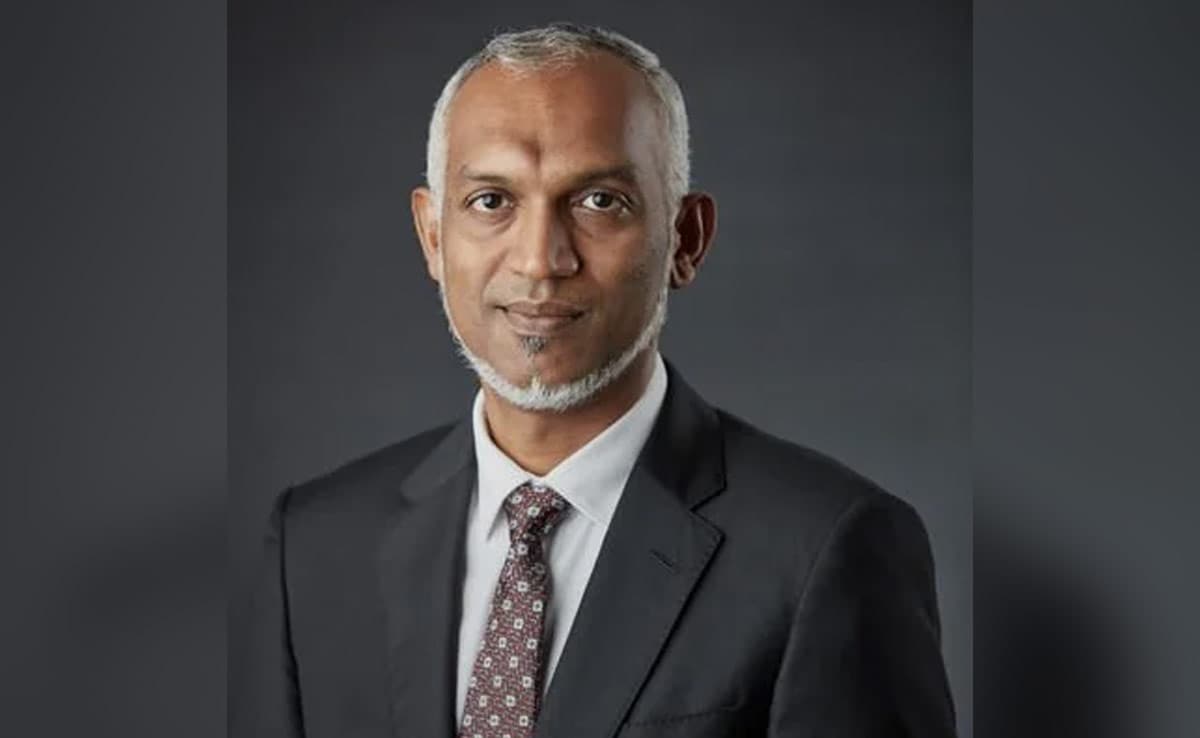
Maldives President Mohamed Muizzu’s demand that India withdraw its troops stationed in the country by mid-March is the newest in the anti-India rhetoric in the island nation that has started over the last few years. The number of troops — 88 — is too few to be a threat, which is what their presence is being portrayed as.

The troops have been stationed in Maldives since 2010 as part of a bilateral ties that involve training of Maldivian troops in combat and reconnaissance. They also provide help with humanitarian aid and medical evacuations for the residents of the remote islands.

Domestic politics of Maldives

President Muizzu is widely seen as a pro-China leader, a departure from his predecessors who pursued a pro-India policy. One of the key slogans for his campaign was “India Out’. The coalition government of the People’s National Congress & the Progressive Party of Maldives party is currently following the pro-China policy to remove what they call the Indian influence.

Ahead of the Presidential election held in Maldives at the end of September, supporters of the People’s National Congress of President Muizzu had pushed a narrative that the Ibrahim Mohamed Solih-led Maldivian Democratic Party was influenced by India.

The formal demand for troop removal was first made around two months ago — shortly after the Muizzu government came to power in September, riding on an anti-India agenda.

Anti-India build-up

India’s gift of two military Dhruv Advanced Light Helicopters helicopters to Maldives for rescue ops have been portrayed as creation of military presence.

An agreement for the UTF Harbour Project agreement, signed in February 2021 — under which India was to develop and maintain a harbour and dockyard at Uthuru Thilafalhu near Maldives capital Malé — has been a subject of intense speculation. A section of local media claimed that the project would eventually lead to the building of an Indian naval base there.

Fuelled by social media, a diplomatic row with India started as Maldivian ministers made derogatory comments following Prime Minister Narendra Modi’s widely circulated post about his visit to the Lakshadweep islands. Three ministers who made harsh comments, were, however, removed.

China factor

President Muizzu’s demand for the removal of Indian troops was also made days after his visit to China, when the two nations upgraded their relationship to a comprehensive strategic cooperative partnership.

China is interested in expanding its influence in Maldives owing to its strategic position in the Indian Ocean. The islands are located on the one of the busiest maritime trade highways through which nearly 80 per cent of China’s oil imports pass.

Maldives and China have signed 20 important agreements during President Muizzu’s visit. China has given Male an aid of 130 million dollars which will be spent on the development projects.

Should India be concerned

The foreign ministry is yet to comment on Male’s demand for troop withdrawal.

Former foreign minister Shashi Tharoor has warned about the increasing proximity between China and Maldives.

“There is no doubt about the fact that China has been attempting to expand its influence throughout our periphery. They have been increasingly influential in everyone of our neighbouring countries, everyone, without exception,” he said.

Read full article
Link copied!