Live · Global · Independent
Live Feeds
PinkVilla
Forbes
NDTV
Hindustan Times
Government Makes Key Changes In Bill To Protect Top Election Officers
onmynews.com

Government Makes Key Changes In Bill To Protect Top Election Officers

The controversial bill replacing the Chief Justice of India with a Union Cabinet minister in the selection panel for the Chief Election Commissioner and election commissioners will be tabled in the Rajya Sabha today, but the Centre has made some amendments to it following objections from the Opposition and some former chief election commissioners. 

The Chief Election Commissioner and Other Election Commissioners (Appointment, Conditions of Service and Term of Office) Bill, 2023, has been brought in following a Supreme Court judgment in March, which had ordered the constitution of a panel consisting of the Prime Minister, Chief Justice of India and the leader of the opposition for the selection of the Chief Election Commissioner and election commissioners. 

If there is no leader of the opposition in the Lok Sabha, a representative of the single-largest opposition party would be on the panel, the Supreme Court had said in response to petitions seeking a collegium-like system for the appointment of the election commissioners to ensure transparency. 

The government had earlier intended to table the bill, which also strips the Chief Election Commissioner and other election commissioners of the status of Supreme Court judges, in the special session in September, but decided against it following strong resistance from the opposition. The bill proposed to bring the salary, allowance, and service conditions of the CEC and other ECs on a par with that of the Cabinet Secretary as opposed to those of Supreme Court judges currently.

While the government has retained the provision of replacing the Chief Justice of India with a Union Cabinet minister in the selection panel, it has decided to retain the status of the CEC and the ECs as equivalent to Supreme Court judges. This will also ensure protection for the Election Commissioners from removal except with a recommendation from the chief election commissioner, which was a key demand of the former CECs.

The bill had also proposed an initial search committee comprising the Cabinet secretary and two senior officials to prepare a panel of five names for consideration by the selection panel. Another key amendment that has now been made replaces the Cabinet secretary in this committee with the Union law minister.

The opposition has argued that replacing the Chief Justice of India with a Union Cabinet minister in the selection panel runs contrary to the judgment of the Supreme Court as it would place the power of picking the CEC and ECs back firmly in the hands of the executive, since it would have two of the three members in the committee. 

Former CEC SY Quraishi had also expressed concerns over the composition of the selection panel and the “downgrading” of the position of CECs and ECs to the level of the cabinet secretary. He had, however, also said that the bill has many positive features, including setting qualifications for the selection of election commissioners.

“Till today, there was no qualification (prescribed), anyone from the street can be picked up and made an election commissioner which was not good. The new bill says that only secretary-rank officers or their equivalents will be posted which is a good thing,” Mr Quraishi had said. 

“It (the bill) also talks of a shortlisting committee that is also a good idea because that is a practice in many countries, except that the composition can be improved a little and the most important thing is that we have been demanding protection from removal which is available to the CEC should be extended to the two election commissioners also. So, this new bill proposes that, this is an important thing,” he had told news agency PTI in October. 

Speaking to NDTV today, Mr Quraishi said a detailed representation was made to the government on the bill as per the spirit of the Constitution.
Read full article
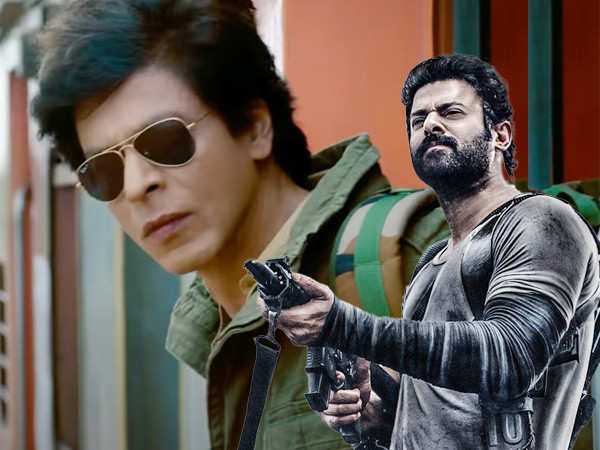
Salaar producer opens up about the Prabhas starrerâs clash with Shah Rukh Khanâs Dunki
onmynews.com

Salaar producer opens up about the Prabhas starrerâs clash with Shah Rukh Khanâs Dunki

After delivering box office hits Pathaan and Jawan, Shah Rukh Khan is gearing up for the release of Dunki. The film is set to release on the same date as Prabhas’ Salaar: Part One – Ceasefire. Now, the producer of Salaar has opened up about the clash.

As per reports on a leading news portal, Vijay Kirgandur of Hombale Films revealed that a lot of market research went into locking Salaar’s release date which is set for December 22, a day after Dunki releases on December 21.

Kirangdur shared that the film’s team doesn’t want the clash to get ugly. Instead, they hope that the two big releases will contribute to better numbers for both films. The producer also shared that there are astrological releases behind releasing the film on December 22. 

Salaar: Part One – Ceasefire directed by Prashanth Neel and led by Prabhas and Prithviraj Sukumaran is a dystopian action drama. Shah Rukh Khan’s Dunki which also features Taapsee Pannu, Vicky Kaushal and more, is a comedy-drama based on migration.

Read full article
NDTV Explains: BJP’s 2024 Game Plan Behind Latest Chief Minister Choices
onmynews.com

NDTV Explains: BJP’s 2024 Game Plan Behind Latest Chief Minister Choices

After a week of secretive deal-making – and snide swipes from the opposition – the BJP pulled the trigger twice in as many days, naming Vishnu Deo Sai and Mohan Yadav as the new chief ministers of Chhattisgarh and Madhya Pradesh. Both picks were out of left field but have been seen as part of the BJP’s masterplan to balance caste/class ahead of next year’s general election.

For example, in Chhattisgarh – a state where tribal communities form 32 per cent of the population – the BJP has opted for a tribal leader. The party could have also settled on a Chief Minister from an OBC, or Other Backward Class, but a dominant show in tribal-dominated seats made that choice moot.

Over in Madhya Pradesh, the BJP walked a tighter rope and had to factor in two Deputy Chief Ministers, plus the Speaker’s chair, to cobble together a leadership structure that (it hopes) will keep various communities, and their political reps, happy and voting saffron through to the 2024 election.

The heartland state now has a Chief Minister from the Yadav community (an OBC), Dalit (Jagdish Devda) and Brahmin (Rajendra Shukla) faces as his deputies, and a Thakur (ex-Union Minister Narendra Singh Tomar, seen by some as a potential Chief Minister pick too) as the Assembly speaker.

That the BJP, or any party, picks chief ministers or ministers with an eye on electorally-important communities is not new, although some may argue it means some groups, such as non-Hindus and women, get overlooked. What is significant in these picks, though, is the planning that went into naming Mr Sai and Mr Yadav (and his deputies), and will go into selecting a Rajasthan Chief Minister.

READ | The 7 BJP Frontrunners For Rajasthan Chief Minister’s Post

The point is this – in both Chhattisgarh and Madhya Pradesh, the BJP’s choices are a nod not only to state-centric caste/class arithmetic but also to a regional spread of different communities and castes.

Chhattisgarh

Once it emerged the BJP had won 22 of 26 seats in the state’s tribal belt of Surguja and Bastar, the party had little choice but to pick a member of that community as Chief Minister, and so came Mr Sai.

READ | Tribal Leader Vishnu Deo Sai Is New Chhattisgarh Chief Minister

The strong showing itself was not a surprise – Prime Minister Narendra Modi’s sustained outreach in campaigning, including hailing the state’s tribal heritage, declaring himself “born to serve” the community and references to President Droupadi Murmu, went a long way to courting those votes.

For the BJP, though, picking Vishnu Deo Sai as the Chief Minister was more than just acknowledging tribal voters. It was, and is, about prepping a cross-border campaign platform for the 2024 election that will allow the party to tap those votes across several states in one go.

Madhya Pradesh and Jharkhand, two of six states bordering Chhattisgarh, have sizeable tribal numbers – nearly 22 and more than 26 per cent, respectively. In Odisha, another border state and the home state of President Murmu, tribal communities account for over 23 per cent of the population.

Picking Mr Sai as the Chief Minister in Chhattisgarh allows the BJP to project itself as a tribal-friendly face in these states before the 2024 polls. These four combined have 75 Lok Sabha seats, of which 20 are reserved for tribal communities that, in dozens more, are a key vote base.

Madhya Pradesh

Across the border too, the BJP has been assiduously tracking tribal votes; that persistence paid dividends in this election, with the party claiming 24 of 47 Assembly seats reserved for ST candidates.

And the community, less significant within the state’s demographic make-up, has been rewarded with a Deputy Chief Minister in Jagdish Devda. Picking a Brahmin face as the other deputy balances the party’s need to keep upper caste voters in the state, which it has dominated since 2003, happy.

READ | BJP’s Madhya Pradesh Surprise: Mohan Yadav To Be Chief Minister

So, if tribal communities have been paid court so far, the selection of Mr Yadav as the new Madhya Pradesh Chief Minister suggests the BJP is setting its sights on the politically crucial states of Uttar Pradesh and Bihar, which will send a massive 120 MPs to the Lok Sabha next year.

Essentially, if the BJP were to sweep these two states (and assuming it continues to dominate the Hindi heartland), there is realistically little the opposition can do to prevent a third term for Mr Modi.

How might a Yadav as Madhya Pradesh Chief Minister play to this? In the central state, the Yadavs account for only six per cent of the overall population. However, they are the largest OBC group in Bihar (over 14 per cent) and are around 10 per cent of the population in UP, for a total of 30 per cent.

READ | NDTV Explainer: With Eye On Polls, Breaking Down Bihar’s Caste Survey

A Yadav face as the Chief Minister in Madhya Pradesh is a message of empowerment to a community spread across three states that send a combined 149 MPs to Parliament.

It has also been seen as a swipe at Yadavs in the opposition – the Samajwadi Party’s Akhilesh Yadav in UP and the Rashtriya Janata Dal’s Tejashwi Yadav in Bihar.

Rajasthan

This leaves Rajasthan – of the three states the BJP won last month – as the only one without a new Chief Minister or government. The BJP is widely expected to resolve that by this evening, with the focus, as in Madhya Pradesh or Chhattisgarh, on maximising potential gains before the 2024 election.

The obvious pick here is stalwart Vasundhara Raje – a scion of the Scindia royal family, she is a two-time Chief Minister, has enormous sway over local BJP leaders, and is well-liked by the public.

But given the party shunned the obvious in Madhya Pradesh and Chhattisgarh, saying ‘no’ to Shivraj Singh Chouhan and Raman Singh, the expectation is there will be a new face here too.

READ | Another Surprise? BJP May Announce Rajasthan Chief Minister Today

Several big names, including Ms Raje and Union Law Minister Arjun Ram Meghwal, are in the running, but the arithmetic here suggests two major criteria – upper class, or Rajput, and a woman.

The latter might be key given the BJP’s recent push to win over women voters.

With those in mind, and the ‘new face’ factor, there is talk that Diya Kumari might get the nod.

READ | Palace To Parliament: Diya Kumari Among Rajasthan Chief Minister Favourites

A member of the former Jaipur royal family, she has the political nous, having won three elections now, and is liked by the people, particularly for blending her royal heritage with a ‘down-to-earth’ persona.

NDTV is now available on WhatsApp channels. Click on the link to get all the latest updates from NDTV on your chat.

Read full article
Link copied!