Live · Global · Independent
Live Feeds
PinkVilla
Forbes
NDTV
Hindustan Times
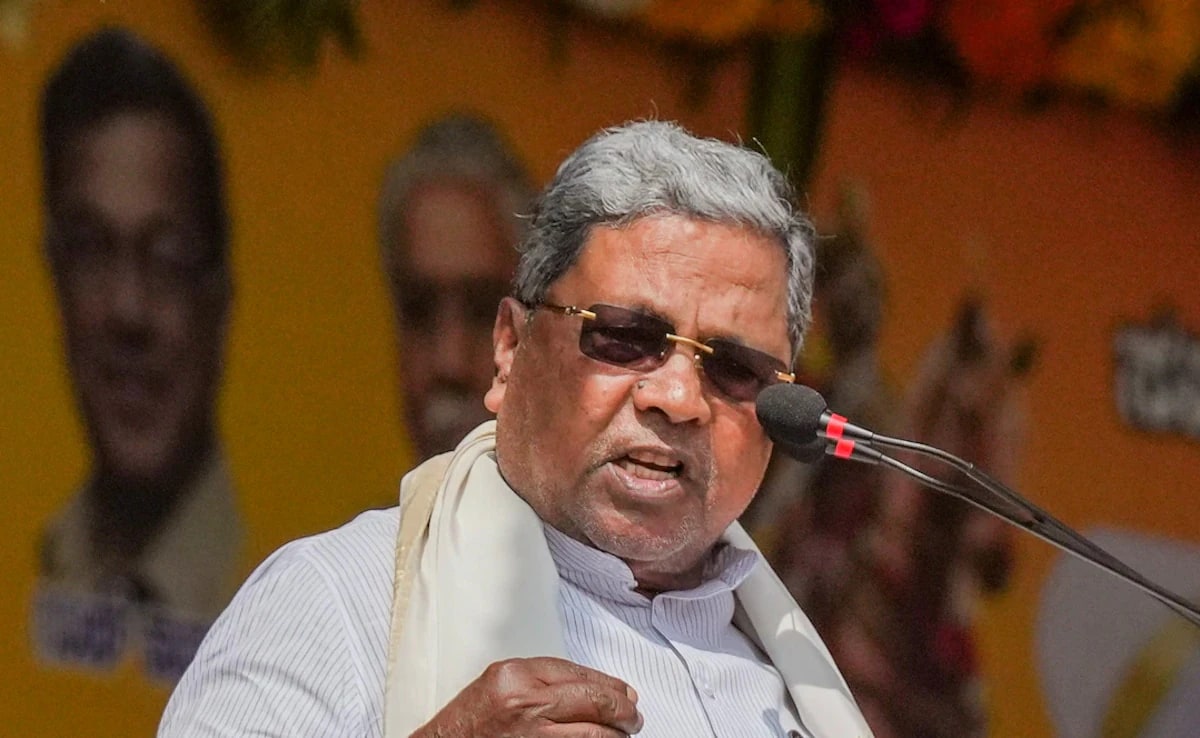
In Setback For Siddaramaiah, Karnataka Bill To Tax Temples Defeated
onmynews.com

In Setback For Siddaramaiah, Karnataka Bill To Tax Temples Defeated

In a setback for the Congress-led government in Karnataka, a bill that mandated a 10 per cent tax on the income of temples that have revenues of more than Rs 1 crore was defeated in the state legislative council late this evening. This comes two days after the bill was passed in the state assembly.

The bill sparked a huge controversy in Karnataka with the opposition BJP accusing the Congress of implementing ‘Anti-Hindu’ policies.

The National Democratic Alliance led by the BJP has more numbers than the ruling government in the legislative council or Upper House in Karnataka. The Congress has 30 MLCs, BJP has 35, eight MLCs are from the JD(S) and there is one independent candidate. One seat is vacant in the council.

The Karnataka government passed ‘Karnataka Hindu Religious Institutions and Charitable Endowment Amendment Bill 2024’ that mandates the state to collect 10 per cent tax from temples that have revenues exceeding Rs 1 crore and 5 pe rcent from those with revenues ranging between Rs 10 lakh and Rs 1 crore.

After flak regarding the government’s amendments to the bill, state ministers Ramalinga Reddy and Dinesh Gundu Rao defended the move and criticised the BJP for its opposition to it.

Minister for Transport, Ramalinga Reddy alleging that BJP is “anti-Hindu” claimed that the party which was in power in 2011 had made the amendments to the bill.

“We are not anti-Hindu. Actually, the BJP is anti-Hindu. This Act came into existence in 2003. In 2011, they made some amendments. At that time, up to Rs 5 lakh, there were about 34,000 temples – they did not give any money for Dharmika Parishad. From Rs 5 Lakhs to Rs 10 Lakhs, there are about 193 ‘B grade’ temples – they have to give 5 per cent. More than Rs 10 Lakhs, there are about 205 temples – they have to give 10 per cent. They approved this amendment in 2011 in the Assembly. Who is anti-Hindu? BJP,” he said.

Minister for Health Dinesh Gundu Rao said that the BJP should realise the bill is for the benefit of the temples, alleging that when the government is trying to help smaller temples, the BJP is trying to mislead.

After the bill was cleared in the lower house of the state, former Chief Minister and BJP veteran BS Yediyurappa questioned why only Hindu temples are being scrutinized and not the incomes of other religions.

Chief Minister Siddaramaiah said that the allegations regarding the amendments to the bill “appear to be misrepresented”, “aiming only at misleading the public” and “polarizing people along communal lines for political leverage.”
Read full article
“Pressure Being Put On Us To Walk Out Of INDIA Bloc,” Alleges AAP
onmynews.com

“Pressure Being Put On Us To Walk Out Of INDIA Bloc,” Alleges AAP

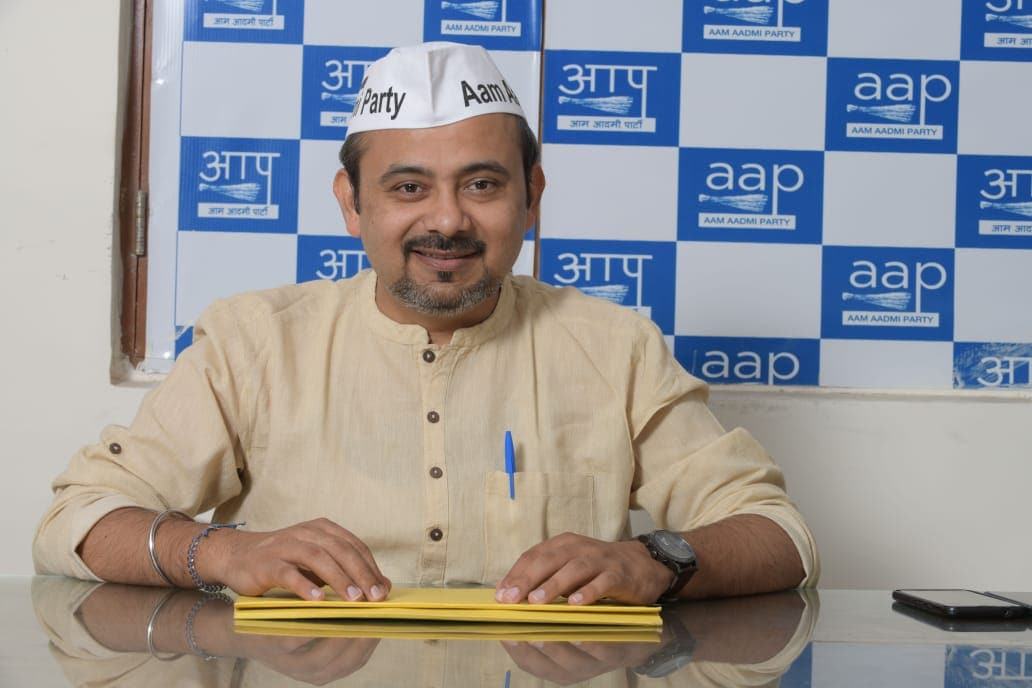
Aam Aadmi Party leader Dilip Pandey has alleged that pressure is being put on his party and on Delhi CM Arvind Kejriwal to walk out of the INDIA bloc.

Mr Pandey also claimed that after the Enforcement Directorate (ED), the Bharatiya Janata Party government is trying to put Mr Kejriwal behind bars through the Central Bureau of Investigation (CBI).

However, BJP has denied these allegations, stating that AAP is playing ‘victimhood’.

AAP leader Dilip Pandey said that the party is not afraid and will fight democratically.

“BJP is not able to get Kejriwal arrested from the ED so now they are trying to put Arvind Kejriwal behind bars through CBI. Until BJP felt that an alliance between AAP and Congress would not be possible, they went into waiting mode. As the alliance took a concrete shape, the BJP started attacking AAP. Even if they (BJP) are using ED and CBI as their political frontal organisations, AAP will not be afraid of them. We will democratically face them,” he said.

“BJP is so scared of INDIA bloc that now CBI pressure is being put on us so that we come out of the alliance,” he alleged.

BJP leader Shehzad Poonawalla said that the guarantee of Chinese products are more than the statements given by the Aam Aadmi Party.

“The allegations made by AAP are less credible than the things we get in the ‘chor bazaar’. The guarantee of Chinese products is more than the statement of Aam Aadmi Party. This is because whenever they made allegations be it on Arun Jaitley or Nitin Gadkari, they had to apologise. First they alleged that BJP wants to break their MLAs, till date no proof of this has come. When the police reached them, they ran away from there. They have left Anna Hazare and have joined Lalu and Sonia Gandhi whom they cursed for corruption. He (Arvind Kejriwal) knows that he won’t get any relaxation in the liquor scam and thus he is playing victimhood,” he said.

Meanwhile, Delhi Minister and Aam Aadmi Party leader Saurabh Bharadwaj on Friday claimed that Delhi Chief Minister Arvind Kejriwal will be arrested in the next 2-3 days.

Mr Bharadwaj claims that people from the BJP have been telling them that if AAP forms a multi state alliance with Congress, Arvind Kejriwal will be jailed and that there is only one way to keep Mr Kejriwal safe, and that is not to form any alliance with Congress.

(Except for the headline, this story has not been edited by NDTV staff and is published from a syndicated feed.)

Read full article
US Targets Russia With New Sanctions Over Ukraine War, Putin Critic Death
onmynews.com

US Targets Russia With New Sanctions Over Ukraine War, Putin Critic Death

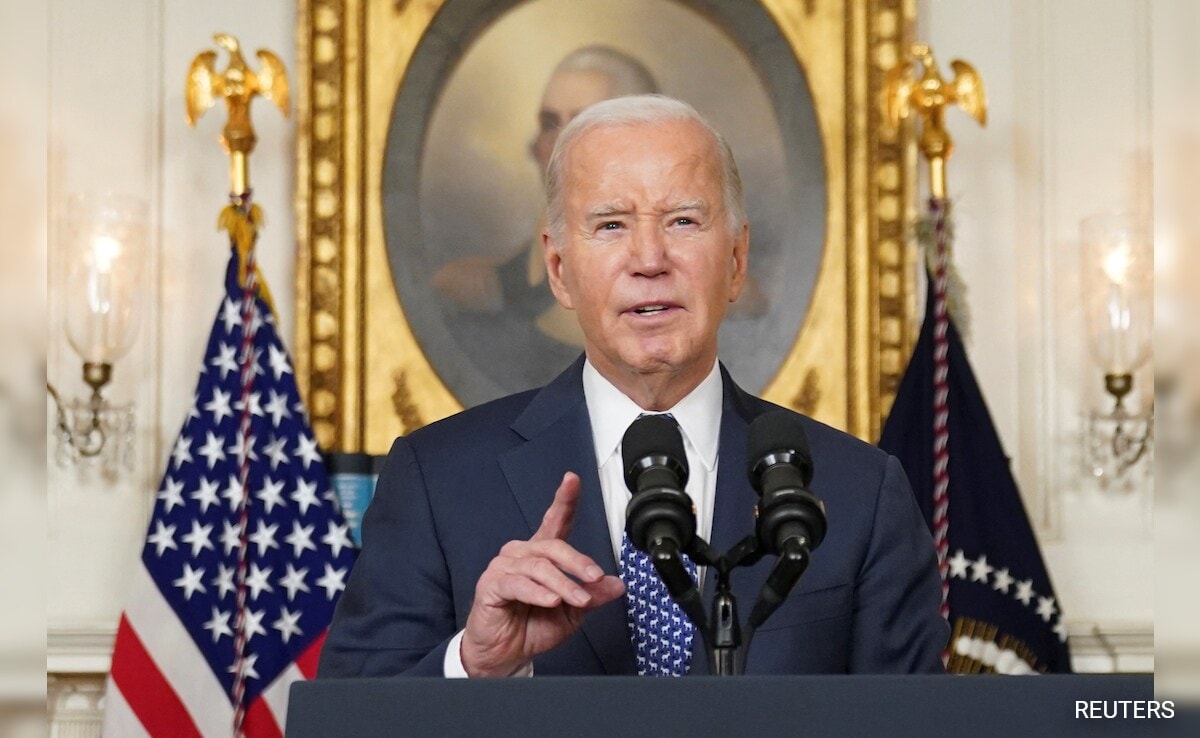
President Joe Biden sought to show his determination to stand up to Russia in announcing fresh sanctions on Friday, but his resolve only went so far over concerns that the toughest measures left in the US arsenal risk roiling the global economy.

A 200-page list of targets based in Russia, the United Arab Emirates, China and other nations was the biggest single-day package of financial punishment since Russia invaded Ukraine two years ago. Just as notable, though, were companies and sectors missing from the expansive list: the metals sector, more energy-related punishments, and secondary sanctions on banks.

That caution reflected how for all of Biden’s talk about the sanctions, his team is still unwilling to go after revenue streams that experts argue would really cripple Russia’s economy, for fear of setting off broad shocks that could rebound on the US economy.

Possible targets for a more aggressive approach could include the foreign banks that help Russia procure the technology and materials it needs to continue the war, as well as the trade in enriched uranium and metals such as aluminum and nickel. The US could also potentially seize – and distribute – frozen Russian sovereign assets. All of those measures carry significant risks.

“To really affect Russia, we’re going to have to take more strategic actions that may have detrimental effects on the broader global economy,” said Kim Donovan, a former Treasury official and director of the economic statecraft initiative at the Atlantic Council. “We’re going to have to start making more difficult decisions and accept the impact that goes along with those decisions.”

Indeed, the list Friday was filled with names of people and entities that have already been sanctioned or have limited links to the US financial system, reducing their impact. There was the warden of the prison where Russian dissident Alexey Navalny died this month and the deputy director of the Federal Penitentiary Service. Also targeted was a Russian shipbuilder that helped produce 15 liquefied natural gas tankers.

In the meantime, what’s still missing is the action Ukraine really wants: approval of $60 billion in fresh armaments and munitions. Biden’s request for that money is tied up in the House of Representatives.

The Ukrainians appeared to agree. Mykhailo Podolyak, an adviser to President Volodymyr Zelenskiy, said the only western action that would really scare President Vladimir Putin is providing more weapons.

“Lots of weapons,” Podolyak said in a post on X, formerly known as Twitter. “A really big amount of weapons for Ukraine. Long-range, anti-missile, anti-marine weapons. The rest is a fiction, delayed awareness, chronicling of the process, prolongation of the war, a dangerous illusion that it is possible to ‘sit out.'”

The sanctions come at a precarious time for the Ukrainian government. A counteroffensive mounted last year failed to meaningfully shift the battle lines and the Russian military recently captured Avdiivka, a bitter symbolic defeat. Meanwhile, Washington continues to dither on additional aid, with a supplemental spending package passed by the Senate stalled out in the House.

Senate Majority Leader Chuck Schumer is visiting Kyiv this weekend to reassure Ukrainians that something will be done but Congress has its plate full over the next few weeks with a government shutdown fight looming large on the calendar. The 2024 US presidential election hasn’t helped matters, with Biden pitching Ukraine aid as necessary to protect against the spread of autocracy and former President Donald Trump opposing it as inconsistent with his America First platform.

As for the Russian economy, it continues to chug along despite the sanctions.

“The latest announcements mark only an incremental tightening of the sanctions regime and we still estimate that Russia’s economy will expand by around 1% to 1.5% in 2024,” Alexander Isakov, Russia economist at Bloomberg Economics, wrote in a note.

Further complicating matters is the fact that Russia has willing partners in China, Brazil and other countries that continue to purchase its oil and ship it supplies. While those countries still account for less than half of global GDP, they represent a growing share, according to Bloomberg Economics.

“It seems that the west is not quite ready to pull the type of levers that would really make a big difference for Russia’s economy,” said Eddie Fishman, a senior research scholar at Columbia University’s Center for Global Energy Policy. “Namely aggressively targeting its energy revenues, its oil revenues, and imposing secondary sanctions on banks that are helping Russia access the international financial system.”

US officials suggested there would be more to come. In an interview with Bloomberg Television on Friday, Deputy Treasury Secretary Wally Adeyemo said the US is exploring options to use $300 billion in Russian state assets to help pay for Ukraine’s reconstruction.

“We’re looking for ways to unlock the economic value of those reserves for the Ukrainian people,” Adeyemo said.


(Except for the headline, this story has not been edited by NDTV staff and is published from a syndicated feed.)

Read full article
Link copied!