Editorâs Take: The Day I Met Pancham Daâ¦And Never Stopped Listening

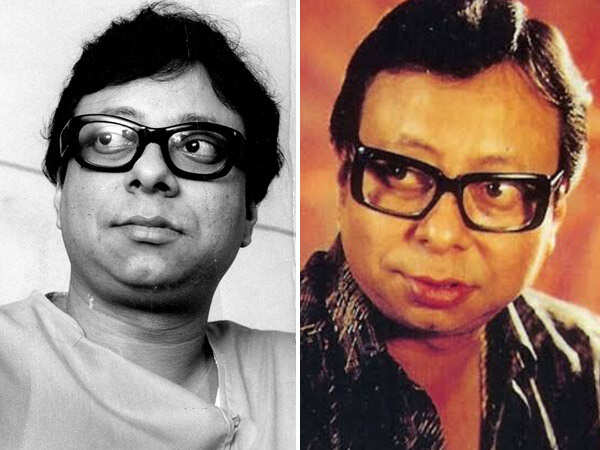
The legacy of Rahul Dev Burman, affectionately known as Pancham remains one of the most transformative chapters in the history of Indian cinema. His music was a bridge between eras. While his career was marked by chartbusters that defined the sound of the ‘70s, it also carried the quiet weight of his later years.
Filmfare’s Editor-in-Chief Jitesh Pillai writes about his experience of meeting Pancham Da and his remarkable work for Indian cinema.
In his words:
It was a chance college assignment to interview a celebrity. I chose Rahul Dev Burman. I was not sure of the drill. I called on the landline; there were no mobile phones then. His secretary, Bharat Asher, mumbled that RD would be recording at Famous Studio, Mahalaxmi—his preferred music den. RDB had just suffered a stroke and was looking frail, supervising the background music for a film called Aag Se Khelenge (1989). He was monitoring a chase sequence between Jeetendra and Kimi Katkar. So, there was me, in some weird baseball cap and loafers. He sized me up. I told him the purpose of my meeting, and he asked me to meet him the following day.

I cannot even begin to describe how I felt that very moment. It was a lifetime of my music standing in front of me—music culled through radio in childhood, Chayageet on Doordarshan, and movies. It’s “the” moment that defines your life and you. I was marked. It sort of culminated in an interview. I never did the college assignment, but Filmfare graciously carried portions of the interview. That’s a long story for another day. The written interview, per se, wasn’t memorable. What made it memorable was RDB’s absolute lack of pretension, his memory, and his gently guiding me through the interview. I was further hooked.
And my search for Pancham and his music began. My second and last meeting with him was when he was physically weak, all alone in his music room. I guessed that he was working on the music of 1942: A Love Story (1994). His man Friday, Sudam, was around. The silence of the Merryland Apartments first-floor flat drained me. Drink in hand, he spoke cautiously, keeping all his cards close to his chest. The room was white, with musical instruments strewn carelessly. His record player, his amplifiers, and assorted musical gizmos were silent, while he spoke in a sort of a gurgling voice. I, all of 19, foolish and overconfident, reminded him of some of his songs which he had forgotten. Indrajeet Aurangabadkar, the still photographer, clicked several frames. There was one frame with me, too. I’m filled with a pang because I’m not in possession of those prized pictures.

He was at his career’s lowest ebb. Some films like Jurrat and Rama o Rama (both in 1989) did nothing to seal the dent. The industry was riding a Bappi Lahiri and Laxmikant-Pyarelal wave. Pancham regulars like Nasir Hussain, Rahul Rawail, and Dev Anand had stopped calling, and Subhash Ghai’s dodgy behaviour during the announcement of Ram Lakhan (1989) had left him dispirited. And to be fair, even his work at that time—Zalzala, Aag Se Khelenge, Jagir, Chor Pe Mor, Indrajeet, Aaja Meri Jaan—did not behove him.
I look back and recall those two meetings with fondness. Perhaps I was too young to process what he was going through, and he camouflaged his loneliness well. There were rare moments of candour during the interview when he said Guru Dutt was confused and scrapped the beautiful songs of his debut film, Raaz. He reminded me how Majrooh Sultanpuri was 14 years older than Anand Bakshi. The evening shadows were lengthening, as if it was time for us to draw the curtains on the meeting. I wish I had known more of his music back then. The folly of youth. A year later, Pancham passed away (January 1994). He was barely 53.
But my obsession with his music grew. Though not a qualified music person, I’ve dabbled in some amateurish music reviews, but I began to listen to him more carefully. And the first discovery was his non-film Bengali songs! Like uncut diamonds—be it Phoole gondho nei, Mohua mon jomecche, or Gun gun bhromora. It was manna, especially the tonal quality; Asha Bhosle’s rich voice gave soul and spine to Pancham’s compositions. I still maintain Pancham’s best work came with Ashaji in the Bengali non-film songs. Asha’s voice was a sugar rush, like treacle on a double sundae. Ashaji’s vocal prowess was tested every time by RDB, and she scored! Be it the limpid beauty of Phirse aaiyo (Namkeen, 1982), Hamen raaston ki (Naram Garam, 1981), or the Dil Padosi Hai album, which never got its due. Sample Maanjhi mere maanjhi, Saawan sasura sataye, or Haan mere gham.

And then there was his unbeatable body of work with Lata Mangeshkar. Be it Ghar aaja (Chhote Nawab, 1961), Tumse milke zindagi (Chor Police, 1983), Naa teri haan bani (Bindiya Chamkegi, 1984), or Tere liye palkon (Harjaee, 1981). Pancham’s music complemented Lataji’s pristine vocals like a moonbeam on an inky blue night. Pancham’s partnership with Kishore Kumar too has been discussed threadbare in book after book, analysis after analysis. If Kishoreda’s voice was the antidote to heartbreak, Pancham’s music was the balm. Go through Jaane kya sochkar (Kinara, 1977), Naa jaane din (Chala Murari Hero Banne, 1977), or Aye zindagi (Namumkin, 1988) to realise how adroitly Kishore’s voice navigated Pancham’s deceptively simple tunes. Together, they were a love affair to remember.
What was the key to Pancham’s enduring appeal? Was it the tonal quality of his music? Was it his ability to mine magic out of the strangest of instruments? Or his constant improvisations with rhythm and form? With easy facility, he managed the commercial chartbusters Yaadon Ki Baarat (1973) and Hum Kisise Kum Nahin (1977) with the somewhat artsy Ratnadeep (1979) and Sitara (1980).

It’s impossible to pinpoint what exactly made RDB tick. The guilelessness in Ladki ki kaathi… the pain of Tujhse naraaz, both in Masoom (1982); the brooding quality of Tum aa gaye ho (Aandhi, 1975); the whimsy of Dhanno ki aakhon mein (Kitaab, 1977)… the versatility through the decades is impressive. His musical legacy, combined with his ability to harness a talented team of musicians (be it Shiv Kumar Sharma or Manohari Singh, Bhupinder or Maruti Rao), was another streak that led people to believe that success comes from warmth, understanding, and collaboration.
There are so many unsung Pancham beauties I discovered. And they lie like jewels in Bollywood’s graveyard of flops through the ’80s: Red Rose (1980), Romance (1983), Sunny (1984), Maati Maangey Khoon (1984), Awaaz (1984), Aar Paar (1985), Lava (1985), Mangalsutra (1981), Jal Mahal (1980), and Samundar (1986). Movies which resurfaced for their magical scores long after he was gone. They only acknowledged his ability to adapt Western scores. I wish they had tipped their hats to his genius too then. Who can forget the classical scores of Amar Prem (1972), Kudrat (1981), Mehbooba (1976), and Parichay (1973)?
Perhaps I was too blinded by my love for RDB to acknowledge that there were superior compositions by SD Burman, Shankar-Jaikishan, and Madan Mohan, whom I discovered and cherished only later. Perhaps that lonely man in the dimly lit room in Merryland Apartment fired my imagination like no one else did. His music soothed me; it helped me to find me. Goodbyes are always tough. Like Gulzar saab’s voice trails off in his preamble to the album Pancham And I, “Main bahut akela hoon, Pancham…” Pancham disappeared in the musical mists. I’m not that 19-year-old anymore. His music saved me then. Who will heal my soul again? It will be 32 years since you went away. Happy birthday, Pancham.
Also Read: Editor’s Take: Remembering Pancham Da, The Music That Still Echoes