Live · Global · Independent
Live Feeds
PinkVilla
Forbes
NDTV
Hindustan Times
Concern Over Possible Cross-Voting Ahead Of Rajya Sabha Polls In 3 States
onmynews.com

Concern Over Possible Cross-Voting Ahead Of Rajya Sabha Polls In 3 States

Three seats in two Congress-ruled states and one in Uttar Pradesh are in for a tough fight during Tuesday’s Rajya Sabha polls. Sources have indicated that cross-voting by Opposition MLAs are very likely, for which the Congress and the Samajwadi Party are keeping strict watch.

In Karnataka, the ruling Congress has shipped off its MLAs to a “safe house” to prevent undue influences — a frequently occurring situation in the chequered politics of the state.

For Himachal Pradesh, the measures were not so drastic. The ruling Congress there has issued a whip to its MLAs for election on its sole Rajya Sabha seat — a move that has drawn sneers from the BJP.

The Samajwadi Party — the main Opposition in Uttar Pradesh — meanwhile says all is well, even though sources say at least 10 of the party’s MLAs are ready to cross-vote.

The ruling BJP and the SP have the numbers to send seven and three members unopposed to the Rajya Sabha. But the BJP upped stakes by fielding Sanjay Seth — a former SP member and industrialist — as its eighth candidate.

To get elected, a candidate from the state needs nearly 37 first preference votes. Leaders of the BJP have claimed that at least 10 MLAs of the SP are in touch with them.

The SP has fielded actor-MP Jaya Bachchan, retired IAS officer Alok Ranjan and Dalit leader Ramji Lal Suman. The decision has apparently alienated its ally Apna Dal (Kamerawadi) leader Pallavi Patel, who earlier said she would not vote as she did not agree with the decision to field Ms Bachchan and Mr Ranjan.

While numbers had ensured smooth sailing for the Congress in four of Karnataka’s three seats, the BJP-Janata Dal Secular alliance queered the pitch by fielding a second candidate. In case there were four candidates, each needed 45 votes to win, but in case of more candidates, preference votes kick in.

The Congress has 134 MLAs, the BJP has 66 and the JD(S) 19, while others account for four. Of the four, the Congress claims the support of two Independents and Darshan Puttanaiah from Sarvodaya Karnataka Paksha, and is confident of winning three seats.

On Monday, the Congress shifted all its MLAs to a hotel, marking the beginning of the state’s trademark resort politics. All parties have issued whips to their MLAs ahead of tomorrow’s election.

In Himachal, the candidate for whom the Congress would be battling is the party’s senior leader Abhishek Manu Singhvi, against whom the BJP has fielded its core committee member Harsh Mahajan. While the Congress has a clear majority with 40 MLAs, the BJP has 25 members. Three MLAs are Independents of whom two are BJP rebels. The BJP, sources said, is now eyeing dissatisfied Congress MLAs to win over.

The election is expected to be prestige battle for Chief Minister Sukhvinder Singh Sukhu, who took over the reins of the state after last year’s assembly polls.

Election will be held on 56 Rajya Sabha seats across 15 states tomorrow from 9 am to 4 pm. Counting will begin at 5 pm and the results are expected late in the evening.

The ruling BJP holds 28 of the 56 seats –including the one left vacant by party lawmaker Kirodi Lal Meena, who has become a minister in Rajasthan. After elections, it will have at least 29 seats. In Uttar Pradesh, INDIA bloc will gain two seats as the SP is expected to improve its tally from one to three seats.
Read full article
Paytm CEO Quits Payments Bank Board In Major Shakeup Amid RBI Clampdown
onmynews.com

Paytm CEO Quits Payments Bank Board In Major Shakeup Amid RBI Clampdown

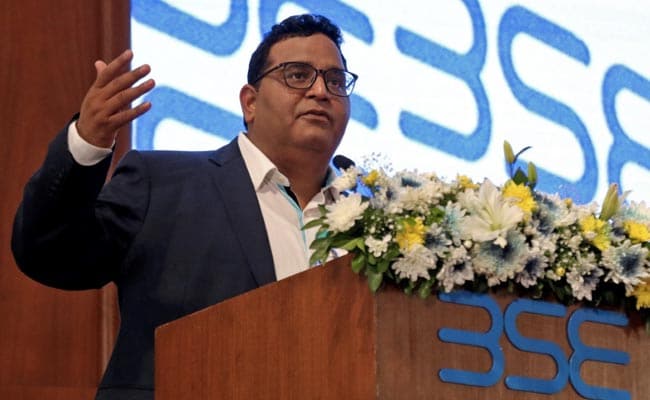
Paytm said on Monday that Vijay Shekhar Sharma would step down as non-executive chairman and board member of its payments bank’s unit, as the embattled digital payments company overhauls its board after a central bank clampdown.

The action against Paytm Payments Bank followed “serious supervisory concerns”, including inadequate customer identify and a lack of arms-length distance with Paytm, sources had told Reuters.

The Reserve Bank of India has asked the banking unit to wind down its operations by March 15 due to persistent non-compliance and continued material supervisory concerns, triggering a meltdown in Paytm’s stock.

Srinivasan Sridhar, former chairman of state-owned Central Bank of India, former Bank of Baroda Executive Director Ashok Kumar Garg and two retired Indian Administrative Service officers will join the board, Paytm said in an exchange filing.

The new board members’ expertise will be “pivotal in guiding us toward enhancing our governance structures and operational standards, further solidifying our dedication to compliance and best practices”, Paytm Payments Bank CEO Surinder Chawla said.

Paytm supports its banking unit’s move of opting for a board with only independent and executive directors by removing its nominee, it said, adding Sharma was also stepping down from the board to “enable the transition”.

Mr Sharma owns a 51 per cent stake in Paytm Payments Bank, while One 97 Communications, as Paytm is formally known, owns the rest.

(Except for the headline, this story has not been edited by NDTV staff and is published from a syndicated feed.)

Read full article
Tried To Maintain Equilibrium, China’s 2020 Move Changed That: S Jaishankar
onmynews.com

Tried To Maintain Equilibrium, China’s 2020 Move Changed That: S Jaishankar

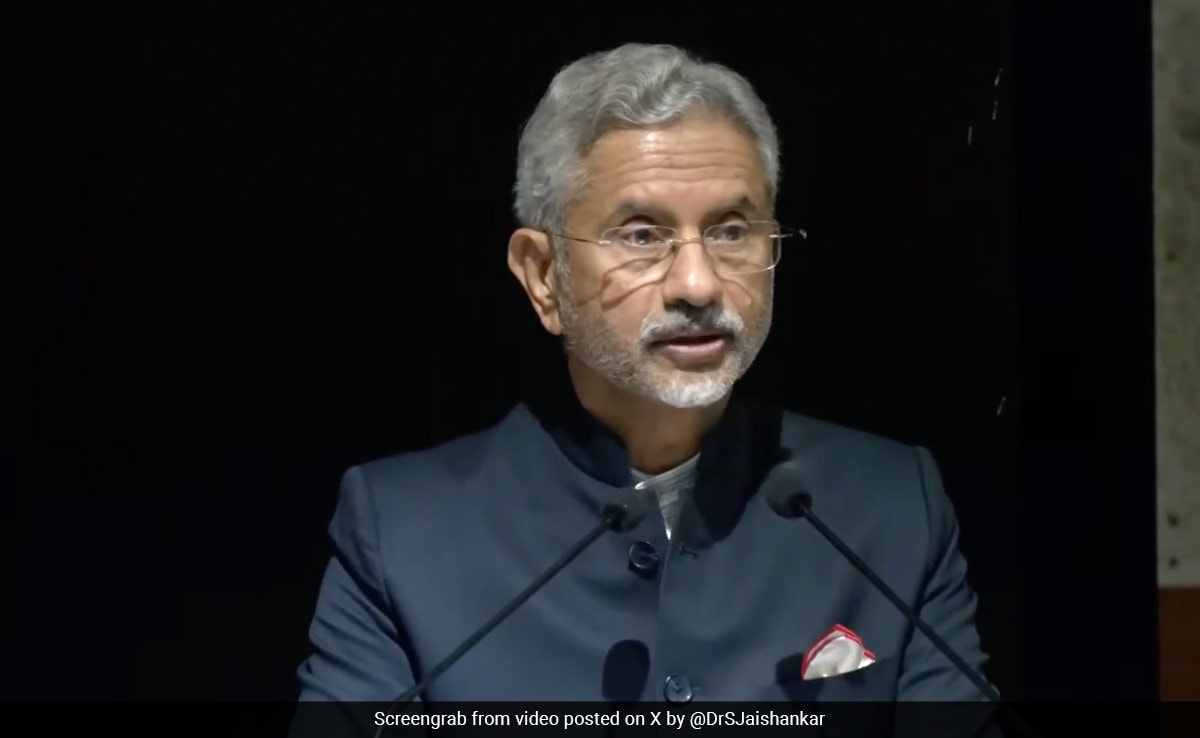
India and China are rising and the two countries, in the process, are changing the world order, External Affairs Minister S Jaishankar said on Monday.

Mr Jaishankar, citing talks between the leadership of the two countries in Mamallapuram and Wuhan, said India tried to maintain an “equilibrium” in the ties through diplomacy, but the relations took a different turn following China’s military build-up along the Line of Actual Control in 2020 in violation of laid down norms.

The external affairs minister, speaking at a media summit organised by the TV9 Network, described the rise of India and China as “significant” in the global geopolitical scenario.

“If you were to list three or four really big things which have changed in the last 20-25 years, I think most people would agree it would be the rise of China and the rise of India,” he said, replying to a question.

“You can say China started it much earlier because our own politics here delayed the era of reform. That’s okay. What’s done is done. But there is no question, both countries are rising and for world politics, this poses a very interesting problem,” he said.

“The problem is this: both are changing the world order by their rise. So each one has an impact vis-a-vis the world. But they also happened to be neighbours. So their relationship is also changing while it is changing vis-a-vis the rest of the world,” Mr Jaishankar added.

The external affairs minister argued that the situation, therefore, is making it “very complicated to create an equilibrium”. They were part of an “equilibrium maintenance exercise”, Mr Jaishankar said when specifically asked about the informal summit between Prime Minister Narendra Modi and Chinese President Xi Jinping in the Chinese city of Wuhan in 2018 and Mamallapuram in 2019.

“We tried to maintain that equilibrium naturally — first through diplomacy. So what you saw in Wuhan and Mamallapuram, etc was that equilibrium maintenance exercise,” he said.

“But what happened in 2020 was China for whatever reason chose to move military forces in disregard of agreements. That called for a different response for the equilibrium,” he said.

“The logical thing for us to do, which is what we did, was we moved our forces and in a very big way. So from 2020, you have an equilibrium, one part of which is the military posture in the border areas, one part of it today obviously is the political relationship impacted by this border situation,” he said.

“One part of it is also the economic measures that we have taken,” he added.

Mr Jaishankar said the Modi government believes that the interests of the country’s working class, small enterprises and small industries must be protected against “unfair competition”.

“Our effort today is to build our deep strengths. We have to build our digital capabilities, our telecom, our manufacturing, our pharma industry, our health self-sufficiency, our defence industry, our ability to deploy on the border which you can only do if you build infrastructure,” he said.

Mr Jaishankar suggested that India’s annual average expenditure on the border with China was about Rs 3,500 crore till 2014.

Today, it is almost Rs 15,000 crore, he said.

There was a neglect of the border infrastructure, he said, adding “You cannot defend the border if you do not build infrastructure there”. 

(Except for the headline, this story has not been edited by NDTV staff and is published from a syndicated feed.)

Read full article
Link copied!