He could never “get over this image of someone who bulldozed his corporate rivals, managed to always procure the licences he wanted and got the government of the day to set duty rates that suited him. He had to fight the law enforcement agencies on charges of smuggling in a new polyester filament yarn plant and how companies registered in the tax haven, Isle of Man, with names like Crocodile Investments and Fiasco Investments had purchased Reliance shares at one-fifth their market prices…His political connections had even given birth to a popular joke which divided the country’s politicians in two groups: R-positive and R-negative.”
This lengthy excerpt is from a column by leading commentator Shyamal Majumdar on the legacy of Dhirubhai Ambani, the founder of Reliance Industries.
VP Singh, who became India’s eighth Prime Minister, was one of the prominent ‘R-negative’ politicians of that time.
Taking Sides May Not Always Work
As Finance Minister and later, the key challenger to Rajiv Gandhi’s Congress in the lead-up to the 1989 Lok Sabha election, VP Singh employed various tactics against Dhirubhai Ambani. He positioned himself as a corruption slayer who spared no one. It’s widely known that his anti-Dhirubhai stance received generous support from a rival corporate lobby and certain sections of the media.
However, the 1989 election results didn’t provide the resounding mandate that VP Singh and his supporters had hoped for. His Janata Dal managed only 143 of 543 seats, with a vote share of less than 18 per cent. Except for a decent performance in Bihar, Uttar Pradesh, Odisha, Karnataka, and Rajasthan, the party flopped in other states. His strategy of targeting big business failed to resonate with voters, even when national sentiment had turned against the Congress.
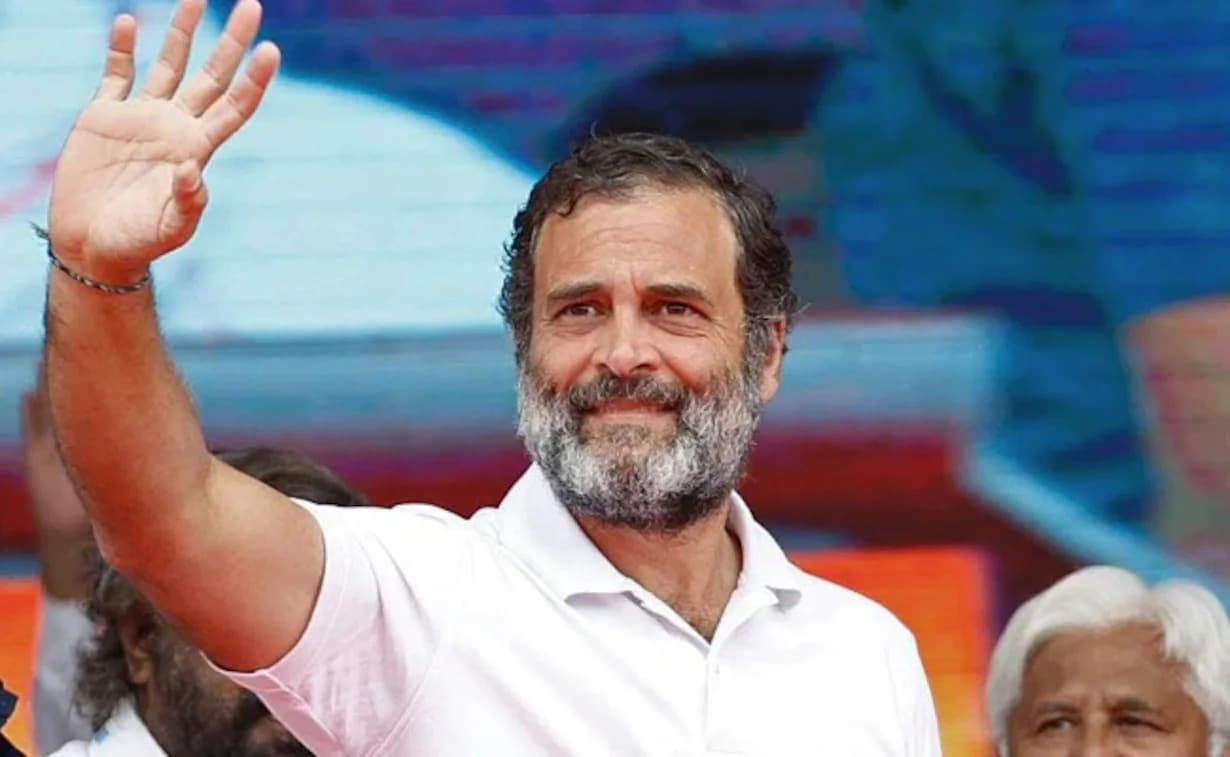
There is a lesson here for Congress leader Rahul Gandhi, when it comes to the VP Singh playbook of taking sides in corporate rivalries. While it may align you with one group over others, anti-business sentiment doesn’t find many supporters in the country.
Limitations Of Mandal politics
On the campaign trail, VP Singh wore the badge of Mr. Clean. As Prime Minister, he tried to be a social justice messiah by implementing the recommendations of the Mandal Commission reserving 27 per cent government jobs for Other Backward Classes (OBCs).
“Mandal politics” had a lasting impact on India’s political dynamics. The Janata Dal and its various state-specific factions did win elections in states like Bihar, Uttar Pradesh, Odisha, and Karnataka. However, these parties struggled with a significant electoral handicap – they never managed to secure more than a third of the total votes on their own.
Even the Rashtriya Janata Dal (RJD) led by Lalu Yadav, considered one of the most successful exponents of Mandal politics, couldn’t overcome this limitation. The RJD’s best-ever Lok Sabha performance was in 2004 when it won 22 seats with a vote share of nearly 31 per cent. In assembly polls, its best performance was in 2000, with just over 28 per cent of the votes.
The Samajwadi Party (SP), another advocate of Mandal politics, faced similar challenges. Its highest vote share was in the 2022 assembly polls, when it secured just over 32 percent of the votes.
State-specific iterations of Mandal politics, such as the RJD and the SP, failed to garner support from all OBC groups. In fact, a significant section of less dominant and more deprived OBCs grew dissatisfied with this brand of politics. This disenchanted group played a role in the BJP’s resounding victories in the 2014 and 2019 Lok Sabha elections. Data from the Centre for the Study of Developing Societies (CSDS) shows that nearly half of the numerically significant non-dominant OBCs voted for the BJP in the 2019 Lok Sabha election.
This brings us to another point that Rahul Gandhi must be wise to. The yet-to-be-published 2011 caste census reportedly revealed approximately 46 lakh caste categories, as reported in leading newspapers at the time. Assuming that roughly half of these categories belong to the OBCs, in proportion to their population share, it means that when we refer to OBCs, we are essentially talking about a diverse group of 15-20 lakh social categories.
Each group has distinct challenges and aspirations. Their political allegiances depend on what is on offer. Moreover, there is fierce competition among proximate castes or groups closer to each other in the traditional hierarchy. Attempting to unify them under one banner and expecting them to vote together may be unrealistic. That is why Mandal parties had limited appeal in the past, and that is unlikely to change anytime soon. Rahul Gandhi should bear this in mind when applying the VP Singh playbook from the late 1980s and early 1990s in 2023-24.
Finally, a disclaimer and a related observation that made me rethink the electoral appeal of Mandal 2.0.
I have seen the Mandal phenomenon altering the basic grammar of India’s politics in ways not much else could. That is the reason I anticipated a significant buzz the day the Bihar caste census data was released. One way to gauge this was by examining Google Trend data on that day. To my surprise, among the top searches in India that day, the Bihar caste census ranked a low 13. Even a nondescript cricket match and the wedding of Pakistani actress Mahira Khan caught more attention.
(Mayank Mishra is Consulting Editor, NDTV.)
Disclaimer: These are the personal opinions of the author.