Live · Global · Independent
Live Feeds
PinkVilla
Forbes
NDTV
Hindustan Times
Suriyaâs Scene Gets a Diwali Release Title Teaser Introduces Him As a Rebellious Cop
onmynews.com

Suriyaâs Scene Gets a Diwali Release Title Teaser Introduces Him As a Rebellious Cop

Suriya is set to bring a very different cop character to the screen with Scene, his upcoming collaboration with Aavesham and Romancham director Jithu Madhavan. The makers officially unveiled the title with a teaser on Wednesday, September 9, while also confirming that the film will arrive in theatres worldwide on November 6, ahead of the Diwali weekend.

The film, which has been referred to as Suriya 47 during production, marks Jithu Madhavan’s first Tamil directorial. The title teaser offers a glimpse into the world of Suriya’s character, DSP Inbaraj, a police officer whose methods and temperament appear to put him at odds with those around him.

Inbaraj is portrayed as a rebellious and intimidating figure who has earned the displeasure of his colleagues. The teaser also hints at his unusual relationship with prisoners, several of whom appear to have landed behind bars because of his actions. The glimpses suggest that Jithu is bringing the irreverent humour and eccentric characters associated with his Malayalam films into a distinctly Tamil setting.

A new Tamil outing for Jithu Madhavan

Scene brings together an interesting combination of talent from the Tamil and Malayalam film industries. Jithu Madhavan made his feature directorial debut with Romancham in 2023 before following it up with the highly successful Aavesham in 2024. Both films were noted for their distinctive humour, memorable characters and energetic storytelling.

The filmmaker has previously described his Suriya project as a proper Tamil film, making Scene an important new chapter in his career. The film also marks the Tamil debut of actor Naslen, who has emerged as one of the most recognisable young performers in Malayalam cinema following films such as Premalu.

Nazriya Nazim, meanwhile, returns to Tamil cinema after more than a decade. Her last Tamil feature was Thirumanam Enum Nikkah, released in 2014. Her pairing with Suriya and the presence of Naslen add another layer of interest to the project.

An ensemble cast and Sushin Shyam’s music

Scene also features Anandraj, Lal and social media personality Raj Priyan, who makes his feature film debut. The supporting cast further expands the film’s ensemble, although the makers have kept several details about the characters under wraps.

Jithu has once again collaborated with composer Sushin Shyam, who has scored all of the director’s feature films so far. Scene marks Sushin’s first Tamil film as a composer. The technical crew includes cinematographer Vineeth Augustian, editor Ajmal Sabu, production designer Ashwini Kale and action director Chethan D’Souza. Dravid Selvam, known for Idhayam Murali, has penned the Tamil dialogues.

Production on Scene began in December 2025 and was completed in July 2026, with portions of the film shot in both Tamil Nadu and Kerala. Suriya is also producing the project along with Jyothika under their Zhagaram Studios banner, with Jaishree Damodaran serving as co-producer. The film is now in post-production ahead of its November release. Netflix has acquired its digital streaming rights, while Sony Music has secured the music rights. 

With Scene scheduled to arrive on November 6, Suriya will headline a film that brings together one of Tamil cinema’s biggest stars with a filmmaker who has quickly established a distinct voice in Malayalam cinema. The title teaser’s glimpse of DSP Inbaraj suggests that their collaboration could offer Suriya a particularly unconventional addition to his filmography.

Also Read: Fact Check: Vijay Deverakonda’s Team Responds to Viral Rumours About Ranabaali
Read full article
Monsoon Wedding at 25: The Family It Never Let Me Forget
onmynews.com

Monsoon Wedding at 25: The Family It Never Let Me Forget

As a wide-eyed first-year mass communication student in 2017, walking into class each day meant a new lens on cinema and feminist studies. One lecture on Mira Nair’s Monsoon Wedding introduced me to a filmmaker whose portrait of the Indian diaspora leaves you with a distinctly bitter-sweet feeling. In the film, I recognised an aunt who panics through every family function, a father convinced his way of running the household is the only right way, and that one older cousin who looks out for you and holds up the mirror when the ‘perfect’ desi household’s cracks start to show. Nair’s shaadi does soak you in a hazy Delhi monsoon afternoon, but it also exposes the dysfunction underneath, like an annoying seelan (dampness) on the wall.
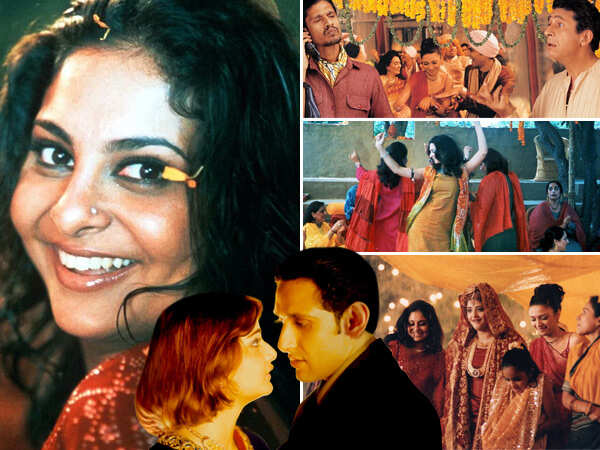
At 19, watching it with a classroom full of fellow students, we smirked mischievously as ‘Aaj Mausam Bada Beimaan Hai’ played behind PK Dubey (Vijay Raaz) and Alice (Tillotama Shome) trading glances, Dubey nearly swallowing a marigold in the moment. As the film opens up, it spills through every crack in the Verma family’s chaos: Naseeruddin Shah’s frustration with a son he thinks isn’t macho enough, Aditi’s (Vasundhara Das) inability to focus on her wedding while an affair with a colleague still lingers, and her cousin Ria (Shefali Shah) finally holding up the mirror to the family by calling out the revered patriarch Tej Puri (Rajat Kapoor) for abusing her as a child. The film keeps oscillating between sangeet rehearsals and the uncomfortable conversations underneath them. From Ria’s single status to Lalit’s reckoning with his brother-in-law Tej, everything simmers inside the chai ka pateela, threatens to boil over, and is pulled back just in time to be served hot as Aditi and Hemant’s wedding celebrations begin to ‘Aaja Nachle’.

Monsoon Wedding 25 Years

Back then, the film was studied in class as a text on the cultural weight of Indian weddings and their grandeur. Monsoon Wedding never chases the loud, glossy Band Baaja Bride aesthetic; it’s marinated instead in the yellows and oranges of the auspicious genda phool. Its handheld camera, a quiet homage to the Dogme 95 movement, gives it the texture of a simple wedding shot on an old VHS tape. But what sits at the centre of this deceptively familiar docu-drama and this is where Nair’s documentary instincts show, is its ability to paint a vivid picture of a Delhi monsoon soaked in tradition versus modernity, class dynamics within an upper-class Hindu household, and agency in love.

Love takes centre stage in the film, told through parallel stories set against marriage as a ‘sacred’ and lifelong commitment. Nair has spoken about how Sabrina Dhawan’s writing of the younger couples’ romances was rooted in her understanding of a generation’s evolving dynamics in the early 2000s. The romantic tracks, Aditi and Hemant (the bride and groom), Dubey and Alice (the wedding planner and the house help), Rahul and Ayesha (the Indian-born Australian and Aditi’s cousin), and the charged, unresolved tension between Ria and Umang Chadha in the final scene, all together capture the rawness of desire and attraction navigating the societal norms of Indian culture. Twenty-five years on, in an era of left and right swipes, it’s worth wondering how these same dynamics would play out today. Would Aditi block her married ex after being left hanging? Would Rahul and Ayesha keep texting after the wedding, given what we’d now call their situationship? The nature of the conflicts and dilemmas may stay the same even 25 years on, but the language and resolution around them would almost certainly look different.

Monsoon Wedding 25 Years

In parallel, the story confronts child sexual abuse and puts the entire Verma family in an impossible position. Seeing Tej Puri, her own abuser, circling a younger girl in the family again leaves Ria with no choice but to intervene. She’s slapped for it, and pulls away from the sangeet in the aftermath. What has stayed with me is that Lalit, the bride’s father and the closest thing Ria has had to one since her own father passed, stands by her. Even in 2026, such matters are rarely spoken about out loud within families. But screenwriter Sabrina Dhawan doesn’t take the easy way out. She has a chastened, indebted Lalit set the record straight, Tej Puri is no longer welcome at the wedding. Ria’s truth is acknowledged, and Lalit finally gives her the safe space she was denied for years. It never feels like a forced message; it plays as an organic apology from Lalit to Ria. 
Watching this unfold with a room full of female batchmates, I remember the soft sniffs and heavy sighs around me. Some of us may have recognised something of Ria’s past in her; others felt it like a warm hug when she doesn’t fully recover but still dances her heart out with little Aaliya as it pours down on Aditi and Hemant’s baraat. The weight of that moment has stayed with me.

Monsoon Wedding 25 Years
Rewatching the film at 28, some things that didn’t land at 19 make sense to me now. Nair’s choice to have the Verma family converse largely in English felt a little alien to me at first. Digging into her filmography later, her years split between New York and Kampala, a career-built studying in Delhi before Harvard pulled her away, it became clear why she’d bring a diasporic lens back to a Delhi wedding rather than an insider’s. Sabrina Dhawan’s own roots lie in Delhi, where she grew up before writing the screenplay as a film student in America. That distance gave her the sensibility of an outsider looking in, rather than someone too close to look at all.
I remember Monsoon Wedding through its visual language, its tenderness towards love, messy relationships, and family siyapa. I remember the pop culture moments from the sangeet’s Chunari Chunari face-off to Sukhwinder Singh’s Aaj Mera Jee Karda, that have stayed my favourite topics of debate with a fellow film buff. And I remember the hazier memory, at seven or nine, of picking out Monsoon Wedding’s cassette for its vivid yellow-and-orange cover and asking my maternal uncle about the film. He couldn’t explain much, so he just played the songs in the car instead. Funny how he wasn’t grooving and I was. Maybe because it was his own wedding chaos playing out at home, and I could feel it too.

Also read: 25 Years of Lagaan: Aamir Khan Made More Than One Impossible Dream Come True

Read full article
âœAnimal Chal Gayi Toh Chalo Sab Violence Kar Lete Haiâ – Kareena Kapoor Calls Out Herd Mentality
onmynews.com

âœAnimal Chal Gayi Toh Chalo Sab Violence Kar Lete Haiâ – Kareena Kapoor Calls Out Herd Mentality

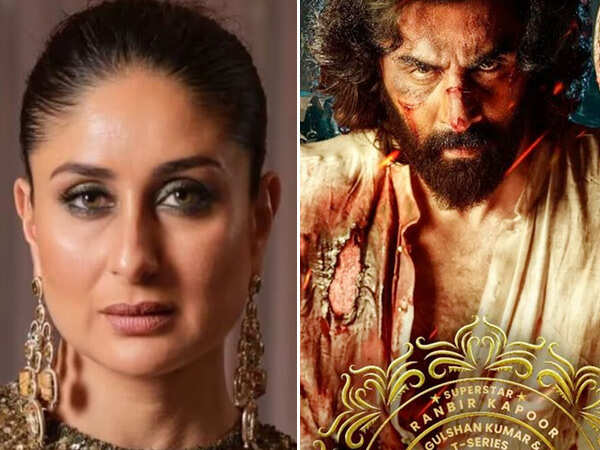
Kareena Kapoor Khan has never really been one to mince words, and her latest interview proves that hasn’t changed. During a candid conversation, the Daayra star called out what she describes as Bollywood’s “herd mentality,” pointing directly at how quickly the industry tends to copy whatever formula just worked at the box office.

Kareena Kapoor Khan

Her example of choice was hard to miss. Referring to the massive success of Sandeep Reddy Vanga’s Animal and the wave of violent, alpha-male narratives that followed it, Kareena didn’t hold back. “Our audience is smarter than we think. They know exactly when it’s a good film and they want to watch it. So today it is not just about a young love story. All these things are very dated, ki abhi violence chal rahi hai… ki abhi Animal chal gayi toh chalo sab violence kar lete hai. We are herd mentality, what to say?”

Translated loosely, her point was simple. One film does well with a certain kind of aggression on screen, and suddenly every filmmaker wants a piece of that same energy, regardless of whether it actually serves the story they’re trying to tell.

But Kareena wasn’t entirely pessimistic about where the industry is headed. She was quick to acknowledge the filmmakers bucking that trend too. She added, “Then there are filmmakers who want to make something different, who provoke your thoughts and who have their own fan following. I feel like things are changing now. The audience will now watch the trailer and say that we want to watch this film.”

Kareena Kapoor Khan
According to her, audiences today aren’t just settling for what’s being repeated on loop. They’re actively choosing films based on what genuinely interests them, not just what’s currently “trending.”
The timing of these remarks isn’t incidental either. Kareena is gearing up for the release of Daayra, a crime thriller directed by National Award-winning filmmaker Meghna Gulzar, where she plays a cop navigating a complex case alongside Prithviraj Sukumaran. The film, inspired by true events, releases in theatres on September 18.
Coming from an actress who has spent over two decades picking roles that rarely follow a predictable pattern, the observation carries a fair bit of weight.

Also Read: Sach Ka Daayra from Kareena Kapoor Khan and Prithviraj Sukumaran’s Daayra is out now

Read full article
…
Link copied!