Live · Global · Independent
Live Feeds
PinkVilla
Forbes
NDTV
Hindustan Times
“People Say I Was…”: When Manmohan Singh Defended “Silent PM” Charge
onmynews.com

“People Say I Was…”: When Manmohan Singh Defended “Silent PM” Charge

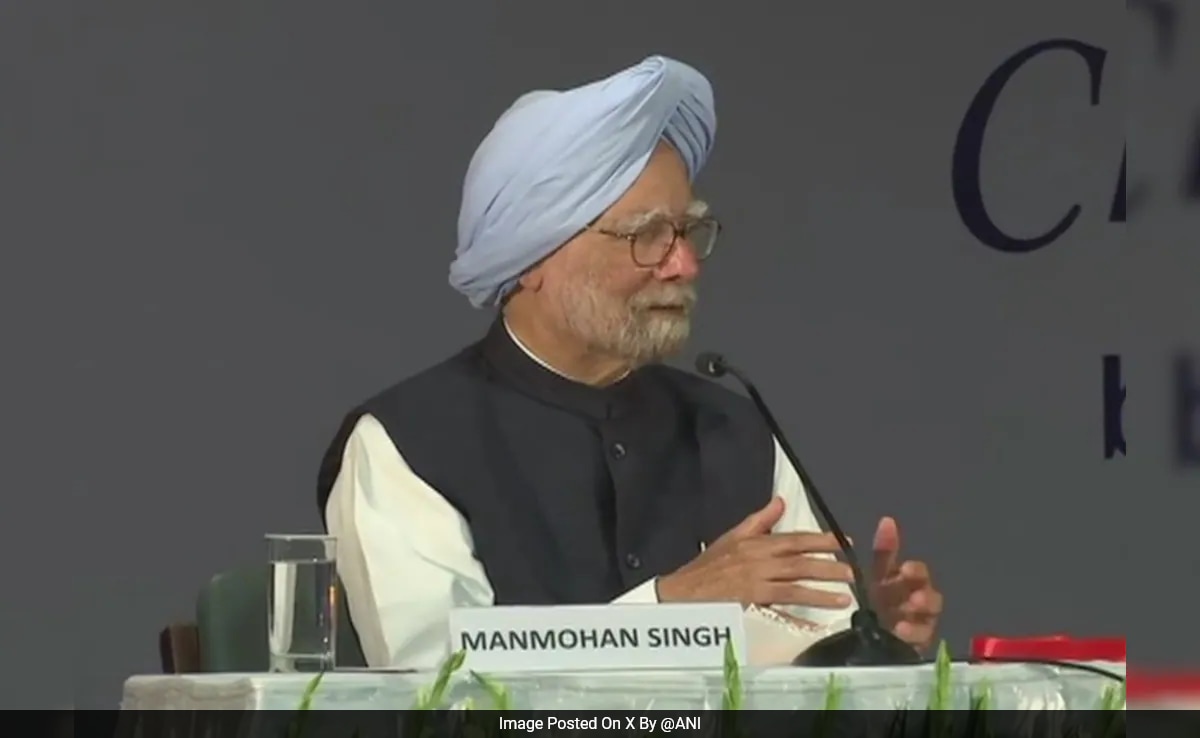
Dr Manmohan Singh‘s critics often labelled him as a “silent Prime Minister”, taking a dig at his reticent demeanour during his decade-long tenure at the helm of the UPA government from 2004 to 2014. However, there were moments when the former PM defended himself. 

In 2018, at the launch of ‘Changing India’, a six-volume book set in which Dr Singh chronicled thoughts on his career as an economist who was instrumental in India liberalising its market to him becoming the PM, he stood his ground. 

“People say I was a silent Prime Minister. I think these volumes speak for themselves. I wasn’t the PM who was afraid of talking to the press. I met the press regularly, and on every foreign trip I undertook, I had a press conference on return. So there are a large number of those press conferences whose results are also described in the book,” Dr Singh said. 

Dr Singh, India’s 14th PM and one of its most respected economists, died last night at the All India Institute of Medical Sciences (AIIMS) in New Delhi. He was 92.

Born on September 26, 1932, in Gah, Punjab (now in Pakistan), Mr Singh’s journey stretched from an academically gifted student in a village with no electricity to one of India’s most influential leaders. After earning a First-Class Honours degree in Economics from the University of Cambridge in 1957, he pursued a D.Phil. in Economics at  Oxford. He began his career as an academic, teaching at Punjab University and later the Delhi School of Economics, before moving into public service.

Dr Singh’s appointment as Finance Minister in 1991 by then Prime Minister PV Narasimha Rao marked the turning point for India’s economy. At a time when the country was on the brink of financial collapse, Dr Singh ushered in sweeping liberalisation reforms. He dismantled the licence raj, unshackled private enterprise, and repurchased the gold reserves India had mortgaged just months earlier. 

His work earned him recognition as the architect of modern India’s economic framework.
Read full article
Manmohan Singh’s Poetic Banter With Sushma Swaraj In Parliament
onmynews.com

Manmohan Singh’s Poetic Banter With Sushma Swaraj In Parliament

Former Prime Minister Dr Manmohan Singh is seen as the architect of India’s economic reforms during the PV Narasimha Rao rule that paved the way for the country’s economic growth. But besides economics, his other abiding interest was ‘shayari’ and he often employed verses to launch attacks on political rivals inside and outside the Parliament.

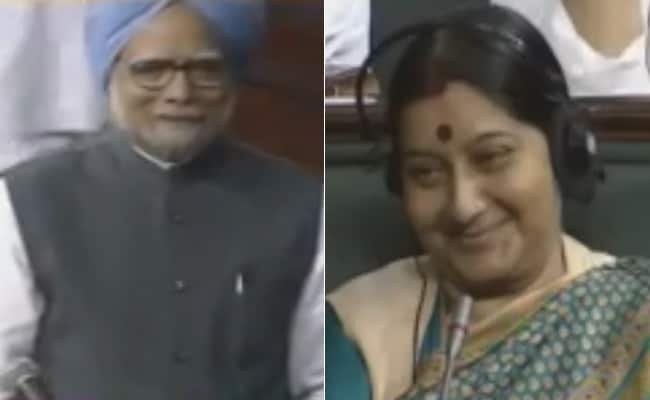
These poetry attacks drew loud cheers from both the treasury and the Opposition benches in times when humour, and not hostility, dominated the mood in Parliament. Mr Singh‘s shayari strikes found their worthy match in the 15th Lok Sabha. From 2009-14, BJP stalwart, late Sushma Swaraj, was the Leader of the Opposition in Lok Sabha and the ‘jugalbandi’ of ‘shayari’ between the two was nothing less than a delight.

In March 2011, the Parliament erupted over a Wikileaks cable that accused the then ruling Congress of bribing MPs during the 2008 trust vote. Leading the Opposition charge, Ms Swaraj targeted the Prime Minister with Shahab Jafari’s famous lines, “Tu idhar udhar ki na baat kar, yeh bata ki kafila kyun luta, humein rahjano se gila nahi, teri rahbari ka sawal hai.” The lines roughly translate to: “Don’t change the topic, just say why the caravan was looted, we have nothing to say about the robbers, but this is a question on your leadership.”

The Prime Minister replied with Allama Iqbal‘s couplet that drew a smile from Ms Swaraj and cheers from the House. “Mana ki teri did ke kaabil nahin hoon main, tu mera shauq dekh mera intezar dekh” (I know I am not worth your attention, but look at my longing.”

Another war of couplets broke out between the two leaders in 2013 during the debate on the Motion of Thanks to the President’s Address.

In a sweet attack on the Opposition, former Prime Minister Singh used Mirza Ghalib’s lines, “Humein unse hai wafa ki ummeed jo nahin jante wafa kya hai.” (We expect loyalty from those who don’t know what loyalty is.”

The Leader of the Opposition responded with two shers. The first one was by Bashir Badr. “Kuch to majuriyan rahi hongi, yun hi koi bewafa nahin hota (There must be a reason for betraying love)”

In her second shayari strike, she added, “Tumhe wafa yaad nahi, Humein jafa yaad nahi, zindagi or maut ke toh do hee tarane hain, ek tumhein yaad nahi, ek humein yaad nahi“. The lines translate to “you don’t remember loyalty and we don’t remember disloyalty, life and death have two rhythms, you don’t remember one, we don’t remember the other.”

When Ms Swaraj died in August 2019, Dr Singh had described her as a great parliamentarian and an exceptionally talented Union minister. “I was shocked to hear about the sudden demise of Sushma Swaraj. I have fond memories of my association with her when she was Leader of Opposition in the Lok Sabha,” he had said.

With Dr Singh gone today, the two leaders and their ‘shayari jugalbandi’ will now live only in our memories of a less-polarised political discourse when debates in Parliament saw less chaos and more cheers.

Read full article
Influencer Simran Singh found hanging, called self ‘girl with giggles’ in last post
onmynews.com

Influencer Simran Singh found hanging, called self ‘girl with giggles’ in last post

Simran Singh, a 26-year-old social media influencer, was found dead in her Gurgaon flat, suspected to have died by suicide. Her family mentioned her struggle with depression. Simran’s death has sparked condolences from political figures, highlighting her contribution to Jammu and Kashmir’s culture. The investigation is underway, pending the autopsy report.

Read full article
…
Link copied!