Live · Global · Independent
Live Feeds
PinkVilla
Forbes
NDTV
Hindustan Times
Bloodstains, Clever Cab Driver: How CEO Accused Of Son’s Murder Was Caught
onmynews.com

Bloodstains, Clever Cab Driver: How CEO Accused Of Son’s Murder Was Caught

Bloodstains, alert hotel staff, resourceful cops, and a cool-under-pressure cab driver – assorted elements that helped the police hunt down and arrest a woman for killing her four-year-old son.

Speaking to reporters in Goa capital Panaji, senior police officer Nidhin Valson praised the presence of mind of the hotel employees and the taxi driver, crediting them with key roles in this case.

Several details of this gruesome murder are as yet unclear, including why a mother felt she had to kill her child. Those confirmed so far are – the child was killed in a Goa hotel room, his body was stuffed into a bag, and that bag was found in the cab the mother hired to drive her to Bengaluru.

What Happened?

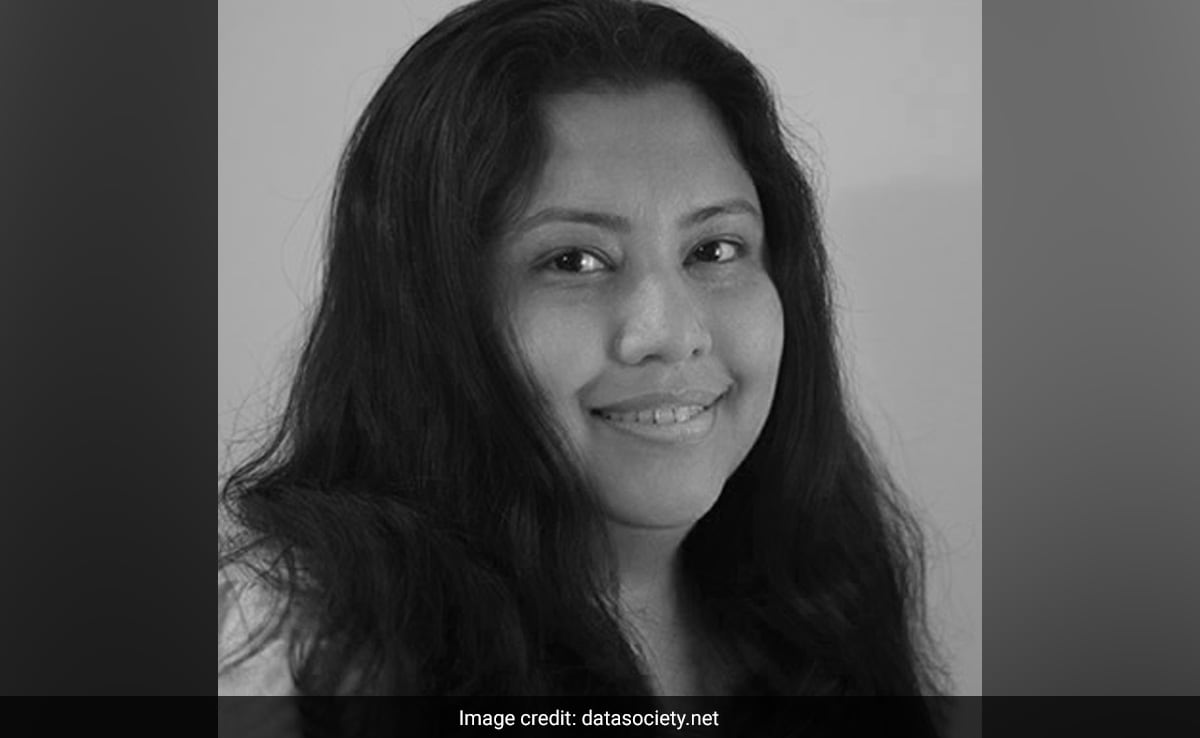
Suchana Seth, 39, checked into a service apartment in north Goa’s Candolim on January 6 with her son. Two days later she checked out, alone, with a large bag that (we know now) contained his body.

Ms Seth had demanded the hotel book her a cab for a distance of nearly 600 km that takes over 12 hours by road but less than 90 minutes by air. The staff advised her to take a flight but she refused.

How Did Police Arrest Suchana Seth?

She was arrested in neighbouring Karnataka’s Chitradurga district, around 200 km from Bengaluru, after staff at the Sol Banyan Grande noticed bloodstains while cleaning the room and called the police. The cops tracked down the cab and, to avoid alerting or panicking Ms Seth, they spoke to the driver in Konkani (hoping she did not understand the language), and directed him to a police station.

“The woman asked hotel staff to arrange a taxi to Bengaluru. After checkout, when the staff went to clean the room, they found red stains, which they assumed was blood, (and) informed the police.”

“Police reached the hotel and tried to contact the woman through the driver. They asked about her son, to which she said the child was staying at a friend’s place… but the address she gave was fake.”

READ | Why did Start-Up CEO Suchana Seth Allegedly Kill Her Son? What Police Said

And now, just as the staff acted promptly and correctly in summoning the police, the taxi driver, rather than being rattled by numerous calls from the cops, acted calmly and followed instructions.

“The driver was asked to take the car to a police station and, on checking the luggage, the body of the boy was found. A case was registered and the woman was arrested,” Mr Valsom concluded.

Suchana Seth’s Estranged Relationship With Husband

According to the police, Ms Seth’s relationship with the father, a businessman from Kerala, was “less than cordial” and the couple is in the final stages of their divorce. Mr Valson told reporters the father, who was in Indonesia at the time of the murder, has been summoned home.

READ | Suchana Seth, Accused Of Killing Young Son In Goa, Was Separated

“Prima facie… the woman said her relationship with her husband is not good. Their divorce, she said, is almost finalised, and there is some court order due to which she was unhappy,” he said, while also cautioning the press, “All these details have to be verified. The investigation is ongoing.”

The subject of the court order – the one that left Ms Seth “unhappy” – is not yet known.

Post-Mortem On Child’s Body

Mr Valsom also told reporters the child’s body had been placed in a morgue at a Karnataka government hospital pending a post-mortem to establish the cause of death. He also said CCTV footage from the hotel had been collected, and that a forensics team is on-site gathering more evidence.

Who Is Suchana Seth?

Ms Seth is believed to be the founder and CEO of an AI, or artificial intelligence, start-up called Mindful AI Lab. She was a 2017/18 Fellow at Harvard University’s Berkman Klein Centre, a think-tank that studies the development, dynamics, norms, and standards of cyberspace, where she worked on “operationalising ethical machine learning and artificial intelligence in the industry”.

READ | All About Suchana Seth, Bengaluru CEO Who Allegedly Killed Her Son, 4, In Goa

She is also understood to hold a Master’s degree in Physics, with a speciality in Plasma Physics and Astrophysics from the University of Calcutta, from where she reportedly graduated in 2008.

NDTV is now available on WhatsApp channels. Click on the link to get all the latest updates from NDTV on your chat.

Read full article
Jason Momoa and Lisa Bonet file for divorce after 2 years of separation
onmynews.com

Jason Momoa and Lisa Bonet file for divorce after 2 years of separation

Lisa Bonet, also known as Lilakoi Moon, has filed for divorce from actor Jason Momoa after 18 years together. Bonet, 56, filed the necessary paperwork in Los Angeles county court, citing irreconcilable differences. The couple, who announced their separation nearly two years ago, has agreed on asset division and seeks joint custody of their 16-year-old daughter and 15-year-old son.

Momoa, recognised for his roles in Aquaman and Game of Thrones, began dating Bonet in 2005 and tied the knot in 2017. Their divorce filing indicates a separation date of October 2020, preceding their public announcement. The court process for their divorce is expected to take at least six months.

This marks Momoa’s first marriage and the second for Bonet, who was previously married to musician Lenny Kravitz and shares a daughter, actor Zoë Kravitz, with him. Bonet gained fame from her roles in The Cosby Show, A Different World, and various films like High Fidelity and Enemy of the State.
Read full article
‘India’s Restraint After 26/11 Sent Wrong Message To Pak’: Former Diplomat
onmynews.com

‘India’s Restraint After 26/11 Sent Wrong Message To Pak’: Former Diplomat

In strong comments on India’s response to the 26/11 attacks and what has changed with the surgical strikes and the Balakot strike, former diplomat Ajay Bisaria has said New Delhi was over-reliant on diplomacy in 2008 and its responses in recent years have ensured that it now has an answer to Pakistan’s sub-conventional warfare.

Speaking exclusively to NDTV on Tuesday, Mr Bisaria – who was the Indian High Commissioner to Pakistan when the Balakot airstrike was carried out in February 2019 – also said Indian diplomats’ confidence levels have changed because they have a clear mandate and confidence in the leadership.

The former diplomat has written in his new book, ‘Anger Management: The Troubled Diplomatic Relationship between India and Pakistan’ that there was a policy dilemma when it came to tackling terrorism and that India’s restraint had perhaps sent a wrong message to terrorists and their backers in Pakistan.  

“In case India had reacted in 2008 the way it did in 2016 or 2019 with a surgical (strike) or airstrike, a strong Indian response would have entered the security calculus of Pakistan and served as a disincentive for the Pakistan army’s support of India-focused militant groups,” he wrote.

When he was asked about this, Mr Bisaria, who was also the principal secretary to former Prime Minister Atal Bihari Vajpayee, said, “I think this has been a dilemma for India for three decades, ever since we have started facing terrorism, and I would argue even from the 1980s. The question before India and Indian policymakers has been how to react to it,” he said.

“So the argument I make is that, perhaps, in 2008, India’s response was not sufficient, it wasn’t adequate. It was over-reliant on diplomacy and not reliant enough on the use of hard power. I make a deeper point that India has suffered terrorism in the eighties in Punjab and then in the 80s and 90s in Kashmir. If we had crafted a response to this sub-conventional warfare by Pakistan even earlier, we could perhaps have saved ourselves from a lot of bloodshed and loss of lives,” the former diplomat explained.

Dealing With Pakistan

On whether he thought the government at the time relied too much on diplomats, Mr Bisaria said that would be an oversimplification and that the issue boils down to whether there was a capacity and the will to look beyond diplomacy. 

“And the argument is that India now has an answer to Pakistan’s sub-conventional warfare, as expressed in 2016 with surgical strikes and in 2019 with airstrikes, that it is dealing in the sub-conventional space where you have, you know, a kind of warfare or proxy warfare below the conventional realm of battle. And I think that is something that is going to serve India well in dealing with the Pakistan issue,” he emphasised.

On claims by some experts that Prime Minister Narendra Modi’s method of dealing with Pakistan has led to a reduction in acts of terrorism in India, the former diplomat referred once again to the capacity and the will, and said both had changed. He said that, as an answer to Pakistan’s terrorism, India decided to take much stronger steps than it had earlier in both 2016 (after the attack on an Army camp in Uri) and after the 2019 Pulwama attack. 

Mr Bisaria also pointed out that Prime Minister Modi had also attempted diplomacy. “2014 and 2015, remember, was a period when he engaged with Nawaz Sharif. Nawaz Sharif was here for his inauguration, for his swearing in, and Prime Minister Modi himself made a visit to Pakistan towards the end of 2015. But we finally managed to craft a response to terrorism, which entered Pakistan’s calculus, that this would be a cost that Pakistan would have to pay, whether deploying state actors or non-state actors,” he asserted.

Different Approaches

Asked whether Mr Modi’s approach was different from his predecessors like Manmohan Singh and Vajpayee, the former diplomat said that every Prime Minister has to deal with the compulsions of the times. 

“So I would argue that, in Prime Minister Vajpayee’s time, he was acutely conscious of the fact that India had gone nuclear in 1998 and there ought to have been a strong nuclear responsibility in dealing with the Pakistan issue and in dealing with the world. And what Prime Minister Vajpayee did was try to understand the nuclear threshold of Pakistan and the red lines,” the former principal secretary to PM Vajpayee said.

“So I feel that, by 2008, that threshold and those red lines were clearer and, therefore, we perhaps needed a much stronger response, the absence of which led to perhaps more acts of terrorism, greater audacity on the part of Pakistan. The fact that this government took the risk and took it a step forward and took hard action against terrorism is something that is going to stand India in good stead in dealing with terrorism,” he added.

‘Confidence, Not Aggression’

On Congress leader Rahul Gandhi’s statement that Western diplomats have told him that the Indian counterparts have become very aggressive and that there is a great degree of arrogance, Mr Bisaria said the change was actually a greater degree of confidence.

“That confidence comes from the confidence not just in the country and its capacity, but also its leadership and the clear mandates that are available to these diplomats. So now I think Indian diplomats have clearer mandates on what they do and say and how they interact with their counterparts. They do it with a greater degree of confidence. So I would term it confidence rather than use any other adjective,” he said. 

Admiration Of India

Asked about videos emerging from the streets of Pakistan suggesting a grudging admiration of India and whether that was the impression he got before he left the country in 2019, the former diplomat said there is a change in mood. 

“A large proportion of the population is young and younger people have fairly common aspirations… You would see a huge gulf between what the official narrative is in Pakistan and what you would capture on social media… And, certainly,  there’s been evidence in recent times of an admiration for India and questioning of their government, which has landed Pakistan in the kind of economic crisis it has,” he said.

Read full article
Link copied!