Live · Global · Independent
Live Feeds
PinkVilla
Forbes
NDTV
Hindustan Times
EXCLUSIVE: The Walking Dead: Daryl Dixon S2 Stars Norman Reedus And Melissa McBride Reflect On Their Decade-Long Journey With Franchise
onmynews.com

EXCLUSIVE: The Walking Dead: Daryl Dixon S2 Stars Norman Reedus And Melissa McBride Reflect On Their Decade-Long Journey With Franchise

The Walking Dead stars Norman Reedus and Melissa McBride recently returned to the screens to reprise their roles from the original franchise in the second season of The Walking Dead: Daryl Dixon – The Book of Carol.

Reedus portrayed the role of Daryl Dixon in the original AMC television show from 2010 to 2022 before getting his own spin-off series, The Walking Dead: Daryl Dixon, in 2023.

Similarly, McBride also made her first appearance as Carol Peletier on The Walking Dead in 2010 and continued to play the role until 2022 before starring on the 2023 spin-off series.

Norman Reedus and Melissa McBride are the only two cast members in The Walking Dead franchise to appear in every season of the show.

Amid the release of The Walking Dead: Daryl Dixon – The Book Of Carol, Pinkvilla sat down for an exclusive chat with Reedus and McBride as they reflected on their 14-year long journey with the franchise.

Remembering how they first appeared on the show more than a decade ago, McBride and Reedus both exclusively told Pinkvilla that the timespan of their journey seems “crazy” when they look back at the beginning today.

“It’s been an incredible journey for so many, not just me and Norman, but for so many of the cast members in the show and the franchise,” McBride said.

“It’s wild to think about that,” Reedus added, saying, “It’s such a gift! This whole show has been such a gift for all of us.”

The Blade II actor went on to explain how the franchise achieved continued success over the years because everyone viewed it as a gift and “a great, awesome opportunity.”

“There’s nothing half-done, nothing is half-cooked, it’s very thought out, it’s executed in a way that we want to be very proud of because we recognize that it is such an awesome gift… We put so much into it that we want to end it the same way when that happens,” Reedus mentioned.

The Daryl Dixon star also fondly remembered the “friendships” they made through the show and all the people they got “inspired by” during their journey.

Reedus further mentioned “all the people who passed away, people who had babies, people who got married” while reflecting on his memories with The Walking Dead over the years. Meanwhile, McBride noted how their journey is also special for people “who grew up watching” the franchise.  

The Walking Dead: Daryl Dixon – The Book of Carol premiered in AMC on September 29, 2024 and will be available for streaming in Amazon Prime Videos from November 12 onwards.

ALSO READ: EXCLUSIVE: Lupita Nyong’o Opens Up About The ‘Primary Challenge’ Of Voicing Roz On The Wild Robot: ‘How Do You Show…’
Read full article
Iron Beam: Israel’s “New Era” Anti-Missile Defence System Will Use Lasers
onmynews.com

Iron Beam: Israel’s “New Era” Anti-Missile Defence System Will Use Lasers

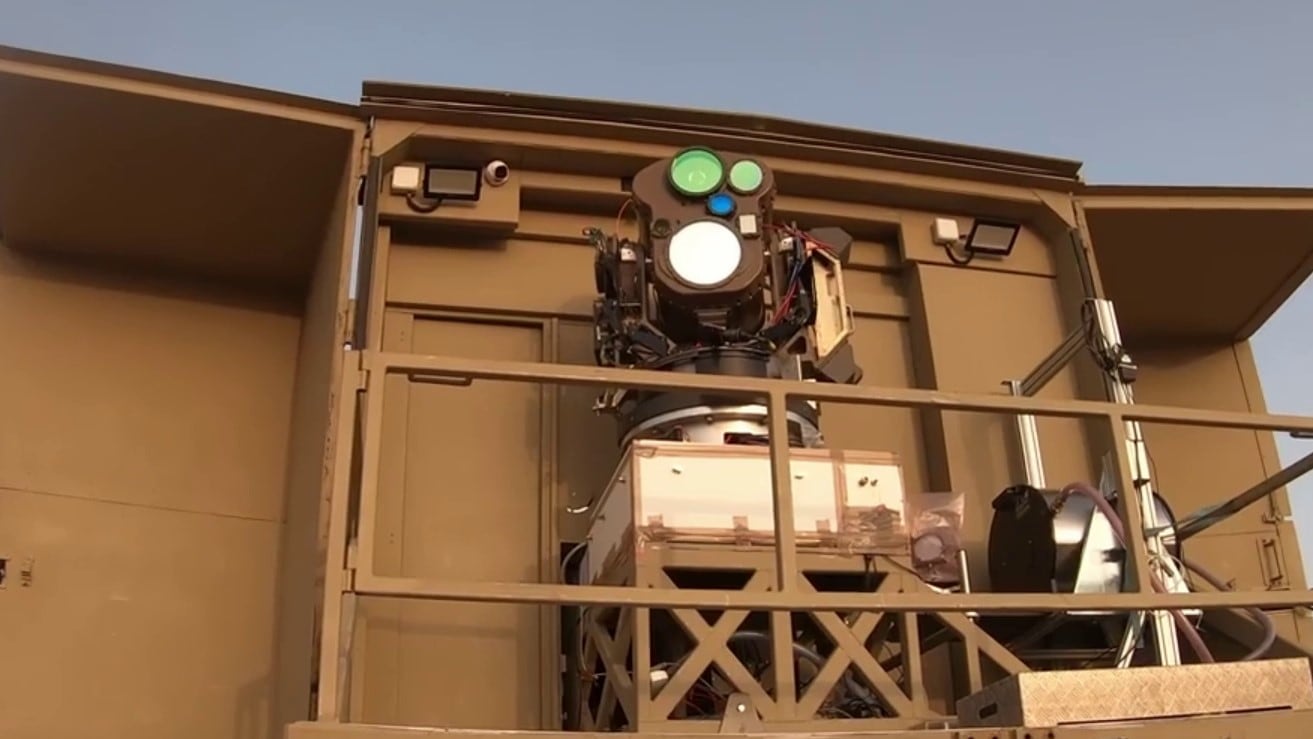
Israel’s ‘Iron Beam’, designed to use high-power laser to down projectiles, will be operational within a year, according to reports. The laser defense system will complement the country’s Iron Dome and other defense systems, heralding in a “new era of warfare”, the Israeli defence ministry said.

Costing Israel over $500 million, the Iron Beam will engage and neutralise missiles, drones, rockets and mortars at a time the country is at war with the Hamas in Palestine and Hezbollah in Iran. Retaliatory strikes between the three countries have caused widespread destruction, recently hitting Israeli Prime Minister Benjamin Netanyahu’s residence in the coastal city of Caesarea.

Developed by Rafael Advanced Defense Systems, architect of Israel’s Iron Dome, and Elbit Systems, the Iron Beam can engage at the speed of light from a range of hundreds of meters to several kilometers. It has an unlimited magazine, almost zero cost per interception and causes minimal collateral damage.

Israel’s defence ministry said that the Iron Beam will shoot down the smaller projectiles, while larger targets like ballistic missiles will be tackled by the Arrow 2 and Arrow 3 interceptors. The system will heat and destroy the target, including drones, which are small, light and have a low radar signature, making them tough targets for the Iron Dome, experts told CNN.

Further, the system will function at a fraction of the cost that goes into operating the Iron Dome. Tel Aviv think tank Institute for National Security Studies said each interceptor missile fired by the Iron Dome costs approximately $50,000.

The system, however, does not operate well in low visibility conditions, including inclement weather.

Meanwhile, the United States said it will deploy B-52 bombers, fighter jets, refueling aircraft and Navy destroyers to the Middle East, in a readjustment of military assets as the Abraham Lincoln carrier strike group prepares to leave the region. The latest adjustment in US forces in the region follows direct exchanges of fire in October between Israel and Iran. 

Since late September Israel has been fighting a two-front war, against Iran-backed Hezbollah in Lebanon and against Hamas, which triggered the Gaza war by attacking Israel on October 7 last year. Hamas’s October 7, 2023 attack resulted in the deaths of 1,206 people, mostly civilians, according to an AFP tally of Israeli official figures. Israel’s retaliatory military campaign has killed 43,259 people in Gaza, most of them civilians, according to figures from the Hamas-run territory’s health ministry which the United Nations considers reliable.

US, Egyptian and Qatari mediators have tried for months to broker a truce and hostages for prisoners exchange for Gaza.

Read full article
15 Billion Miles Away, NASA’s Voyager 1 Comes Back to Life Using 1981 Tech
onmynews.com

15 Billion Miles Away, NASA’s Voyager 1 Comes Back to Life Using 1981 Tech

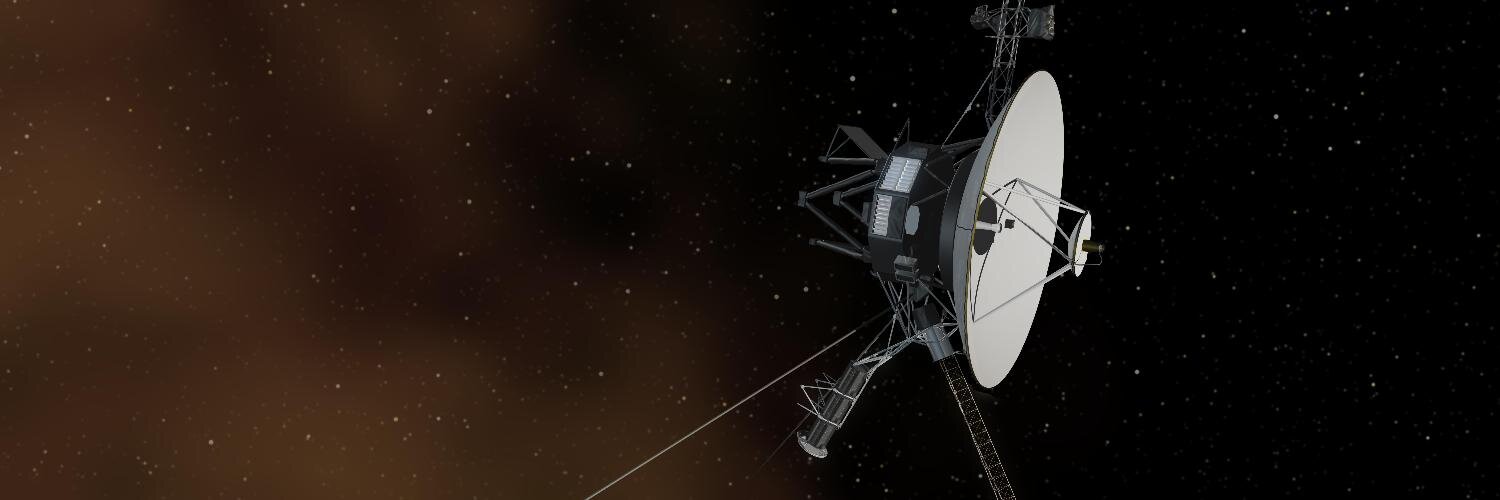
NASA’s 47-year-old Voyager 1 spacecraft recently established contact with Earth after a brief halt with the help of a radio transmitter that has not been used since 1981. NASA engineers at Jet Propulsion Laboratory (JPL) in California re-established contact with the spacecraft on October 24.

The spacecraft, which is in interstellar space over 15 billion miles away, experienced a brief interruption in communication on October 16 due to a shutdown of one of its transmitters. This shutdown was likely triggered by the spacecraft’s fault protection system, which powers down certain systems when power usage is too high.

According to NASA, a message takes around 23 hours to travel one way – from Earth to Voyager 1 and vice-versa. On October 16, when the NASA engineers sent a command to the spacecraft, they could not detect its response till October 18. A day later, communication with Voyager 1 stopped completely.

After an investigation, the space agency team discovered that Voyager 1’s fault protection system had switched the spacecraft to a second, lower-power transmitter.

Voyager 1 has two radio transmitters, but has been using only one for years called an ‘X-band’. However, the other transmitter – the ‘S-band’ – uses a different frequency which has not been employed since 1981.

Presently, NASA has opted to avoid switching back to the X-band transmitter until they can determine what activated the fault protection system – which may take weeks.

“Engineers are being cautious because they want to determine whether there are any potential risks to turning on the X-band. In the meantime, engineers sent a message to Voyager 1 on October 22 to check that the S-band transmitter was working and received confirmation on October 24. But it’s not a fix the team wants to rely on for too long,” Voyager mission assurance manager, Bruce Waggoner told CNN.

Voyager 1 was launched after Voyager 2, but because of a faster route it exited the asteroid belt earlier than its twin, and it overtook Voyager 2 on December 15, 1977. The spacecraft is the first human-made object to venture into interstellar space.

The spacecraft was the first to cross the heliosphere – the boundary where the influences from outside our solar system are stronger than those from the Sun.

So far, the Voyager 1 has discovered a thin ring around Jupiter and two new Jovian moons – Thebe and Metis. It also found five new moons and a new ring called ‘G-Ring’ at Saturn.

Read full article
…
Link copied!