Live · Global · Independent
Live Feeds
PinkVilla
Forbes
NDTV
Hindustan Times
All about Sobhita Dhulipalas saree at the Pasupu Danchadam ceremony
onmynews.com

All about Sobhita Dhulipalas saree at the Pasupu Danchadam ceremony

Sobhita Dhulipala is set to tie the knot with Naga Chaitanya. She recently shared photos from one of her pre-wedding festivities, Pasupu Danchadam. The actress was seen in a beautiful pink Kanjivaram saree with green and beige borders.

The stunning traditional silk saree has been gifted to her by her mother-in-law Lakshmi Daggubati. The actress opted for this simple ensemble while ditching high-end designer sarees. Sobhita took to social media to let her fans know that her ‘atta’, a.k.a her mother-in-law gifted her the special saree. “From my Atta @lakshmi_thefineline,” she replied to a fan’s query.

She paired the saree with exquisite gold jewellery complemented by delicate jasmine flowers woven into her hair. In the photos shared by the actress, she is seen participating in the celebrations with her family members while posing for stunning photos.

Read full article
“If They Want To Risk…”: Supreme Court’s Bulldozer Action Warning To UP
onmynews.com

“If They Want To Risk…”: Supreme Court’s Bulldozer Action Warning To UP

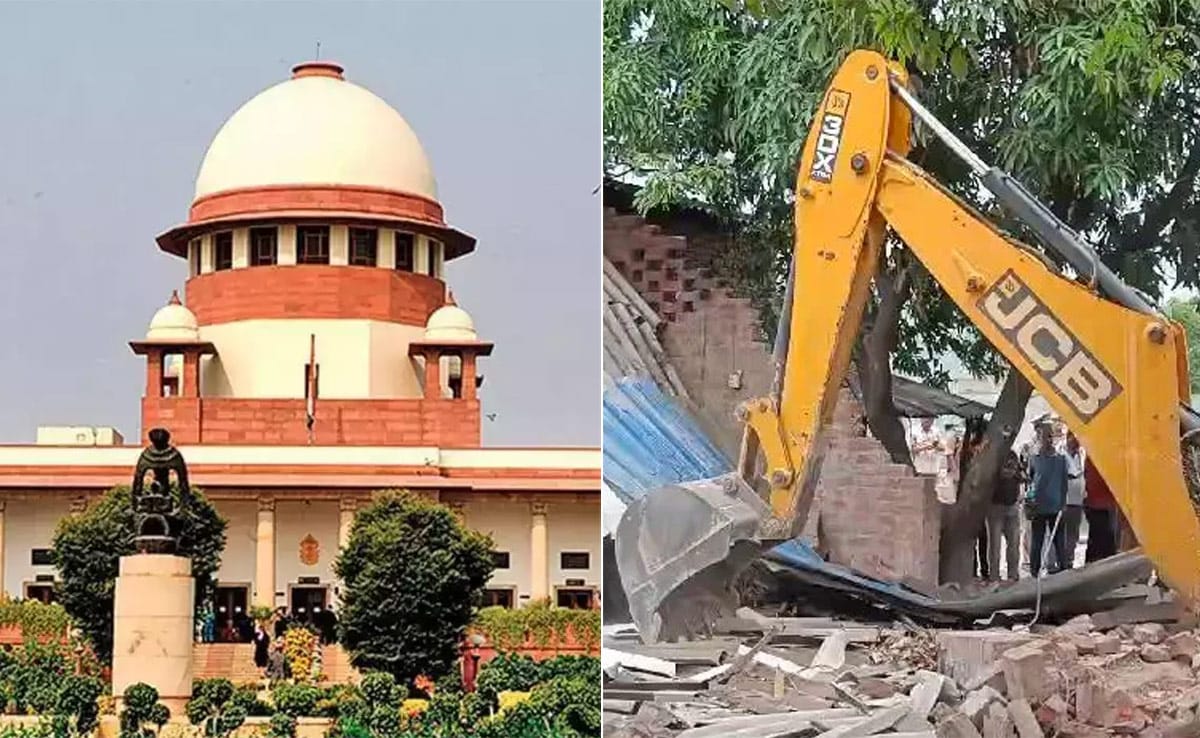
Hearing a challenge to demolition notices served in Uttar Pradesh’s Bahraich after a communal clash, the Supreme Court today indirectly warned the Yogi Adityanath government against any bulldozer action. The court said it is the state government’s “choice” if it wants to risk violating the top court’s directions. The court, however, noted that its orders in the ‘bulldozer justice’ case specify that it will not intervene if the structures facing demolition are illegal.

The bench of Justice BR Gavai and Justice KV Viswanathan has asked the Uttar Pradesh government not to take any action before the next hearing tomorrow.

Appearing for the petitioners, Senior Advocate CU Singh told the bench that local authorities issued demolition notices after the October 13 violence — which claimed one life — and asked them to respond within three days.

“Applicant No.1’s father and brothers surrendered… notices purportedly issued on 17 Oct, but pasted on 18th evening… we sought hearing on Sunday, but that did not happen. Some have approached HC,” Mr Singh said.

Earlier, the Allahabad High Court extended to 15 days the deadline to file replies to the demolition notices and directed the state authorities to decide after considering the responses. Additional Solicitor General KM Nataraj, appearing for the Uttar Pradesh government, assured the court that no action would be taken till tomorrow.

“If they (UP authorities) want to take the risk of flouting our order, it’s their choice,” Justice Gavai said today. Justice Viswanathan added that the high court had given 15 days to file replies to the demolition notices. Mr Singh, however, said the petitioners have not been granted any protection. 

The Supreme Court is currently hearing a bunch of petitions against ‘bulldozer justice’ – a term used to refer to the practice of razing the property of individuals accused in criminal cases. The trend has caught on in several states, Uttar Pradesh among them. The court has clarified that being accused of a crime cannot be the basis for the demolition of property and only violation of civic rules may attract such action. The court has also paused demolitions carried out without its permission.

What Happened In Bahraich

On October 13, an altercation broke out in Bahraich’s Maharajganj when a group of people objected to loud music near a mosque during a procession for Durga Puja idol immersion. This snowballed into arson and vandalism in the area, forcing the local administration to snap Internet connectivity. Ram Gopal Mishra, 22, was shot dead during the clash. A video that circulated after the clash showed Mishra removing a green flag from a rooftop and replacing it with a saffron flag.

Police have arrested five persons suspected to be involved in Mishra’s death — Mohammad Faheen, Mohammad Sarfaraz, Abdul Hameed, Mohammad Taleem alias Sabloo, and Mohammad Afzal. Mohammad Talim and Mohammad Sarfaraz were arrested after they suffered gunshots in an encounter with Uttar Pradesh police. Police said the accused were trying to cross into Nepal when they were caught.

A total of 104 people have been arrested in connection with the violence and 23 establishments have been served demolition notices. Among those who were served notices is Hameed, one of the accused in the killing. Authorities, however, claim the notices were issued as part of a routine anti-encroachment drive. The notices have sparked panic among local residents as shopkeepers were seen vacating their premises. 

Read full article
Chhattisgarh Red Flag: Uranium In Drinking Water 3-4 Times Above Limit
onmynews.com

Chhattisgarh Red Flag: Uranium In Drinking Water 3-4 Times Above Limit

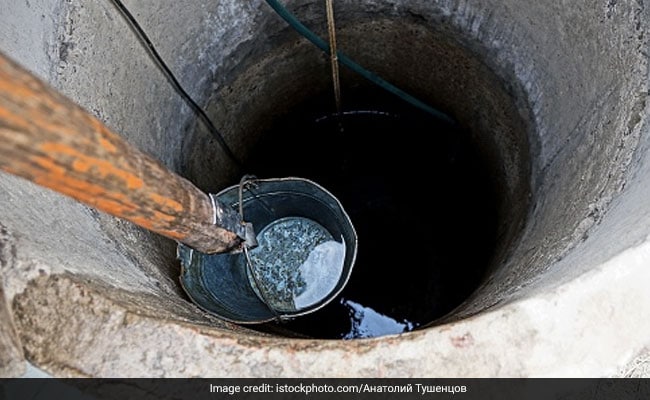
Dangerously high uranium levels – three to four times the World Health Organization’s 15 microgram per litre limit and higher even than the government’s limit of 30 micrograms per litre – have been recorded in drinking water sources across at least six Chhattisgarh districts, significantly increasing the risk of cancers and pulmonary conditions, as well as skin and kidney diseases, in these areas.

In 2017 the WHO suggested uranium in drinking water should not exceed 15 micrograms per litre, but acknowledged “there are uncertainties (if) concentrations above this would be of concern”. The global health body also said some countries – like India – had doubled that permissible limit.

In June a Bhabha Atomic Research Centre study suggested even 60 micrograms per litre is safe

However, tests of drinking water samples from Chhattisgarh’s Durg, Rajnandgaon, Kanker, Bemetara, Balod, and Kawardha found uranium levels in excess of 100 micrograms per litre; one sample from a village in Balod had as much 130 micrograms per litre and another from Kanker had 106 micrograms per litre. Across the six districts the average reading was 86 to 105 micrograms of uranium per litre.

The first samples tested were from a 25-year-old borewell in Balod’s Devtarai village.

The results were double-checked by the state’s Public Health Emergency Department.

“There is no other source of water in the village… one day we came to know that research was done and some students took water from here, in which uranium was found,” Daneshwar Sinha, the village chief, said, “… after that we ran to the PHE Department and it was tested once again.”

The village has now opened a second bore, but it is unclear if the source of that water is different from the first or if uranium levels in the water from the new well are within permissible limits.

After the Devtarai red flag samples from all six districts were sent to the Bhilai Institute of Technology in Durg and the readings – between 86 and 105 micrograms of uranium per litre – were confirmed by Dr Santosh Kumar Saar, the Chair of the university’s Chemistry Department.

BIT scientists took samples from six square kilometre range in each of the six districts.

Uranium In Groundwater In India

Uranium in groundwater is a long-standing point of concern for health officials; in January last year a report by the Central Groundwater Board said it had crossed permissible limits in 12 states, including Punjab and Haryana; the two states produce over half of the country’s wheat supply.

Samples from 13 other states had uranium within set limits; those from Kerala had none.

In August 2022, nine districts of Bihar reported similarly high levels of uranium in water.

READ | High Volume Of Uranium In Bihar Groundwater Worries Authorities

Ashok Kumar Ghosh, the then Chairman of the State Pollution Control Board, told news agency PTI, “Uranium contamination in groundwater is a matter of serious concern, as it is hazardous to the health of those exposed. High exposure may cause bone toxicity and impaired renal function and cancer”.

A few months earlier Karnataka had also reported high uranium levels in water.

Solution To Uranium Contamination?

Meanwhile, Chhattisgarh, faced with the uranium-in-water problem, may also have a solution.

A study by three BIT scientists, led by Poonam Deshmukh, indicates uranium can be filtered by using the bark of a gooseberry (amla) tree. Ms Deshmukh published her findings in the Groundwater for Sustainable Development in 2021 and the method has been patented but not implemented yet.

“We thought that if there is concentration of uranium in water… there should also be remedial techniques. We developed ‘bio-adjusting’ technique (and) we got the best result with amla bark.”

Large-scale implementation of such filtering techniques must be a point of action, given Chhattisgarh is home to four known deposits of 100 per cent grade uranium – three of which are Rajnandgaon district, where contaminated water was found – according to the Uranium Corporation of India.

NDTV is now available on WhatsApp channels. Click on the link to get all the latest updates from NDTV on your chat.

Read full article
…
Link copied!