Live · Global · Independent
Live Feeds
PinkVilla
Forbes
NDTV
Hindustan Times
Richest Candidate In Phase 2 Has Rs 622 Crore, Poorest Has Just…
onmynews.com

Richest Candidate In Phase 2 Has Rs 622 Crore, Poorest Has Just…

The voting for the second phase of Lok Sabha polls will take place across 88 seats in 13 states and union territories on Friday.

The votes will be cast in all 20 Lok Sabha seats of Kerala, 14 of the 28 seats in Karnataka, 13 seats in Rajasthan, eight seats each in Maharashtra and Uttar Pradesh, six seats in Madhya Pradesh, five seats each in Assam and Bihar, three seats each in Chhattisgarh and West Bengal, and one seat each in Manipur, Tripura and Jammu and Kashmir.

Earlier, 89 constituencies were expected to vote in this phase. But polling in Madhya Pradesh’s Betul was rescheduled after the death of a candidate from the Bahujan Samaj Party. Betul will now vote in the third phase on May 7.

In 2019, the ruling BJP-led NDA won 56 of these 89 seats, while the opposition UPA secured 24.

Among the prominent contestants are Union minister Rajeev Chandrasekhar, BJP’s Tejasvi Surya, Hema Malini, and Arun Govil, Congress leaders Rahul Gandhi and Shashi Tharoor, and former Karnataka chief minister and JDS’s HD Kumaraswamy.

Lok Sabha Election 2024 Phase 2: 5 Richest Candidates

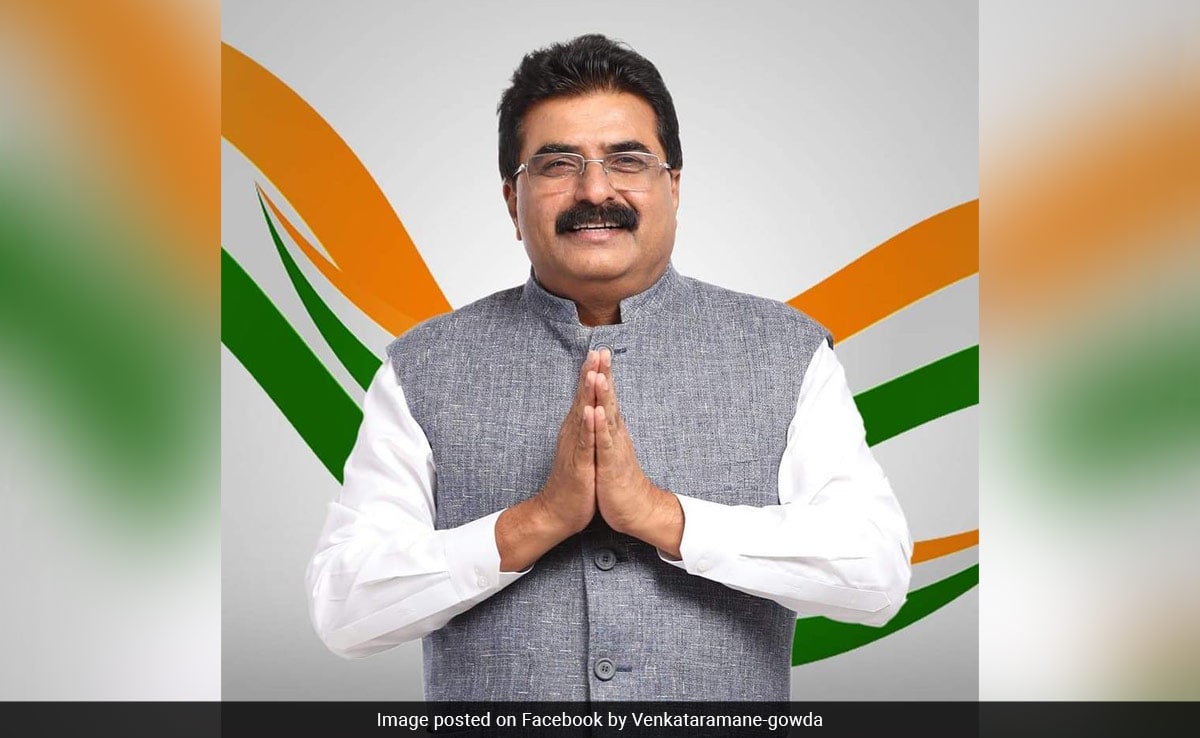
Karnataka Congress leader Venkataramane Gowda, who is popularly known as ‘Star Chandru’, is the richest candidate in the phase 2 polling, according to an analysis of self-sworn affidavits of the contestants by the Association for Democratic Reforms (ADR) and the National Election Watch. Mr Gowda, who is contesting against HD Kumaraswamy, has declared assets worth Rs 622 crore.
Incumbent Karnataka Congress MP DK Suresh is the second richest candidate with assets valued at Rs 593 crore. Mr Suresh, the younger brother of Karnataka Deputy Chief Minister DK Shivakumar, is a three-time MP who is seeking re-election from Bangalore Rural. According to his poll affidavit, he has Rs 16.61 crore in banks as deposits, has agriculture land at 21 locations worth Rs 32.76 crore, non-agriculture land at 27 places worth Rs 210.47 crore, nine commercial buildings worth Rs 211.91 crore and three residential buildings worth Rs 27.13 crore.
BJP MP Hema Malini, who is fighting again from the Mathura Lok Sabha seat, is the third richest with assets worth Rs 278 crore.
Madhya Pradesh Congress leader Sanjay Sharma is fourth on the list. He has declared assets worth Rs 232 crore.
HD Kumaraswamy, former Karnataka Chief Minister, is fifth on the list and has total assets of about Rs 217.21 crore.

Phase 2 Election 2024: 5 Candidates With Lowest Assets

Laxman Nagorao Patil, who is fighting Lok Sabha polls from Maharashtra’s Nanded as an Independent, is the candidate with the lowest assets in the second phase. According to his poll affidavit, he has declared assets worth Rs 500.
Mr Patil is followed by another independent candidate Rajeswari KR, who is contesting from Kasaragod in Kerala and has assets worth Rs 1,000.
Pruthvisamrat Mukindrao Dipwansh, who entered the contest as an independent candidate from Amravati (SC), is third on the list and has total assets of Rs 1,400.
Dalit Kranti Dal leader Shahnaz Bano, who is contesting from Rajasthan’s Jodhpur, has declared assets worth Rs 2,000.
VP Kochumon, who has been fielded by the Socialist Unity Centre of India (Communist) from Kerala’s Kottayam, is fifth on the list with Rs 2,230 assets.

Phase 2 Polls 2024: Zero Assets Candidates

Karnataka’s Prakash RA Jain, Ramamurthy M, and Raja Reddy are among the six candidates who have zero assets.

Three other candidates who also have zero assets are from Maharashtra — Kishor Bhimrao Labade, Nagesh Sambhaji Gaikwad and Dnyaneshwar Raosaheb Kapate.

After the second phase, polling will be over in Kerala, Rajasthan, and Tripura. In the first phase of voting on April 19, polling was completed in all seats of Tamil Nadu (39), Uttarakhand (5), Arunachal Pradesh (2), Meghalaya (2), Andaman and Nicobar Islands (1), Mizoram (1), Nagaland (1), Puducherry (1), Sikkim (1) and Lakshadweep (1).
Read full article
How 2 Indian Restaurants Duped Investors Of Rs 3 Crore In US
onmynews.com

How 2 Indian Restaurants Duped Investors Of Rs 3 Crore In US

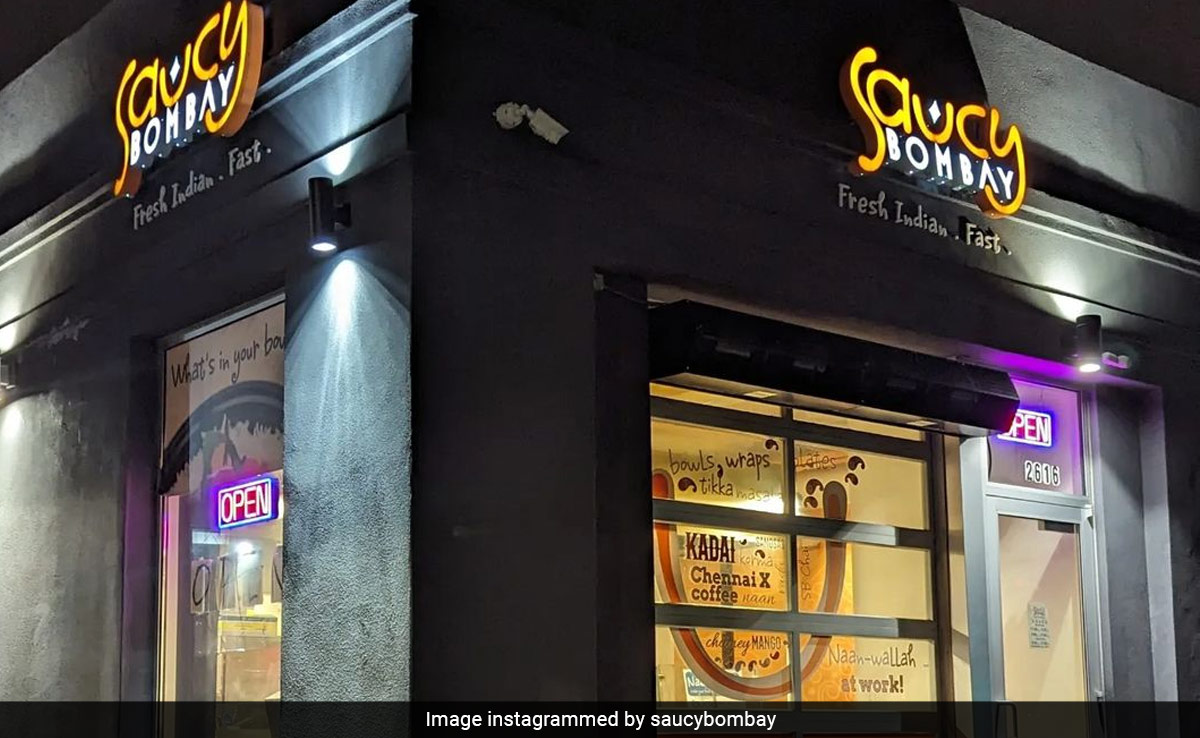
Bombay Clay Oven and Saucy Bombay, two Indian restaurants in the US state of Colorado have been accused of defrauding investors of $380,000 or Rs 3,16,56,926 by employing deceptive tactics, including “half-truths and lies,” to lure investors into their ambitious plans for a nationwide expansion. Both restaurants were under the ownership of The Bombay Group (TBG), which partnered with a securities broker named Michael Bissonnette. 

TBG, like many others in the competitive restaurant industry of the US, harboured aspirations of scaling their business into a national chain, potentially comprising hundreds or even thousands of outlets. Their strategy involved franchising Saucy Bombay, a newer venture, to capitalise on the burgeoning trend of fast-casual dining.

“The investors in this case really believed in The Bombay Group and their restaurant, Saucy Bombay,” remarked Tung Chan, the state’s securities commissioner. “But as we allege, the investors were not told the truth about the investments and they have not been paid back.”

The lawsuit alleges that TBG’s owners, Marshall and Rohini Miranda, along with Bissonnette, misled investors by portraying their investment as a secure and lucrative opportunity. The plan reportedly guaranteed substantial returns, with dividends as high as 2,900 per cent quarterly.

However, despite the promises, the sole location of Saucy Bombay eventually closed its doors by the end of 2015, unbeknownst to the investors. Despite the closure, funds continued to flow into TBG’s coffers throughout 2015 and 2016, allegedly diverted towards operational expenses, rent, and even self-commissions for selling its own stock. 

By the end of 2016, the invested capital had dwindled, with no returns forthcoming to the investors. Although a new Saucy Bombay location opened in 2018, it remained the sole outpost, and the grand franchising plans failed to materialise.

When local media contacted them for comment, both Bissonnette and Marshall Miranda refused to speak. 


Read full article
Explainer: Harvey Weinstein’s Rape Conviction Overturned. What’s Next?
onmynews.com

Explainer: Harvey Weinstein’s Rape Conviction Overturned. What’s Next?

Thursday’s ruling overturning Harvey Weinstein’s New York rape conviction gives the one-time film mogul a chance at a new trial and calls into question what evidence prosecutors can use in future sex crime cases.

Here is a look at what happened to the case, which helped define the #MeToo movement, and what might happen next.

WHY WAS WEINSTEIN’S CONVICTION OVERTURNED?

Weinstein, 72, was found guilty of raping one woman and sexually assaulting another after both testified in court.

But a 4-3 majority of the New York Court of Appeals, the state’s highest court, found that the trial judge should not have permitted three other women to testify that Weinstein had assaulted them as well because their allegations were not part of the criminal charges against him.

Such testimony about “prior bad acts” is usually barred by New York’s so-called Molineux rule, named for a landmark 1901 court case. The majority of the court found that the testimony by the three women ran afoul of the rule and made the trial unfair.

WHY WERE THE OTHER WOMEN ALLOWED TO TESTIFY IN THE FIRST PLACE?

The Molineux rule is not absolute. It holds that prosecutors cannot use such testimony to prove that the defendant has a “propensity” to commit crime, but they may use it as evidence of motive or intent.

In Weinstein’s case, prosecutors persuaded the trial judge that the producer’s alleged prior sexual assaults showed that he knew his accusers did not consent to his advances, but that he intended to force them into sex anyway.

Prosecutors believed the evidence would help disprove Weinstein’s assertion that the encounters were consensual.

The Court of Appeals, however, found that the testimony was simply evidence that he had a propensity to commit rape and sexual assault, not of his motive or intent.

WHAT DOES THE RULING MEAN FOR WEINSTEIN’S CALIFORNIA CASE?

Weinstein was sentenced to 16 years in prison following a separate 2022 rape conviction in California, which he is expected to appeal, and the New York ruling has no direct effect on that case.

In fact, California law specifically allows testimony about prior bad acts in sex crime cases as evidence that a defendant has a propensity to commit sex crimes. Such evidence was used in Weinstein’s California trial, and the state’s law will make it harder for his lawyers to challenge on appeal than in New York.

WHAT DOES THE RULING MEAN FOR FUTURE CASES IN NEW YORK?

According to the majority of the court, very little. Judge Jenny Rivera wrote in the majority opinion that the decision was based on well-established New York law, and said it was similar to another 1996 Court of Appeals decision, People v. Vargas, vacating a rape conviction because witnesses were allowed to testify about earlier alleged rapes by the defendant.

Dissenting judges in Thursday’s decision said the ruling would make it more difficult to prosecute sex crimes committed by people who know their victims and may have ongoing relationships with them, as in Weinstein’s case.

Judge Anthony Cannataro, who was among the dissenters, called it “an unfortunate step backwards from recent advances in our understanding of how sex crimes are perpetrated.”

Another dissenting judge, Madeline Singas, said the decision would effectively end the use of prior bad acts witnesses in such cases and make it difficult to prove intent.

(Except for the headline, this story has not been edited by NDTV staff and is published from a syndicated feed.)

Read full article
Link copied!