Live · Global · Independent
Live Feeds
PinkVilla
Forbes
NDTV
Hindustan Times
Third Republican Debate: 5 Trump Rivals To Engage In Verbal Bouts On Stage
onmynews.com

Third Republican Debate: 5 Trump Rivals To Engage In Verbal Bouts On Stage

Five presidential hopefuls will participate in what’s expected to be an intense third Republican debate on Wednesday in Miami. The number of participants for the Republican nominee has come down from eight in Milwaukee during the August debate to five, but the frontrunner Donald Trump will once again give it a miss.

According to a report in The New York Times, the former president will host a rally outside Miami while his rivals engage in verbal bouts on stage. Let’s take a look at five candidates for the third Republican debate.

1) Nikki Haley

The 51-year-old, who served as the US ambassador to the United Nations under the Trump presidency, is the only woman candidate in the race. Haley has impressed voters in the first two outings, and she is currently third in most polls behind Florida Governor Ronald Dion DeSantis. On Tuesday, Hailey’s campaign released a video, targetting DeSantison energy policy, an indication of what’s to come on Wednesday night.

2) Ronald Dion DeSantis

Forty-five-year-old DeSantis, who launched his Presidential campaign in May, avoided targetting former president Donald Trump until the last debate. However, after perhaps noticing the diminishing support for his candidacy, DeSantis said that Trump was missing in action, adding that he should have been on stage. According to a report in Reuters, he is still 40% points adrift of the former US president. In another setback on Tuesday, DeSantis’ biggest donor, Robert Bigelow, a Nevada real estate investor, who has so far funded the Florida Governor’s campaign with over $20mn, said that he was considering switching his support to Donald Trump.

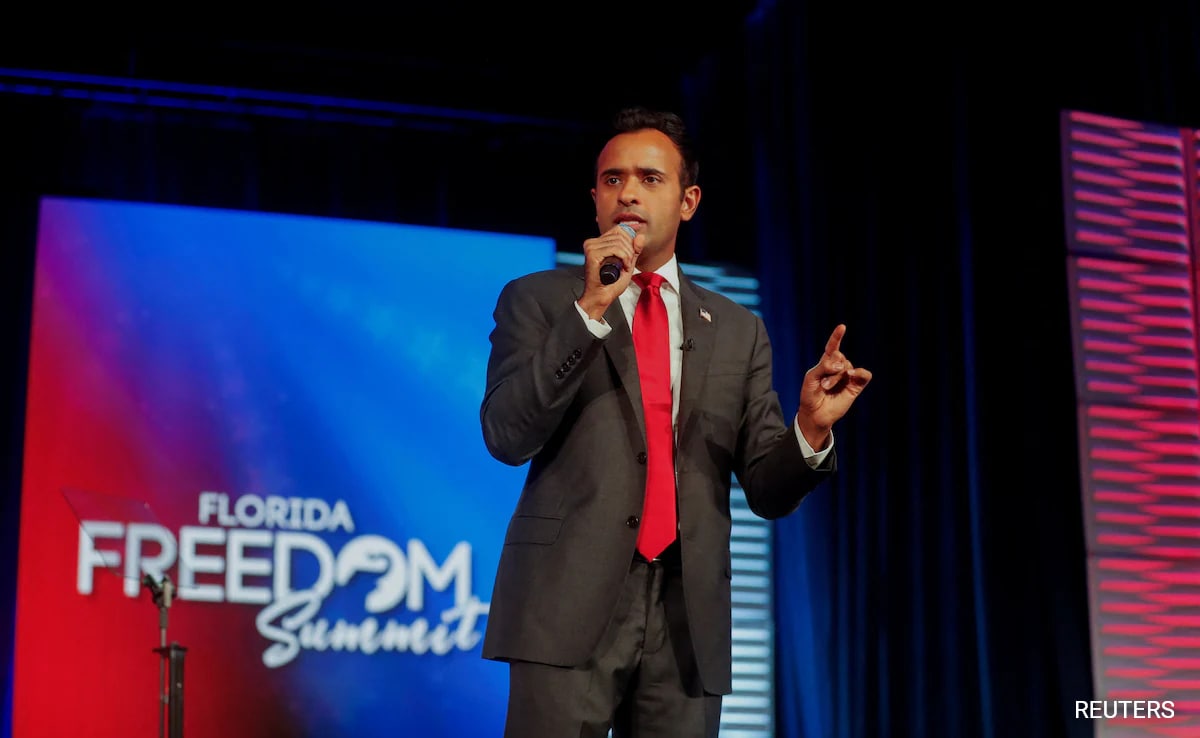
3) Vivek Ramaswamy

Vivek Ramaswamy is a former biotechnology investor and executive. The thirty-eight-year-old political outsider generated some buzz initially but soon came under fire from fellow competitors who have repeatedly underlined his lack of political experience. According to The New York Times, Ramaswamy’s approval ratings remain in single digits and “he does not loom as a major force in the race going into tonight”. Interestingly, Ramaswamy is a big Trump supporter and said he would pardon the former president, should he win the White House.

4) Chris Christie

Chris Christie, who once advised Donald Trump’s White House campaign, has now pitched himself as an alternative to the former president. The former New Jersey governor is now a vocal critic of Trump and even called him “Donald Duck” for sitting out the debates. Christie upped the ante against Trump after a growing number of criminal charges against the Republican frontrunner. But does he pose a threat to Trump?

In a Reuters/Ipsos poll conducted from September 8 to September 14, Christie received about 2% support among Republicans.  

5) Tim Scott

The only African-American in the race for the Presidential candidate of the Grand Old Party, Mr Scott was lauded for his remarks about race in the last debate. “There is not a redeeming quality in slavery,” he said, criticising Mr DeSantis’ education policies in Florida, where new guidelines suggested there were personal benefits for slaves who developed skills.

The US senator doesn’t enjoy much recognition or popularity outside his home state of South Carolina and even Scott’s supporters acknowledge he had little chance to win.

According to the polling average compiled by the RealClearPolitics website, Mr Trump’s support among Republicans stands at a staggering 58%, over 44 points ahead of Mr DeSantis, his nearest challenger.
 

Read full article
Hamas Attacked Israel Over Mosque In Jerusalem, Once Liberated by India: Read
onmynews.com

Hamas Attacked Israel Over Mosque In Jerusalem, Once Liberated by India: Read

Just before sunrise on October 7, hundreds of Hamas operatives crossed Gaza’s border with Israel. Within minutes, they poured across, opening the gates of hell. On that morning, neither the Israeli soldiers monitoring the Gaza border nor the civilians living in nearby towns and kibbutz had any idea about the bloodiest attack in the country’s 75-year history. Hamas called it ‘Operation Al-Aqsa Flood’, in reference to the mosque in Jerusalem’s Old City that houses the third holiest site in Islam.

Hamas said the attack was carried out in reference to the police storming the mosque in 2022. The mosque is situated in Jerusalem, which is 40,000 kilometres away from India yet has a connect with our country.

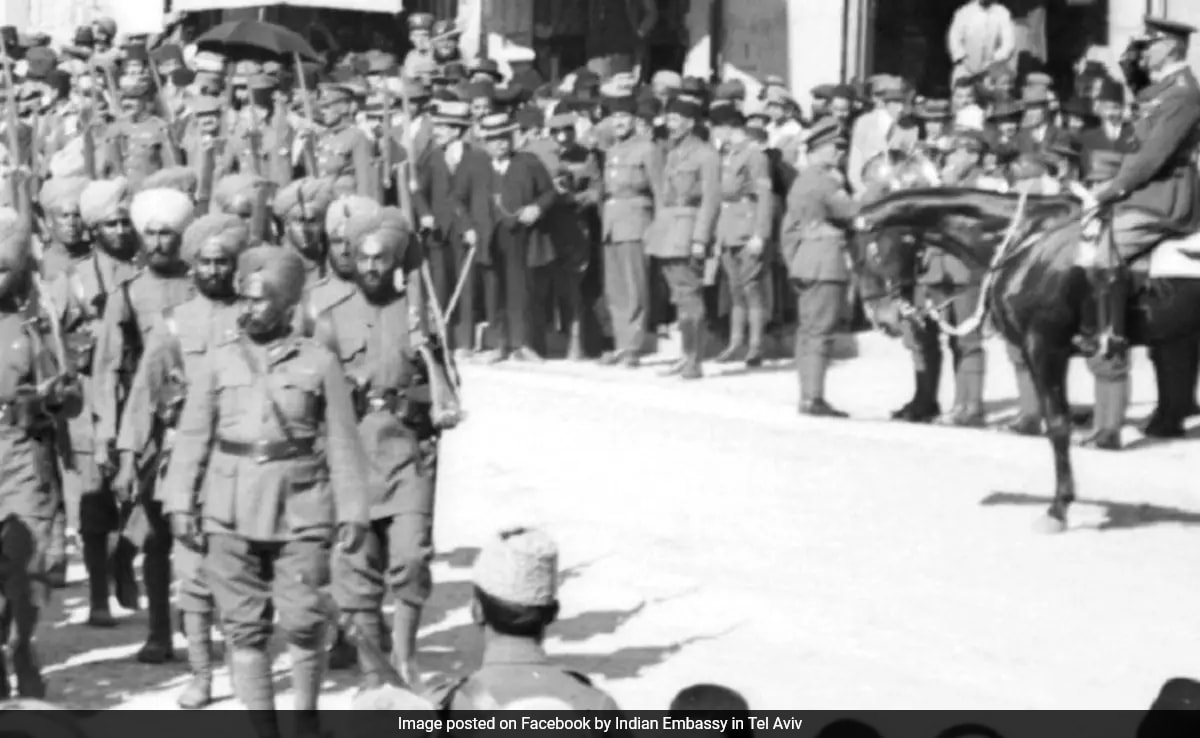
Over 100 years ago, during the First World War, Indian soldiers helped win the city for the British who defeated the Ottoman Empire.

More than a million Indian soldiers fought for the British in 1917 to liberate Jerusalem. Between 1914 and 1918, they fought the Turkish-German armies at Gallipoli, the Suez Canal, through the Sinai and Palestine and finally Damascus, with crucial battles in Gaza, Jerusalem, Jaffa, Haifa, Nablus and Megiddo, according to a report in Jerusalem Post.

There is a cemetery in memory of Indian soldiers who died fighting the war.

Indian soldiers also fought in the Battle of Tabsor during World War I. Fought on September 19-20, 1918, it was an important battle and the opening of the famous Meggido offensive. These events played a crucial role in the victory of the Entente Forces over the Ottoman armies in Palestine.

A vast majority of the soldiers who participated in this offensive were Indian troops, consisting of Punjabis, Sikhs, Gurkhas and soldiers from various other regions of undivided India.

Two years ago, External Affairs Minister S Jaishankar unveiled a plaque at Ra’anana in northern Israel in the memory of these Indian soldiers.

Read full article
Delhi Metro’s 5th Bridge Over Yamuna To Be Completed By September
onmynews.com

Delhi Metro’s 5th Bridge Over Yamuna To Be Completed By September

Construction of one module of the first metro bridge over the Yamuna being built using the cantilever construction technique has been completed, DMRC Managing Director Vikas Kumar has said and added that the entire work is expected to be completed by September.

The bridge — the fifth metro bridge over the Yamuna — is being built under Delhi Metro’s ongoing Phase IV project.

In a recent interview to PTI, Kumar had said that this state-of-the-art bridge would be “visually appealing” and become an iconic landmark similar to the Signature Bridge.

Signature Bridge, which connects Wazirabad to the inner city, is “India’s first asymmetrical cable-stayed bridge”. Its pylon is the tallest structure in Delhi at double the height of the Qutub Minar.

The bridge boasts a viewing box at a height of 154 metres that acts as a selfie point. It shortens travel time between north and northeast Delhi, according to the website of the North East district.

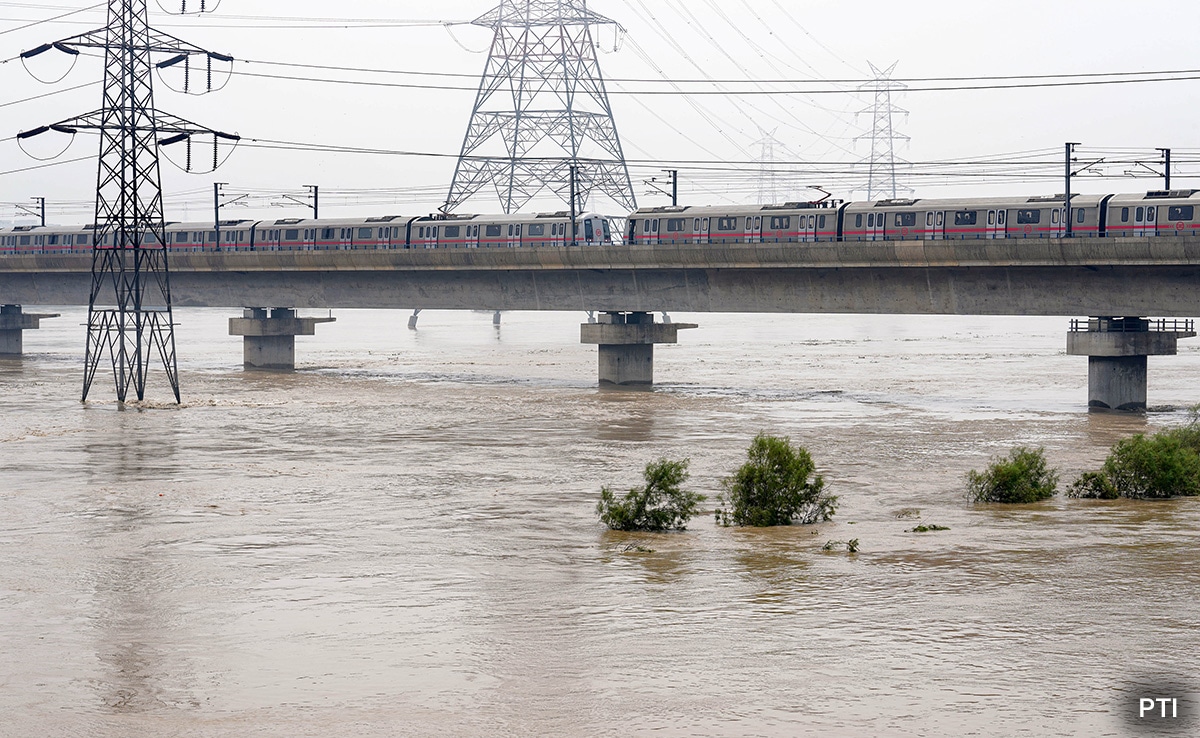
Work on the under-construction bridge over the Yamuna was halted for a few days in July when the river had become swollen due to the rising water level.

“The status is that almost 50 per cent of the work is complete. It is in two modules of 290 metres each, the total length is 580 metres. And, one module is complete, having four spans,” Kumar told PTI.

“Otherwise, the sub-structure is complete. The other module again comprises four spans, this stretch … so, the entire stretch is expected to be completed by September 2024,” he added.

The Delhi Metro Rail Corporation (DMRC) commenced in 2020 preliminary work on the bridge, which is part of the Majlis Park-Maujpur corridor being built under the Phase IV project.

The DMRC is currently undertaking construction on 65.2 kilometres of three priority corridors spanning 45 stations under the project — Janakpuri West-RK Ashram Marg (28.92 kilometres), Majlis Park-Maujpur (12.55 kilometres), which are extensions of the already operational Magenta and Pink lines, and Aerocity-Tughlakabad (23.62 kilometres) that is being built as the Silver Line to connect the Violet Line and the Airport Line from the respective ends.

The Majlis Park-Maujpur corridor — an extension of the Pink Line — is planned to be opened by March 2025, Kumar said.

The new bridge across the Yamuna will come up between two existing bridges — the Wazirabad Bridge and the Signature Bridge.

With eight spans and nine piers, the bridge will connect the Soorghat and Sonia Vihar stations of the Pink Line.

“This will be the first-ever metro bridge over the Yamuna to be built using the cantilever construction method. A cantilever is a rigid structural element that extends horizontally and is supported at only one end,” the DMRC said.

Typically, it extends from a flat, vertical surface such as a wall or a pier to which it must be firmly attached. Cantilever construction allows overhanging structures without additional support. Employment of this technology will make the bridge look aesthetically pleasing, it said.

The DMRC said there have been many challenges in planning and executing this project.

“We did most of the work in time, anticipating the rainy season. However, there were certain things that were left behind, so we had to stop the work during the (recent) flooding. So, that got the work delayed. Otherwise, this bridge could have been constructed much earlier,” Kumar said.

In July, the Yamuna swelled past the danger mark, breaching the all-time record of 1978 and flooding low-lying areas near its banks.

The DMRC’s top official said there were also other engineering challenges.

“The design approval was … in fact, it being a first bridge of its kind for the DMRC. The design, it took some time, but definitely, the execution. In fact, again, most of the work we try to do … again, with pre-cast elements, whatever can be taken, and the rest were done in situ, following a particular method statement that we had followed. No surprises as such in this, because of our preparations,” Kumar added.

Aesthetically also, the design is such that from that point of view, it will be “very appealing to the eyes”, he further said.

The design of the bridge was finalised using the ‘Building Information Modelling’ technology. With the help of this technology, a 3D model of the bridge was prepared with intricate details of the proposed structure, DMRC officials said.

The new bridge will cross the river about 385 metres downstream from the old Wazirabad Bridge and 213 metres upstream from the Signature Bridge, the urban transporter has said.

Various eco-friendly measures are being taken during its construction. All construction activities are being carried out with minimum effect on the floodplains, the officials had earlier said.

Restoration of the floodplain that may be impacted by the construction of bridge alignment or pillars will be undertaken, they had said.

The muck and debris generated will be disposed of scientifically and no dumping will be allowed on the floodplains, the DMRC said.

The four existing metro bridges over the Yamuna are at Yamuna Bank (698.8 metres on the Blue Line), Nizamuddin (602.8 metres on the Pink Line), Kalindi Kunj (574 metres on the Magenta Line) and Shastri Park (553 metres on the Red Line).

Read full article
Link copied!