Live · Global · Independent
Live Feeds
PinkVilla
Forbes
NDTV
Hindustan Times
Man Tries To Throw Petrol Bomb At Tamil Nadu Governor’s House, Detained
onmynews.com

Man Tries To Throw Petrol Bomb At Tamil Nadu Governor’s House, Detained

A man has been detained for attempting to throw a petrol bomb at a gate of the Raj Bhavan in Chennai. The man had tried to do the same thing outside a BJP office in the city a few months ago.

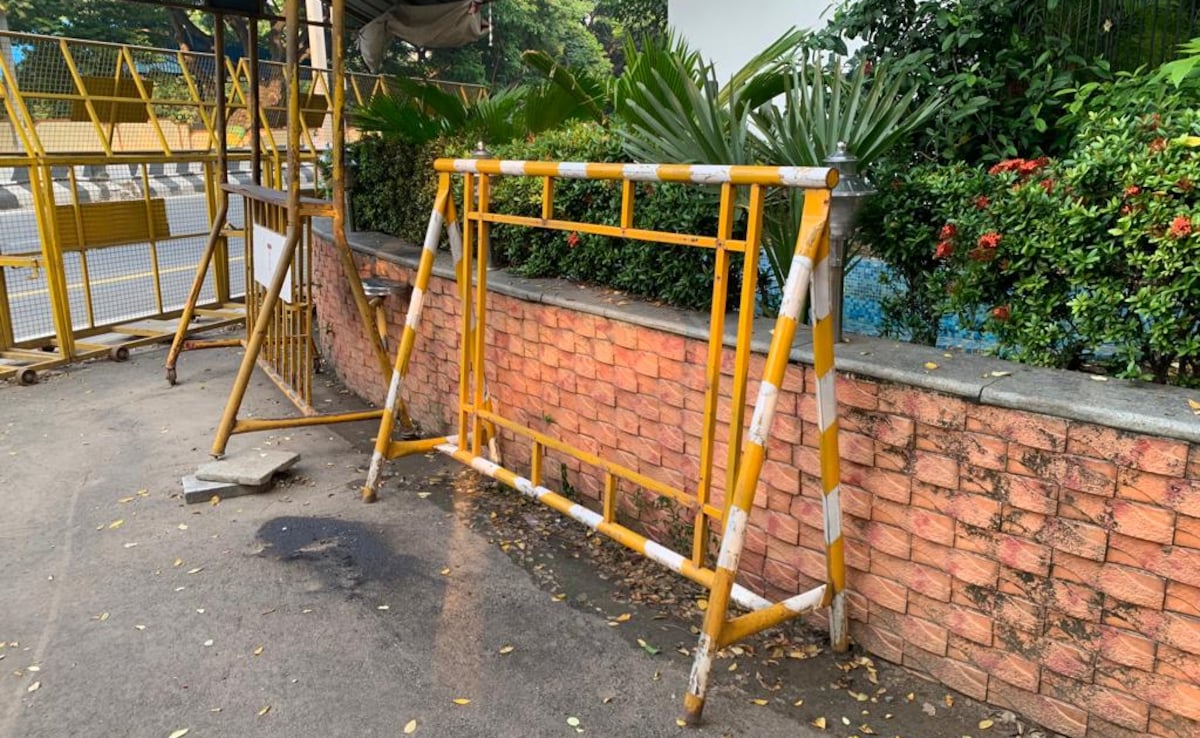
Officials said the incident took place around 2.45 pm on Wednesday and the man attempted to throw the bomb near the Raj Bhavan’s main gate, which is used by Governor RN Ravi.

“The man, identified as one Vinod, will be sent for an examination of his mental health,” said a police official, adding that he is likely to be arrested soon.

The incident comes in the backdrop of the Tamil Nadu governor returning, for the second time, a state government file recommending former director general of police C Sylendra Babu’s appointment as chairman of the Tamil Nadu Public Service Commission.

When the recommendation was sent for the first time, soon after Mr Babu’s retirement at the end of June, Mr Ravi had questioned the criteria for his selection as well as those of other candidates for the post, and asked whether Supreme Court guidelines had been followed. 

The DMK-led Tamil Nadu government had denied that any guidelines had been violated and pointed out that the Governor has no prerogative in such matters and has to abide by the recommendations of the elected government. 

Tensions have been high between the MK Stalin government and Mr Ravi since January, when the governor skipped portions of text during his customary address to the state Assembly. There have been other flashpoints since then as well, including when the governor allegedly suggested changing the name of the state to ‘Tamilagam’.

The DMK government has alleged that Mr Ravi behaves like an agent of the Rashtriya Swayamsevak Singh (RSS) and the BJP. 
Read full article
Global Study Shows Over Half Of Earth’s Vital Signs At Record Extremes
onmynews.com

Global Study Shows Over Half Of Earth’s Vital Signs At Record Extremes

A global team of scientists has shown in a new study that 20 of the Earth’s 35 vital signs have “worsened beyond anything humans have seen, to the point that life on Earth is imperilled”.

The 20 signs, such as the Arctic sea-ice levels, ice mass loss in Antarctica and Greenland, sea level rise and surface temperature anomaly, are at record extremes, the team of researchers, including those from the US, the UK, Brazil and Bangladesh, said.

The study, published in the journal BioScience, also established pertinent statistics regarding temperatures and greenhouse gas emissions.

For example, 2023 has already witnessed 38 days with global average temperatures more than 1.5 degrees Celsius above pre-industrial levels, the researchers said in their study.

Further, the highest average Earth surface temperature ever recorded was in July, and there was reason to believe it was the highest surface temperature the planet has seen in the last 1,00,000 years, they said.

“Life on our planet is clearly under siege,” said co-lead author William Ripple, a distinguished professor at the Oregon State University, US.

“The statistical trends show deeply alarming patterns of climate-related variables and disasters. We also found little progress to report as far as humanity combating climate change (was concerned),” said Ripple.

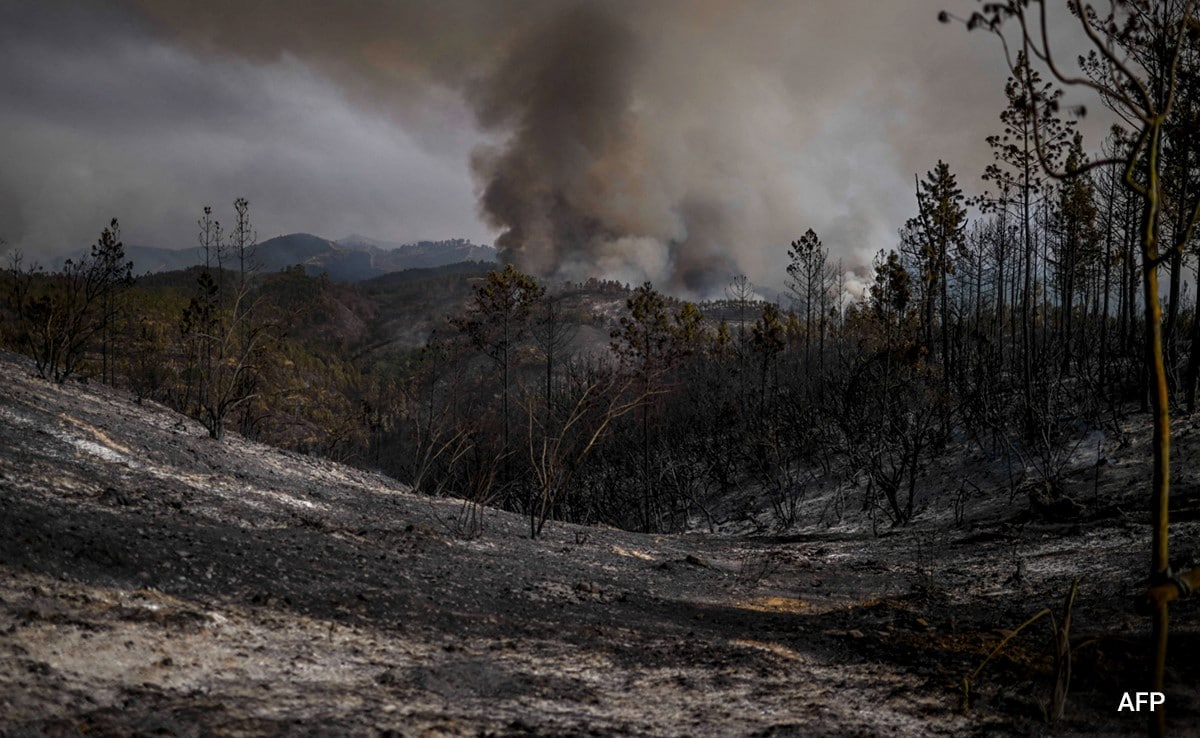
On greenhouse gas emissions, the researchers asserted that the Canadian wildfires this year pumped more than 1 gigatonne of carbon dioxide into the atmosphere, which they said was higher than the country’s total greenhouse emissions of 2021.

Their study also acknowledged that fossil fuel subsidies had roughly doubled between 2021 and 2022 globally, from USD 531 billion to just over USD 1 trillion. The authors noted that rising energy prices, brought about by Russia’s ongoing invasion of Ukraine, could have contributed to this rise in subsidies.

“The trends indicate the need to drastically speed and scale up efforts globally to combat climate change while more generally reducing our ecological footprint,” said study author Thomas Newsome from the School of Life and Environmental Sciences at the University of Sydney, Australia.

“Extreme weather and other climate impacts are disproportionately felt by the poorest people, who have contributed the least to climate change,” he said, stressing that that all climate-related actions must be grounded in equity and social justice.

The authors say policies are needed that take aim at the underlying issue of “ecological overshoot” and urge transitioning to a global economy that prioritises human well-being and curtails overconsumption and excessive emissions by the rich.

Specific recommendations in their study include phasing out fossil fuel subsidies, transitioning toward plant-based diets, scaling up forest protection efforts and adopting international coal elimination and fossil fuel non-proliferation treaties.

“Without actions that address the root problem of humanity taking more from the Earth than it can safely give, we’re on our way to the potential partial collapse of natural and socioeconomic systems and a world with unbearable heat and shortages of food and freshwater,” said Ripple.

Read full article
Opposition MPs Question “Haste” In Adopting Report On New Criminal Laws
onmynews.com

Opposition MPs Question “Haste” In Adopting Report On New Criminal Laws

Opposition MPs in the Parliamentary Standing Committee on Home Affairs have questioned the “haste” in adopting the draft reports on the three bills to replace the IPC, CrPC and the Evidence Act, as a meeting has been called later this week for the purpose.

The committee, which is examining the Bharatiya Nyaya Sanhita, Bharatiya Nagarik Suraksha Sanhita and the Bharatiya Sakshya Bills, has informed its members through a notice that the draft reports will be adopted on October 27.

According to sources, at least two opposition MPs have written to the panel’s chairperson raising concerns about the process of scrutiny of the bills and have also urged him to postpone the meeting.

Questioning the “haste”, both the MPs have said that they did not get enough time to go through the three reports which were sent to them only on the late evening of October 21.

Members of the panel who belong to parties of the opposition INDIA bloc are set to submit dissent notes against adopting the reports. In the 30-member panel, the BJP has 16 members.

Opposition MPs, who have in the past raised questions over the experts being called for examination, have questioned the short notice for calling the meeting even as a number of experts suggested by them are yet to be called.

One of the opposition MPs, in his letter to the panel chairperson, pointed at an “alarming lack” of consultation with stakeholders and shared a list of experts that had been suggested by them for examination.

Former Chief Justice of India U U Lalit, retired Supreme Court judge Justice Madan B Lokur, eminent jurist Fali Nariman, Senior Advocate Rebecca John and Advocate Menaka Guruswamy are among the names included in the list.

Requesting postponement of the panel’s meeting, another opposition MP pointed out that the draft report was sent in the middle of festivals even though the next Parliament session is at least four weeks away.

TMC MPs in the panel have, meanwhile, raised concern over the meeting being called a day before Lakshmi Puja which is celebrated in Bengal a few days after Durga Puja.

“It shows that the BJP does not understand anything about the culture of Bengal,” said a TMC MP, who is a part of the parliamentary panel.

Raising concern about the bills, an opposition MP alleged that these proposed laws which are meant to replace the colonial-era procedural laws are “even more colonial”.

The 30-member Parliamentary Standing Committee on Home Affairs has 16 BJP MPs including the chairperson, four of the Congress, two each of DMK, TMC, JD(U) and BJD, and one of the Shiv Sena.

It was given three months to examine the three bills and submit its report after Home Minister Amit Shah had requested the Lok Sabha chair to refer the bills to the panel for threadbare examination. In the 11 meetings held so far, the panel took the views of various experts, including the Law Commission.

The IPC and the Evidence Act are colonial-era procedural laws that form the backbone of Indian criminal jurisprudence along with CrPC.

Read full article
Link copied!