Live · Global · Independent
Live Feeds
PinkVilla
Forbes
NDTV
Hindustan Times
Delhi Metro’s 5th Bridge Over Yamuna To Be Completed By September
onmynews.com

Delhi Metro’s 5th Bridge Over Yamuna To Be Completed By September

Construction of one module of the first metro bridge over the Yamuna being built using the cantilever construction technique has been completed, DMRC Managing Director Vikas Kumar has said and added that the entire work is expected to be completed by September.

The bridge — the fifth metro bridge over the Yamuna — is being built under Delhi Metro’s ongoing Phase IV project.

In a recent interview to PTI, Kumar had said that this state-of-the-art bridge would be “visually appealing” and become an iconic landmark similar to the Signature Bridge.

Signature Bridge, which connects Wazirabad to the inner city, is “India’s first asymmetrical cable-stayed bridge”. Its pylon is the tallest structure in Delhi at double the height of the Qutub Minar.

The bridge boasts a viewing box at a height of 154 metres that acts as a selfie point. It shortens travel time between north and northeast Delhi, according to the website of the North East district.

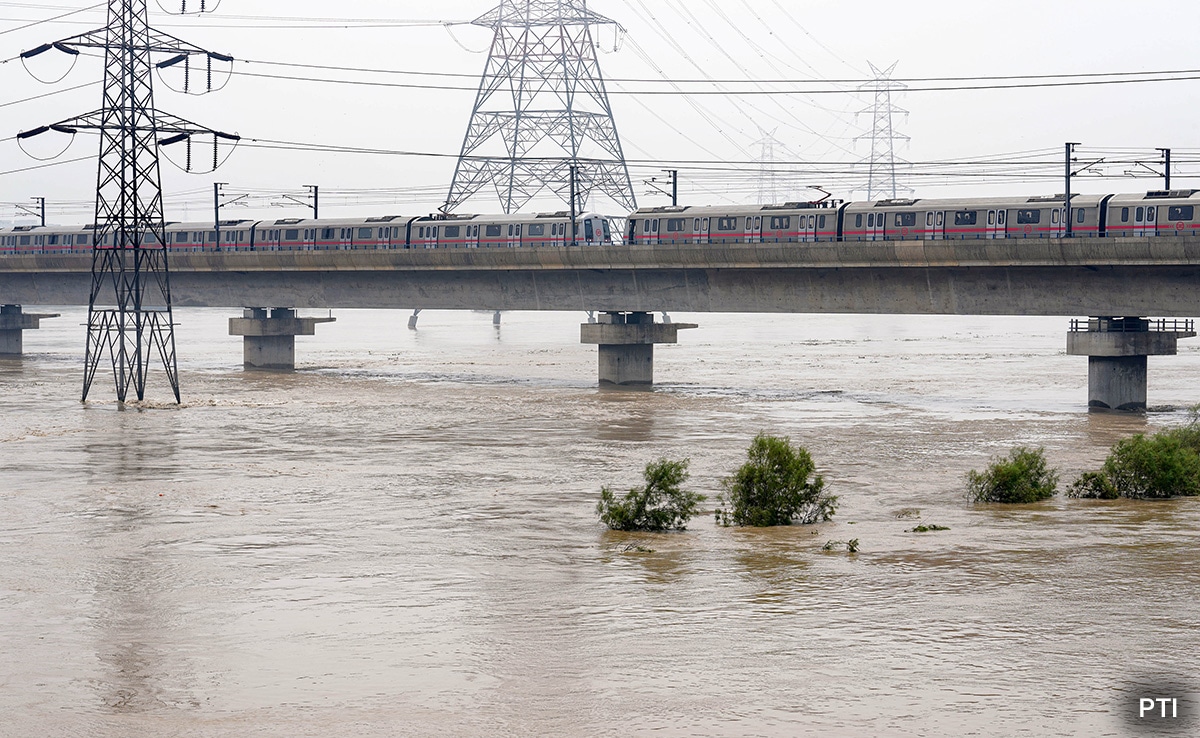
Work on the under-construction bridge over the Yamuna was halted for a few days in July when the river had become swollen due to the rising water level.

“The status is that almost 50 per cent of the work is complete. It is in two modules of 290 metres each, the total length is 580 metres. And, one module is complete, having four spans,” Kumar told PTI.

“Otherwise, the sub-structure is complete. The other module again comprises four spans, this stretch … so, the entire stretch is expected to be completed by September 2024,” he added.

The Delhi Metro Rail Corporation (DMRC) commenced in 2020 preliminary work on the bridge, which is part of the Majlis Park-Maujpur corridor being built under the Phase IV project.

The DMRC is currently undertaking construction on 65.2 kilometres of three priority corridors spanning 45 stations under the project — Janakpuri West-RK Ashram Marg (28.92 kilometres), Majlis Park-Maujpur (12.55 kilometres), which are extensions of the already operational Magenta and Pink lines, and Aerocity-Tughlakabad (23.62 kilometres) that is being built as the Silver Line to connect the Violet Line and the Airport Line from the respective ends.

The Majlis Park-Maujpur corridor — an extension of the Pink Line — is planned to be opened by March 2025, Kumar said.

The new bridge across the Yamuna will come up between two existing bridges — the Wazirabad Bridge and the Signature Bridge.

With eight spans and nine piers, the bridge will connect the Soorghat and Sonia Vihar stations of the Pink Line.

“This will be the first-ever metro bridge over the Yamuna to be built using the cantilever construction method. A cantilever is a rigid structural element that extends horizontally and is supported at only one end,” the DMRC said.

Typically, it extends from a flat, vertical surface such as a wall or a pier to which it must be firmly attached. Cantilever construction allows overhanging structures without additional support. Employment of this technology will make the bridge look aesthetically pleasing, it said.

The DMRC said there have been many challenges in planning and executing this project.

“We did most of the work in time, anticipating the rainy season. However, there were certain things that were left behind, so we had to stop the work during the (recent) flooding. So, that got the work delayed. Otherwise, this bridge could have been constructed much earlier,” Kumar said.

In July, the Yamuna swelled past the danger mark, breaching the all-time record of 1978 and flooding low-lying areas near its banks.

The DMRC’s top official said there were also other engineering challenges.

“The design approval was … in fact, it being a first bridge of its kind for the DMRC. The design, it took some time, but definitely, the execution. In fact, again, most of the work we try to do … again, with pre-cast elements, whatever can be taken, and the rest were done in situ, following a particular method statement that we had followed. No surprises as such in this, because of our preparations,” Kumar added.

Aesthetically also, the design is such that from that point of view, it will be “very appealing to the eyes”, he further said.

The design of the bridge was finalised using the ‘Building Information Modelling’ technology. With the help of this technology, a 3D model of the bridge was prepared with intricate details of the proposed structure, DMRC officials said.

The new bridge will cross the river about 385 metres downstream from the old Wazirabad Bridge and 213 metres upstream from the Signature Bridge, the urban transporter has said.

Various eco-friendly measures are being taken during its construction. All construction activities are being carried out with minimum effect on the floodplains, the officials had earlier said.

Restoration of the floodplain that may be impacted by the construction of bridge alignment or pillars will be undertaken, they had said.

The muck and debris generated will be disposed of scientifically and no dumping will be allowed on the floodplains, the DMRC said.

The four existing metro bridges over the Yamuna are at Yamuna Bank (698.8 metres on the Blue Line), Nizamuddin (602.8 metres on the Pink Line), Kalindi Kunj (574 metres on the Magenta Line) and Shastri Park (553 metres on the Red Line).

Read full article
“Gaza Cut Into 2”: Key Challenges For Israel In Gaza’s Urban War Explained
onmynews.com

“Gaza Cut Into 2”: Key Challenges For Israel In Gaza’s Urban War Explained

The Israel Defence Forces (IDF) have encircled Gaza City and what exists now is north and south Gaza after striking the important Salah-Al-Din road that runs north-south. The Palestinian Authority President Mahmud Abbas has denounced Israel’s offensive as “genocide” while the IDF calls it its mission to uproot Hamas.

Before the launch of the full ground invasion, Israel conducted relentless air strikes to destroy Hamas structures and hit the ‘Gaza Metro’, a secret web of tunnels and hospitals.

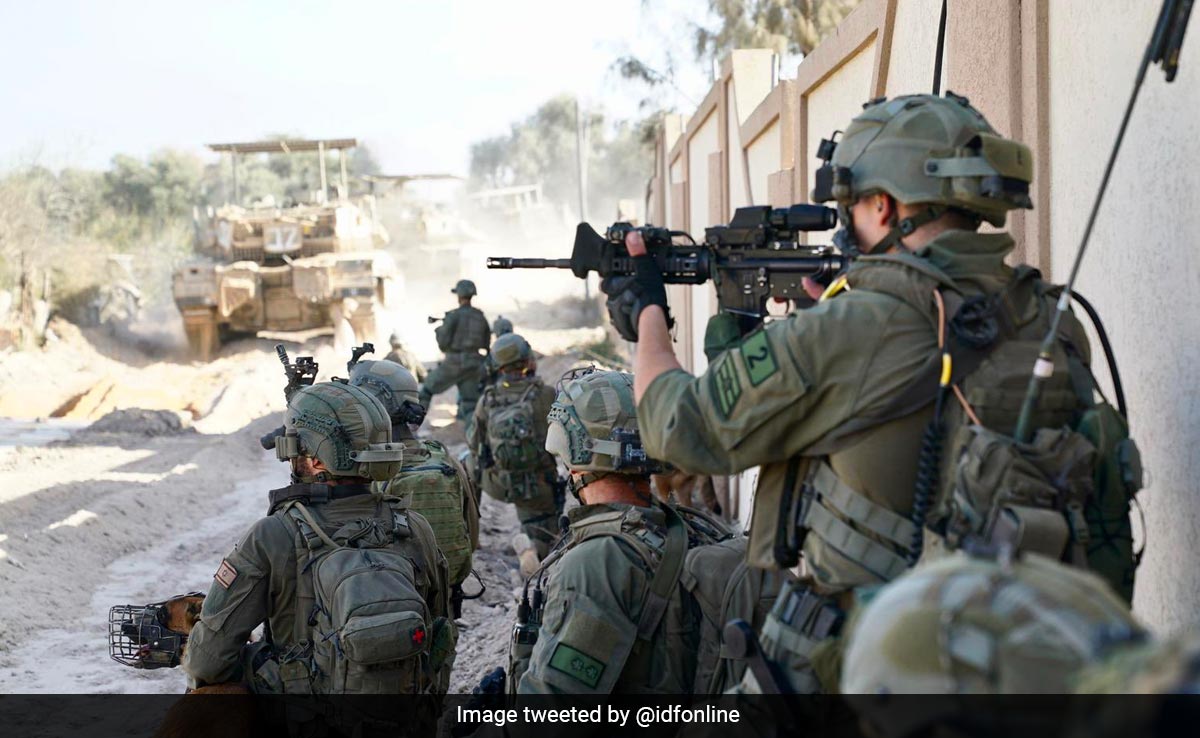
Fighting in Built-up Areas (FIBUA), in other words, an area dense with buildings and structures will entail lethal urban warfare, posing severe challenges for the Israeli ground troops and armoured units.

First 

The narrow lanes of Gaza may not be the ideal place for armoured units like tanks or Infantry Fighting Vehicles (IFVs) to move as Hams operatives may use buildings to fire anti-tank guided missiles. Hamas has claimed that intense fighting broke out when Israel entered Gaza and fired machine guns and anti-tank guided missiles (ATGMs) at the forces.

Israel has targeted the observation posts and anti-tank missile launch posts of Hamas.

The ongoing Russia-Ukraine war showed how vulnerable tanks and troops can be to ATGMs when not supported by Close Air Support (CAS). Russian tanks were sitting ducks for Molotov Cocktails thrown from buildings and built-up structures.

Not just Molotov Cocktails, even Kamikaze drones targeted Russian T-72, exposing the design vulnerability of the ‘Jack-In-The-Box’ design of the tanks. The Indian Army operates Russian T-72 and T-90 tanks.

Learning from the Ukraine war, Israel is now installing metal roofs, also known as “cope-cages”, on tanks to protect them from munitions and drone attacks.

‘Cope Cage’ on top of Israeli tanks

Second 

Not Just tanks but even ground troops are exposed to surprise attacks from hideouts and ambushes from the ‘Gaza Metro’, a web of secret tunnels built by Hamas to supply, store weapons, hit and run after guerilla attacks.

Israel has developed a new weapon called “Sponge Bombs” to neutralise the tunnel threat but the IDF intelligence says that Hamas has kept the hostages in these tunnels.

During Operation Pawan, the Indian Peacekeeping Forces (IPKF) faced the challenges of FIBUA when the LTTE operatives carried out guerilla attacks and Improvised Explosive Devices (IED) attacks on roads and junctions leading to Jaffna.

Well-entrenched LTTE cadres attacked the IPKF from unknown positions, and poor ground intelligence of the area resulted in heavy casualties to the Brigade comprising of the 4/5 Gorkhas, 5 Para and 4 Mahar suffered over 200 casualties until 6 Guards, the Striking Sixth was assigned the task to break through and reach Jaffna Fort. 

Delta Company under Capt Anil Chatta under the guidance of commanding officer Col B R Bhatia, SM broke through the cordon using an innovative approach of going cross-country in pitch darkness using maps from 1949.

Third 

The street fighting in Gaza is expected to stretch for weeks and Israel has to maintain supply lines when fighting deep in hostile territory, especially when the probability of ambushes is very high.

The liberation of Mosul by US-led forces from ISIS in Iraq serves as a lesson for operations in a Dense Urban Environment (DUE). Large-scale combat operations are required to capture a modern city.

Isolating a city is impossible when the lines between a combatant and a civilian are blurred and the depth and duration increase the difficulty.

More Israeli troops would be required to completely capture Gaza, which can result in high civilian and troop casualties.

Fourth – The Battle Of Perception

Despite global concerns over a major humanitarian crisis in Gaza, Israel has continued its operation. The next big challenge for Israel would be the Battle of Perception.

Over 9,700 people have died and the UN has warned that a ground invasion may significantly increase civilian casualty in Gaza.

A 2017 report by the International Committee of the Red Cross, ‘I Saw My City Die‘, highlights how deadly Urban warfare is to civilians in Syria and Iraq.

The report said the war in cities caused eight times more casualties than fighting in other areas.

Gaza has a population density of 5,500 people per sq km and the sufferings of the innocent may not end soon.

Read full article
For The Swarovski X Skims Launch, We Couldn’t Expect Anything Less Than Kim Kardashian Shining In Crystal Co-Ords
onmynews.com

For The Swarovski X Skims Launch, We Couldn’t Expect Anything Less Than Kim Kardashian Shining In Crystal Co-Ords

Everybody is a style gangster until the fashion mogul turns to the show. Kim Kardashian has often served us with multiple iconic fashion moments that we have very preciously saved in our style files. Kim’s latest collaboration for Skims with Swarovski served as another occasion for the diva to showcase her love for everything bejewelled. Shine bright seems to be Kim’s motto of late. For her latest appearance for the collaboration, she almost doused herself in Swarovski jewels. She opted for a jewel-encrusted halterneck top paired with a similar mini skirt. She covered herself in crystals for the launch party of her new Swarovski X SKIMS collection. Her transparent silver heels completed the monotone style. Kim’s middle name is extra and until that is reflected in her style, the look isn’t complete. Her top came with a backless pattern. It featured flossing chain details at the back with jewel hangings. Well, it truly was a surprising spin to this embellished fit. She sure was shining bright like a diamond.

Also Read: With Kim Kardashian Headlining, Skims’ Latest Collaboration Gets A Sparkling Swarovski Touch

It is no surprise that the fashion girl has a signature beauty look which mostly comprises of well-defined contours and nude glam. This time as well she paired the glitzy style with a nude makeup look but what really stood out was her high bun and face-framed bangs. Her overall attire is worthy of many double takes!

Also Read: The Kardashians Sparkling In Silver At Beyonce’s Concert Is Family Fashion At Its Peak

Kim Kardashian loves a good dramatic look and here’s proof.

Read full article
Link copied!