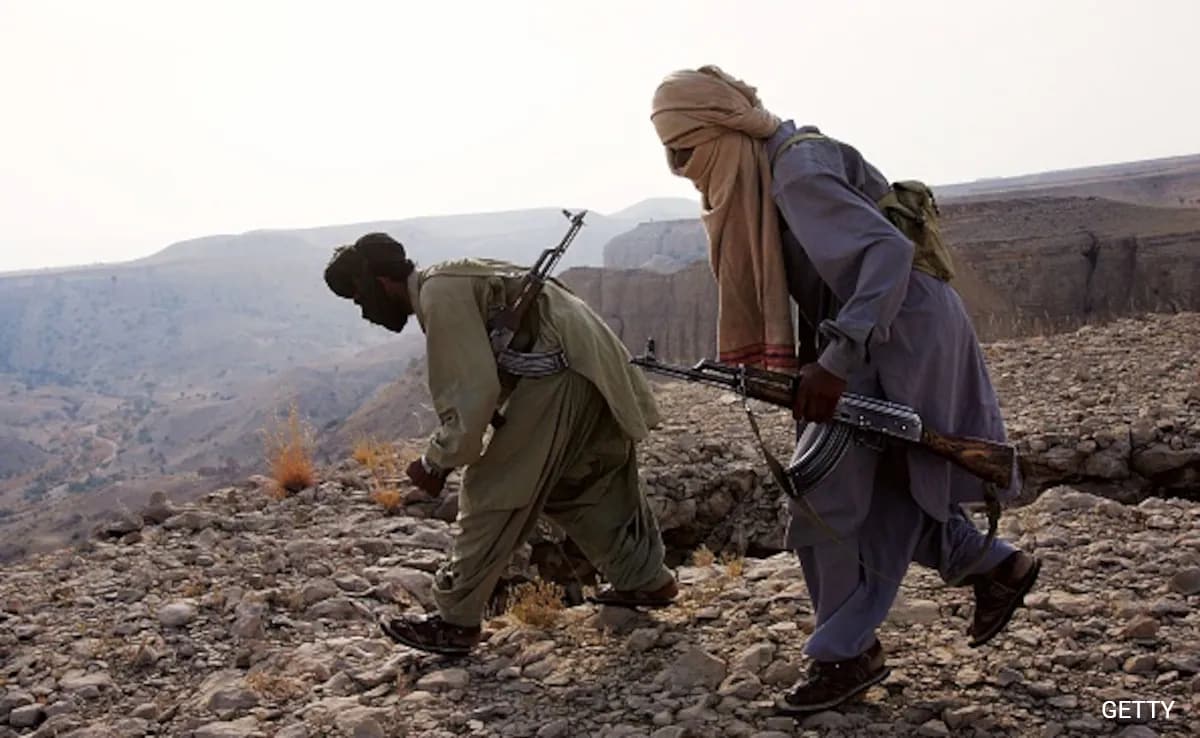
Iran violated Pakistan’s airspace and launched multiple missile strikes to target camps of two bases of the Baluchi militant group Jaish-al Adl. The bases were hit and destroyed by missiles and drones and two children were killed in the attacks. It happened when the caretaker PM of Pakistan, Anwaar ul Haq Kakar, met Iran’s Foreign Minister in Davos, Switzerland on the sidelines of the World Economic Forum. Pakistan retaliated with missile strikes on Iran today after warning the country of “serious consequences”.
Balochistan is Pakistan’s largest province and accounts for 40 per cent of its gas production and is an important checkpoint in China’s so-called “China Pakistan Economic Corridor”, with the Gwadar port located close to the Gulf of Oman. Despite its strategic significance, the region has been ignored by Pakistan’s central leadership, giving rise to an independence movement which began ever since it acceded to Pakistan in 1948.
Militancy In Balochistan – A Shared Problem
The Baluch tribe is a group of people from the Balochistan region and the area is divided into three regions. The northern part is in present-day Afghanistan, the western region in Iran is called the Sistan-Baluchistan region and the remaining in Pakistan. The region was and has been at the centre of a power struggle during British rule and even after that.
The Britishers governed the region with the ‘Sandeman system’, where an indirect rule was established with autonomy to tribes governed by ‘sardars’ or ‘jirgars’. It was established by Robert Groves Sandeman and was called the “Sandemization” of tribes. Pakistan took control of the region in 1948 and the accession agreement led to the first uprising for autonomy, resulting in systemic suppression of the independence movement in Balochistan with violence.
Balochistan Liberation Army, a separatist group, killed four people in a bomb blast in Quetta in April last year.
The Baluchis believe they were colonised or annexed by Pakistan during the Partition and the ethnic group is different from the dominant Punjabis, Sindhis that have dominated the politics of Pakistan. The Pashtun region’s affinity with Afghanistan and the Baluchis seeking independence has become Pakistan’s ‘Achilles Heel’. Fifty-two years ago, a call for independence in East Pakistan led to the creation of Bangladesh. Baloch armed groups were created to “liberate” the region and the Pakistan army and the militants have clashed several times. The groups have also targeted Chinese infrastructure to hamper the projects in the region and create a state of fear like it did when a Confucius Institute in Karachi was attacked in 2022.
There’s a shared sense of subjugation among Balochis on both sides of the border that has created a feeling of Balochi nationalism that aims for independence and also a hotbed for drugs and arms smuggling due to a power vacuum and increased hostility between the state and people.
The Problem In Iran
The western region of Balochistan (now Sistan-Baluchistan), was annexed by Iran’s Reza Shah Pahlavi in a coup by overthrowing the Qajar dynasty. The Iranian Revolution in the 1970s took control of the country and a Shia-dominated regime was in power. Ayatollah Khomeini’s regime saw the Sunni Baluchis indifferently over the years.
The region was deprived of development, leaving a stark difference in the living conditions of millions of people in the province compared with other regions of Iran. The situation is the same in Pakistan too.
Years of neglect and suppression led to a resistance movement in Iran, too, and gave rise to Sunni Balcuhi militant groups like, Jundullah and Jaish-al Adl, that have taken shelter in Pakistan. The people from both sides of the region help each other and have provided a haven to militant groups on both sides of the border.
The two countries share the same problem – Baluchi militancy. They have agreed in the past to combat militancy. In 2019, the Jaish-al-Adl claimed to have killed 27 Iranian Revolutionary Guards Corps members (IRGCs), leading to tensions between the countries over Pakistan’s failure to crack down on militancy.
A few months later, an attack in the Gwadar district of Pakistan’s Balochistan was seen as a retaliation to the Jaish-Al-Adl’s attack. Pakistan claimed the group that killed 14 people was trained in Iran.
Not The First Incident
There have been instances in the past where Iran has fired mortars to attack militant camps in Balochistan. A fencing along the Iran-Pakistan border now separates families and tribes, which is still in progress.
The recent attacks bring attention to two things – A nuclear-armed nation’s airspace was violated with missile and drone attacks and volatility in Balochistan and the power politics involving regional and global powers.
Iran sees Jaish al-Adl as a proxy of Saudi Arabia, its arch-rival, and Pakistan’s closeness with Saudi Arabia is not acceptable to Iran. It claims the Jundullah group is backed by Al-Qaeda and the Taliban because of the common Sunni faith and blames Pakistan too for the militant group’s rise, though both nations face the same problem.
The Gwadar port in Balochistan and the Chabahar port in Iran are in the Balochistan region and are termed as “sister ports”. Iran has to secure Chabahar and cannot afford instability in Sistan-Baluchistan.
The ongoing Israel-Hamas war has brought the Arab world together against Israel. Iran’s proxy, the Houthis, are continuously targeting merchant ships in the Red Sea in “solidarity with people of Gaza”, but any militancy in its own country is not ideal in the Saudi-Iran cold war. Chabahar and Gwadar are vital ports of trade in the Sea Links of Communication.
For India, too, Chabahar is a strategic port to counter Gwadar. India and Iran reached a final agreement on the port’s development when External Affairs Minister S Jaishankar visited the country recently. India’s “self-defence” response to Iran’s actions points to Sistan-Baluchistan’s importance for trade.