Live · Global · Independent
Live Feeds
PinkVilla
Forbes
NDTV
Hindustan Times
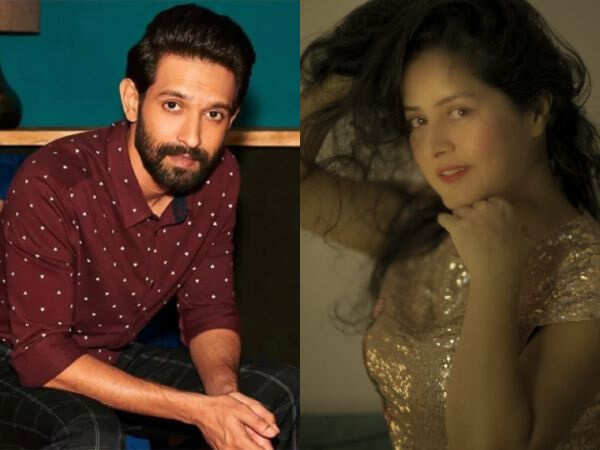
Exclusive: Akriti Singh on Working With Vikrant Massey Directing Skibidi and More
onmynews.com

Exclusive: Akriti Singh on Working With Vikrant Massey Directing Skibidi and More

Actor, creator, and now a filmmaker, steadily carving her own space, Akriti Singh has always moved between worlds with ease. From films like Bank Chor, Kamayab and Eight Down Toofaan Mail to her warmly received turn in Broken But Beautiful, she has built a body of work rooted in character and quiet conviction. Her directorial debut, Eight Down Toofaan Mail, travelled to international festivals and earned critical acclaim. Now, Akriti returns with Skibidi, her second feature film and a spirited leap into comedy, drawing from the chaos, charm, and everyday madness of Mumbai. In a conversation with Filmfare, the Broken But Beautiful actor speaks about switching genres, being an actor who directs, and why humour is the hardest form of cinema.
Tell us about your new film, Skibidi.

The film is deeply rooted in aamchi Mumbai’s everyday madness. Set on and against roads of Mumbai, ever moving, the narrative of Skibidi thrives on silly situations and hilarious complications, creating a world that is as whimsical and refreshing as the word “Skibidi” itself. It is a comedy that is all humour and a lot more heart. SKIBIDI celebrates masala comedy, friendships, and the energy that only Mumbai can bring.
Your debut Eight Down Toofaan Mail was intimate and emotionally heavy. Why did you deliberately swing to comedy for SKIBIDI instead of deepening that lane?

Sometimes the art chooses the artist; the film & the story of Skibidi chose me. Once I started working on a film set on Mumbai roads, it could have been nothing else but a quirky caper. Eight Down Toofaan Mail, in spite of being a drama based on real incidents, had a lot of wit and humour. I enjoy all the genres, but comedy is my favourite because it is the toughest one to win. I have made several comedy plays and am super confident with my material because it’s been fine-tuned over many performances in front of live audiences to great appreciation. Skibidi is sure to make people fall off their seats laughing.
akriti
As a woman actor-turned-director, did you have to prove your authority more than your vision on set?
Don’t they say something like ‘if you want a person to build a ship, teach them to dream of the endless immensity of the ocean.’ In a creative pursuit, you need collaboration more than authority. My entire team was with me in a very non-hierarchical way. As a woman filmmaker, the least I can do to change the structures of our workspace. Skibidi is a product of this beautiful collaboration of artists.
Were there moments where people questioned your decisions because they still saw you as an actor?
On the contrary, my actors are more open to my ideas because I am an actor and they acknowledge my craft. Although Skibidi just is my second feature film, I have directed many acclaimed plays. We approached Skibidi with a similar mindset – we did intensive workshops before the shoot and constantly innovated. And as far as the technical aspects of filmmaking are concerned, I am well versed in most of the departments – edits, grade, SFX, sound, mixing, mastering, etc. I have dabbled in all the departments in one project or another including in all the short films I made. So, it is easy to communicate with the technicians as well. The label of being an actor actually helps in my case. They love an actress who can talk lenses, colour grading, compositing plates, Dolby mastering and other details.
Eight Down Toofaan Mail travelled to international festivals. Did that validation change how you approached your second film?

Eight Down Toofaan Mail was a huge confidence boost for me as a storyteller and a filmmaker with all the acclaim it received nationally and internationally. All the adulation and validation made me more fearless in my art. Skibidi is a fun story with a lot of quirkiness and that needed confidence and craft. Eight Down Toofaan Mail gave me both.

akriti
When you look back at Broken But Beautiful now, especially with Vikrant Massey going on to win a National Award, does that project feel different to you in retrospect?

Broken but Beautiful is a very special project for me. I enjoyed performing Agni so much. Reshu Nath had written a beautiful character, and our producer, Sarita Tanwar, was just amazing. Vikrant is a beautiful human being on and off camera. It was a joy to work with him. I have always enjoyed his performances.
Who are some of the actors and directors you want to collaborate with…

The list keeps changing & evolving. Today it is Arshad Warsi, Robert Downey Junior and Kate Winslet. I would love to make films with so many of my favourite artistes. As an actor, it would be amazing to work with Zoya Akhtar.

Also Read: Exclusive: Vikrant Massey and Lakshya to Begin Shooting for Dostana 2 Next Month
Read full article
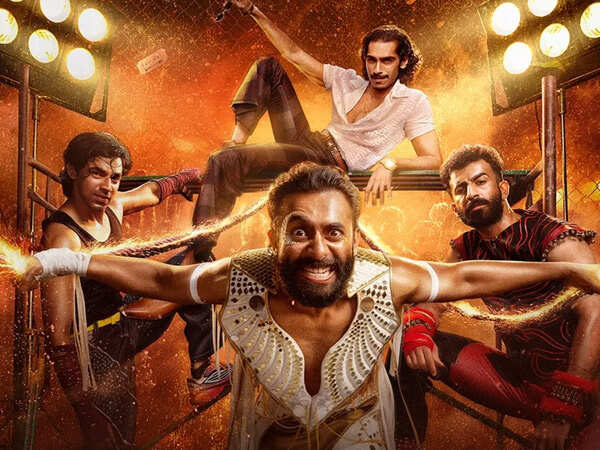
Exclusive: Broken Beds and Big Dreams: Talking Wrestling With The Team of Chatha Pacha
onmynews.com

Exclusive: Broken Beds and Big Dreams: Talking Wrestling With The Team of Chatha Pacha

Every generation has its private mythology. A shared memory bank that does not need footnotes or explanation. For kids who grew up in the late nineties and early 2000s, that mythology arrived with entrance music, shattered glass sound effects and men who looked like they could tear the world in half but chose instead to play to the crowd. Professional wrestling was never just a television show. It was ritual. It was theatre. It was an invitation to pretend.

Chatha Pacha: The Ring Of Rowdies is built entirely out of that invitation.

Director Adhvaith Nayar remembers the moment the idea first took hold. “I initially had this idea of a movie where we could possibly bring this pro wrestling sort of world that we grew up watching and loving,” he says. “What if that kind of wrestling was placed in a Kerala sort of setting?”

That question stayed with him long after the first version of the script was written in 2019. Back then, the film was darker, rougher, and far harder to sell. “It was sort of difficult to convince people that this would work out,” Adhvaith admits. “Not many people really thought it was relatable enough.”

The reactions were polite, cautious, and consistent. Wrestling felt too Western. Too implausible. Too loud for Kerala.

Eventually, Adhvaith moved on. Or at least tried to.

Everything changed when producer Shihan Shoukath and his brother, actor Ishan, entered the picture. The script resurfaced almost accidentally. “I showed them the pitch deck,” Adhvaith recalls. “I was not feeling confident about it when I showed it to them. I was like, yeah, I have this whole wrestling idea, a film about a wrestling club in Kochi or something. But I do not think it will work out.”

It barely took a moment. “They just saw the front page of it and they were like, ‘dude, this is the film that we should be making.’”

For Shihan, the attraction was instinctive and deeply personal. “There are a lot of great films coming out of Kerala,” he says. “But I felt like if a new producer or a new director was coming in, we should bring something fresh. I wanted to make something that I would love to watch and I would love to buy a ticket for.”

That decision, he admits, was biased. “I am a huge WWE fan.” The challenge was not nostalgia. It was translation. “How do you bring such a Western concept into a place like Mattancherry, which is so unique in its own way?”

The answer lay in Fort Kochi itself. “It is one of the few places in India where people think completely out of the box,” Shihan says. “It is a place where anything like this can happen.”

Adhvaith’s own research had already begun bridging that gap. “There exist much smaller wrestling clubs across countries,” he explains. “You have blue collar workers. A butcher. A taxi driver. A schoolteacher. Once or twice a week, they finish work, go to a rented basketball court, help each other put on costumes, set up a ring with very low quality materials.”

What happens next is the heart of Chatha Pacha. “For the next two hours, they get to live out their childhood dreams,” Adhvaith says. “And then they go right back to their other work.”

Kochi offered a cultural anchor. “Kochi happens to be one of the South Indian hubs of Gatta Gusthi,” he points out. “If you really look at it, pro wrestling is just a much more theatric, colourful, fancier version of that.”

Actor Roshan Mathew was pulled in almost instantly. “At the core of it, it was definitely just the idea,” he says. “It sounded quirky, it sounded wild, and it sounded instantly exciting. A bunch of people trying to do this in Kochi.”

There was also familiarity. “I have known Adhvaith since Moothon,” Roshan says. “Whatever he makes, if he wants me to be part of it, I will most probably be part of it.”

But Chatha Pacha also arrived at a moment when Roshan was quietly restless. “The roles of mine that stick in people’s minds are usually the serious, realistic ones,” he admits. “Slowly, this image was forming.” He wanted to break it, but not artificially. “You cannot pick projects just to change things up. It has to excite you.”

This one did. “I was already looking to do something emotional and entertaining and very out of the ordinary for me.”

For Arjun Ashokan, who plays the volatile Loco Lobo, the film felt personal on multiple levels. “I believe my childhood WWE craze really did a good job tilting me towards this role,” he says. “Also, Mattancherry; that’s where my love of cinema started, where my career actually started (Parava). And my trust in the brilliant cast and crew for this project also motivated me to say yes.”

The physical preparation for the film only deepened those bonds. “All of us started parkour and mobility trainings three months back,” Arjun adds, “and this definitely helped us get to know each other on a personal level and there started our friendship.”

For Vishak Nair, the conviction came from the narration itself. “Adhvaith had so much clarity,” he says. “Chatha Pacha was one of those films where as soon as the narration was done, I told him, dude, we are doing this.”

His character Cherian is written to resist easy categorisation. “He is a person who walks around wearing a mask,” Vishak explains. “There is a funny side to him, a lovable side, but also a side you absolutely despise.” What drew him in was complexity. “He is not purely good or purely bad. Those characters are very difficult to come by.”

Ishan Shoukath, who plays a character named Little, sees the film through a more emotional lens. “Little is the youngest of the group,” he says. “He had to leave Fort Kochi, and when he comes back, his innocence wants to restart whatever nostalgia he had.”

Little’s in-ring persona may be different, but the man beneath it is defined by longing. “To him, his family and his friends and his gang is everything,” Ishan says. “He just wants to get the band together again.”

As the conversation unfolds, it becomes clear that Chatha Pacha is stitched together with shared memories, broken furniture, school bus debates, and childhood injuries disguised as heroism.

“I was basically his punching bag,” Ishan laughs, talking about wrestling with his brother. “A lot of beds were broken because of that.”

Roshan’s memories are equally vivid. “My dad did not like us watching too much TV,” he recalls. “So I used to sneak in to watch WWE. Then he started locking the TV. Then he started removing the cable adapter and taking it to work.” He pauses. “So I figured out how to get the TV to work without an adapter.”

Vishak does not hesitate to confess. “My brother and I broke our parents’ bed trying to do a slam.” Then, with a grin, “Filmfare exclusive. I think thirteen-year-old Vishak really loved WWE Divas as well.”

Shihan admits the blame always landed on him. “Being the older brother, you get all the beatings,” he says. “The bed breaks and you are responsible.”

That sense of things coming full circle extends beyond the story and into the making of the film itself. Even the collaboration with Shankar–Ehsaan–Loy carries the weight of childhood fantasy turning real. “My narration with them was one of my favourite narrations,” Adhvaith says. “Shankar sir just kept saying wow, superb! And that was encouragement enough.”

“Walking into Purple Haze Studios for the first time felt surreal,” Adhvaith admits. “It was even more so because I’ve seen a lot of making videos from other films; like let’s say Rock On or Zindagi Na Milegi Dobara. It’s in that same studio where Hrithik Roshan, Farhan Akhtar, and Abhay Deol recorded their song for Zindagi. I was tearing up the first day.” This was the same space where other people once chased their own versions of magic. Now, it was hosting a film about boys who never quite let go of theirs.

What Chatha Pacha: The Ring of Rowdies ultimately understands is something wrestling always knew. That it was never really about who won. It was about the walk to the ring. The music. The pose. The moment when a crowd believed in you, even if only for a few minutes. It was about pretending together and agreeing, collectively, that this illusion mattered.

For the characters in the film, and for the people who made it, wrestling becomes a way of holding on. To friendships that aged. To places that changed. To a version of themselves that once felt fearless. Loud. Limitless. Or as Adhvaith puts it, without trying to dress it up, “It is their way of keeping that little dream alive.”

Also Read: Mohanlal Kickstarts Drishyam 3 After Phalke Honour

Read full article
The Raja Saab Box Office Collections: Prabhas starrer crash and burn in second weekend, 179cr worldwide in 10 days
onmynews.com

The Raja Saab Box Office Collections: Prabhas starrer crash and burn in second weekend, 179cr worldwide in 10 days

The Raja Saab collected Rs. 9.50 crore approx in its second weekend at the Indian box office. This marks a steep 83 per cent drop from its opening weekend, with its ten-day running total reaching Rs. 146.50 crore approx in India. Overseas, the Prabhas starrer has added Rs. 32.50 crore (USD 3.60 million) approx, taking the worldwide box office total to Rs. 179 crore approx.

The fate of the film was sealed on the first day itself when it opened to underwhelming numbers, and the reception was even worse. It faced big drops over the weekend, and that was it. Over the weekdays, the film managed to put up some numbers due to Sankranti holidays, especially on Wednesday and Thursday, but in the second weekend, as the holiday boost wore off, the collection came crashing down once again. With no holidays left to cushion the run, the film is now expected to fizzle out and close at around Rs. 185–190 crore worldwide.

In the end, The Raja Saab is going to end up in the same range as Game Changer from last year, which was a disaster of a similar level, with similar opening, trending and now final number. The Raja Saab will end up with somewhat higher numbers in Nizam and Karnataka, while Game Changer had higher “numbers” in Hindi. The costs involved for both films are also of same level, and so are the losses at around Rs. 200 crore. 

The Territorial Breakdown for The Raja Saab is as follows:

Area Gross
AP/TS Rs. 104.75 cr.
Nizam Rs. 43.00 cr.
Ceded Rs. 13.25 cr.
Andhra Rs. 48.50 cr.
Karnataka Rs. 13.50 cr.
Tamil Nadu – Kerala Rs. 3.00 cr.
Rest of India Rs. 25.25 cr.
   
INDIA Rs. 146.50 cr.
   
United States USD 2,175,000
Rest of World USD 1,400,000
   
OVERSEAS USD 3,575,000
   
WORLDWIDE Rs. 179.00 cr.

ALSO READ: Border 2 Box Office: Sunny Deol starrer opens advances in India with a bang, Sells 10K tickets in no time

Read full article
Link copied!