Live · Global · Independent
Live Feeds
PinkVilla
Forbes
NDTV
Hindustan Times
The Lyrical Beauty of Guru Duttâs Cinema: A Tapestry of Light Shadow and Soul
onmynews.com

The Lyrical Beauty of Guru Duttâs Cinema: A Tapestry of Light Shadow and Soul

Guru Dutt’s cinema is a haunting symphony of longing, love, despair, and poetic rebellion. Every frame, every word, every glance in his films speaks of an inner music, a sorrow too deep for speech, too beautiful for silence. More than a director or actor, Dutt was a poet of the visual medium, whose best scenes unfold like verses from a melancholic ghazal. His films, especially Pyaasa, Kaagaz Ke Phool, Sahib Bibi Aur Ghulam, Mr & Mrs ’55, Chaudhvin Ka Chand, and Aar-Paar, exist in a space where cinema becomes literature, and literature becomes life.

Jaane Woh Kaise Log The Jinke: The Ache of the Outsider

Youtube 93evoW782eg


In Pyaasa, Guru Dutt sits quietly in the shadows as Hemant Kumar’s voice floats over the melancholic strains of S.D. Burman’s music. Jaane woh kaise log the jinke pyaar ko pyaar mila…is not just a song, it’s a sigh in cinematic form, an elegy for those who love too deeply in a world too cruel. Dutt’s face, lit with disappointment and quiet defiance, turns the scene into a lament not just for a lover, but for a broken world.

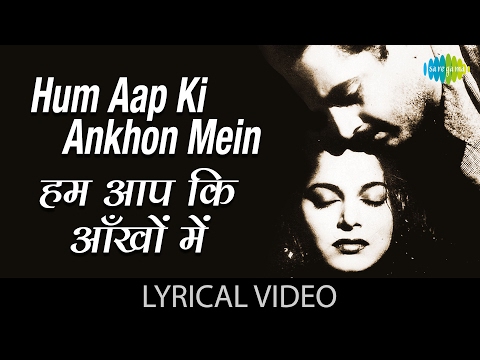
Hum Aapki Ankhon Mein: A Dream in Celluloid
Youtube 6DJxr_GOiHc


 In Pyaasa again, the dream sequence of Hum aapki ankhon mein is a hypnotic escape from grim reality. It’s a rare moment of levity, of imagined love, cloaked in surreal lighting and lyrical choreography. But even here, the joy feels ephemeral, like a candle flickering in a storm.

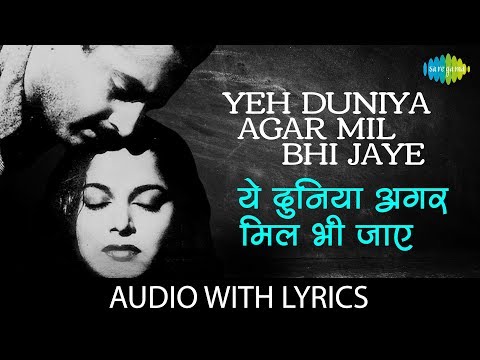
The Revolutionary Verse: Yeh Mehlon Yeh Takhton
Youtube vZPawv6TmEA


One of Dutt’s most explosive scenes comes with his impassioned recitation of Yeh mehlon yeh takhton yeh taazon ki duniya. In Pyaasa, the poet Vijay confronts the hypocrisy of a world that celebrates his words only after believing he is dead. Delivered with ferocious intensity, the scene is a rare moment in Indian cinema where poetry turns into protest.

Dignity in Defeat: The Office Scene

In a heartbreaking moment from Pyaasa, Dutt enters Rehman’s office seeking a job. The camera lingers on his helplessness, the degradation of talent at the altar of compromise. It’s a subtle but crushing commentary on the soul-killing machinery of modern life.

 
First Glance, Unknowing Truth

The scene where Vijay meets Gulabo (Waheeda Rehman) without knowing she is a prostitute is as delicate as it is layered. Dutt’s films rarely moralise, they humanise. His empathy transforms what could be judgment into understanding, and what could be shame into grace.

The Conscience of the Nation: Jinhe Naaz Hai Hind Pe Woh Kahan Hain

Walking through brothels, ruins, and decay, Vijay sings of a nation’s betrayal in Pyaasa. Jinhe naaz hai Hind par woh kahaan hain? asks not just about patriots, but about conscience. It’s a powerful, lyrical indictment wrapped in melancholy.


Estranged Love: Reunion and Rage in Kaagaz Ke Phool

When Dutt meets his daughter after years of estrangement, and clashes with his in-laws, we witness a deeply personal pain. The restrained dialogue and lighting reveal the emotional cost of ambition and abandonment. It’s less a scene than a confession.

Waqt Ne Kiya: Time, Love, and Loss

Youtube 69vc3ov_gOU


If Kaagaz Ke Phool had only the song, Waqt ne kiya kya haseen sitam, would still be immortal. Dutt and Waheeda, bathed in soft shadows, move like ghosts haunted by what could have been. Rarely has longing been so elegantly visualised.

The Fan Mob Scene: Stardom’s Price

In a chilling moment of Kaagaz Ke Phool, Dutt watches from the shadows as Waheeda is mobbed by adoring fans. There is no joy on his face, only the pain of someone who has lost a muse to the public. It’s cinema, looking at cinema, and weeping.


Lighting the Pipe: A Silent Sonata

One of the most iconic scenes in Kaagaz Ke Phool, is the lighting of a pipe. No words. Just gestures. In Dutt’s world, silence often speaks loudest. The act, tender and intimate, becomes a metaphor for unspoken connection, and inevitable parting.

Sun Sun Sun Zaalima: A Rhythmic Tease
guru

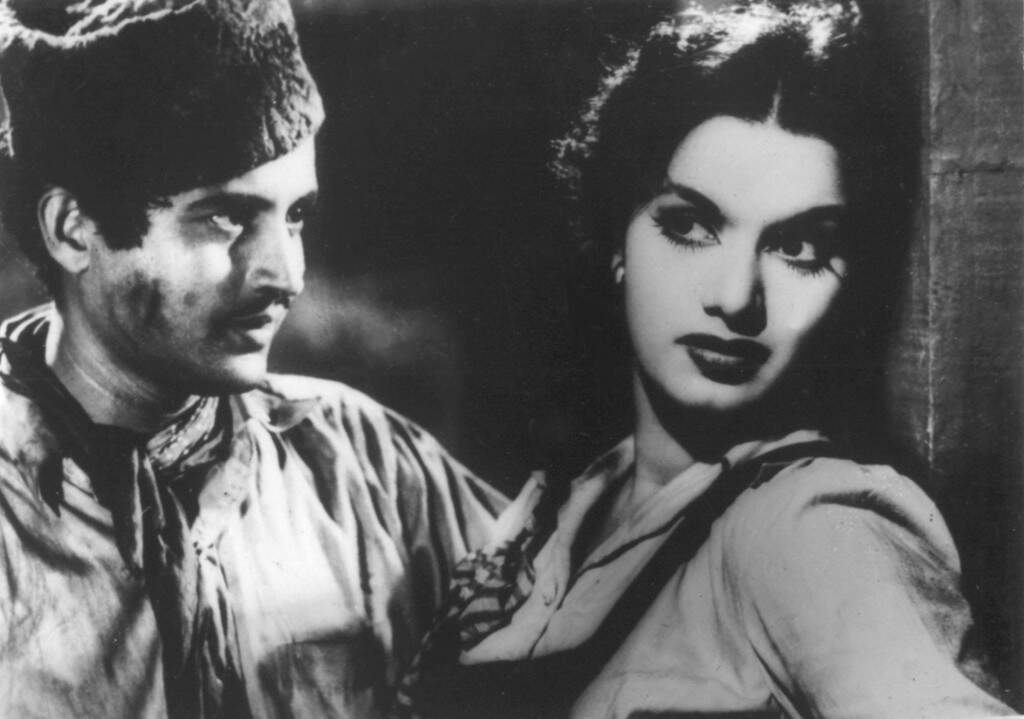
In Aar-Paar, the energetic number Sun sun sun zaalima is a playful explosion of noir-flavored romance. The camera moves as rhythmically as the beat, and Dutt’s comic timing meets Geeta Dutt’s flirtatious singing in a song of cinematic joy.

The Burden of Love: Carrying Madhubala Upstairs

Physical space becomes emotional in this comic yet telling moment where Dutt carries Madhubala upstairs in Mr & Mrs ’55. It’s a romantic comedy with undertones of vulnerability and emotional weight, a balance Dutt mastered.


Showdown with Lalita Pawar: A Battle of Wills

Lalita Pawar’s strict authority in Mr & Mrs ’55 crashes against Dutt’s simmering defiance in a classic confrontation. Sparks fly without theatrics, proving Dutt’s strength as a restrained yet powerful actor.

Chaudhvin Ka Chand: A Hymn to Beauty
Youtube Iz8E5cFYfZE


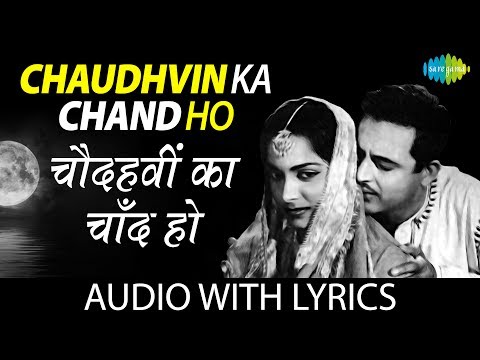
The titular song from Chaudhvin Ka Chand is perhaps Indian cinema’s most exquisite ode to feminine beauty. Dutt gazes at Waheeda like she’s divine, and through his gaze, we too fall in love with light, shadow, and sheer poetry.

The Veil Returns: End Scene of Chaudhvin Ka Chand

In a quietly shattering ending, Dutt’s character restores the veil on Waheeda’s face. It is a moment heavy with sacrifice, lost love, and silent respect, a poetic punctuation to a tragic romance.


Meeting Chhoti Bahu: The Temptation of the Ethereal

In Sahib Bibi Aur Ghulam, Dutt’s first encounter with Meena Kumari’s Chhoti Bahu is laden with curiosity and an almost sacred reverence. Her voice, her sadness, her vulnerability: all become part of a larger tapestry of dying traditions and silent rebellion.


Opening Scene: A Skeleton and a Memory

The haunting first scene of Sahib Bibi Aur Ghulam, where the narrator sees Chhoti Bahu’s skeleton, sets the tone of a gothic tragedy. Memory, guilt, and decay weave together into one of Indian cinema’s most unforgettable introductions.


The Coach Scene: Comfort Amidst Chaos

When Dutt comforts Meena Kumari in a dimly lit coach, there’s more emotion in his restraint than in any grand gesture. It’s an act of tenderness, but also of helplessness, hallmarks of Dutt’s tragic masculinity.


The Haveli’s First Glimpse: Architecture of Decay

The first look at the haveli in Sahib Bibi Aur Ghulam is a character introduction in itself. Dusty grandeur, crumbling facades, Dutt uses architecture to mirror the decay of morals and relationships, wrapping his film in a shroud of elegy.

The Poet of Shadows

Guru Dutt’s cinema was not just lyrical in content, it was poetry in form. He filmed silences like stanzas, shadows like metaphors, and songs like philosophies. In his world, even heartbreak had beauty, and even joy carried a shadow. Few directors have captured the soul’s bruises with such grace. Fewer still have left behind films that don’t just entertain, but endure.

Also Read: “Women were ready to do anything for Guru Dutt”- Devi Dutt
Read full article
Emmy Awards 2026 Nominations: The Pitt Leads With 25 Nods Check Out The Full List
onmynews.com

Emmy Awards 2026 Nominations: The Pitt Leads With 25 Nods Check Out The Full List

The nominations for the 78th Primetime Emmy Awards were announced recently, with The Pitt emerging as the most nominated series this year. The acclaimed medical drama earned 25 nominations, followed closely by Hacks with 24. The Bay secured 19 nominations, while Pluribus picked up 18.

Spider-Noir also had an impressive showing with 11 nominations. In the Best Drama Series category, the nominees include The Diplomat, The Gilded Age, A Knight of the Seven Kingdoms, Paradise, The Pitt, Pluribus, Slow Horses and Your Friends & Neighbours.
Check out the full list of nominations below:
Best Drama Series
The Diplomat
The Gilded Age
A Knight of the Seven Kingdoms
Paradise
The Pitt
Pluribus
Slow Horses
Your Friends & Neighbours
Lead Actor in a Drama Series
Sterling K. Brown (Paradise)
Gary Oldman (Slow Horses)
Mark Ruffalo (Task)
Rufus Sewell (The Diplomat)
Noah Wyle (The Pitt)
Lead Actress in a Drama Series
Carrie Coon (The Gilded Age)
Chase Infiniti (The Testaments)
Keri Russell (The Diplomat)
Rhea Seehorn (Pluribus)
Zendaya (Euphoria)
Supporting Actor in a Drama Series

Patrick Ball (The Pitt)
Billy Crudup (The Morning Show)
Shawn Hatosy (The Pitt)
Gerran Howell (The Pitt)
Jack Lowden (Slow Horses)
Tom Pelphrey (Task)
Carlos-Manuel Vesga (Pluribus)
Supporting Actress in a Drama Series
Taylor Dearden (The Pitt)
Fiona Dourif (The Pitt)
Allison Janney (The Diplomat)
Katherine LaNasa (The Pitt)
Sepideh Moafi (The Pitt)
Julianne Nicholson (Paradise)
Karolina Wydra (Pluribus)
Best Comedy Series

Abbott Elementary
The Bear
Hacks
Margo’s Got Money Troubles
Nobody Wants This
Only Murders in the Building
Shrinking
Widow’s Bay
Best Limited or Anthology Series

All Her Fault
The Beast in Me
Beef
DTF St Louis
Love Story: John F. Kennedy Jr. & Carolyn Bessette
Lead Actor in a Comedy Series

Yahya Abdul-Mateen II (Wonder Man)
Steve Carell (Rooster)
Matthew Rhys (Widow’s Bay)
Jason Segel (Shrinking)
Martin Short (Only Murders in the Building)

Lead Actress in a Comedy Series
 
Quinta Brunson (Abbott Elementary)
Ayo Edebiri (The Bear)
Elle Fanning (Margo’s Got Money Troubles)
Lisa Kudrow (The Comeback)
Jean Smart (Hacks)
Supporting Actor in a Comedy Series
Colman Domingo (The Four Seasons)
Paul W Downs (Hacks)
Harrison Ford (Shrinking)
Nick Offerman (Margo’s Got Money Troubles)
Stephen Root (Widow’s Bay)
Michael Urie (Shrinking)
Tyler James Williams (Abbott Elementary)
Supporting Actress in a Comedy Series

Dale Dickey (Widow’s Bay)
Hannah Einbinder (Hacks)
Janelle James (Abbott Elementary)
Kate O’Flynn (Widow’s Bay)
Michelle Pfeiffer (Margo’s Got Money Troubles)
Megan Stalter (Hacks)
Jessica Williams (Shrinking)

Lead Actor in a Limited or Anthology Series or Movie
Riz Ahmed (Bait)
Jason Bateman (Black Rabbit)
Charlie Hunnam (Monster: The Ed Gein Story)
Oscar Isaac (Beef)
Matthew Rhys (The Beast in Me)
Lead Actress in a Limited or Anthology Series or Movie

Claire Danes (The Beast in Me)
Sally Field (Remarkably Bright Creatures)
Carey Mulligan (Beef)
Sarah Pidgeon (Love Story: John F. Kennedy Jr. & Carolyn Bessette)
Sarah Snook (All Her Fault)
Supporting Actor in a Limited or Anthology Series or Movie

Jason Bateman (DTF St Louis)
Richard Gadd (Half Man)
David Harbour (DTF St Louis)
Richard Jenkins (DTF St Louis)
Charles Melton (Beef)
Nick Offerman (Death by Lightning)
Supporting Actress in a Limited or Anthology Series or Movie

Linda Cardellini (DTF St Louis)
Dakota Fanning (All Her Fault)
Laurie Metcalf (Monster: The Ed Gein Story)
Joy Sunday (DTF St Louis)
Youn Yuh-jung (Beef)
Constance Zimmer (Love Story: John F Kennedy Jr & Carolyn Bessette)
Television movie

Heads of State
Miss You, Love You
People We Meet on Vacation
Remarkably Bright Creatures
Tom Clancy’s Jack Ryan: Ghost War
Variety Special (Live)

The Apple Music Super Bowl LX Halftime Show Starring Bad Bunny
83rd Annual Golden Globes
68th Annual Grammy Awards
The Oscars
78th Annual Tony Awards
Directing for a Drama Series

The Gilded Age
Paradise
The Pitt
Pluribus
Slow Horses
Task
Directing for a Comedy Series
Abbott Elementary
The Bear
The Chair Company
Hacks
The Ms Pat Show
Widow’s Bay
Directing for a Limited or Anthology Series or Movie
Beef (season 2, episode 4)
Beef (season 2, episode 8)
Black Rabbit
DTF St Louis
Writing for a Drama Series

The Diplomat
The Pitt
Pluribus
Slow Horses
Task

Writing for a Comedy Series
 
Abbott Elementary
The Chair Company
The Comeback
Hacks
Jury Duty Presents: Company Retreat
Widow’s Bay
Writing for a Limited or Anthology Series or Movie
All Her Fault
The Beast in Me
Beef
Death by Lightning
DTF St Louis
Writing For a Variety Series

Jimmy Kimmel Live!
Last Week Tonight with John Oliver
The Late Show With Stephen Colbert
Reality Competition Series

Dancing with the Stars
RuPaul’s Drag Race
Survivor
Top Chef
Read full article
Editors Take: Remembering Sanjeev Kumar The Actor Who Made Every Character Feel Real
onmynews.com

Editors Take: Remembering Sanjeev Kumar The Actor Who Made Every Character Feel Real

On the birth anniversary of the legendary Sanjeev Kumar, we celebrate one of Indian cinema’s finest and most versatile performers. From emotionally layered dramas to unforgettable comic roles, the actor left behind a body of work that continues to inspire generations of movie lovers.
Filmfare’s Editor-in-Chief Jitesh Pillai looks back at the legacy and story of the legendary actor whose talent and character were extraordinary. In his words:

The first sign of a great actor is when he lends himself to caricature, which is why you see a lot of second-rate hams trying to imitate Sanjeev Kumar. And failing miserably. The thing about Sanjeev was that you could almost “feel” his performances. They were that tactile. There was a goodness about them. They lacked guile. While there was craft, you could also see him channelling some inner resource, and the force of it came full blast on screen.

Sanjeev Kumar
You have to take Aandhi (1975) or Mausam (1975). How did a 35-year-old pull off such characters? You cared for what Sanjeev did, be it Anubhav (1971), Dastak (1970) or Namkeen (1982). We invested in his life; we invested in his emotions. We share a symbiotic relationship with very fine actors on screen. Some we pay to invest in and forge relationships with.
Perhaps that’s why Thakur Baldev Singh from Sholay (1975) is unforgettable. Behind the pain, there is a menace on slow burn which hits you like a bullet in the climax. He made you cry as he did in Koshish (1972); he moved you in Arjun Pandit (1976) or Humare Tumhare (1979), or he could be outrageously funny in Pati Patni Aur Woh (1978) or hilarious in Angoor (1982).
Sanjeev Kumar
Sanjeev Kumar had that Teflon knack. He was seamless. He gave the character actor dignity, be it in the heavyweight Trishul (1978) or Silsila (1981). Your heart went out to him because he was a friend. He was the man next door. He was the do-gooder uncle. Even when the films were godawful, like Naya Din Nayi Raat (1974) or Chehre Pe Chehra (1981), Sanjeev made you invest in his predicament.
I’ve laboured through bad films like Ayaash (1982) and Daasi (1981) just to see this man emote. He probably had a hunch that he wouldn’t live beyond 50, so he ate and drank himself silly. He enjoyed the good life. Unrequited love was his thing, and I often think he died less due to a heart attack and more due to heartbreak.
Sanjeev Kumar
At 47, the merry bachelor upped and left, leaving behind many films like Qatl (1986), Professor Ki Padosan (1993) and Love And God (1986). You think of Sanjeev Kumar, and a smile comes to you, just like you would smile at the happy memory of a friend who never really left your side.
Happy Birth Anniversary, Haribhai.

Here are two books on Sanjeev Kumar that are worth reading for anyone who wants to know the man behind the legend:

View this post on Instagram

A post shared by Filmfare (@filmfare)

Sanjeev Kumar: The Actor We All Loved by Reeta Ramamurthy Gupta and Uday Jariwala
A neatly curated biography, this book offers fascinating insights into Sanjeev Kumar’s life, struggles, relationships, insecurities and extraordinary career. Along with heartfelt memories from colleagues like Sharmila Tagore, Tanuja and Moushumi Chatterjee, it paints a portrait of a deeply humane yet emotionally wounded man. While one may wish for a more detailed analysis of his acting craft, it remains an engaging and affectionate tribute to one of Indian cinema’s greatest performers.
An Actor’s Actor: The Life and Times of Sanjeev Kumar by Hanif Zaveri and Sumant Batra

This book focuses more on the man behind the actor, exploring his family, early years, personal tragedies, reported romances and complex personality. Rich in anecdotes and archival details, it offers a compelling account of his life, though readers looking for deeper discussions on his performances may be left wanting more. Even so, it serves as another valuable addition to the limited literature available on the unforgettable Haribhai.

Also Read: Exclusive: Sai Paranjpye on Chashme Buddoor, Comedy, and Crafting Cinematic Joy

Read full article
…
Link copied!