Live · Global · Independent
Live Feeds
PinkVilla
Forbes
NDTV
Hindustan Times
Editors Take: Remembering Sanjeev Kumar The Actor Who Made Every Character Feel Real
onmynews.com

Editors Take: Remembering Sanjeev Kumar The Actor Who Made Every Character Feel Real

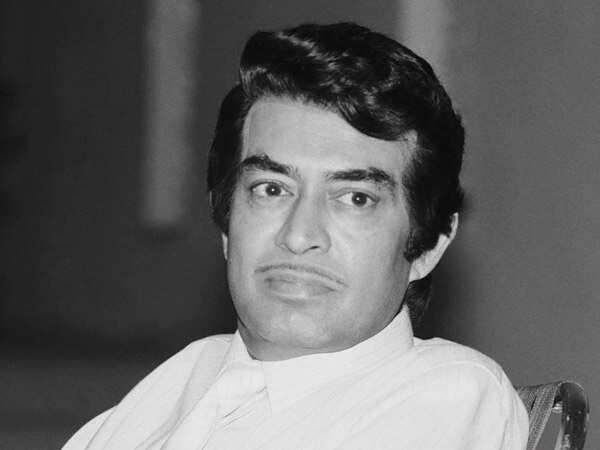
On the birth anniversary of the legendary Sanjeev Kumar, we celebrate one of Indian cinema’s finest and most versatile performers. From emotionally layered dramas to unforgettable comic roles, the actor left behind a body of work that continues to inspire generations of movie lovers.
Filmfare’s Editor-in-Chief Jitesh Pillai looks back at the legacy and story of the legendary actor whose talent and character were extraordinary. In his words:

The first sign of a great actor is when he lends himself to caricature, which is why you see a lot of second-rate hams trying to imitate Sanjeev Kumar. And failing miserably. The thing about Sanjeev was that you could almost “feel” his performances. They were that tactile. There was a goodness about them. They lacked guile. While there was craft, you could also see him channelling some inner resource, and the force of it came full blast on screen.

Sanjeev Kumar
You have to take Aandhi (1975) or Mausam (1975). How did a 35-year-old pull off such characters? You cared for what Sanjeev did, be it Anubhav (1971), Dastak (1970) or Namkeen (1982). We invested in his life; we invested in his emotions. We share a symbiotic relationship with very fine actors on screen. Some we pay to invest in and forge relationships with.
Perhaps that’s why Thakur Baldev Singh from Sholay (1975) is unforgettable. Behind the pain, there is a menace on slow burn which hits you like a bullet in the climax. He made you cry as he did in Koshish (1972); he moved you in Arjun Pandit (1976) or Humare Tumhare (1979), or he could be outrageously funny in Pati Patni Aur Woh (1978) or hilarious in Angoor (1982).
Sanjeev Kumar
Sanjeev Kumar had that Teflon knack. He was seamless. He gave the character actor dignity, be it in the heavyweight Trishul (1978) or Silsila (1981). Your heart went out to him because he was a friend. He was the man next door. He was the do-gooder uncle. Even when the films were godawful, like Naya Din Nayi Raat (1974) or Chehre Pe Chehra (1981), Sanjeev made you invest in his predicament.
I’ve laboured through bad films like Ayaash (1982) and Daasi (1981) just to see this man emote. He probably had a hunch that he wouldn’t live beyond 50, so he ate and drank himself silly. He enjoyed the good life. Unrequited love was his thing, and I often think he died less due to a heart attack and more due to heartbreak.
Sanjeev Kumar
At 47, the merry bachelor upped and left, leaving behind many films like Qatl (1986), Professor Ki Padosan (1993) and Love And God (1986). You think of Sanjeev Kumar, and a smile comes to you, just like you would smile at the happy memory of a friend who never really left your side.
Happy Birth Anniversary, Haribhai.

Here are two books on Sanjeev Kumar that are worth reading for anyone who wants to know the man behind the legend:

View this post on Instagram

A post shared by Filmfare (@filmfare)

Sanjeev Kumar: The Actor We All Loved by Reeta Ramamurthy Gupta and Uday Jariwala
A neatly curated biography, this book offers fascinating insights into Sanjeev Kumar’s life, struggles, relationships, insecurities and extraordinary career. Along with heartfelt memories from colleagues like Sharmila Tagore, Tanuja and Moushumi Chatterjee, it paints a portrait of a deeply humane yet emotionally wounded man. While one may wish for a more detailed analysis of his acting craft, it remains an engaging and affectionate tribute to one of Indian cinema’s greatest performers.
An Actor’s Actor: The Life and Times of Sanjeev Kumar by Hanif Zaveri and Sumant Batra

This book focuses more on the man behind the actor, exploring his family, early years, personal tragedies, reported romances and complex personality. Rich in anecdotes and archival details, it offers a compelling account of his life, though readers looking for deeper discussions on his performances may be left wanting more. Even so, it serves as another valuable addition to the limited literature available on the unforgettable Haribhai.

Also Read: Exclusive: Sai Paranjpye on Chashme Buddoor, Comedy, and Crafting Cinematic Joy
Read full article
Editors Take: Remembering Guru Dutt The Poet Who Turned Pain Into Cinema
onmynews.com

Editors Take: Remembering Guru Dutt The Poet Who Turned Pain Into Cinema

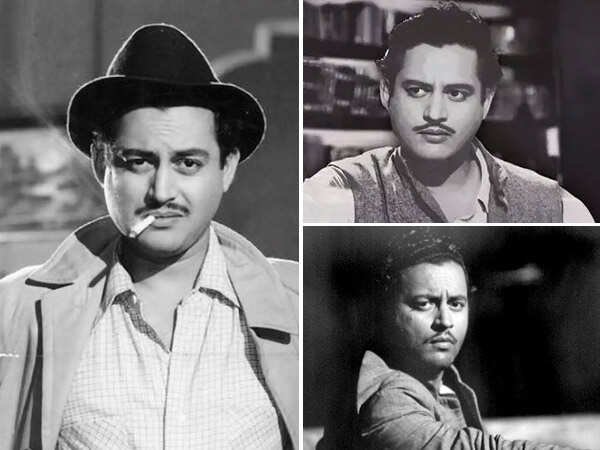
As the world celebrates the 101st birth anniversary of legendary filmmaker and actor Guru Dutt, his films continue to resonate with generations of cinephiles. Remembered for masterpieces like Pyaasa (1957), Kaagaz Ke Phool (1959) and Sahib Bibi Aur Ghulam (1962), Guru Dutt left behind a cinematic legacy shaped by beauty, longing and profound emotional depth.
Filmfare’s Editor-in-Chief Jitesh Pillai reflects on the man behind the masterpieces, his enduring legacy and the pain that often accompanied his genius.
In his words:
Heartbreak was his legacy. On Guru Dutt’s 101st birthday, I can wish him peace and hope the angels will sing to him always. He was mercurial, he was a poet, he was a magician. On screen, he transformed his angst into works of art. How many filmmakers can claim to make a film borne out of their pain as he did with Pyaasa at the age of 32?
Editor's Take
He channelised his inner demons into enduring movie images. Some filmmakers give us great works of art. Guru Dutt showed us a mirror into our restlessness. He told us there were no easy exits, or easy solutions. You could be caught between the two great loves or your life; you could crave success but yet have to walk away from it all when the time came.
He was blessed with divine discontentment. He had it all, and yet he chucked it up. We will never know why he did what he did. The great movies he made, why he chose to walk away from his great loves and life itself. If only he knew the comfort his art gave us. Wish someone told him that healing was messy. That if only he had given it some more time, all the pain would be a distant memory.
Editor's Take
Genius and grief are strange bedfellows. Did the origins of Guru Dutt’s angst lie in his troubled childhood? His father, too, was a creative man who could never follow his dreams and was tied to a job he hated. Dutt’s parents had an unhappy marriage and, like the norm, chose to be in it. Dutt’s sensitive mind absorbed all that pain in his life. But the demons of his mind always played havoc. His Hamlet-like indecisions and his own wayward ways led to the crumbling of the marriage.
Then there is also the much-discussed role of Waheeda Rehman, which seemed to have been the cause of frisson in his marriage. Waheeda’s exit from his movies after Sahib Bibi Aur Ghulam is cited as one of the many reasons for his downward spiral.
His love for wife Geeta Dutt ran parallel with the acrimony in the marriage. She couldn’t bear being chained to domesticity and the gradual fading of her singing stardom. She wanted to fly too. And rightly so. Geeta attempted suicide more than once. After Dutt’s death, she suffered a nervous breakdown and found refuge in alcohol and various other substances. She was 41 when she died heartbroken.
Editor's Take
Thank you for Pyaasa and Kaagaz Ke Phool. Thank you for the music. You get to know a lot about people by the work they do. Thank you for showing us that behind your beautiful face was an even more beautiful heart. Because without kindness and compassion you cannot produce a Sahib Bibi Aur Ghulam. Without empathy, you cannot churn out Waqt Ne Kiya Kya Haseen Sitam.
Thank you for letting us know that solitude and silence are okay too. Thank you for showing us movies are not brothels but pieces of our heart. In your silence, we hope we will find our own selves again.

Guru Dutt is reported to have attempted suicide on many occasions and had to be revived by his doctor. One is always tempted to think that if there was proper awareness of mental health, he most probably could have been saved. At a time when most people are making hectic career plans, Dutt made his untimely exit. On the bed where he lay inert, a mixture of crushed sleeping pills was found in his whisky. He was 39.

Also Read: Editor’s Take: Balan The Boy Review – Chidambaram Weaves Suspense With Soul

Read full article
Dhanushs Om: Chapter 1 Gets Bigger As Naseeruddin Shah Joins The Star-studded Cast
onmynews.com

Dhanushs Om: Chapter 1 Gets Bigger As Naseeruddin Shah Joins The Star-studded Cast

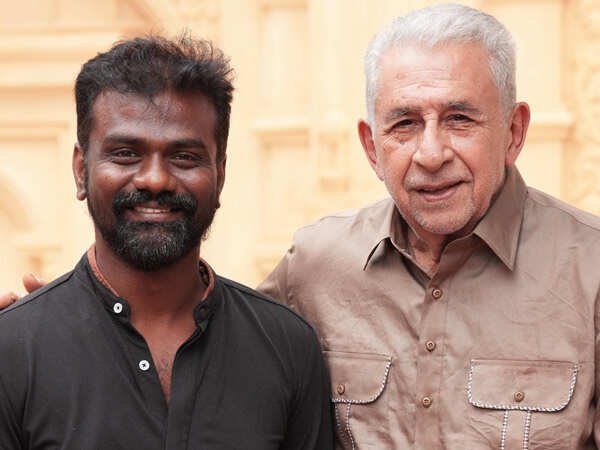
Dhanush and director Rajkumar Periasamy are steadily assembling one of the most exciting ensembles in Indian cinema. Just days after unveiling the official title, Om: Chapter 1, along with its release date, the makers have now revealed another major addition to the film. Veteran actor Naseeruddin Shah has officially come on board, further raising anticipation for the ambitious multilingual action drama.

The announcement strengthens an already formidable cast led by Dhanush, Mammootty, Sai Pallavi and Sreeleela. Malayalam actor Indrans is also set to play a pivotal role, making Om one of the most talent-packed films currently in production. Directed by Rajkumar Periasamy, whose last outing Amaran emerged as both a critical and commercial success, the film is slated to hit theatres on October 16 and marks the filmmaker’s first collaboration with Dhanush.

For Naseeruddin Shah, Om marks a long-awaited return to Tamil cinema. The celebrated actor has appeared in only one Tamil film before, Kamal Haasan’s ambitious bilingual Hey Ram (2000), where he portrayed Mahatma Gandhi. Interestingly, the film also marked Shah Rukh Khan’s Tamil debut. Twenty six years later, Shah is set to return to the industry with a project that has already generated considerable buzz.


A reunion, a Tamil comeback, and a cast that keeps getting stronger

The casting also sets up an exciting reunion between two acting powerhouses. Naseeruddin Shah and Mammootty previously shared screen space in the acclaimed Malayalam classic Ponthan Mada, directed by T.V. Chandran. Released in 1994, the film remains one of the most celebrated collaborations in Indian cinema, and Om will bring the two veterans together again 32 years later.

The film also continues several notable creative reunions. Rajkumar Periasamy reunites with Sai Pallavi after the blockbuster success of Amaran, where she portrayed Indhu Rebecca Varghese opposite Sivakarthikeyan’s Major Mukund Varadarajan. Dhanush, meanwhile, teams up once again with Sai Pallavi after their chemistry in Maari 2, while Mammootty returns to Tamil cinema for the first time since his acclaimed performance in Peranbu.

Although the makers are keeping the plot tightly under wraps, the recently released title teaser hinted at a gritty world driven by conflict, political unrest and large scale action. Rajkumar Periasamy has previously revealed that the film draws inspiration from real-life events and is envisioned as the opening chapter of a larger cinematic saga. Produced by Wunderbar Films in association with R Take Studios, Om: Chapter 1 also features music by Sai Abhyankkar and is expected to release in Tamil, Telugu, Hindi, Kannada and Malayalam.

With every new announcement, Om: Chapter 1 is shaping up to be one of the biggest Indian films on the horizon. And with an ensemble now featuring Dhanush, Mammootty, Sai Pallavi, Sreeleela, Indrans and Naseeruddin Shah, the film’s cast has become every bit as compelling as the mystery surrounding its story.

Also Read: Dhanush Praises Father Kasthuri Raja’s Performance in Habeebi

Read full article
…
Link copied!