Live · Global · Independent
Live Feeds
PinkVilla
Forbes
NDTV
Hindustan Times
Farewell Bharathiraja
onmynews.com

Farewell Bharathiraja

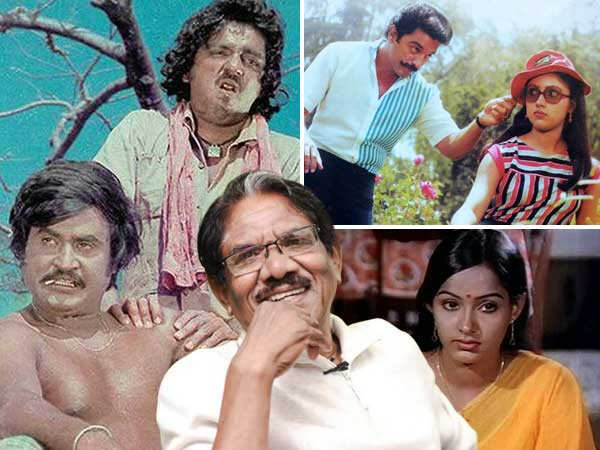
Bharathiraja, the visionary filmmaker who transformed the landscape of Tamil cinema by taking it out of the confines of studio sets and into the heart of rural India, has passed away at the age of 84. With his death, Indian cinema loses one of its most influential storytellers — a director whose films forever altered the way villages, ordinary people and everyday emotions were portrayed on screen.

Born Chinnasaamy Periyamaya Thevar in Allinagaram near Theni, Bharathiraja brought to cinema an authenticity that stemmed from lived experience. Before his arrival, villages in Tamil films often existed as stylised backdrops. Bharathiraja changed that with his groundbreaking debut, 16 Vayathinile (1977), a film that introduced audiences to a raw, earthy and emotionally truthful vision of rural life. Starring Kamal Haasan, Rajinikanth and Sridevi, it became a landmark in Indian cinema and heralded a new era of realistic filmmaking.

Though often described as the filmmaker who brought the village to the screen, Bharathiraja’s talents extended far beyond rural dramas. He moved effortlessly between genres, directing acclaimed works such as Sigappu Rojakkal, Tik Tik Tik, Mudhal Mariyathai, Alaigal Oivathillai and Oru Kaidhiyin Diary. His films combined emotional depth with social observation, while his visual style, rooted in natural landscapes, became instantly recognisable.

His influence also extended to Hindi cinema. In 1979, he directed Solva Sawan, the Hindi remake of 16 Vayathinile, which marked Sridevi’s debut as a leading lady in Hindi films. He later directed Lovers (1983), adapting his own Tamil classic Alaigal Oivathillai for Hindi audiences. Bharathiraja also remade his psychological thriller Sigappu Rojakkal as the Hindi film Red Rose (1980), introducing North Indian viewers to one of Tamil cinema’s most celebrated thrillers. He also directed Sunny Deol in Saveray Wali Gaadi (1985). Decades later, he returned to Hindi filmmaking with Final Cut of Director (2016, starring Nana Patekar and Arjun Sarja.

Throughout his career, Bharathiraja displayed an extraordinary eye for talent. He helped launch and shape the careers of numerous actors and technicians, while his collaborations with composer Ilaiyaraaja produced some of the most enduring moments in South Indian cinema. Equally significant was his portrayal of women. His female characters were often complex, resilient and emotionally rich, occupying the centre of stories rather than merely supporting them.

Recognition followed naturally. Bharathiraja received six National Film Awards and was honoured with the Padma Shri in 2004 for his contribution to the arts. Yet his greatest achievement lies in the generations of filmmakers he inspired and the cinematic language he helped create. He also won Filmfare Awards for films like Sigappu Rojakkal, Vedham Pudhithu and Karuthamma.

In later years, he reinvented himself as a character actor, delivering memorable performances in films such as Aayutha Ezhuthu, Pandianadu, Thiruchitrambalam and Maharaja. Audiences embraced him once again, this time in front of the camera.

For nearly five decades, Bharathiraja chronicled the dreams, heartbreaks and aspirations of ordinary people with uncommon compassion. He showed that the lives of villagers could possess the grandeur of epic drama and the intimacy of poetry.

Bharathiraja died of age-related complications on June 10, 2026. His passing marks the end of an era, but his legacy will endure in every filmmaker who chooses authenticity over artifice and in every story that finds beauty in the soil from which it springs.

Top Tamil films of Bharathiraja:

Farewell Bharathiraja Farewell

16 Vayathinile (1977)
Bharathiraja’s debut feature and a milestone in Tamil cinema, portraying rural life with raw realism and introducing stars like Kamal Haasan and Sridevi.


Farewell Bharathiraja Farewell

Sigappu Rojakkal (1978)
A psychological thriller and notable departure from his rural dramas, exploring crime and suspense in an urban setting. 

Farewell Bharathiraja Farewell

Alaigal Oivathillai (1981)
A romantic drama exploring young love and family opposition, praised for performances and Bharathiraja’s direction of rustic settings 


Farewell Bharathiraja Farewell

Muthal Mariyathai (1985)
A sensitive love story between a village chief and a schoolteacher, acclaimed for its lyrical visual style and emotional depth


Diary

Oru Kaidhiyin Diary (1985)
The revenge thriller starred Kamal Haasan in dual roles and had him portraying both a prisoner and his police inspector son. The film’s twists and turns kept the audience spellbound.


Kavithaigal

Kadalora Kavithaigal (1986)
A poetic tale set in coastal villages emphasizing friendship, love, and human values, reflecting Bharathiraja’s rural storytelling


Kavithaigal

Vedham Pudhidhu (1987)
A socially relevant film addressing caste and community prejudices, awarded for its impactful narrative on social issues

Kavithaigal

Karuththamma (1994)
Critically acclaimed for its social commentary on female infanticide and the plight of women in rural India.


Kavithaigal

Pudhu Vasantham (1990)
A narrative of friendship, love, and youth in a rural-urban backdrop, marking Bharathiraja’s versatility in addressing social themes


Kavithaigal

Taj Mahal (1999)
Starring Bharathiraja’s son in a unique love story, blending cinematic aesthetics with contemporary themes

Also Read: Tamil Filmmaker Bharathiraja Dies at 84
Read full article
Editors Take: Chapal Rani and The Loneliness of Bengals Last Queen
onmynews.com

Editors Take: Chapal Rani and The Loneliness of Bengals Last Queen

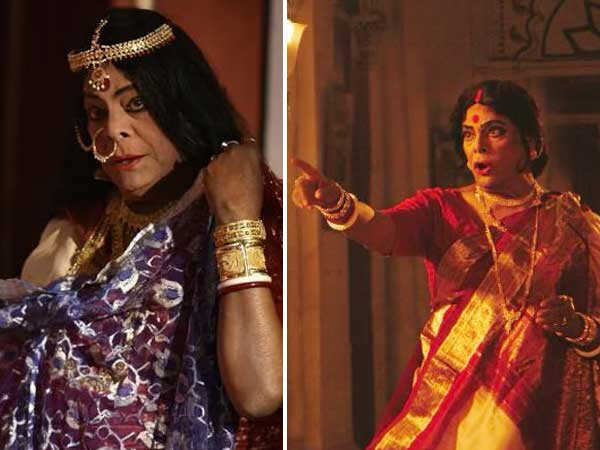
Chapal Rani: The Last Queen of Bengal by Sandip Roy chronicles the life of legendary jatra artiste Chapal Bhaduri, who rose to fame playing female characters on stage and became one of Bengal’s most celebrated performers. The book explores his journey through fame, love, loss and changing times, while offering a deeply personal look at a life lived both in the spotlight and on the margins.
Filmfare’s Editor-in-Chief Jitesh Pillai writes about the biography and the remarkable man at its centre.
In his words:
The story of a queen without a throne—a queen who held her own despite dereliction, abandonment, and betrayal. Anyone who has seen Kaushik Ganguly’s Arekti Premer Golpo, a fairly sensitive and gripping film on the life and times of female impersonator Chapal Rani, will know what I’m talking about.


Editor's take
But that is where the rub lies, and that is where the similarities end. Sandip Roy’s book, Chapal Rani: The Last Queen of Bengal, deviates a lot from the film. The movie was a somewhat whitewashed truth of the female impersonator and more about Rituparno Ghosh, the director, and his attempt to prove his gender alliances. Roy’s book is a sensitive exploration of a young boy, Chapal Bhaduri, son of a famous stage actor and nephew of the illustrious Sisir Kumar Bhaduri, who at the age of 16 took to the jatra like waves to the seashore. He started with bit female roles as Morjina and went on to rule the world of jatra as a queen.
The somewhat unwieldy but unputdownable book is fascinating and well-researched. It starts with Chapal’s childhood and his forever probing and questioning nature. His thin voice and effeminate being may have brought his life into focus early within the family, but it was all glossed over for a job in the railways and small parts as a female impersonator.
It’s a brutally honest book. Chapal recounts his photographic memories, his tryst with makeup, stuffing falsies, and getting hurt by the strings that made up his petticoat. It’s all highly evocative. Roy shines a light on his sexuality through the voice of Chapal, who shares that he had a clandestine affair with a male lover for 34 years, starting at the age of 18.
He went on to serve his lover and his lover’s wife even as a maid and a midwife, at the cost of his own self-respect. The affair ended abruptly with the arrival of a new mistress.


Editor's take
Chapal, in between his lifelong servility and devotion to his lover “X”, ruled the stage with his hauteur and perhaps vanity. It was the beginning of the 1970s when women started joining the jatras, and men playing women began to be phased out. The best parts of the book are those where Bhaduri recalls playing female parts like Purnima and other feisty ladies with aplomb. With his career steeped in art and the folk form of jatra, Bhaduri is candid enough to admit that perhaps fame did go to his head, and he hadn’t prepared himself for his eventual and hasty curtain call.
He was then reduced to playing bit roles and even doing menial jobs. In his later years, he was reduced to playing the goddess Sitala, which won him encomiums but very little money. Bhaduri, while talking about his favourite dishes and their recipes, also briefly hints at his cannabis usage and how he steered clear of alcohol, possibly owing to childhood trauma dealing with an alcoholic father. The portions with his mother are tender and very moving.


Editor's take
Bhaduri doesn’t use fancy pronouns or LGBTQIA+ terms to describe himself or his adventures. While he suffered bullying and catcalling, he simply states he was a man who dressed up as a woman and felt like one while performing, and then happily slipped into wearing pyjama-kurtas in real life. There were no drag acts for him off-screen. The interludes in the book are irresistible, especially the one where a drag queen in Canada is both fascinated and disappointed by Chapal because he is unaffected, dismisses queer terms and lifestyles, and is unwilling to acknowledge the strident militancy of the gay subculture.
My only criticism is that Bhaduri perhaps didn’t entirely embrace his homosexuality and has been almost “antiseptic” in describing his personal life, perhaps in deference to those living, or perhaps just shy of telling it like it is. I missed the candour that he describes in everything else, which feels missing in his personal and romantic shenanigans.
The disappointment over Rituparno Ghosh hijacking his role and character in Arekti Premer Golpo and making it his own is very evident, though he does give a clean chit to director Kaushik Ganguly. Ganguly reworked his TV film Ushnotar Jonno to make Arekti Premer Golpo; perhaps Ganguly, a fledgling filmmaker at the time, couldn’t stand up to the tantrums and diva behaviour of a colossus like Ghosh. But Bhaduri is unsparing in his disappointment and criticism.
In the evening of his life, Chapal, who was once the queen of everything he surveyed, now spends his time in an old age home not too far from the streets he grew up in. His nieces bring him home-cooked food and look after him while he deals with age-related ailments.
Sandip Roy’s biography is not an easy read given our kindergarten attention spans and brain rot in the age of Instagram and algorithms. But it’s an intensely rewarding book. It makes you unbearably sad and yet makes you admire the fortitude of a jatra artiste whom history will hopefully remember more kindly than his own world did.


Also Read: Grace, Guts, Glory: Celebrating Dimple Kapadia | Editor’s Take

Read full article
Is Katrina Kaif Planning Her Acting Comeback?
onmynews.com

Is Katrina Kaif Planning Her Acting Comeback?

Actress Katrina Kaif has been away from the big screen for quite some time now. She was last seen in Merry Christmas with Vijay Sethupathi in 2024. Last year, the actress embraced parenthood, and following that, she has been keeping a low profile and focusing on her beauty brand.
But now, we are getting to know that she is going to make a comeback to the world of acting.
Katrina Kaif
As per a report in India Today, Katrina has resumed reading scripts and is evaluating potential projects for her comeback. The actress is interested in exploring streaming projects that could provide her with better opportunities. If things materialise, then it can be her first OTT project.

Also Read: Katrina Kaif Shares Wholesome May Diaries Ft. Vicky Kaushal & Baby Vihaan

The publication quoted a source as saying, “Katrina Kaif is back to reading scripts after embracing motherhood recently. The actress is reportedly planning to return to a film set by the second half of 2027 and is actively looking for the right script, something that is worth her time. For the same, she seems interested in exploring streaming projects that could provide better opportunities for actors.”
Katrina Kaif
The source also stated that the actress is in no rush to sign anything and is looking for a role that aligns with her current priorities as an actor and also a mother.
Katrina Kaif is also busy with her motherhood duties. She welcomed her firstborn, Vihaan Kaushal, with her husband, Vicky Kaushal, in November last year. A couple of weeks ago, she shared a carousel of photos on social media to wish her actor-husband on his birthday.
Among these pictures was a glimpse of baby Vihaan, with his hand visible in one of the frames. 

Also Read: Katrina Kaif Drops Adorable Photos With Son Vihaan on Vicky Kaushal’s Birthday

Read full article
Link copied!