Tracing The Origin Of India’s Own ‘Top Gun’ Fighter Pilot School – ‘TACDE’
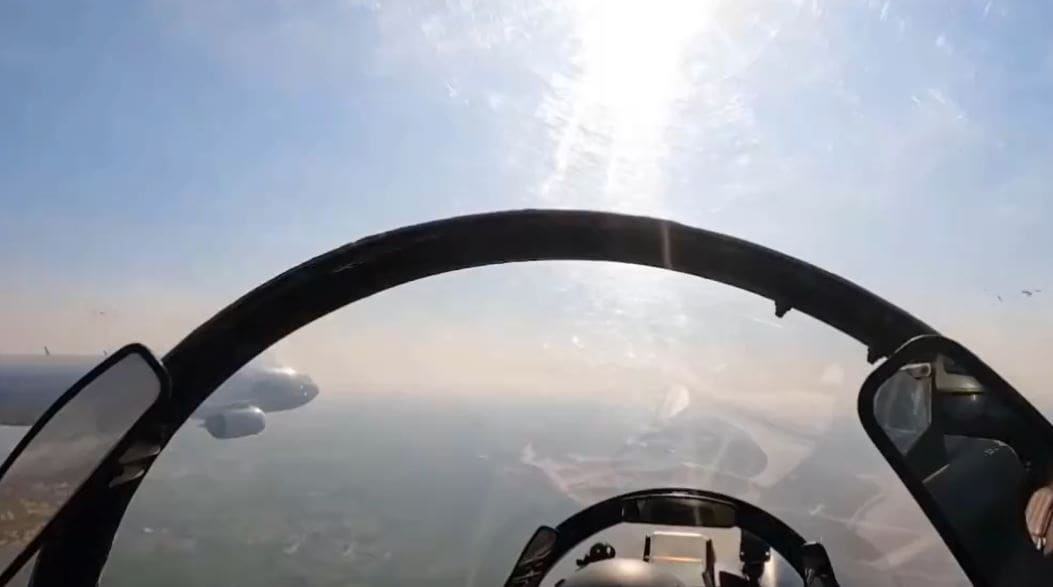
Squadron Leader Shamsher Pathania, call sign ‘Patty,’ a top fighter pilot in the Indian Air Force, joins forces with other elite aviators to establish a special unit called ‘Air Dragons.’ ‘Patty,’ piloting a Su-30MKI, skillfully evades a missile lock from an F-16 by executing the daring ‘cobra manoeuvre,’ subjecting himself to high g-forces. This intense combat sequence is from Hrithik Roshan’s ‘Fighter,’ but such exceptional skills are cultivated at the Indian Air Force’s Tactics and Combat Development Establishment (TACDE), where aviators are trained to be the “best of the best.”
TACDE ( pronounced as ‘Tack-dee’) stands as India’s equivalent of the renowned ‘Top Gun’ school, focusing on training the top 1 per cent of the air force in aerial combat and tactical procedures to produce elite fighter pilots and ground staff. In contrast to the U.S. Navy’s Strike Fighter Tactics Instructor Course, known as TOP GUN, which began in a California parking lot, TACDE originated as a test program to achieve self-reliance in the Indian Air Force’s combat doctrine.
Anchit Gupta, an award-winning Air Force historian, extensively details the history of TACDE. The special unit was established in February 1971, ten months before the Indo-Pak war, as the Tactical and Combat Development and Training Squadron (T&CD&TS) for combat pilots, fighter controllers, and operators of guided weapons and platforms in Adampur, Punjab. It was later renamed TACDE in 1972 and had the privilege of serving during the 1971 war.
Indian Aviators At ‘TOP GUN’ School
The Indian Air Force, founded on October 8, 1932, with six Royal Air Force-trained pilots, 19 Havai Sepoys (air soldiers), and four Westland Wapiti IIA aircraft, formed the No. 1 Squadron. Indian pilots served during World War II, and post-independence, the IAF recognized the need to train its pilots in aerial combat tactics and training.
Westland Wapiti Mk IIA aircraft are as old as Indian Air Force’s history
Royal Air Force (RAF) and the Indian Air Force share a common history, and a few selected Indian aviators were sent to the Central Fighter Establishment (CFE) at West Raynham, Norfolk, established in 1945 to train pilots in fighter tactics. The Air Fighter Training Unit (AFTU) in Mayurbhanj, Odisha, was another school where pilots were trained in leadership skills and aerial combat against the Japanese during world war 2.
Three IAF officers – MK Janjua, Shiv Dev Singh, and BS Dastur – became the first Indians to attend the AFT course at Amrada. In 1945, Ranjan Dutt was one of the first Indians selected for the Day Fighter Leaders’ School (DFLS), writes Mr Gupta.
The CFE acted as a ‘think tank’ for the RAF, advising on combat doctrine, with DFLS considered an early ‘TOP GUN’ outfit.
Establishing TACDE
The precursor to TACDE included the Pilot Attack Instructors (PAI) Course, which trained pilots in air-to-ground attack. Former Air Force chief, Air Chief Marshal SP Tyagi, who underwent the PAI course, mentioned on the Blue Skies Podcast that “PAI was the predecessor to TACDE, focusing not only on weapons but also on teaching”. He was the youngest PAI in IAF’s history. The course trained pilots with air-to-ground weapons delivery, while aerial combat tactics were taught overseas, such as at CFE.
Anchit Gupta documents that Dilbagh Singh, former Air Force Chief, along with Air Marshal Johnny Greene and Air Marshal Ragvendran, all alumni of DFLS, recommended establishing a similar school in India after the DFLS was shut down. An ad hoc course was established, later evolving into TACDE.
On February 1, 1971, T&CD&TS was established under the command of Wing Commander AK Mukherjee at Adampur with MiG-21s and Su-7s in their fleet. In December, the unit saw action and conducted counter-air missions, interdictions, and close-air support.
Indian Air Force’s Su-7 Fighter Aircraft
“I Am Glory To The Glorious”
The establishment of TACDE came at a time when the Indian Air Force learnt some hard lessons during the 1965 war on air-ground coordination, offensive strategy and high attrition rate. The IAF leadership worked on evolving its tactics like low-level flying as opposed to combat at 40,000 was brought in, response doctrines according to new technology were implemented and schools like TACDE gave IAF squadrons top aviators and Air Force offensive on two fronts is a testament. The motto of TACDE is “I am glory to the glorious”.
Four Air Force Chiefs – Air Chief Marshal PV Naik, ACMs SK Mehra, AY Tipnis, and S Krishnaswamy – are TACDE alumni, and the unit received ‘Battle Honours’ from the President in 1995 for its role in the 1971 war. It also received the prestigious President’s Standard in 2009.
TACDE was initially based in Adampur, later moving to Jamnagar in 1972 and subsequently to Gwalior. It possesses MiG-29s, Mirage 2000, and Su-30MKI in its inventory. In January of last year, a TACDE pilot was killed, and two other aviators from the unit were injured in a Su-30, Mirage-2000H crash. Wing Commander Hanumanth Rao Sarathi lost his life in the incident.