onmynews.com
Delhi NCR Air Pollution: GRAP IV Curbs To Stay Till Dec 2, Schools To Remain In Hybrid Mode
GRAP-4 restrictions specifically relate to restricting entry of trucks carrying non-essential goods into the national capital
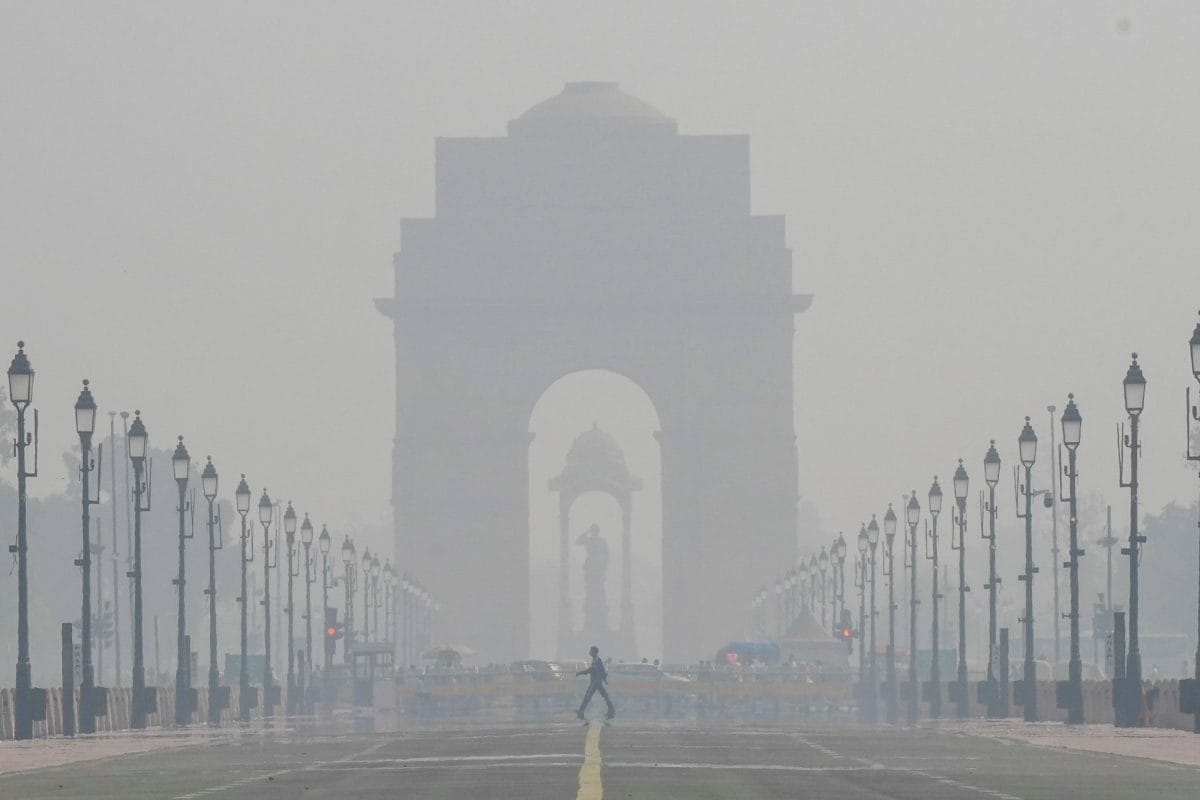
GRAP-4 restrictions specifically relate to restricting entry of trucks carrying non-essential goods into the national capital
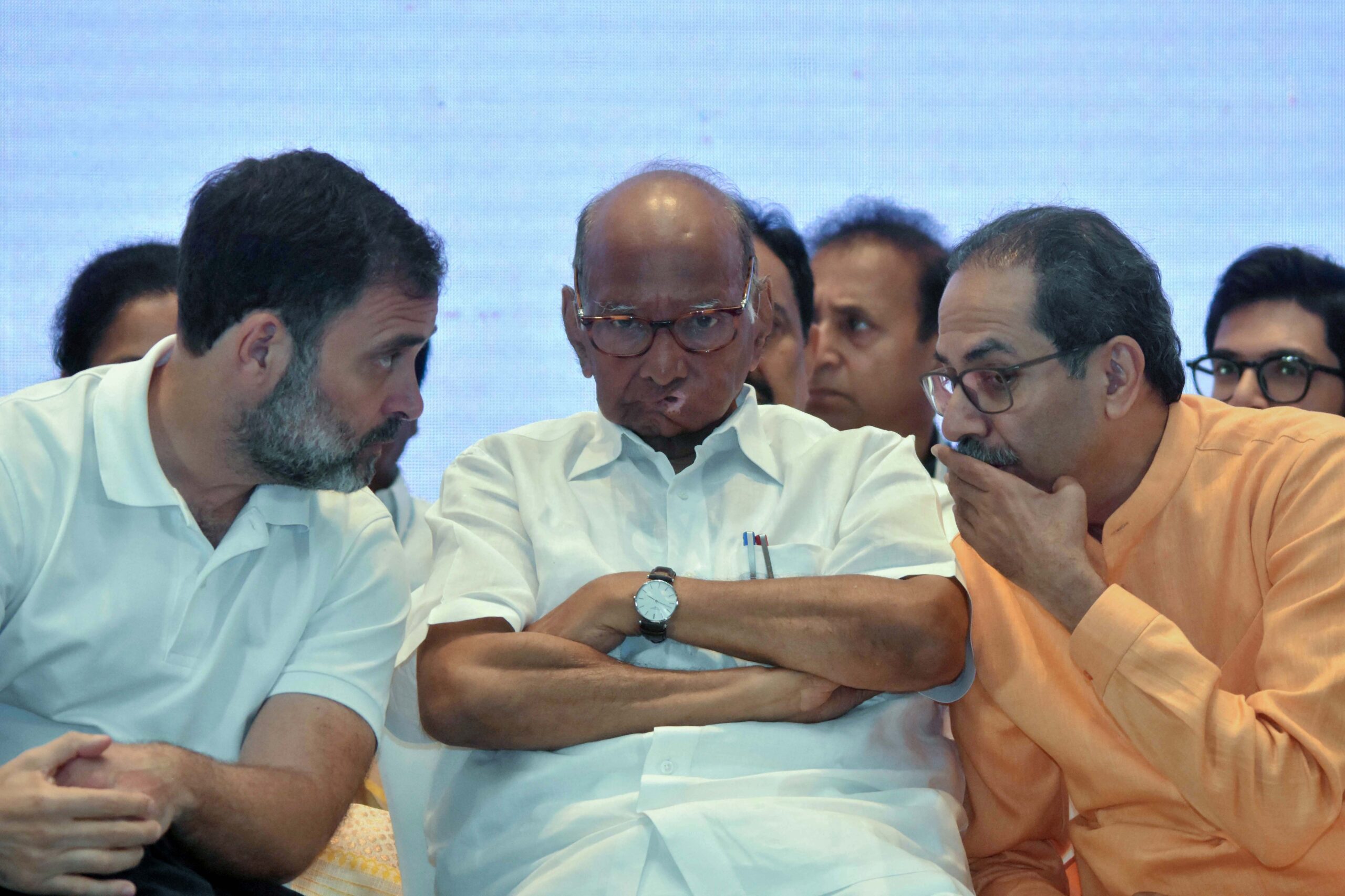
The Congress’s “overconfidence” in Maharashtra and its “attitude” during seat-sharing talks hurt Maha Vikas Aghadi’s prospects, a senior leader of Shiv Sena (UBT) has said a week after the Opposition bloc was routed in the state polls. The BJP-led Mahayuti scored a thumping victory in the election, winning 230 seats in the 288-member Assembly.
Ambadas Danve, Leader of the Opposition in Maharashtra Legislative Council said that the Maha Vikas Aghadi should have projected Uddhav Thackeray as its Chief Minister face.
“After the Lok Sabha election results, the Congress was overconfident in Maharashtra like in Haryana and Jammu and Kashmir. This was reflected in the results. Its attitude during seat-sharing negotiations hurt us. Uddhav ji should have been projected as the Chief Minister face. Not doing so harmed our prospects. The results would have been different if this was done,” Mr Danve told the media.
In a subtle dig at the Congress, he said, “They were getting ready with suit and tie even before the results.”
The Congress won 13 seats in the Lok Sabha election months ago, the highest among Maha Vikas Aghadi allies. Buoyed by the stellar show, the Nana Patole-led state Congress unit bargained hard during the seat-sharing talks ahead of the state polls, leading to friction in the alliance. Eventually, it contested 103 seats but won only 16. The Sena (UBT), which contested 89 seats, managed to win 20 seats. The third ally, Sharad Pawar’s NCP, contested 87 seats and won 10.
Mr Danve said some of the candidates of Sena (UBT) had pointed to the organisational aspect, but did not name any party. He said Sena (UBT) will prepare to build its strength to the point where it can contest all 288 seats in the state.
On his former party colleague and former Chief Minister Eknath Shinde, whose rebellion split the Shiv Sena, Mr Danve said the BJP has “many Shindes”. “The BJP has many Shindes in several states. The BJP uses and throws them away,” he said.
The remarks come amid talks within the Mahayuti alliance on who will be the next Chief Minister. The BJP has scored the highest among NDA allies and is learned to have pushed for the Chief Minister post. After days of posturing by some Sena leaders, Mr Shinde yesterday stepped back and said he would accept Prime Minister Narendra Modi’s decision on the Chief Minister post.
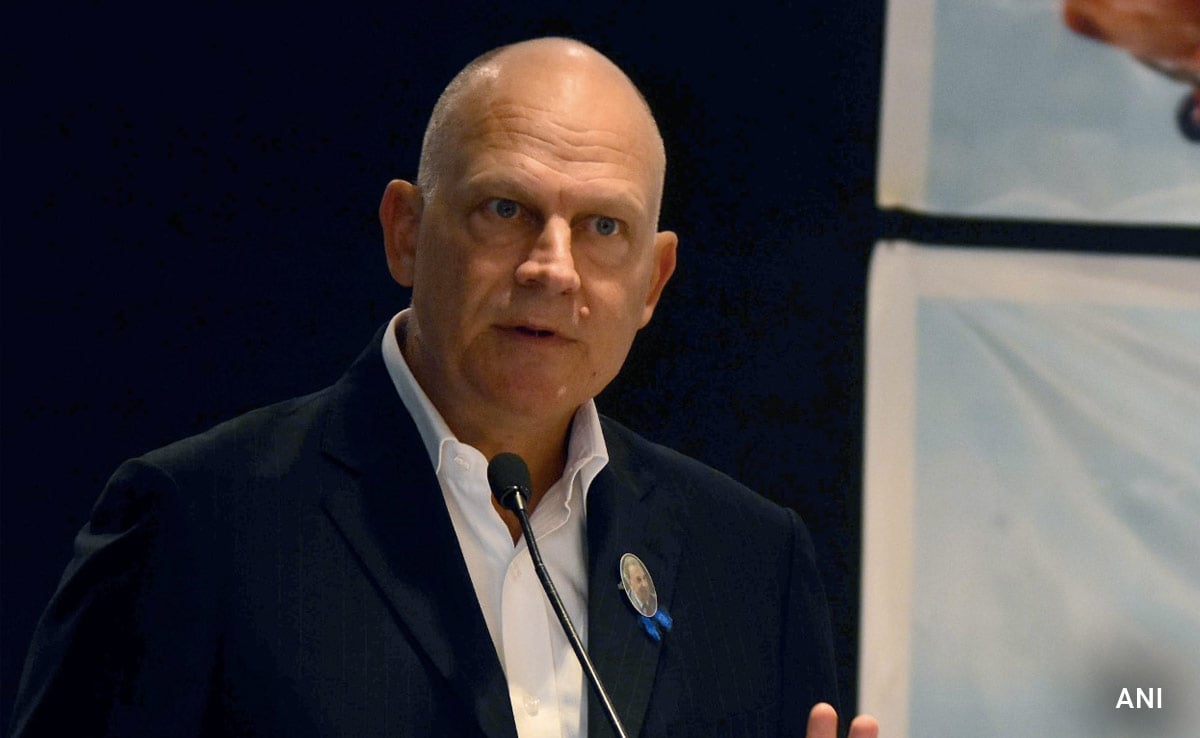
Under fire for faltering service standards, staff disputes and severely dated aircraft interiors, Campbell Wilson, the MD and CEO of Air India told NDTV that the revival of the airline will take a few more years to complete. “The Economist called this the Everest of corporate turnarounds,” said Mr Wilson. “We made no secret of the fact that it was going to be a multi-year programme.”
Now in year two of a five-year transformation programme, the management of Air India is facing an uphill battle to integrate thousands of workers across airlines that are now part of the group – Vistara, Air India Express and Air Asia India. Each airline, including the original Air India, has had its own work culture, however, bringing the job expectations of personnel into line has been particularly challenging.
Vistara pilots effectively went on a form of strike by calling in sick en masse, starting notably towards the end of March 2024, with significant disruptions continuing into early April 2024. This was a protest against new contracts introduced due to Vistara’s impending merger with Air India, which reduced their guaranteed flying hours from 70 to 40 hours, resulting in a pay cut for many pilots, particularly junior first officers.
In May this year, Air India Express cabin crew went on strike when a significant number of cabin crew members began reporting sick to protest against alleged mismanagement and issues related to their merger with AIX Connect (formerly AirAsia India). After initially dismissing several cabin crew members, the airline management reinstated them after mediation by India’s Chief Labour Commissioner.
“It is certainly not the finished product. I know that there’s a huge amount of expectation and indeed impatience for the future Air India to fully emerge,” says Mr Wilson. “I am equally impatient for that to happen,” he says, pointing out that despite the hiccups, there have still been massive changes in the direction of the airline.
”We’ve brought the average age [of staff members] from 54 to 35, hired 9,000 new staff, brought four airlines, 140 IT systems, 100 new aircraft, new training academies [and] started a base maintenance facility,” he said.
Asked about being fined for deficient safety practices, Mr Wilson acknowledged occasional systemic gaps, some of which could be explained through legacy practices within the former government carrier. “Sometimes it’s legacy practice. Sometimes it is a matter of human oversight. Sometimes it’s a matter of a systemic gap or something that hasn’t been addressed or mitigated through another means,” said Mr Wilson. “We open ourselves for audit every 6 months. We open ourselves for external audit, whether by IATA [International Air Travel Association] or other parties.”
Between January and August this year, Air India was fined at least Rs 2.8 crore by India’s aviation regulator, the Director General of Civil Aviation (DCGA) for a host of safety-related concerns linked to operations over long-range critical routes, violating the flight duty time limitations of its operating crews and for operating an international flight with ‘non-qualified’ crew members.
Air India’s decision to proceed with its planned merger with Vistara, widely considered India’s finest full-service airline, has also raised concerns among passengers and fans of Vistara who have consistently appreciated the former airline’s renowned service standards. Earlier this year, Vistara was adjudged the best airline in India and South Asia for the fourth consecutive year at the 2024 World Airline Awards by Skytrax. Vistara, now integrated with Air India, is also configured to a higher standard than a large majority of Air India’s existing A-320s and A-321.
”Vistara now allows Air India the opportunity to be catalyzed and the transformation accelerated at a new airline which represents the best of both Vistara and the legacy of Air India to be born,” says Mr Wilson. In order to be consistent with the quality offered by the Vistara product, Air India has announced that it will continue flying erstwhile Vistara Airbus A320neo aircraft on key metro routes between Delhi-Mumbai, Delhi-Bengaluru, Delhi-Hyderabad, Delhi-Hyderabad, Mumbai-Bengaluru and Mumbai-Hyderabad from December 1.
Air India’s biggest concern, arguably, is the long overdue fleet restoration of its existing long-haul jetliners including legacy Boeing 777s and 787 Dreamliners which it acquired from the government when the airline came into its fold. These are meant to complement its record 470 aircraft order from Airbus and Boeing, a $70 billion deal that it closed out on February 2023. This remains one of the largest single deals in the history of commercial aviation. The refurbishment of the existing fleet will cost the group $400 million. This includes the overhaul of cabin interiors for its wide-body fleet, comprising 27 Boeing B787-8 and 13 Boeing B777 aircraft. Single-aisle aircraft – the Airbus A320neo and A321neo are also being upgraded, a process that has already begun.
“It’s fair to say that, particularly, the legacy aircraft that we inherited, were not up to that standard, and it just takes a long time. We have committed $400 million to buy the seats to refurbish those aircraft. The seats have been in the certification and manufacturing process since then. They will start to be installed on the wide-body aircraft next year. The problem Air India faces with the pace of refurbishment of its older aircraft is an industry-wide issue,” Mr Wilson said.
“Two different seat suppliers, reflecting just the nature of the post-COVID supply chain, came to us and said, the dates we committed to deliver, we can no longer meet. There’s going to be a delay of, in one case, six months, in one case, a little bit longer,” he added.
This means that legacy Air India Boeing 787s and 777s which are scheduled for refurbishment will see a new and vastly improved interior product only from mid-2025 onwards. “Unfortunately, it is what it is. We don’t have any control over that. Many other airlines are affected by similar constraints,” Mr Wilson said.
The first set of new-generation Boeing 787 Dreamliner seats arrive in April and will be installed and then certified for use, though not before October next year. The pace of the upgrade will then pick up with a couple of Boeing 787 Dreamliner aircraft entering the refurbishment process every month. Air India’s large-capacity Boeing 777, which has operated long-haul routes primarily to the United States and the United Kingdom will take longer to upgrade. While there will be an interim refresh to the product on existing aircraft during 2025, the full cabin refresh will only happen in 2026.
“As I say at the end of 2026, the refurbishment is to be well underway,” said Mr Wilson.
In the meanwhile, Air India has introduced six brand new Airbus A-350-900 aircraft onto its flagship routes – New York and London with services commencing to Newark within weeks. While this is a welcome addition to the hard product offered by the legacy carrier, the truly new Air India is still years away from being realised. Mr Wilson realises this.
”We carry 60 million people a year across the group. We operate more than 1200 flights every day. And so, it is a mass transportation business, and unfortunately, you know, there are occasions where it’s not perfect,” says Mr.Wilson. “It’s just that we have to be more consistent and continue that process because I’m as impatient as anyone of improving this to the level that, you know, meets customer expectations all the time.”