
Live · Global · Independent
Live Feeds
PinkVilla
Forbes
NDTV
Hindustan Times
Sibling Rivalry Costs Indian Tycoon Rs 20,000 Crore. All About The Case
onmynews.com

Sibling Rivalry Costs Indian Tycoon Rs 20,000 Crore. All About The Case

An obscure 21-year legal feud involving five brothers from India who have amassed a fortune in diamonds and Los Angeles real estate burst into public view this week with a multibillion-dollar US verdict that may be among the largest of the decade.

After a five-month trial, a jury ordered Haresh Jogani to pay his brothers Shashikant, Rajesh, Chetan and Shailesh Jogani more than $2.5 billion (over Rs 20,000 crore) in damages and to divide up shares of their Southern California property empire – about 17,000 apartments worth billions more. 

The trial, over allegations that Haresh breached a longstanding partnership with his siblings, continues with a punitive damages hearing Monday that could add to the award.

Jogani v. Jogani

The 2003 lawsuit already has been through 18 appeals, generations of attorneys and five judges in Los Angeles Superior Court. It’s drawing comparisons from some of the lawyers to the fictional Victorian-era probate case that Charles Dickens wrote about in his 1852 novel Bleak House. They’re calling Jogani v. Jogani the new Jarndyce v. Jarndyce, but with a twist.

“At end of the book, there was no money, hence the name, Bleak House,” said Peter Ross, an attorney who represents Chetan and Rajesh Jogani. “That’s not the case here. There’s billions here that remain to be distributed.”

Making the case more unusual is that most multibillion-dollar verdicts in the US are against giant corporations. How much each brother ultimately walks away with turns on the ups and downs of the real estate market, with apartment prices having fallen from their 2022 peak after higher interest rates raised borrowing costs and cut into property values. Apartment prices averaged $329,000 a unit in January in the Los Angeles area, down 26% from a November 2022 high, according to MSCI Real Assets.

Rick Richmond, the lawyer for defendant Haresh Jogani, declined to comment because the jury isn’t finished yet.

Diamond Trade

The Jogani family, natives of Gujarat, India, built a fortune in the global diamond trade, establishing outposts in Europe, Africa, the Middle East and North America. Shashikant “Shashi” Jogani moved at age 22 in 1969 to California, where he began a solo firm in the gem business and started to build a property portfolio, according to a complaint he filed in 2003. 

The properties suffered losses in the recession of the early 1990s, which worsened after the 1994 Northridge Earthquake killed 16 people in one of his buildings, leading Shashi to bring in his brothers as partners. The firm then embarked on a buying spree that eventually built the portfolio to roughly 17,000 apartment units with the brothers collaborating until Haresh “forcibly removed” his sibling from managing the firm and refused to pay him, according to Shashi Jogani’s complaint.   

Haresh Jogani contended that without a written agreement, his brothers couldn’t prove they had a partnership with him. But the jury found that Haresh had broken an oral contract.

Jurors heard testimony that oral agreements are customary in both the diamond trade and among Gujaratis.

‘Just as Valuable’

“The law is you can have oral contracts that are just as valuable as written contracts,” said Steve Friedman, an attorney for Shashi Jogani.

As the trial was coming to a close, Haresh Jogani moved to disqualify the judge, accusing her of “racial animus” toward his lawyer and other misconduct. In a filing last week, Judge Susan Bryant-Deason denied doing anything improper and rejected the claim that she’s “biased or prejudiced for or against” any of the parties or lawyers in the case. She referred the motion to the court’s supervising judge, where it is pending.

The jury awarded $165 million in damages to brothers Chetan and Rajesh over Haresh’s breach of the diamond partnership, as well as $1.8 billion to Shashi, $234 million to Chetan and $360 million to Rajesh for breach of the real estate partnership.

The jurors also concluded that Shashi, now 77 years old, owns 50% of the real estate partnership, followed by 24% for Haresh, 10% for Rajesh, 9.5% for Shailesh and 6.5% for Chetan, the youngest, who is now 62, according to Ross.

The properties generated as much as $137 million a year in net operating income, according to Michael Friedman, 37, who with his father, Steve, has represented Shashi since 2014, the year after he passed the bar to practice law.

“There’s an enormous portfolio that Shashi built,” he said. “And it sustains itself.”

The case is Jogani v. Jogani, BC290553, California Superior Court, Los Angeles County.

(Except for the headline, this story has not been edited by NDTV staff and is published from a syndicated feed.)
Read full article
Centre’s Latest Move After Google Removes Indian Apps From Play Store
onmynews.com

Centre’s Latest Move After Google Removes Indian Apps From Play Store

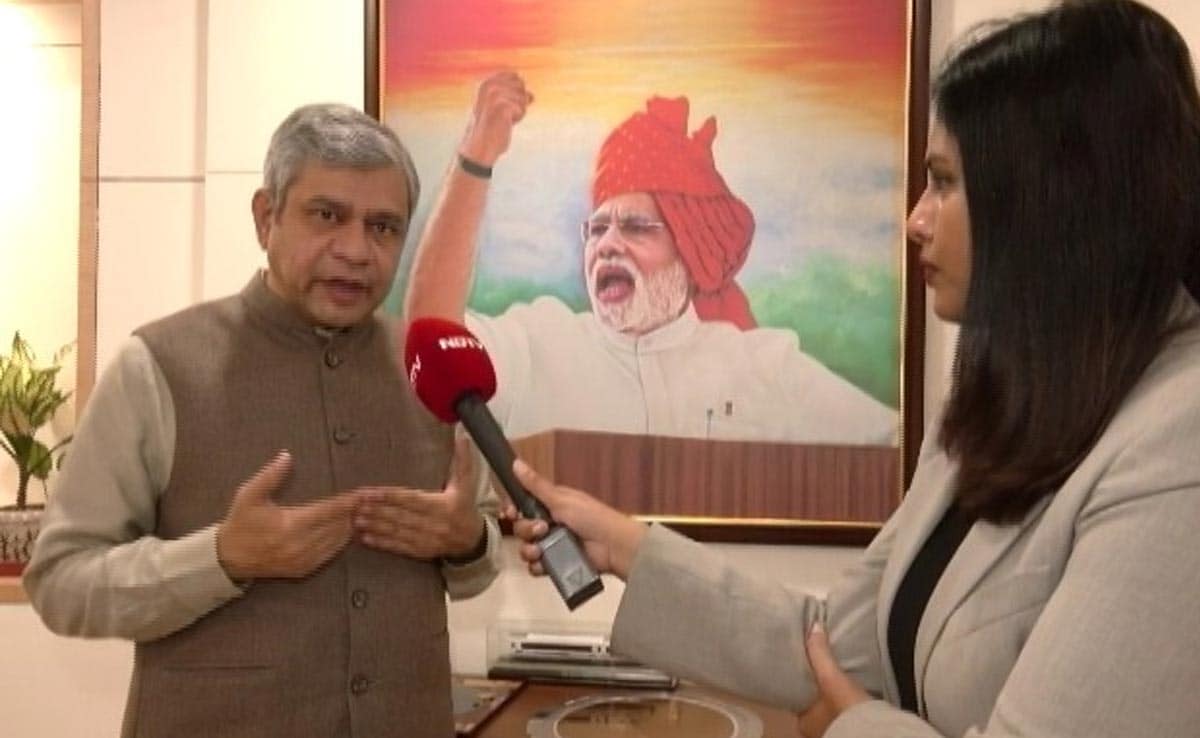
IT Minister Ashwini Vaishnaw has invited representatives from Google for a meeting on Monday over a dispute between the tech giant and some Indian companies over non-compliance with billing policies. 

Google on Friday removed apps from 10 Indian companies, citing disputes over service fee payments. Among the affected apps were matrimony services such as Bharat Matrimony and job search app Naukri, intensifying the long-standing grievances of Indian startups against Google’s practices, including in-app fee charges.

Mr Vaishnaw, expressing optimism about a swift resolution, stated, “I am hopeful that Google will be reasonable in its approach. We have a large, growing startup ecosystem, and it’s crucial to protect their interests.” 

“I have already asked Google to meet me. We will take all necessary steps to safeguard our startup ecosystem, and I trust that Google, which has adapted well to digital payments, will approach this matter reasonably,” the IT Minister added. 

Dispute Explained 

The dispute revolves around attempts by Indian startups to resist Google’s imposition of a fee ranging from 11 per cent to 26 per cent on in-app payments, following an order from antitrust authorities to dismantle the previous fee structure of 15 per cent to 30 per cent. Google says that its fees contribute to the development and promotion of the Android and Play Store app ecosystem. Although two court decisions in January and February seemingly allowed Google to proceed with the new fee or remove apps, Indian companies continue to contest this imposition.

Matrimony.com, the founder of Bharat Matrimony, Christian Matrimony, Muslim Matrimony, and Jodii, expressed dismay as its matchmaking apps were taken down from Google’s Play Store. Founder Murugavel Janakiraman referred to it as a dark day for India’s internet, emphasizing the potential widespread impact on matrimony services. 

“Our apps are getting deleted one by one. It literally means all the top matrimony services will be deleted,” Mr Janakiraman said as quoted by news agency Reuters. 

The impact is significant as matrimonial apps and websites have gained popularity in India, particularly among younger generations opting for non-traditional matchmaking. Bharat Matrimony alone boasted more than 50 million downloads and a customer base exceeding 40 million.

Google’s actions weren’t limited to matrimony apps. Info Edge, the parent company of job search app Naukri and real estate search platform 99acres, faced removal from the Play Store as well. Despite initial share price fluctuations, both Matrimony.com and Info Edge managed to recover partially by the end of the day.

Google’s Response

Google, a subsidiary of Alphabet Inc., defended its actions, claiming that 10 Indian companies had opted not to pay for the “immense value they receive on Google Play” for an extended period. 

“After giving these developers more than three years to prepare, including three weeks after the Supreme Court’s order, we are taking necessary steps to ensure our policies are applied consistently across the ecosystem, as we do for any form of policy violation globally,” Google said in a statement

The tech giant, which holds a dominating 94 per cent share in the Indian market through its Android platform, argued that allowing selective developers to evade fees creates an uneven playing field. Google maintained that no court or regulator had disputed its right to charge fees on its Play platform.

Read full article
Diamond Watch And Supercars: Tobacco Baron’s Lavish Lifestyle Under Probe
onmynews.com

Diamond Watch And Supercars: Tobacco Baron’s Lavish Lifestyle Under Probe

After establishing itself as a key player in the tobacco industry, the Banshidhar Company has come under the radar of Income Tax authorities who are working round the clock to unravel the company’s web of deception. The department today carried out raids at the home and offices of the company’s head KK Mishra.

Banshidhar Tobacco Private Limited is a major player in the tobacco industry and is known for supplying products to major pan masala groups. Reports suggest that the company has a declared income of Rs 20 to 25 crore when the actual turnover was pegged at Rs 100-150 crore. The searches so far have revealed a trail of clandestine dealings and opulent lifestyles.

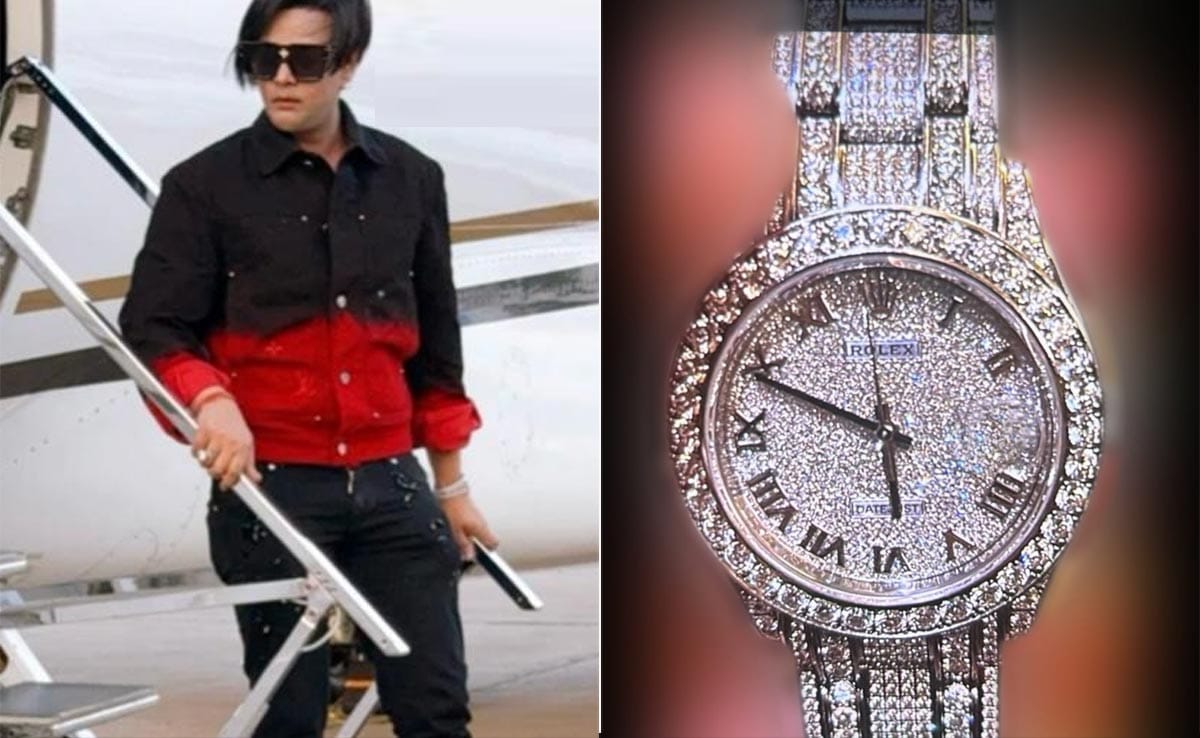
In today’s raids, the agency seized several expensive watches belonging to Shivam Mishra, the scion of the tobacco company. One of the watches, diamond-studded, is worth nearly Rs 2.5 crore rupees, sources in the agency said.

Seven crore rupees in cash, along with jewellery and other assets, have also been seized, intensifying the scrutiny on the group’s financial affairs.

The agency has already seized a collection of luxury cars, all bearing the number plate ‘4018’, from Shivam Mishra’s home in Delhi’s Vasant Vihar.

Fifteen to 20 teams carried out raids across five states, metaphorically shaking down every tobacco leaf linked to Banshidhar Tobacco Company, to stumble upon a treasure trove of luxury cars worth a staggering Rs 50 crore; among them, a Rolls-Royce Phantom, priced at a cool Rs 16 crore, found at Shivam Mishra’s home in Delhi’s Vasant Vihar.

The raids, being executed with military precision, reveal an empire built on deceit and financial manipulations. There is a major gap between the company’s declared income and the actual turnover and the officials believe that they hid their money using offshore accounts and manipulated ledgers, sources said.

KK Mishra, the once-untouchable patriarch, now finds himself entangled in a web of his own making. The Banshidhar Tobacco Limited, once an impenetrable fortress, now stands exposed, its foundations cracked, and its secrets laid bare.

Read full article
Link copied!