onmynews.com
Cannes 2026: Alia Bhatt Says She Mindfully Kept This Years Itinerary Calm and Not Chaotic

Alia Bhatt returned to the Cannes Film Festival once again and turned heads with her back-to-back magnificent looks. She walked the red carpet as the global ambassador for L’Oreal Paris.
She also sat down for a conversation with The Hollywood Reporter India and spoke about representing India on an international platform. The actress also spoke about her ‘chaotic’ Cannes debut last year. The actress shared, “Last year started with a lot of chaos because I landed and I went straight into the red carpet. So this time, I was mindful of trying to find a bit of calm within the chaos. I had a nice lunch, I walked around, I watched a movie.”
In the same conversation, Alia touched upon other topics as well, such as celebrating her 19th birthday on the sets of Highway and her daughter, Raha.
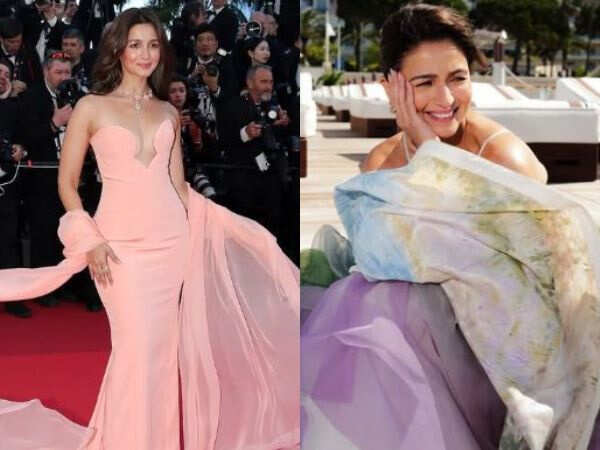
Alia Bhatt’s Looks for Cannes 2026
Alia had two looks on the first day of the prestigious festival. She first wore a structured corset ball gown by Yash Patil, with a bodice and spaghetti straps. The upper part of her ensemble also featured a sweetheart neckline.
The lower part comprised a billowing skirt, with a splash of colours across it. For her makeup, Alia kept it minimal. She paired a shimmery eyeshadow look with nude lipstick. She kept her hair side-parted with a bun. As for her jewellery, she only wore statement rings and diamond studs.
For her second look, she chose a pink body-hugging ensemble. It featured a sculpted corseted silhouette, plunging neckline, sweeping train and a dreamy chiffon scarf trailing behind her.
Meanwhile, on the work front, Alia Bhatt will star in Alpha, alongside Sharvari and in Love & War, opposite her husband, actor Ranbir Kapoor and Vicky Kaushal.


 Trisha Krishnan’s appearance at the swearing-in ceremony of Vijay, who recently assumed office as the Chief Minister of Tamil Nadu, continues to make headlines. Her subsequent Instagram post, “The love is always louder,” further fuelled discussions online. While rumours surrounding their personal equation continue to circulate, the duo’s enduring popularity largely stems from their celebrated on-screen chemistry. Known for their effortless blend of romance, humour, and action, Vijay and Trisha are regarded as one of Kollywood’s most successful on-screen jodis. Their collaborations have consistently generated excitement among fans, audiences, and trade circles alike. Here’s a look back at some of their most memorable films together.