Live · Global · Independent
Live Feeds
PinkVilla
Forbes
NDTV
Hindustan Times
Aamir Khan on doing romantic films again. Says: If it suits my age why not?
onmynews.com

Aamir Khan on doing romantic films again. Says: If it suits my age why not?

Aamir Khan’s last outing on the big screen was Laal Singh Chaddha alongside Kareena Kapoor Khan. The film did not mint much money at the box-office but did well once it was released on OTT. Eversince then Aamir Khan had taken a break. Now he’s come back as a producer for Laapataa Ladies which is being directed by his ex-wife Kiran Rao.

At a conclave held, he was asked by the media on doing romantic films again, to which he replied, “If there’s a romantic film I can do, sure. It’s a little uncommon to explore romance at my age. If I suit the character and the story, why not?”

Furthermore he added, if the role demands he would love to dabble in different genres. However, it should suit his age at this point too.

Read full article
Byju’s Unraveled: The Meteoric Rise And Staggering Fall Of Ed-Tech Titan
onmynews.com

Byju’s Unraveled: The Meteoric Rise And Staggering Fall Of Ed-Tech Titan

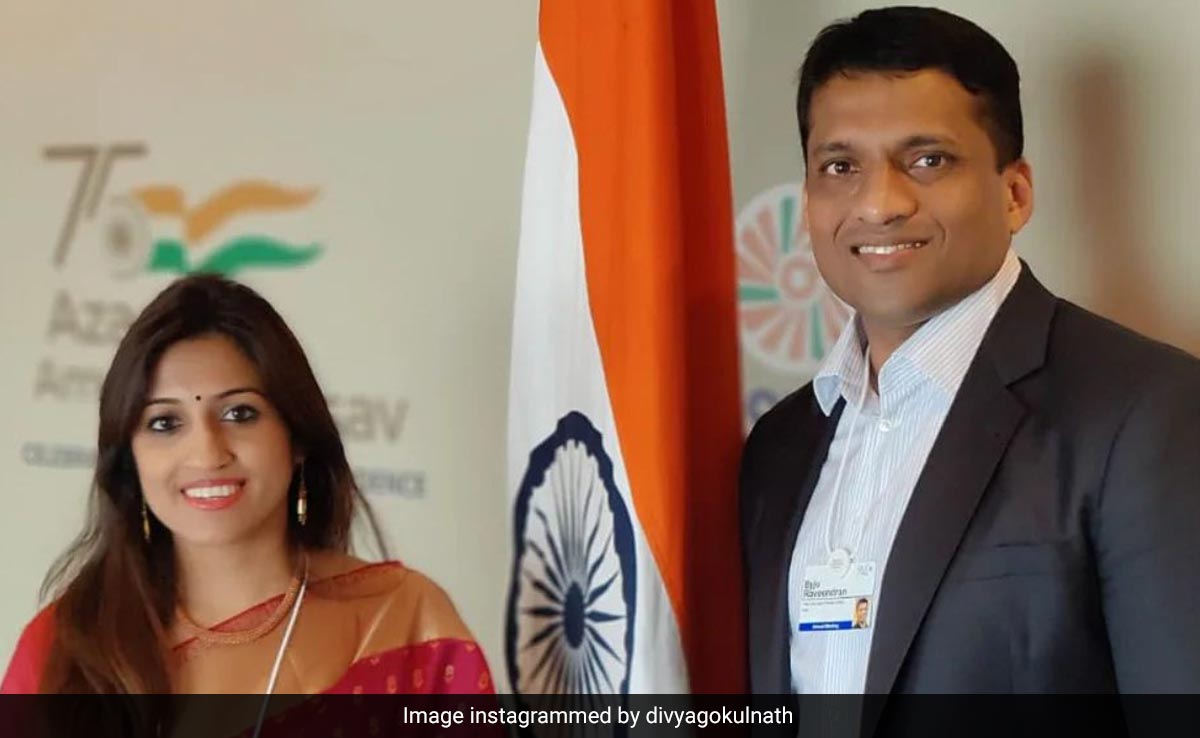
Byju’s, run by billionaire CEO Byju Raveendran, was the poster child of India’s startup ecosystem and was expected to herald a change in the pedagogy at schools and colleges. It reached a valuation of $22 billion in 2022 as its popularity rose by offering online and offline education courses. But in the last year, the company’s popularity and valuation have seen a sharp decline with several of the company’s investors now calling for leadership change at the ed-tech firm.

How Byju’s Started

Byju Raveendran was happily working as a service engineer at a shipping firm. A visit to his hometown in Kerala in 2003, where he helped some friends crack the MBA entrance exam CAT was when he first realised that he had a penchant for teaching. He himself appeared for the competitive exam and aced it with a perfect score.

He though rejected all MBA offers and returned to his job, only to score a 100 percentile in the exam again two years later. This led to several people approaching him to help them crack the exam.  The demand for his teaching skills grew rapidly, leading to the formal launch of Byju’s classes for the CAT exam in 2006.

Meteoric Rise Of Byju’s

Byju’s soon expanded its reach to undergraduate students, eventually forming Think and Learn Pvt Ltd. in 2011. The company then ventured into the school curriculum, breaking down chapters into interactive videos and using real-life examples to make students understand fundamental concepts.

In 2015, the company launched Byju’s learning app, which catered to students from kindergarten to class 12. By 2019, Byju’s had become India’s first ed-tech unicorn, a startup that is valued at over $1 billion.

Byju’s became the darling of India’s startup ecosystem, captivating the nation with its innovative approach to education. The use of interactive videos and technology, coupled with celebrity endorsements from the likes of Shah Rukh Khan and Virat Kohli, propelled Byju’s valuation to an unprecedented $22 billion, making it the world’s most expensive ed-tech startup.

The Fall

The meteoric rise of Byju’s eventually gave way to a tumultuous fall. After a rapid expansion during the Covid pandemic, Byju’s has been struggling with cash-flow problems and is embroiled in a dispute with creditors over a $1.2 billion loan.

The company’s rapid expansion also led to allegations of a toxic work culture and immense pressure on employees to acquire more customers.

In June 2023, tech investor Prosus cut Byju’s valuation by 75%, leading to layoffs and allegations of financial mismanagement. Byju’s parent company, Think & Learn Pvt Ltd., faced scrutiny for not paying PF money to employees and was also suspended by Google and Facebook for non-payment of ad dues.

Reasons For Downfall

When the Covid pandemic hit, Byju’s saw an opportunity to promote online and went all out with marketing. Their business boomed between Mar 2020 to Oct 2020. It acquired several ed-tech startups, not just in India but also in the US, as it tried to expand rapidly.

During COVID-19, the company sponsored the Indian cricket team, the Football World Cup, and even signed football star Lionel Messi as a global ambassador.

But growth has slowed since classes resumed, and the company’s challenges have been exacerbated by the months-long legal dispute that’s only showing signs of intensifying.

Byju’s revenue has remained steady, but its losses jumped from Rs 252 crore to 4,564 crore in just one year between 2019-20 and 2020-21.

Aggressive marketing tactics and financial mismanagement have also played a significant role in the company’s downfall. Sponsorship of major events and celebrity endorsements strained its financial standings, leading to a $1.2 billion loan default in 2021.

The company’s failure to file timely financial reports also raised questions about its stability. Byju’s delayed the filing of its 2021/22 financial results by nearly a year, prompting auditor Deloitte and three board members to quit. Its chief financial officer and chief technology officer also quit in November 2023.

By November 2023, Byju’s founder had to mortgage personal properties to secure a loan for employee salaries. The current valuation of $1 billion marks a drastic decline from its all-time high, signaling a troubling period for the once-thriving ed-tech giant.

What Next For Byju’s?

The latest blow to Byju’s comes in the form of shareholders moving a resolution seeking the ouster of the founders from top leadership roles, including CEO Byju Raveendran. Some of Byju’s investors say the company’s valuation has fallen to between $1 billion and $3 billion.

“The company and our employees are paying the price for a stand-off triggered by some investors,” Byju’s said.

Byju’s, which is currently raising $200 million through a rights issue of shares, said such capital is “pivotal for a successful turnaround” and it has received support for the capital raising from multiple shareholders.

The success of the ongoing capital-raising effort will likely play a pivotal role in determining the company’s ability to execute a successful turnaround.

Read full article
Register Live-In Relationships Or Face 6-Month Jail: Uttarakhand Civil Code
onmynews.com

Register Live-In Relationships Or Face 6-Month Jail: Uttarakhand Civil Code

Individuals in, or planning to enter, live-in relationships in Uttarakhand must register themselves with district officials once the Uniform Civil Code becomes law, with parental consent required for those below the age of 21 who wish to live together. Mandatory registration of such relationships extends to individuals who “any resident of Uttarakhand… in a live-in relationship outside the State”.

Live-in relationships will not be registered in cases that are “against public policy and morality”, if one partner is married or in another relationship, if one partner is a minor, and if consent of one partner was obtained by “coercion, fraud, or misrepresentation (with regard to identity)”.

A senior official told NDTV a website is being prepped to accept details of live-in relationship, which will be verified with the District Registrar, who will conduct a “summary inquiry” to establish the validity of the relationship. To do so, he may summon either or both partners, or anybody else.

Should registration be refused, the Registrar must inform in writing his/her reasons.

The “termination” of registered live-in relationships requires a written statement, in a “prescribed format” that can invite police investigation if the Registrar feels reasons for the relationship ending are “incorrect” or “suspicious”. Parents or guardians of those under 21 will also be informed.

Failure to submit live-in relationship declarations, or providing false information, could land one in jail for three months, a fine of Rs 25,000, or both. Anyone who fails to register a live-in relationship will face a maximum of six months in jail, be fined Rs 25,000, or both. Even a delay in registration, by as little as a month, will trigger a jail term of up to three months, a fine of Rs 10,000, or both.

Among other key points in the section on live-in relationships in the Uniform Civil Code that was tabled in the Uttarakhand Assembly Tuesday morning are that children born out of live-in relationships will receive legal recognition; i.e., they “shall be a legitimate child of the couple”.

READ | Uttarakhand Takes Up Uniform Civil Code: Bill Explained

This, the same official told NDTV, means “rights of all children born out of wedlock, in live-in relationships, or via incubation, will be the same… no child can be defined as ‘illegitimate'”.

Also, “all children will have equal rights in inheritance (including parental property)”, the official said, drawing attention to the language of the UCC, which refers to “child” and not “son” or “daughter”.

A woman “deserted by her live-in partner” can claim maintenance, the UCC draft also said, although it does not specify what constitutes “desertion”.

Uttarakhand’s Uniform Civil Code: Explained

A Uniform Civil Code, or UCC refers to a set of laws applicable to all citizens, and is not based on religion when dealing with marriage, divorce, inheritance, and adoption, among other personal matters.

A common civil code for Uttarakhand was one of the major poll promises made by the BJP in the run-up to last year’s assembly election, which the party won.

A State-appointed panel, led by a retired Supreme Court judge, has drafted a 749-page document based on a reported 2.33 lakh pieces of written feedback and engagement with 60,000 people.

Some of the proposals include a complete ban on polygamy and child marriage, a standardised marriageable age for girls across all faiths, and a uniform process for divorce.

Uttarakhand’s UCC also seeks to ban practices like ‘halala‘ and ‘iddat‘, which are the Islamic practices a woman must go through after a divorce or the death of the husband.

READ | Assam To Implement Uniform Civil Code In 2024, Tribals Exempt

Uttarakhand isn’t the only state to be pushing a uniform civil code, with Assam, another BJP-ruled state announcing plans to implement similar rules later this year. In both cases, though, tribal communities – a key vote bank in each state – will be exempt.

NDTV is now available on WhatsApp channels. Click on the link to get all the latest updates from NDTV on your chat.

Read full article
Link copied!