Live · Global · Independent
Live Feeds
PinkVilla
Forbes
NDTV
Hindustan Times
SSC Combined Graduate Level Tier 2 Answer Key 2023 Released, Check Steps To Download
onmynews.com

SSC Combined Graduate Level Tier 2 Answer Key 2023 Released, Check Steps To Download

The answer key for the Staff Selection Commission (SSC) Graduate Level Tier 2 examination 2023 has been released. Those who took the examination can access the answer key on the official website – ssc.nic.in. In addition to the answer key, the examinees’ response sheets have also been released. Those who have objections against the answer key can submit them on the SSC official website between October 30 and November 1, 2023. Representations made after 6pm on January 1, 2023, will not be entertained. Raising objections against each question will cost candidates Rs 100.

Steps to download the SSC CGL Tier 2 2023 answer key:

Visit the official website of SSC at ssc.nic.in.On the home page, click on the SSC CGL Tier 2 2023 answer key link.Click the link available in the new PDF file.Input the required details and click on submit.Once the above process is completed, you will get the answer key.Review the answer key and download it.Save a copy for future reference.

Direct Link: SSC CGL Tier 2 Answer Key 2023

SSC CGL Tier-II examination 2023:

The SSC CGL Tier 2 examination was held on October 26 and 27, 2023, at various centers across the country.

SSC CGL 2023 (Tier 1) Examination:

The Staff Selection Commission conducted the CGL Tier 1 examination from July 14 to 27, 2023. The results were declared on September 20. A total of 81,752 candidates qualified for the Tier 2 examination.

Read full article
Burglars Steal Donation Box From Hindu Temple In US, Police Launch Probe
onmynews.com

Burglars Steal Donation Box From Hindu Temple In US, Police Launch Probe

A Hindu temple in the US State of California has been raided by burglars who stole a donation box from the premises, leaving the Indian community in a state of shock.

The incident took place on Monday at the Hari Om Radha Krishna Mandir in the Parkway neighbourhood, at about 2:15 am, the Sacramento Bee newspaper reported.

The Sacramento Police Department is investigating the burglary at the Hindu Temple.

Police did not disclose what was stolen, but dispatch audio indicated a donation collection box was taken.

Dispatchers told people that six suspects were seen on the grounds through surveillance video, including two who were inside the temple, when police were called, the report added.

Police said no arrests have been made, but the incident remains under investigation.

Meanwhile, condemning the incident, the US-based advocacy organisation Coalition of Hindus of North America (CoHNA) has asked the Sacramento Police to take this issue very seriously and investigate it as a potential hate crime.

“Disturbing news from Sacramento, California where a #HinduTemple has been broken into. We ask @SacPolice to take this issue very seriously and investigate it as a potential hate crime and the violation of a sacred space. Police are asking for public help in identifying the suspects,” they posted on X.

Guru Maharaj and his wife were at home when they received an alert.

“The first thing I saw was the curtains blowing and I said, ‘Oh, my God. Somebody is in the building,’ ” Maharaj’s wife was quoted as saying by the CBS news.

As footage from the temple showed, someone tried to break through three doors and a car.

“They went right through to the donation box in darkness,” Maharaj said.

The footage shows the thieves lifting the box up and carrying it out behind the building. They hoisted the box, which reportedly weighed close to 100 pounds, over the fence then shoved it in a getaway car and took off.

“It’s a very big hit to our community and we’re here to help people out,” Maharaj said. 

Read full article
Study Finds Air Pollution Leads To 56% Higher Risk Of Parkinson’s Disease
onmynews.com

Study Finds Air Pollution Leads To 56% Higher Risk Of Parkinson’s Disease

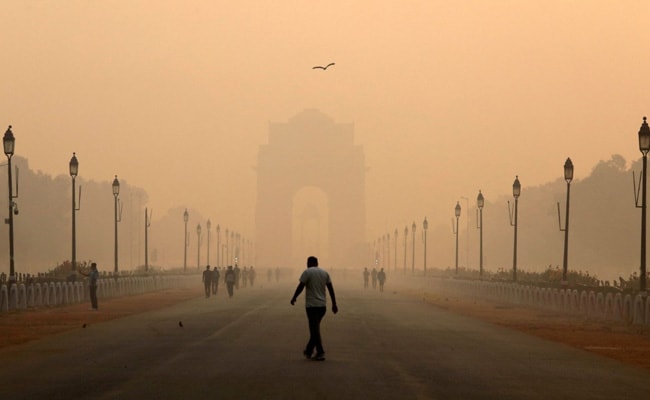
Moderate level of fine particle pollution is associated with a 56 per cent higher risk of developing Parkinson’s disease, new research in the US has found.

Previous studies have shown that fine particulate matter, or PM2.5, can cause inflammation in the brain, which is “a known mechanism by which Parkinson’s disease could develop,” according to lead researcher Brittany Krzyzanowski from Barrow Neurological Institute, Arizona.

The researchers also found that the relationship between air pollution and Parkinson’s disease was not the same in every part of the country, and that it varied in strength by region. They have published their findings in the journal Neurology.

Parkinson’s disease is a degenerative disorder of the central nervous system characterised by tremors and impaired muscular coordination.

In this study, the researchers identified nearly 90,000 people with the neurological disease from the US’s Medicare dataset of about 22 million people. Those identified were then geocoded to the neighbourhood of their residence, which enabled the researchers to calculate the rates of the disease within each region.

The average annual concentrations of fine particulate matter in these specific regions were also calculated.

Thus, the researchers at Barrow were able to identify an association between a person’s previous exposure to fine particulate matter and their later risk of developing Parkinson’s disease.

They found that the Mississippi-Ohio River Valley was a Parkinson’s disease hotspot, along with other US states including central North Dakota, parts of Texas, Kansas, eastern Michigan, and parts of Florida.

Further, people living in the western half of the US were found to be at a reduced risk of developing Parkinson’s disease compared with the rest of the nation.

“Regional differences in Parkinson’s disease might reflect regional differences in the composition of the particulate matter. Some areas may have particulate matter containing more toxic components compared to other areas,” said Krzyzanowski.

Although the authors had not explored the different sources of air pollution, Krzyzanowski noted there was relatively high road network density in the Mississippi-Ohio River Valley and the rust belt makes up part of this region as well.

“This means that the pollution in these areas may contain more combustion particles from traffic and heavy metals from manufacturing which have been linked to cell death in the part of the brain involved in Parkinson’s disease,” said the lead researcher.

The researchers said that such population-based geographic studies had the potential to reveal important insight into the role of environmental toxins in the development and progression of Parkinson’s.

“These same methods can be applied to explore other neurological health outcomes as well,” said Krzyzanowski.

The team hopes that the study findings will help enforce stricter policies aimed at lowering air pollution levels and decreasing the risk for Parkinson’s disease, and other associated illnesses.

 

Read full article
Link copied!