Live · Global · Independent
Live Feeds
PinkVilla
Forbes
NDTV
Hindustan Times
China Foreign Minister Calls For “Stable” US Ties
onmynews.com

China Foreign Minister Calls For “Stable” US Ties

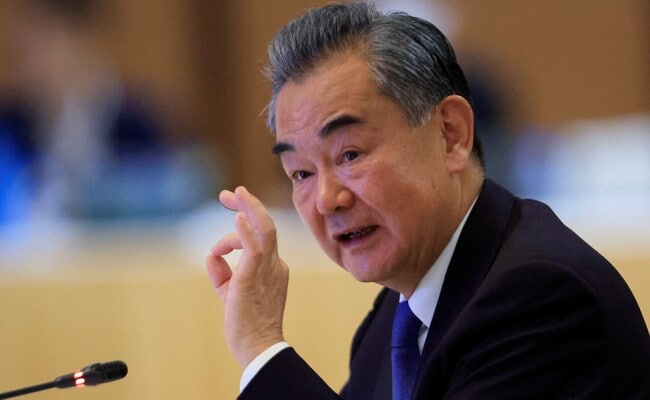
China’s top diplomat voiced hope Thursday for more stable relations with the United States after months of turbulence as he paid a rare trip to Washington to prepare a potential visit by President Xi Jinping.

President Joe Biden has invited Xi to San Francisco to participate in the Asia-Pacific Economic Cooperation (APEC) summit, but he has also stood firm on China in the run-up, keeping up a stream of targeted sanctions and staunchly backing US allies in disputes with Beijing.

Chinese Foreign Minister Wang Yi began by meeting Secretary of State Antony Blinken, who told his guest that he looked forward to “constructive conversations” that will include a dinner and more formal talks.

Wang told Blinken, who paid a visit to Beijing in June, that China wanted to “reduce misunderstanding.”

“We seek to expand cooperation that will benefit both sides so that we can stabilize US-China relations and return them to the track of healthy, stable and sustainable development,” Wang said.

Acknowledging that differences will still come up, Wang said that China hoped to respond “calmly, because we are of the view that what is right and what is wrong is not determined by who has the stronger arm or the louder voice.”

On Friday, Wang will speak at the White House with National Security Advisor Jake Sullivan. No meeting has been announced with Biden, but an encounter is widely expected after Xi received Blinken in Beijing.

US officials have repeatedly spoken of creating “guardrails” with China to prevent worst-case scenarios and have sought, without success, to restore contact between the two militaries.

“We’re going to compete with China (in) every way according to the international rules — economically, politically, in other ways. But I’m not looking for conflict,” Biden said Wednesday as he welcomed Australian Prime Minister Anthony Albanese.

Biden also warned China of US treaty obligations to the Philippines, which said that Chinese vessels deliberately hit Manila’s boats in dispute-rife waters — an account contested by Beijing.

Tensions have been particularly high over Taiwan, the self-ruling democracy claimed by Beijing which over the past year has launched major military exercises in response to actions by US lawmakers.

China’s defense ministry on Thursday accused Taiwan’s ruling Democratic Progressive Party of pushing the island toward a “dangerous situation of war.”

– What are ‘stable’ ties? –

Robert Daly, director of the Wilson Center’s Kissinger Institute on China and the United States, said Wang will likely seek assurances that the Biden administration will not “embarrass” Xi if he comes to San Francisco, either through harsh new policies or public comments.

“They would like to have a smooth glide path and then a smooth exit from the meeting,” he said.

Daly said the two powers had very different views on what “stable” ties mean, with the United States having no intention of changing course from viewing China as a threat and applying pressure.

“By stabilization, we mean that we want to be able to do that without greatly increasing the chance of conflict,” Daly said.

“The Chinese view is that stabilization would mean America ceasing this relentless stream of provocations and insults such that China is free to focus on its extremely weak domestic economy,” he said.

The Biden administration in recent months has tightened export curbs on chips to China, stepped up military support for Taiwan and issued sanctions targeting individual Chinese over support for Iran’s drone program and over production of chemicals that make fentanyl, the painkiller behind an addiction epidemic in the United States.

Biden has also championed alliances in the face of China’s rise. He has forged a new three-way military alliance with Australia and Britain and promoted the “Quad” with Australia, India and Japan.

The United States and China have also traded barbs over the conflict in the Middle East, where Biden has been Israel’s foremost ally.

The diplomacy with China comes as the United States enters an election season in which Biden’s predecessor Donald Trump, who is seeking to return to the White House, has made hawkish criticism of Beijing a signature policy.
Read full article
Broken Lebanon Cannot Afford War, And Hezbollah Knows It
onmynews.com

Broken Lebanon Cannot Afford War, And Hezbollah Knows It

With an economy in ruins and a crumbling state, Lebanon can ill afford another war between Hezbollah and Israel.

Iran-backed Hezbollah knows this and is keeping Lebanon’s crises in mind as it plots the next steps in the conflict with Israel, sources say.

As the war between Israel and Hezbollah’s Palestinian ally Hamas reverberates across the Middle East, the risk of war between Hezbollah and Israel remains higher than at any point since their last big conflict in 2006.

Analysts say the Shi’ite group could escalate if Hamas appears to be on the ropes in the Gaza Strip 200 km (130 miles) away, while Lebanese leaders fear Israel could chose to instigate a major conflict with Hezbollah.

But with Israel warning Hezbollah it would wreak “devastation” upon Lebanon were the group to open the front, the costs of any war loom large in a country already suffering one of the most destabilising phases since its 1975-90 civil war.

“Hezbollah has no interest in war. Lebanon has no interest in war”, a source familiar with Hezbollah thinking said.

The group did not want to see the country destroyed and Lebanese fleeing from the south as thousands already have, the source said.

With state coffers empty, many also wonder who would pay to rebuild. Some question whether Sunni-led Gulf Arab states that financed reconstruction in 2006 would rush to help this time, given Hezbollah’s bigger role in Lebanon.

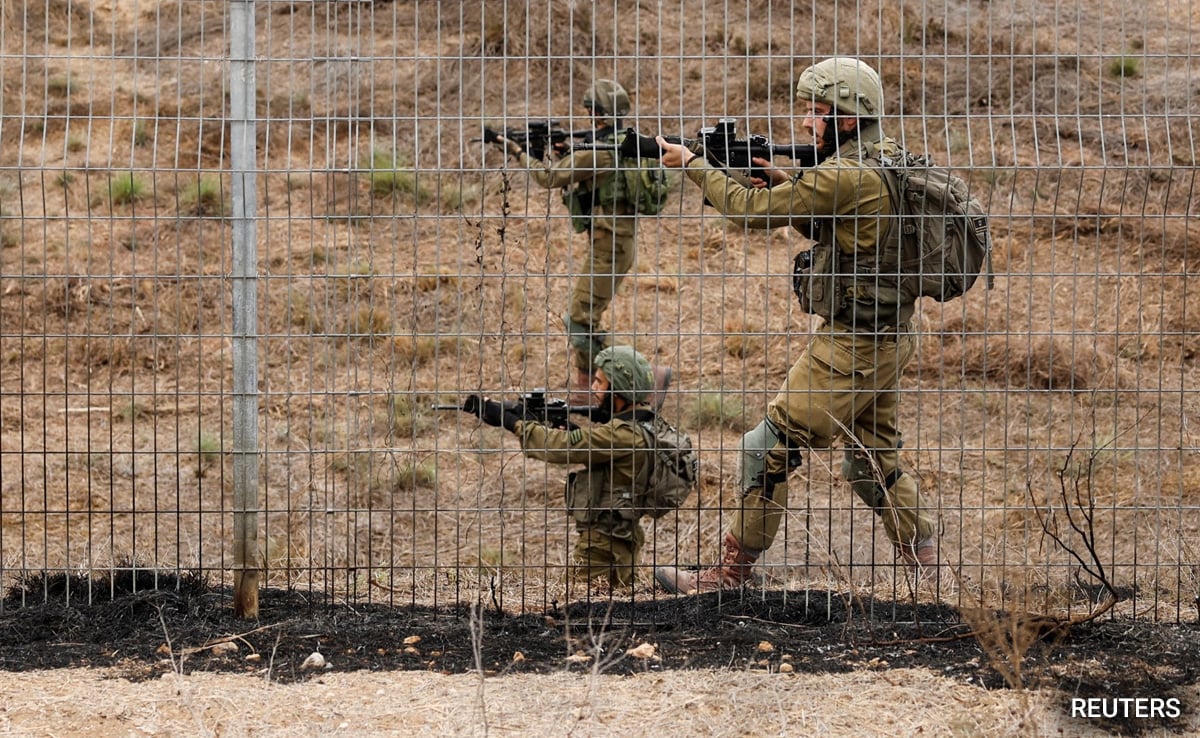
Hezbollah’s clashes with Israeli forces at the border have been calibrated to avoid major escalation so far, sources say, though more than 40 of its fighters have been killed.

However, Hezbollah has also indicated a readiness for war, reflecting its position as the spearhead of an Iran-backed alliance against Israel and the United States.

Lebanese politicians have urged Hezbollah not to escalate, though they have little to no sway over its decisions.

“The fate of Lebanon is at stake,” Druze leader Walid Jumblatt said, calling this perhaps the most dangerous phase he had seen in his political career.

He said there was nothing Lebanese could do to stop a war instigated by Israel.

“But from our side, we must control matters, via dialogue and advising the brothers in Hezbollah to keep the rules of engagement as they are,” he said in comments to media.

‘LEBANON WILL PAY’

Israeli President Isaac Herzog has said Israel was not looking for a confrontation on its northern border “but if Hezbollah drags us into war it should be clear that Lebanon will pay the price”.

One of Hezbollah’s closest allies, the Christian politician Suleiman Frangieh, said on Wednesday the group did not want war. If it had, Hezbollah fighters would have entered Israel on October 7 as Hamas did from Gaza, he said.

One senior Lebanese official said governments had contacted Lebanon to cool tensions.

“We’re telling them that instead of telling us to restrain Hezbollah, they need to put pressure on the Israelis not to escalate,” he said.

The last several years have been particularly difficult for Lebanon, which has known little stability since independence and endured wars including Israeli invasions in 1978 and 1982.

Decades of corruption and mismanagement by ruling politicians led the financial system to collapse in 2019, wiping out savings, demolishing the currency and fuelling poverty.

The following year, Beirut was shattered by a huge chemicals explosion at the port. Hezbollah used its sway to help derail an investigation that sought to prosecute some of its allies, calling it politicised. Tensions led to deadly violence.

The state is barely functioning, while factional squabbling has left it without a president and a fully empowered government.

Nabil Boumonsef, deputy editor-in-chief of Annahar newspaper, said any war would be far more destructive than 2006, while Lebanon did not have a government capable of managing the fallout.

“We would be facing a scenario of real terror – the destruction of the infrastructure in Lebanon and aborting any prospect of economic recovery,” he said.

Lebanon took years to rebuild from the 2006 war which killed 1,200 people in Lebanon, mostly civilians, and 158 Israelis, most of them soldiers.

After the war, which began after Hezbollah kidnapped two Israeli soldiers and killed others in a cross-border raid, Hezbollah leader Sayyed Hassan Nasrallah said the group had not anticipated war and would not have carried out the operation if he had known it would lead to such a conflict.

‘CALLING THE SHOTS’

Seventeen years later, Hezbollah’s massively expanded arsenal has cemented a power balance in its favour to the dismay of opponents who say the group is once again deciding matters of war and peace.

“They are calling the shots. This is totally unacceptable,” said Ghassan Hasbani, a leading member of the Lebanese Forces party, a Christian faction staunchly opposed to Hezbollah.

“There are serious concerns about Lebanon being dragged into a destructive confrontation by Hezbollah, at a time when the fragility of its social and economic situation mean it cannot sustain any further instability.”

Mohanad Hage Ali of the Carnegie Middle East Center said Hezbollah would be thinking hard about how reconstruction would be financed after any war, with questions over whether Gulf Arab states would help and how much cash Iran could provide.

“If there is no reconstruction, there is definitely a political cost for the organisation …People will ask questions, and there will be widespread anger.”

Read full article
Explained: What War Crimes Laws Apply To The Israel-Gaza War
onmynews.com

Explained: What War Crimes Laws Apply To The Israel-Gaza War

War between Israel and Palestinian forces since Hamas group’ October 7 assault have created a huge and rising death count – and accusations of war crimes – on both sides.

The war falls under a complex international system of justice that has emerged since World War Two. Even if states say they are acting in self-defence, the rules of armed conflict apply to all participants in a war.

WHAT LAWS GOVERN THE CONFLICT?

Internationally accepted rules of armed conflict emerged from the 1949 Geneva Conventions, which have been ratified by all UN member states and supplemented by rulings at international war crimes tribunals.

A series of treaties governs the treatment of civilians, soldiers and prisoners of war in a system collectively known as the “Law of Armed Conflict” or “International Humanitarian Law”. It applies to government forces and organised armed groups, including Hamas militants.

WHAT ACTS COULD VIOLATE WAR CRIMES LAW?

New York-based Human Rights Watch cited as possible war crimes the deliberate targeting of civilians, indiscriminate rocket attacks, and the taking of civilians as hostages by Palestinian armed groups, as well as the Israeli counter-strikes in Gaza that killed hundreds of Palestinians.

The taking of hostages, murder and torture are explicitly banned under the Geneva Conventions, while Israel’s response could also be subject to a war crimes investigation.

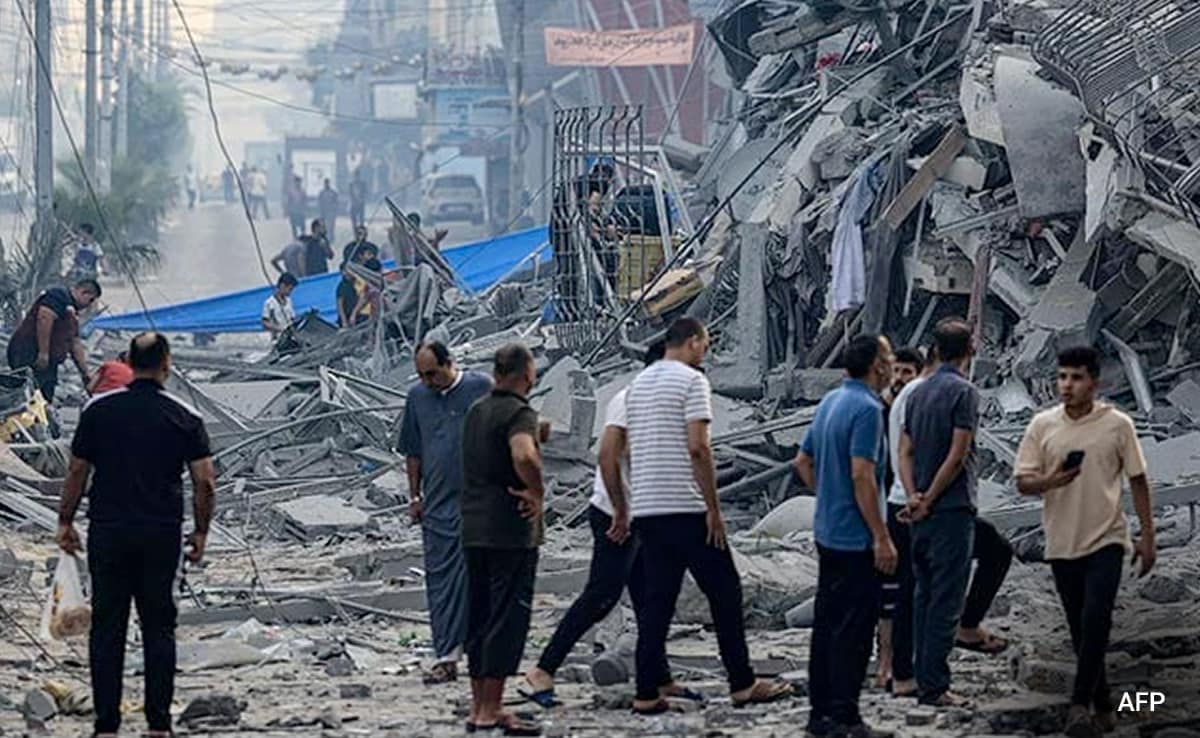
In response to the Hamas violence, Israel put Gaza, home to 2.3 million people, under siege and launched by far the most powerful bombing campaign in the 75-year-old history of the Israeli-Palestinian conflict, destroying whole neighbourhoods.

U.N. Secretary-General Antonio Guterres pleaded on Tuesday for civilians to be protected, voicing concern about “clear violations of international humanitarian law” in Gaza.

WHAT DO THE GENEVA CONVENTIONS SAY?

The overarching goal of the Geneva Conventions and thus international humanitarian law is to protect civilians in wartime and minimize suffering in war.

Under the laws of armed conflict combatants include members of state armed forces, military and volunteer forces and non-state armed groups.

A siege can be considered a war crime if it targets civilians, rather than a legitimate means to undermine Hamas’ military capabilities, or if found to be disproportionate.

Directly targeting civilians or civilian objects is strictly forbidden under the laws of armed conflict. However there are instances in which otherwise civilian objects can become legitimate military targets.

Even then, attacks on military objectives have to be proportional, meaning they must not lead to excessive loss of civilian life or damage to civilian objects.

Proportionality is not a numbers game where count of civilian casualties on one side is compared to the other, rather the loss of civilian life should be proportionate to the direct and concrete military advantage expected from that specific attack.

WHICH INSTITUTIONS CAN TRY ALLEGED WAR CRIMES?

The first in line to try alleged war crimes are local jurisdictions, in this case courts in Israel and the Palestinian territories.

If alleged Palestinian perpetrators of atrocities in Israel and all alleged perpetrators of crimes on the occupied Palestinian territories are not brought to justice at home, the International Criminal Court (ICC) in The Hague is the only international legal organ able to bring charges.

The ICC’s founding Rome Statute gives it legal authority to investigate alleged crimes on the territory of its members or by their nationals, when domestic authorities are “unwilling or unable” to do so.

WHAT IS THE ROLE OF THE ICC?

The International Criminal Court (ICC), the world’s permanent war crimes tribunal, opened in The Hague in 2002. It has jurisdiction over war crimes, crimes against humanity and genocide in its 123 member states or committed by its nationals.

Many of the world’s major powers are not members, including China, the United States, Russia, India and Egypt. The ICC recognises Palestine as a member state, while Israel rejects the court’s jurisdiction and does not formally engage with it.

With a limited budget and staff, ICC prosecutors are already investigating 17 cases ranging from Ukraine and Afghanistan to Sudan and Myanmar.

The ICC has had an ongoing investigation into allegations of war crimes and crimes against humanity committed in the occupied Palestinian territories since 2021.

It has not issued any arrest warrants.

Read full article
Link copied!