Live · Global · Independent
Live Feeds
PinkVilla
Forbes
NDTV
Hindustan Times
Even Before Article 370 Ruling, Kapil Sibal’s Post Said: “Some Battles…”
onmynews.com

Even Before Article 370 Ruling, Kapil Sibal’s Post Said: “Some Battles…”

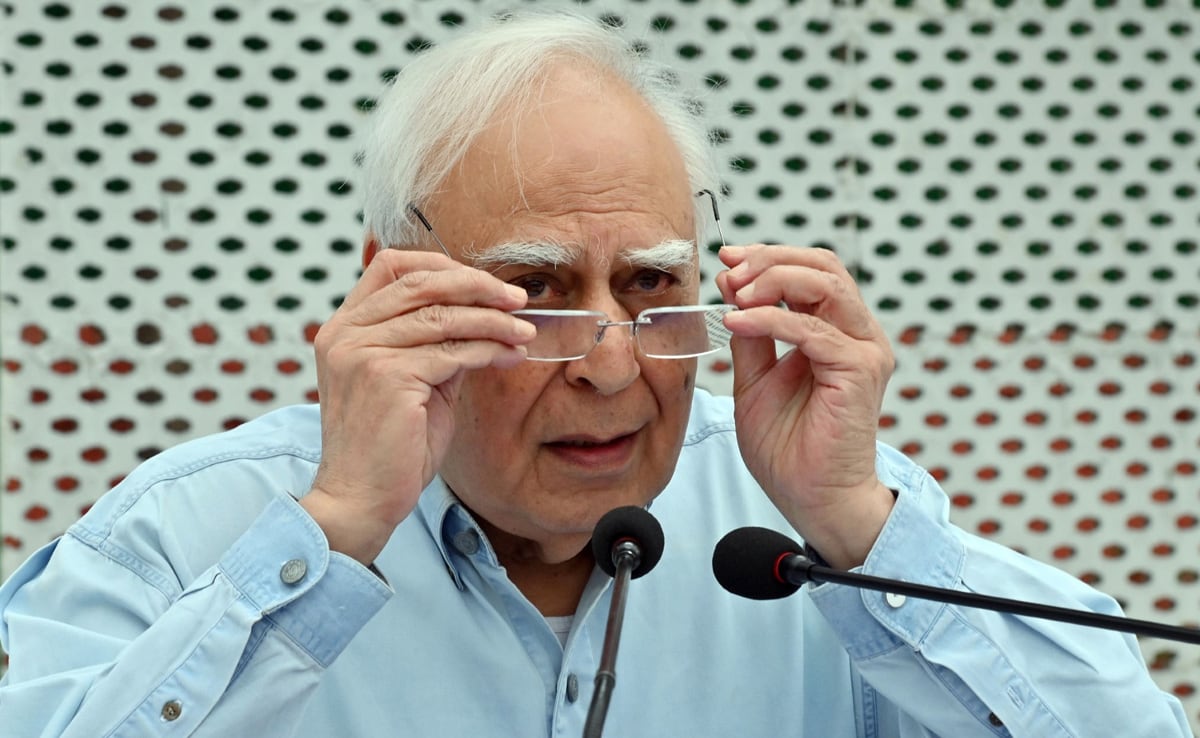
Hours before the Supreme Court’s Article 370 Judgment backing the Centre’s move to scrap Jammu and Kashmir’s special status, senior lawyer Kapil Sibal posted that “some battles were fought to be lost”.

Kapil Sibal was the counsel for petitioners who had challenged the scrapping of Jammu and Kashmir’s special status under Article 370 of the Constitution, in August 2019.
 
“Some battles are fought to be lost. For history must record the uncomfortable facts for generations to know. The right and wrong of institutional actions will be debated for years to come,” Kapil Sibal posted on X – formerly known as Twitter.

Courts

Some battles are fought to be lost

For history must record the uncomfortable facts for generations to know

The right and wrong of institutional actions will be debated for years to come

History alone is the final arbiter
of the moral compass of historic decisions

— Kapil Sibal (@KapilSibal) December 11, 2023

In a historic judgment, the Supreme Court not only upheld the Centre’s order to abrogate Article 370, but also said Jammu and Kashmir’s statehood should be restored at the earliest and elections must be held by September 30 next year.

“The President had the power to issue a notification declaring that Article 370(3) ceases to operate without the recommendation of the Constituent Assembly. The continuous exercise of power under Article 370(1) by the President indicates that the gradual process of constitutional integration was ongoing,” Chief Justice DY Chandrachud said while pronouncing the verdict.

A five-judge bench headed by Chief Justice Chandrachud also upheld the validity of the decision to carve out the union territory of Ladakh.

The petitioners opposing the repeal of Article 370 had been insisting that the provision could not have been scrapped, as the term of the Jammu and Kashmir Constituent Assembly, whose concurrence was required before taking such a step, ended in 1957, after it had drafted the erstwhile state’s Constitution.

With the constituent assembly having become extinct, Article 370 acquired a permanent status, they had contended.

The Centre had argued that its decisions were taken within the legal framework. It had also contended that the mainstreaming of Jammu and Kashmir has reduced terrorism and provided a level playing field.

Over the last four years, it has helped move the erstwhile state on the fast-track to development, the government had argued.

Jammu and Kashmir was split into two Union Territories after the abrogation of Article 370, over a year after the PDP-BJP alliance government had collapsed.

Read full article
BJP’s Madhya Pradesh Surprise: Mohan Yadav Beats Many Known Faces
onmynews.com

BJP’s Madhya Pradesh Surprise: Mohan Yadav Beats Many Known Faces

Mohan Yadav has been chosen as the new Chief Minister of Madhya Pradesh, more than two weeks after the ruling BJP routed rivals Congress to retain control of the heartland state. Mr Yadav, the Higher Education Minister in the outgoing government, was elected from the Ujjain Dakshin seat.

“I am a small party worker… I thank the party for this opportunity,” Mr Yadav said.

The BJP, in a bid to contain ambitions and soothe ruffled feathers ahead of the 2024 Lok Sabha election, also named two deputy chief ministers – Jagdish Deora and Rajesh Shukla. Mr Deora was elected from Malhagarh by nearly 60,000 votes and Mr Shukla from Rewa by around 21,000 votes.

The appointments end suspense over the identity of two of three chief ministers for the states the BJP won on December 3. Vishnu Deo Sai was named Chhattisgarh Chief Minister on Sunday.

Now, of the five states that voted in November, only Rajasthan is without a Chief Minister; the Congress, which won Telangana, has installed Revanth Reddy in the top post and, in Mizoram, the fledgling Zoram People’s Movement claimed an impressive win and Lalduhoma is Chief Minister.

A three-time MLA from the Ujjain district, the appointment of Mohan Yadav, 58, has been widely seen as the end of the political road (at least in the state) for his predecessor, Shivraj Singh Chouhan.

Mr Chouhan is a four-time Chief Minister and arguably the BJP’s tallest leader in the state, but seemed to side-lined by his party in the run-up to the November 17 election. The party opted for a campaign based on “collective leadership” built around Prime Minister Narendra Modi’s face.

The strategy reaped dividends; the BJP won 163 of 230 seats and the Congress, which actually won the 2018 election but saw its government fall two years later, was left with just 66, down from 114.

The BJP’s win defied several exit polls’ predictions of a tight race with the Congress.

Ex-Union Agriculture Minister Narendra Singh Tomar, one of three former cabinet members to contest last month’s election, has been made Assembly Speaker. There was speculation Mr Tomar, who led the ministry during protests against farm laws, could succeed Mr Chouhan to the top post.

Read full article
On Gay Sex, Adultery In New Criminal Laws, PM, Cabinet Disagree With Panel
onmynews.com

On Gay Sex, Adultery In New Criminal Laws, PM, Cabinet Disagree With Panel

The Union Cabinet has given the go-ahead to Home Minister Amit Shah to introduce the criminal law amendment bills, which are set to replace old pre-colonial criminal laws, people familiar with the matter said.

Prime Minister Narendra Modi and his office have disagreed with two suggestions made by the Parliamentary Standing Committee of Home Affairs as they would have far-reaching consequences and would have been seen as against the Supreme Court and its judgments, sources said.

One is on the offence of adultery, and the other is criminalising of homosexual sex.

The committee had recommended that the offence of adultery be retained in the Bharatiya Nyaya Sanhita Bill, 2023. The Supreme Court had, however, struck down this offence in 2018, saying it discriminated against women, perpetuated gender stereotypes, and diminished the dignity of women.

Another recommendation of the standing committee was to penalise non-consensual acts under Section 377 of the Indian Penal Code (IPC). Even though the Supreme Court has struck down the criminalising of homosexual sex between consensual adults, they have asked for this provision to be retained in the new bill, saying no provision for non-consensual sexual offence against male, female, transgender and for bestiality has been made.

The Prime Minister, his office (PMO) and the cabinet have agreed with not accepting this recommendation, and so the Supreme Court judgment on Section 377 of the IPC has been removed.

On the offence of adultery, the Supreme Court had held that a wife was treated like the property of the husband by only penalising the man in disregard to the autonomy of the woman.

The parliamentary committee, however, is of the view that the institution of marriage is considered sacred and needs to be safeguarded in Indian society and made gender-neutral. The PMO, Prime Minister and the cabinet have agreed with the decision not to accept this recommendation, sources said.

There have been some changes to the definition of organised crime and terrorism to make it in line with the 21st century.

All the three bills are expected to be taken up for consideration and passing on Wednesday and early next week in the Rajya Sabha, paving the way for new criminal law bills even though there is a still a lot of controversy over the names of the bill.

Read full article
Link copied!