Live · Global · Independent
Live Feeds
PinkVilla
Forbes
NDTV
Hindustan Times
The Buckingham Murders: Hansal Mehta calls box office number discussions of Kareena Kapoor starrer ‘reductive conversation’: ‘It reduces it to mediocrity…’
onmynews.com

The Buckingham Murders: Hansal Mehta calls box office number discussions of Kareena Kapoor starrer ‘reductive conversation’: ‘It reduces it to mediocrity…’

Hansal Mehta’s The Buckingham Murders is currently in theatres with underwhelming box office numbers. This Kareena Kapoor Khan starrer has so far only managed to earn 6 crore in 4 days. The director recently spoke to DNA and revealed whether he gets involved in the discussions involving his film’s collections and his answer is every sensible filmmaker ever.

“It’s very reductive. I cannot participate in that reductive conversation. It reduces it to the mediocrity of the mind that is equating a film to its number,” Mehta said talking about how conversations are great outside the box office numbers involving Kareena’s performance and the film’s distinct setting.

Hansal Mehta added that he is very pleased with the way The Buckingham Murders has been received. “People have opinions and I might disagree with them. I may even get angry at some but at least, you have watched the film and you are talking about it. The fact that this film has opened up conversations about so many things, including Kareena the actor, is wonderful,” the 56-year-old shared.

ALSO READ: The Buckingham Murders: When hype around Kareena Kapoor got ‘fever’ for co-star Ranveer Brar; latter reveals iconic slap scene took 15 takes

The Buckingham Murders is a slow-burn thriller in the Broadchurch genre relying heavily on the English language with a few Hindi dialogues. While Hansal trusted its audiences, he decided to adhere to commercial demands of releasing an entirely Hindi dubbed version as well. It was Ekta Kapoor who made Hansal understand that considering Kareena Kapoor’s fan following, there is an audience that wants to see her even if it’s in this new avatar.

“Hence, the Hindi version will allow us to reach that audience. That was the rationale behind this. But as the last few days have proved, people have embraced the English version. It has gone beyond the expectations,” Hansal added. The filmmaker is thankful that the audiences have grown much more than makers and critics and it’s a good sign for cinema’s future.

Hansal learned this with Scam 1992 when that project was rejected by most platforms because it was assumed that a show on financial scam with a Gujarati character wouldn’t find its audiences. “The show proved the opposite. It was new for people and they embraced it. We create these convenient safety nets for ourselves only to be proved wrong,” Mehta signed off.

ALSO READ: The Buckingham Murders: Did you know Kareena Kapoor Khan took a pay cut? Director Hansal Mehta reveals, ‘She has also put her belief’

Read full article
BJP Lists Abuses Against PM After M Kharge Flags Barbs At Rahul Gandhi
onmynews.com

BJP Lists Abuses Against PM After M Kharge Flags Barbs At Rahul Gandhi

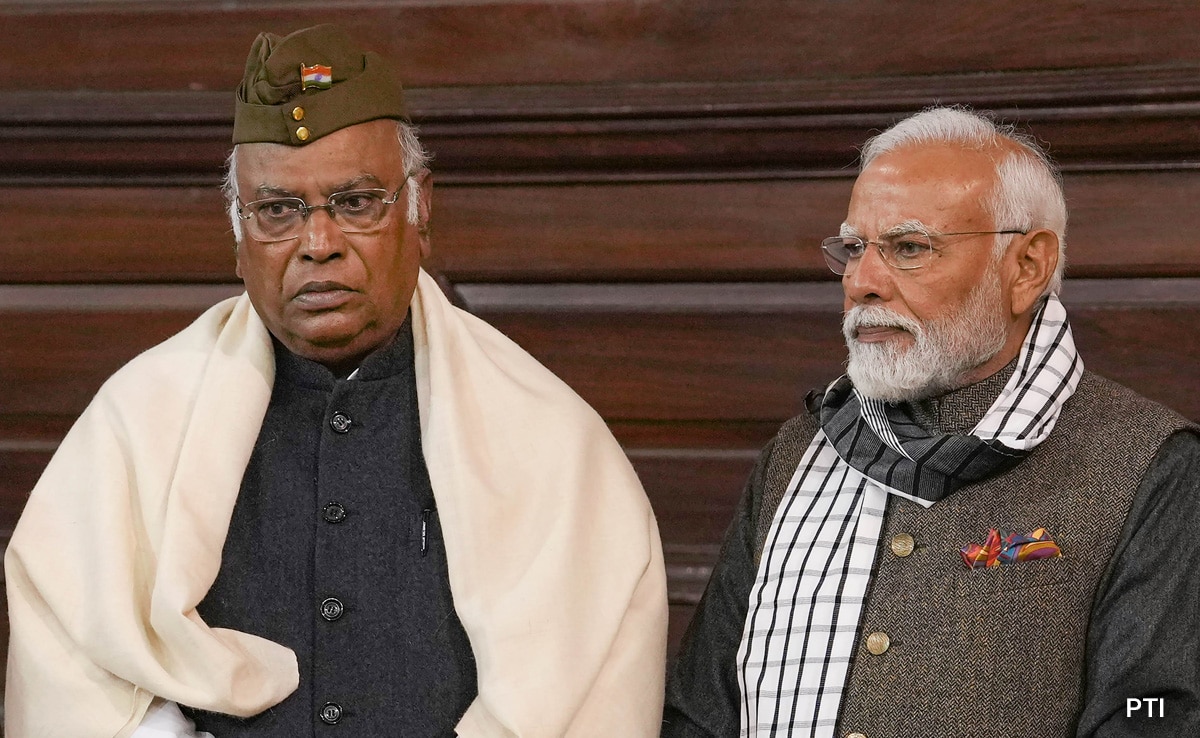
Two days after Congress president Mallikarjun Kharge wrote to Prime Minister Narendra Modi, flagging BJP leaders’ objectionable remarks against Rahul Gandhi, BJP chief JP Nadda has shot off a letter to Mr Kharge, listing derogatory terms used by Congress leaders against the Prime Minister in the past.

Taking a swipe at Mr Gandhi, Mr Nadda wrote that the Congress has again tried to polish and relaunch a “failed product” that the people have rejected several times.

“Wasn’t it Rahul Gandhi’s mother Sonia Gandhi who used the derogatory expression ‘maut ka saudagar’ (merchant of death) for Modiji? You and your party glorified such shameless statements. Had the Congress forgotten political decorum then?” asked Mr Nadda, also the Union Health Minister.

Mr Nadda wrote that the country’s oldest party has become a “copy & paste” party due to Mr Gandhi’s pressure and has imbibed his ills.

Congress leaders, he wrote, called the Prime Minister “snake”, “scorpion”, “demon”, “pickpocket”, and “coward”. “Even his parents were insulted,” Mr Nadda added.

The BJP president accused Mr Gandhi, Leader of the Opposition in Lok Sabha, of resorting to politics of reservation and caste and inciting people against each other. “Then he goes abroad and talks about ending reservation and snatching away rights of people from Dalit, backward classes and tribal communities,” he wrote.

Addressing a gathering at a US university, Mr Gandhi said the Congress would think of scrapping reservations only when “India is a fair place”, which, he said, is not the case right now. The BJP latched on to the remark and said the Congress leader’s prejudice against reservation is out in the open.

Mr Nadda said it is the Congress that has insulted Indian democracy the most. “The Congress imposed Emergency, backed triple talaq, defamed Constitutional institutions and weakened them.”

What Mallikarjun Kharge Wrote To PM

Earlier, in his letter to the Prime Minister, the Congress president had flagged a “series of objectionable, violent and indecent” remarks against Rahul Gandhi.

Listing the verbal attacks on Mr Gandhi, Mr Kharge pointed to Union Minister Ravneet Singh Bittu’s “Number 1 terrorist” remark, Shiv Sena leader announcing Rs 11 lakh for “anyone who cuts” Mr Gandhi’s tongue and Delhi BJP leader Tarwinder Singh Marwah’s threat that Mr Gandhi will meet the same fate as his grandmother and former Prime Minister Indira Gandhi.

“Indian culture is known across the world for non-violence and love… Gandhiji made these standards a key part of our politics during the British era. After Independence, there has been a long tradition of respectable disagreement between the ruling party and the Opposition,” the Congress chief wrote.

He added that crores of Congress workers are worried over the BJP leaders’ verbal attacks on Rahul Gandhi. “It is because of such forces spreading hate that Father of the Nation Mahatma Gandhi, Indira Gandhi and Rajiv Gandhi had to sacrifice their lives. This political conduct of the ruling party is the most indecent example in the history of democracy.”

Mr Kharge requested the Prime Minister to enforce decorum and decency among BJP leaders. “There should be strict legal action for such remarks so that Indian democracy can be saved from decline.”

Read full article
3 Theories On How Israel May Have Triggered Hezbollah Device Blasts
onmynews.com

3 Theories On How Israel May Have Triggered Hezbollah Device Blasts

Thousands of pagers and walkie-talkies used by Hezbollah members detonated across Lebanon on Tuesday and Wednesday, killing at least 32 people and injuring thousands more. This attack has sparked multiple theories about how these devices were sabotaged. While the exact mechanism behind the explosions is still being investigated, a few theories have emerged.

Much of the debate centres around the idea that the pagers were tampered with, causing their batteries to overheat and explode. According to Lebanese Telecommunications Minister Johnny Corm, this overheating indicated “foul play”. However, cybersecurity expert Robert Graham quickly dismissed this theory, arguing that making batteries do more than burn is implausible. Instead, he suggested the far more likely explanation that someone bribed the factories involved to insert explosives into the devices, Bloomberg reported.

What happened?

The first wave of explosions occurred on Tuesday when pagers used by the Iran-backed terror group detonated across Lebanon. Hospitals were quickly overwhelmed with casualties, leading to the establishment of a field hospital in Tyre. These explosions came shortly after Israel announced a strategic expansion in its military actions against Hezbollah. On Wednesday, a second wave of explosions involving Hezbollah walkie-talkies caused further chaos.

Theory 1: Explosives planted in devices

According to Lebanese security sources and reports by Reuters, a new batch of 5,000 pagers ordered by Hezbollah from Taiwan-based manufacturer Gold Apollo had been compromised. Israeli spy intelligence agency Mossad is suspected of embedding small explosive devices within these devices. The explosives, reportedly as small as 3 grams, were hidden in such a way that they went undetected by Hezbollah for months. The detonation mechanism is believed to be activated remotely via a coded message sent to the pagers. These explosives, experts say, were impossible to detect through regular scanners.

The attack on the walkie-talkies, believed to have been purchased around the same time, has been linked to a similar sabotage operation. These devices, labelled as ICOM and reportedly made in Japan, are thought to have been tampered with at the production level, possibly by Mossad. The walkie-talkie explosions are less well-documented, but it is suggested that the same coded message method could have been used to activate the embedded explosives.

Theory 2: Supply chain compromised

Another theory is the tampering of the supply chain. Security experts suggest that Israeli intelligence may have gained access to the devices long before they reached Hezbollah. The pagers were identified as Gold Apollo AR-924 models, but further investigation revealed they were manufactured by BAC Consulting in Hungary, a company with licensing rights to use the Gold Apollo brand. This raises the possibility that the sabotage took place during the manufacturing or distribution stages, providing Israel an opportunity to install explosive materials without detection.

Hezbollah has since stated that the devices were part of a shipment recently imported, implying the tampering occurred before the pagers arrived in Lebanon.

Theory 3: Remote activation via message

Another central theory is that the pagers and walkie-talkies were remotely detonated using an electronic signal or radio frequency, rather than physical tampering. Mark Montgomery, a retired admiral and executive director of the Cyberspace Solarium Commission, suggested that the explosions may have been triggered by a radio frequency or electronic signal. “I suspect it was an intentional physical defect enabled by cyber or a radio frequency signal,” he told Bloomberg.

The detonation appears to have been triggered by a coded message, according to a report from the New York Times. The pagers simultaneously received what appeared to be an internal communication from Hezbollah leadership, which, upon opening, activated the explosives hidden within the devices. Videos circulating on social media supposedly show individuals looking at their pagers moments before the explosions occurred.

Who is responsible?

Hezbollah has blamed Israel for the attack and has vowed retaliation. The timing of the explosions, which followed Israel’s announcement of extended military operations along the Lebanon border, has fuelled speculation that this was a deliberate move by Mossad. However, Israel has not commented on the matter officially. Further investigation is ongoing.

Read full article
Link copied!